What Nitrite Levels Mean for Fish in Community Lakes
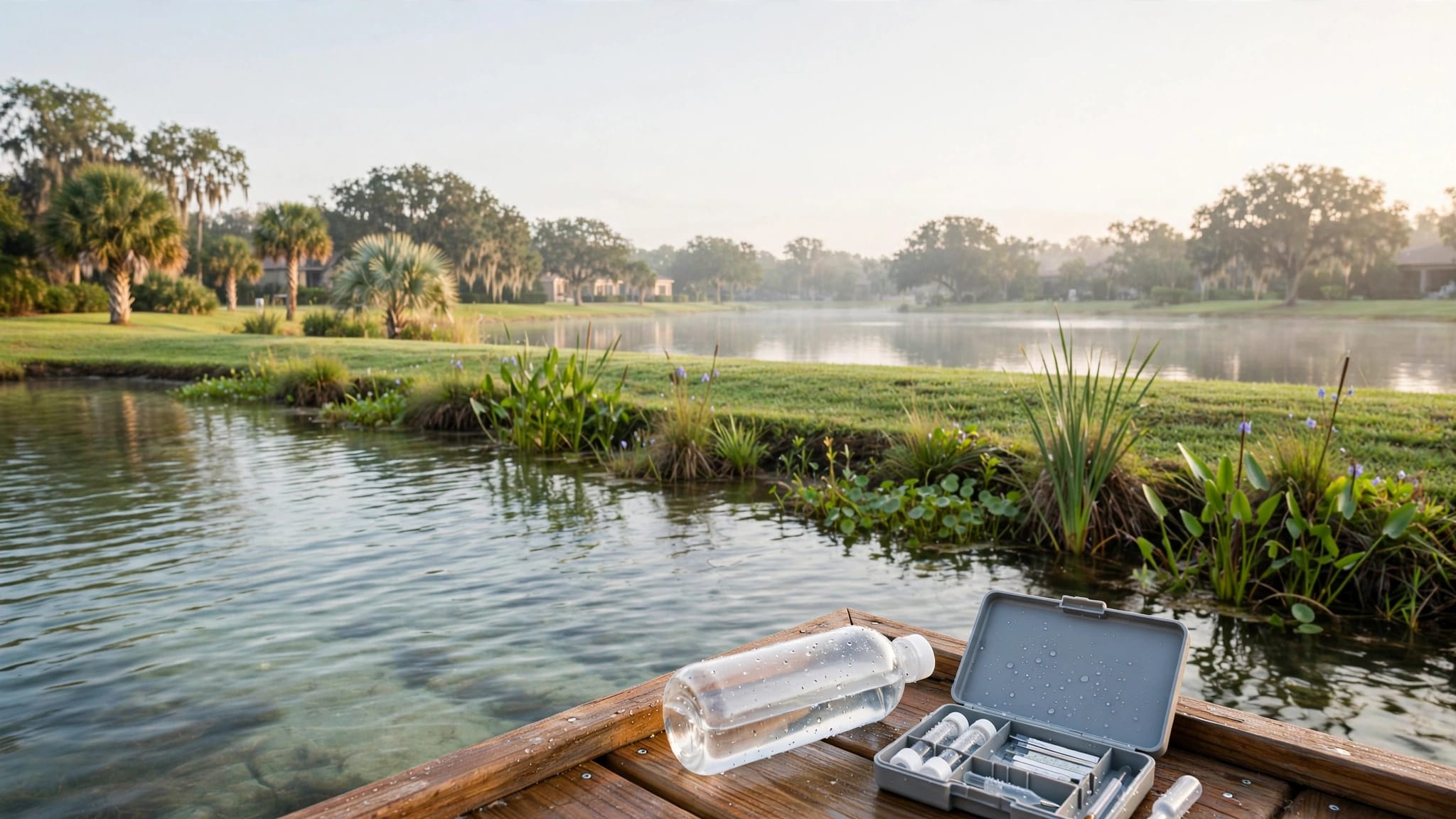
Fish can struggle to breathe even when a lake contains enough dissolved oxygen. Elevated nitrite can interfere with oxygen transport inside their bodies, so a water test needs more context than a single number.
For your HOA, golf course, or multi-lake property, the priority is fish health , not water appearance alone. Clear water can still contain conditions that stress aquatic life.
Understanding how nitrite affects fish starts with separating its direct effects from the broader nutrient and oxygen problems in community lakes.
How Nitrite Affects Fish in Community Lakes
Nitrite disrupts oxygen transport
Fish absorb nitrite through their gills. Once inside the body, it can convert hemoglobin into methemoglobin, which cannot carry oxygen effectively. This condition is often called "brown blood disease."
As a result, fish may experience oxygen stress even when dissolved oxygen readings seem adequate. Aeration can help address low oxygen in the water, but it doesn't directly reverse nitrite's effect on blood.
The risk varies among species and water conditions. Chloride influences nitrite uptake because the two compete at the gills. However, that relationship doesn't make salt addition an appropriate do-it-yourself treatment for a community retention pond.
Fish behavior provides an early warning
Affected fish may become sluggish, gather near moving water, or spend more time near the surface. Residents might notice fish around a fountain or inflow before anyone collects a sample.
However, these behaviors also occur with low dissolved oxygen, ammonia stress, and other problems. Surface activity alone cannot identify nitrite as the cause.
Fish distress should therefore trigger prompt water-quality assessment. Waiting for discoloration, odor, or additional deaths can delay the response because nitrite itself doesn't give the lake a reliable visible warning.
Why Nitrite Can Build Up in Retention Ponds
Nitrite is part of the nitrogen cycle
Nitrite forms as microorganisms process nitrogen. During nitrification, bacteria and other microorganisms convert ammonia to nitrite, then nitrite to nitrate.
Both steps depend on suitable conditions, including available oxygen. If ammonia enters faster than the system processes it, or the conversion steps become unbalanced, nitrite can accumulate.
Still, elevated nitrite doesn't automatically prove that the entire lake lacks oxygen. Different depths, sediment surfaces, and sheltered shoreline areas can have different conditions. A surface sample may miss what is happening below.
Runoff and decay increase the load
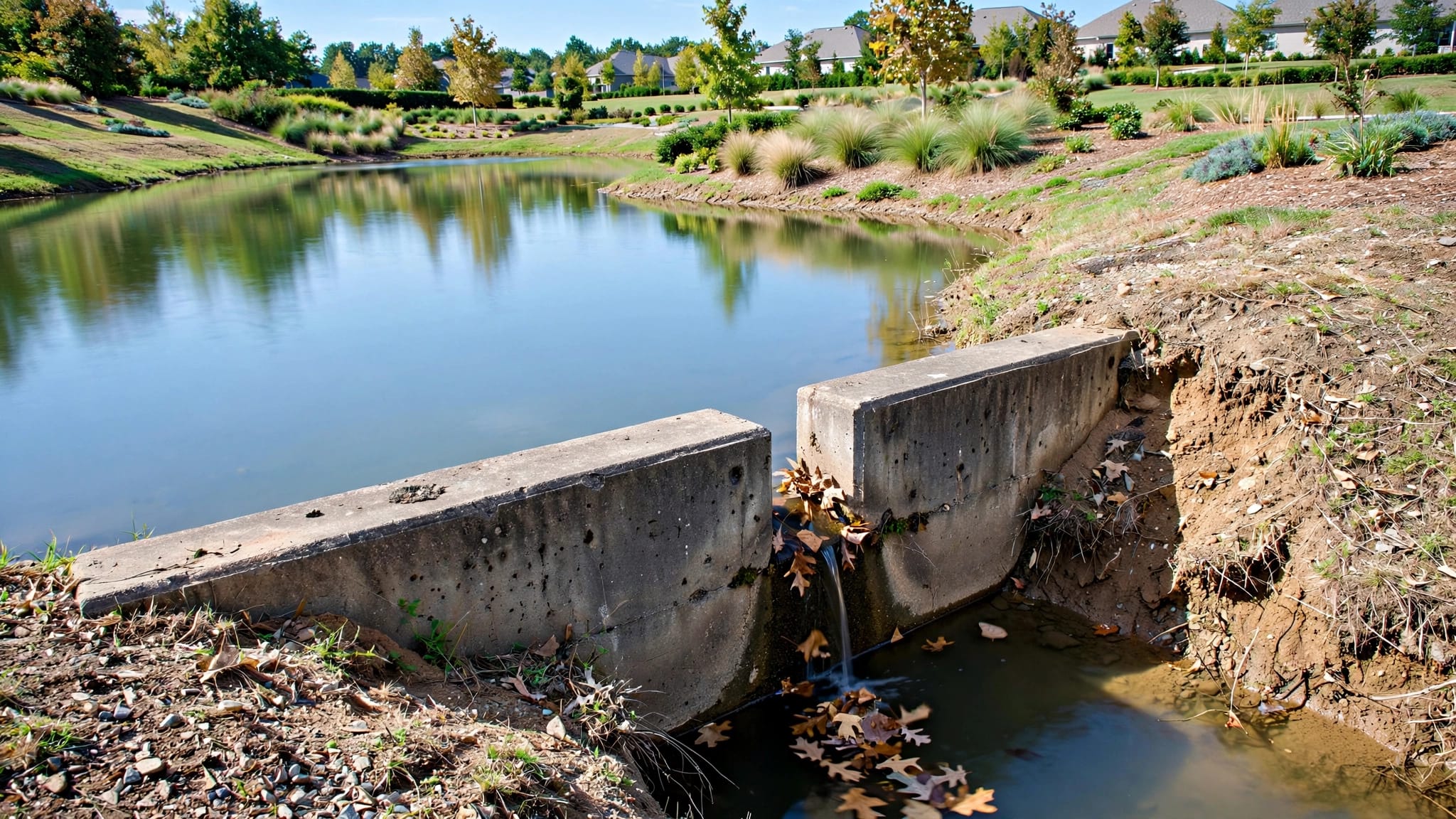
Retention ponds receive stormwater from surrounding land. Fertilizer runoff, grass clippings, leaves, and other organic material can add nitrogen or material that releases ammonia during decomposition.
Meanwhile, decomposing algae and vegetation consume oxygen. That combination can place extra pressure on the biological processes that handle nitrogen.
In Southwest Florida, heat and heavy rainfall can change these conditions quickly. Warm water holds less oxygen, while stormwater can introduce fresh nutrients and debris.
For that reason, recurring nitrite concerns deserve a drainage and shoreline inspection alongside testing. The underlying issue may include repeated inputs, accumulated organic matter, or poor circulation rather than one isolated event.
What a Nitrite Result Means for Your Lake
Identify exactly what the report measures
Nitrite, nitrate, ammonia, and total nitrogen are different measurements. A report showing high total nitrogen doesn't establish that nitrite is elevated.
Likewise, a combined nitrate-plus-nitrite result doesn't tell you how much of each form is present. Interpreting those results as interchangeable can lead to the wrong maintenance decision.
Reporting conventions matter too. Laboratories may express nitrite as nitrogen or as the complete nitrite ion. Those values require different interpretation, so comparisons need matching reporting units and methods.
Our guide to reading HOA water test results explains how nutrients, oxygen, pH, and clarity fit together.
Match the result to conditions
A nitrite result describes the sampled water at that location and time. It doesn't establish the condition of every depth or every connected lake.
Interpret it alongside fish species, chloride, dissolved oxygen, and the surrounding water chemistry. A rising pattern with fish distress deserves more urgent attention than an isolated result without supporting observations.
Also, a result below the laboratory's reporting limit doesn't prove the lake is healthy. Low oxygen, ammonia, or other stressors may still threaten fish.
The test identity matters: general nutrient benchmarks and algae indicators cannot substitute for a nitrite-specific assessment.
Test Oxygen and Other Fish-Health Conditions Together
Include the measurements that explain risk
When fish show stress, nitrite should be part of a broader investigation rather than the only test ordered. Dissolved oxygen, temperature, pH, and ammonia help explain what fish are experiencing.
Ammonia deserves separate attention because its more toxic, un-ionized form becomes more prevalent as pH and temperature rise. That is a different mechanism from nitrite's effect on blood.
Chloride can help interpret nitrite risk. Meanwhile, phosphorus and chlorophyll-a provide context for algae growth and nutrient pressure, but they don't diagnose nitrite exposure.
This broader profile helps separate overlapping problems instead of assuming one abnormal result explains everything.
Measure more than the surface
Oxygen can vary substantially with depth. A fountain may move surface water while deeper areas remain oxygen-poor.
Timing matters as well. Photosynthesis stops after dark, but fish, plants, and microorganisms continue consuming oxygen. Therefore, early-morning readings can reveal stress that afternoon testing misses.
Depth-by-depth oxygen monitoring helps identify low-oxygen layers and circulation gaps. Pairing those observations with nitrogen testing gives managers a clearer basis for action.
Build a Sampling Record That Explains Changes
One sample provides a snapshot. Consistent records show whether a lake is recovering, staying stable, or moving toward another problem.
Use the same lake names on maps, laboratory reports, inspection notes, and maintenance records. On multi-lake properties, unclear identification can make otherwise useful results difficult to compare.
Routine samples should come from consistent locations and comparable conditions whenever practical. However, diagnostic sampling may require additional locations near inlets, sheltered coves, or visibly stressed areas.
Record the circumstances that can change interpretation:
- Note rainfall, irrigation changes, and unusual stormwater flow before sampling.
- Document fertilizer applications, mowing debris, construction, and visible erosion.
- Record algae changes, vegetation decay, equipment outages, and recent treatments.
- Include fish behavior, sample depth, collection time, and water temperature.
These details help distinguish an event-related change from a recurring maintenance issue. They also prevent a board from comparing samples collected under very different conditions as though they were equivalent.
A structured approach to lake nutrient trend tracking connects laboratory findings with the conditions that produced them. That history becomes especially useful when one basin repeatedly changes after storms while neighboring lakes remain stable.
Respond Promptly When Fish Show Stress
Gasping fish, widespread sluggish behavior, or sudden deaths require prompt professional attention. An abnormal nitrite result shouldn't delay assessment of other immediate threats, especially low dissolved oxygen.
Residents and landscape crews should avoid adding chemicals, salt, or other products to the lake. Unapproved additions can affect aquatic life, downstream water, and the existing maintenance program.
A practical response follows a clear sequence:
- Report the affected lake and record when the behavior started.
- Document fish activity, recent weather, odors, and visible water changes.
- Arrange prompt field measurements and targeted sampling.
- Match corrective work to the findings, then follow up with observations and testing.
Keep existing aeration equipment operating as designed unless the responsible professional directs otherwise. However, restarting or changing circulation in a layered lake requires judgment because mixing oxygen-poor bottom water can worsen conditions.
Several causes of community lake fish kills can overlap. Heat, runoff, decomposing vegetation, and oxygen loss may occur together, so finding nitrite doesn't end the investigation.
For boards, this is also a communication issue. Give residents a clear reporting contact and explain that the cause is under assessment rather than naming a pollutant prematurely.
Reduce Repeat Problems Across Multiple Lakes
Control inputs at the source
Long-term prevention starts with reducing what enters the water. Keep grass clippings and collected leaves out of drainage paths, maintain shoreline vegetation, and address exposed soil that washes into inlets.
Review irrigation overspray and runoff patterns near lake edges. On golf properties, drainage from turf areas deserves attention because water can carry nutrients into the receiving basin.
However, visible debris is only part of the picture. A lake may receive dissolved nutrients without looking dirty, so source control needs both site observations and water-quality records.
Match circulation and maintenance to each basin
Aeration can support oxygen availability and the microorganisms involved in nitrogen processing. Yet it doesn't remove ongoing fertilizer runoff or eliminate accumulated organic material.
System placement, depth, lake shape, and equipment condition affect circulation. A strong-looking fountain doesn't prove every cove or bottom area receives enough oxygen.
Similarly, vegetation management should account for decomposition. Rapid die-off across a large area can increase oxygen demand, so treatment scope and timing need professional planning.
Each lake needs its own priorities. One basin may need shoreline repair, another may need debris removal, and another may need improved circulation. Property-wide averages can hide those differences.
Turn Test Findings Into an HOA Maintenance Plan
Boards need a clear connection between a finding and a proposed action. A useful plan identifies the affected lake, the likely contributing conditions, the recommended work, and the follow-up measurements.
Routine inspections can document visible changes. However, recurring fish stress or unexplained chemistry changes call for targeted diagnostic water testing rather than repeated treatment based on appearance.
We provide water quality management, lake health monitoring, aeration, and routine maintenance for community lakes across Southwest Florida. Our professional lake work operates under Commercial Applicator License #CM28291 and State-Licensed Specialty Contractor #SCC131152136.
If your community is seeing fish distress or repeated water-quality changes, Get a Free Lake Health Assessment to book a call and lake inspection.
The goal is a lake-specific response that addresses the cause and documents whether conditions improve.
Protect Fish With a Complete Water-Quality Picture
Nitrite can impair a fish's ability to carry oxygen, even when the water contains adequate dissolved oxygen. That makes combined assessment more useful than relying on appearance or one laboratory result.
For retention ponds and community lakes, consistent sampling and source control help reduce repeated stress. Prompt attention to fish behavior gives managers a chance to respond before losses spread.
A calm-looking surface cannot tell the whole story of fish health.
Recent Posts