How to Measure Dissolved Oxygen Profiles in Florida HOA Lakes
A Florida retention pond can look clean from the gatehouse and still have dangerous oxygen loss below the surface. On a hot, calm morning, measuring dissolved oxygen profiles can show what a visual inspection misses.
One midday reading may look acceptable after algae have produced oxygen in sunlight. By dawn, respiration and decay can push oxygen to the lowest levels of the day. For an HOA board, the useful result is a repeatable record that connects lake conditions with maintenance decisions.
The process below is designed for retention ponds and community lakes, not koi ponds. Start with the full water column, then read the pattern instead of relying on one number.
Why dissolved oxygen profiles matter in community lakes
Dissolved oxygen (DO) is the oxygen available to fish, insects, beneficial microorganisms, and other aquatic life. The concentration changes with water temperature, sunlight, wind, algae activity, plant growth, organic debris, and circulation.
A profile shows how DO changes at different depths. That information helps property managers identify low-oxygen layers, thermal stratification, stagnant bottom water, and possible stress before the problem becomes a fish kill or odor complaint.
A surface reading can hide bottom stress
DO can vary sharply between the surface and the bottom. Wind and aeration may keep the upper water mixed while deeper water loses oxygen as bacteria break down leaves, grass clippings, algae, and other organic matter.
A surface reading alone can therefore give a false sense of security. A lake may have acceptable oxygen near the bank while fish avoid deeper areas or bottom sediments release nutrients into the water.
Readings are usually recorded in milligrams per liter (mg/L) and percent saturation. Temperature matters because warm water holds less oxygen than cool water. Record both values at each depth.
Residents may notice the problem through fish gathering at the surface, foul odors, dark water, or sudden fish deaths. Seabreeze's guide to low dissolved oxygen warning signs can help boards connect visible symptoms with water-quality data.
Heat and layering change the result
Florida's long warm season creates conditions for oxygen loss, especially in deep or sheltered lakes. Warm surface water can remain above cooler bottom water, limiting vertical mixing. This process is known as stratification.
During the day, algae and aquatic plants may raise surface DO through photosynthesis. At night, all aquatic organisms continue using oxygen, while sunlight stops adding it. As a result, pre-dawn readings often reveal the greatest stress.
A lake that appears stable in the afternoon can show a sharp oxygen decline the next morning. Reviewing why Florida HOA lakes stratify helps explain why depth readings are more useful than a single surface measurement.
Equipment and timing for reliable measurements
A dependable field measurement requires the right instrument, a consistent station, and a recorded procedure. Casual testing with an uncalibrated meter can produce numbers that are difficult to compare or trust.
Use a calibrated multiparameter sonde
EPA lake field methods use a calibrated multiparameter water-quality meter or sonde. For HOA lake work, the instrument should measure at least:
- Dissolved oxygen
- Water temperature
- Depth
- pH, when available
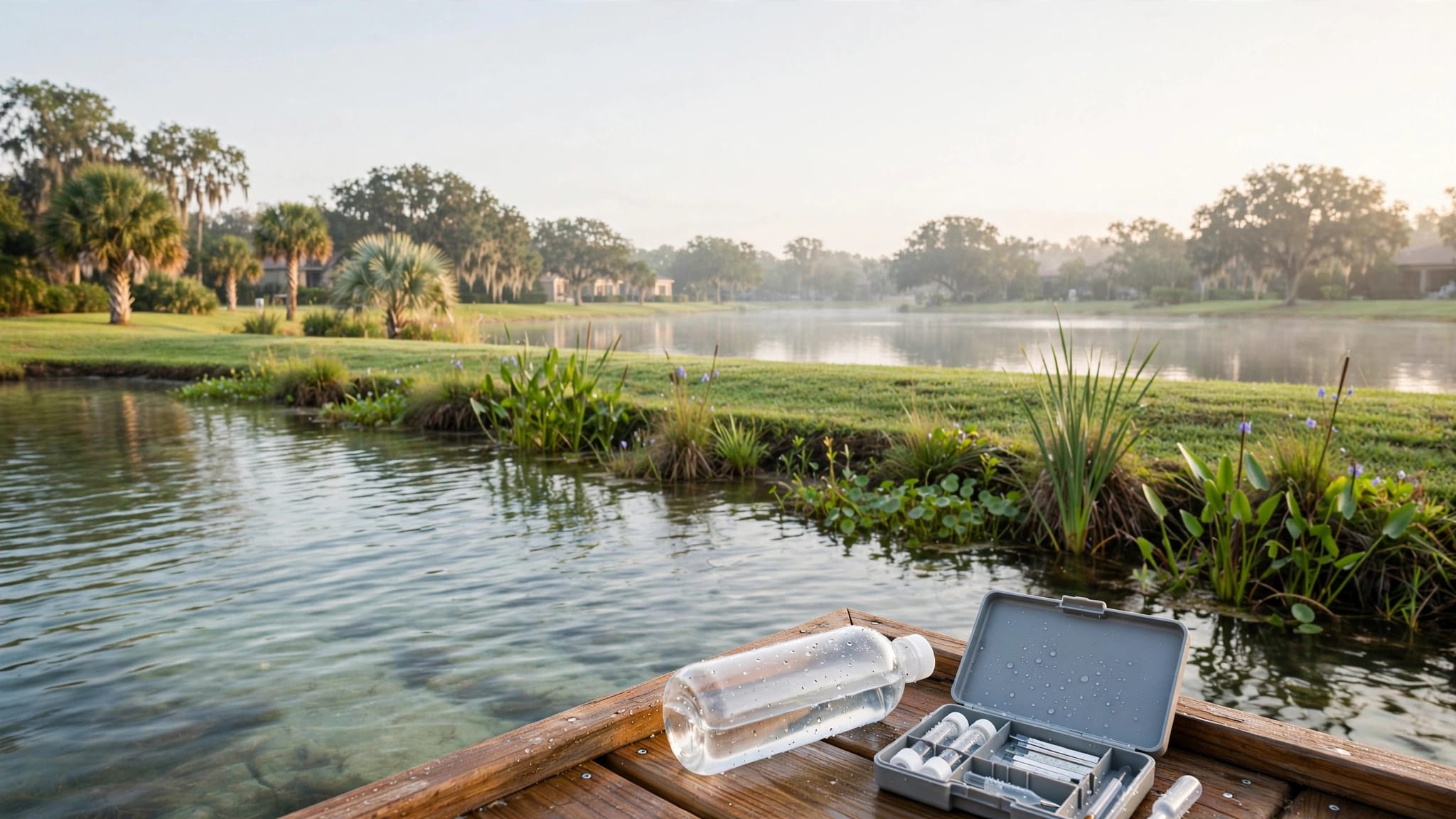
Calibrate the meter according to the manufacturer's instructions before collecting data. Record the calibration time, method, standards, and any errors shown by the instrument.
Check the probe for fouling, damaged membranes, trapped air, or debris. Allow the reading to stabilize at each depth before recording it. At the end of the profile, repeat the surface DO measurement. EPA National Lakes Assessment guidance uses a difference of 0.5 mg/L or less between the first and final surface readings as a useful quality check.
Choose the station and time carefully
Use the same station for repeat measurements. A deep-water location often gives the clearest picture of stratification, but an inlet, outfall, aerator, or recurring algae area may need its own station.
At a multi-lake property, sample representative lakes instead of testing only the pond beside the clubhouse. Record whether fountains, bottom diffusers, pumps, or irrigation systems were operating. Equipment can change the profile within a short distance.
Collect a routine profile as early in the morning as practical. This timing is more likely to capture overnight oxygen loss. If the goal is a formal daily average or a full day-night pattern, use continuous logging or hourly measurements for 24 hours. A handheld profile provides a snapshot, not a complete daily average.
Sampling depths for shallow and deep Florida lakes
The correct depths depend on the basin's maximum depth and whether the water column has distinct layers. Measure depth with the sonde or a separate marked line, then keep the same depth sequence during future visits.
Shallow retention ponds
For water bodies 3 meters deep or less, EPA lake field forms use measurements at the surface, every 0.5 meter, and 1 meter above the bottom. In a shallow HOA pond, that may produce readings at the surface, 0.5 m, 1 m, 1.5 m, 2 m, and a near-bottom point, depending on the actual depth.
Do not lower the probe into bottom sediment. Sediment contact can disturb the reading and contaminate the sensor. Hold the probe steady, allow it to stabilize, and record the exact depth with each DO and temperature result.
If the pond is less than 2 meters deep, measure the available water column at practical intervals. The purpose is to identify whether oxygen stays uniform or falls near the bottom.
Deeper community lakes
Deeper lakes need a wider profile. EPA's standardized sequence uses the surface, 1.5 m, 2 m, 3 m, and additional points at increasing intervals through the water column. Measurements continue to 15 m, then use 5 m intervals in deeper water, with a final reading 1 m above the bottom.
Add closer readings when temperature changes quickly with depth. The transition zone is called the thermocline, or metalimnion. Oxygen can fall rapidly through this layer, so measurements at least every 1 meter provide a clearer picture.
For most Florida HOA lakes, the upper 2 meters deserve close attention even when the lake is deeper. Continue deeper whenever the goal is to find bottom-water depletion, evaluate aeration, or track stratification.
How to interpret Florida dissolved oxygen profiles
Numbers become useful when the sampling method stays consistent and the results include temperature, depth, weather, and lake conditions. A trend across several visits usually says more than one unusual reading.
Understand Florida's upper-two-meter rule
Florida's surface-water assessment framework, including Rule 62-302.533, F.A.C., calculates a lake's daily average DO using measurements collected in the upper 2 meters at the same location on the same day.
That rule matters when data may support regulatory assessment. If a project needs a formal daily average, Florida materials describe 24 hours of measurements at intervals no longer than one hour. A single early-morning profile cannot establish that average by itself.
For HOA maintenance, the rule also provides a useful focus. Track the upper 2 meters carefully, then extend the profile downward when the lake is deep, layered, or showing signs of bottom-water stress.
Read the shape, not only the lowest number
A profile with steady oxygen at every depth suggests good mixing at the time of sampling. A sharp drop below the surface points toward stratification, high sediment oxygen demand, decaying vegetation, or weak circulation.
A low reading throughout the water column can indicate broad oxygen depletion. A high afternoon surface reading may reflect active photosynthesis rather than stable conditions. Compare the result with the morning weather, water temperature, algae coverage, recent rain, and aerator operation.
As practical screening markers, readings below 3 mg/L deserve attention, while values below 1 mg/L indicate severe oxygen stress. Those figures don't replace Florida's rule-based evaluation. They help a maintenance team decide when to investigate quickly.
Build a repeatable monitoring program for the HOA
A one-time profile can answer an immediate question. Repeat measurements show whether the lake is improving, declining, or changing with weather and maintenance.
Establish a baseline and repeat under stress
Collect baseline profiles at consistent stations and similar morning times. Repeat testing during hot, calm weather, after visible algae growth, when odors appear, or when fish show stress. Test before and after significant aeration changes when the board needs to judge circulation performance.
Properties with several lakes should organize results by lake name, station, and maximum depth. A golf course may need separate stations near irrigation returns, drainage inlets, or areas with heavy plant growth.
Pair DO results with routine observations. A Florida HOA lake inspection checklist can help crews track water color, surface scum, debris, erosion, water levels, and aeration equipment during regular visits.
Record conditions that explain changes
Every field sheet should include the date, time, weather, lake name, station, water depth, and equipment used. At each depth, record DO in mg/L, percent saturation, temperature, and depth.
Also note recent rain, wind, algae, aquatic weeds, odors, fish activity, water clarity, and whether an aerator or fountain was running. These details often explain why two readings differ.
Store the results in a shared file that board members, community managers, and contractors can review. When you read HOA lake water test results, compare changes over time instead of reacting to a single value without context.
Turn low-oxygen data into a maintenance decision
A low DO profile is a warning that calls for investigation. It doesn't identify one universal solution, because the cause may involve water movement, organic matter, algae, nutrients, depth, or weather.
Look for the source of oxygen demand
Repeated bottom depletion calls for an inspection of accumulated debris, decaying vegetation, sediment conditions, and circulation. High nutrient inputs from fertilizer, runoff, grass clippings, or stormwater can support algae growth. When that algae dies, decomposition consumes oxygen.
Avoid treating a large algae problem without considering oxygen conditions. Rapid plant decay can increase oxygen demand and worsen an already stressed lake. Aquatic herbicide and algaecide applications should follow the product label and be handled by a properly licensed applicator.
If the upper water column repeatedly shows low morning DO, the community may need a broader water-quality plan. That plan can include nutrient control, debris removal, plant management, circulation adjustments, and targeted aeration.
Match aeration to the profile
A deep profile with low bottom oxygen may support a bottom-diffuser evaluation. A shallow lake with widespread surface stagnation may need a different circulation approach. Compare surface and bottom aeration systems with the lake's depth, shape, use, and visual requirements.
For Southwest Florida communities, Seabreeze Lake Maintenance provides lake inspections and water-quality services for HOAs, gated neighborhoods, golf courses, and other multi-lake properties. The company lists Commercial Applicator License #CM28291 and State-Licensed Specialty Contractor #SCC131152136. Boards can Get a Free Lake Health Assessment when repeated readings show oxygen stress or the cause remains unclear.
Conclusion
A useful oxygen profile begins with a calibrated sonde, a consistent station, early-morning timing, and readings collected at planned depths. Florida's upper-two-meter assessment framework gives HOA managers a clear area to track, while deeper measurements reveal stratification and bottom-water depletion.
The strongest maintenance decisions come from repeated profiles paired with temperature, weather, algae, debris, and aeration records. A lake that looks fine at noon may still need attention before sunrise, so measure when oxygen stress is most likely to appear.
Recent Posts