Low Dissolved Oxygen Warning Signs in Florida HOA Lakes
A lake can look calm at sunrise and still be in trouble. In Florida, low dissolved oxygen often shows up before most people notice a larger water-quality problem.
That matters in retention ponds and HOA lakes, where one stressed water body can affect curb appeal, fish life, and maintenance costs across an entire community. It matters even more in gated communities and multi-lake properties, because problems spread fast when water stays warm and still.
The early signs are easy to miss if you only look at the water from a distance. Once you know what to watch for, the lake starts giving you clues.
Why Florida HOA lakes lose oxygen so fast
Florida gives lakes a tough mix of heat, rain, and runoff. Warm water holds less oxygen than cool water, so summer conditions can push levels down fast.
That problem gets worse in shallow community lakes and retention ponds. These water bodies often collect grass clippings, leaves, fertilizer, and storm runoff. As that material breaks down, it uses oxygen. Heavy algae growth does the same thing, especially at night.
Still water makes things harder. A lake with weak circulation can develop layers, where the top looks fine and the bottom runs low on oxygen. Fish and bacteria feel that difference long before a shoreline camera does.
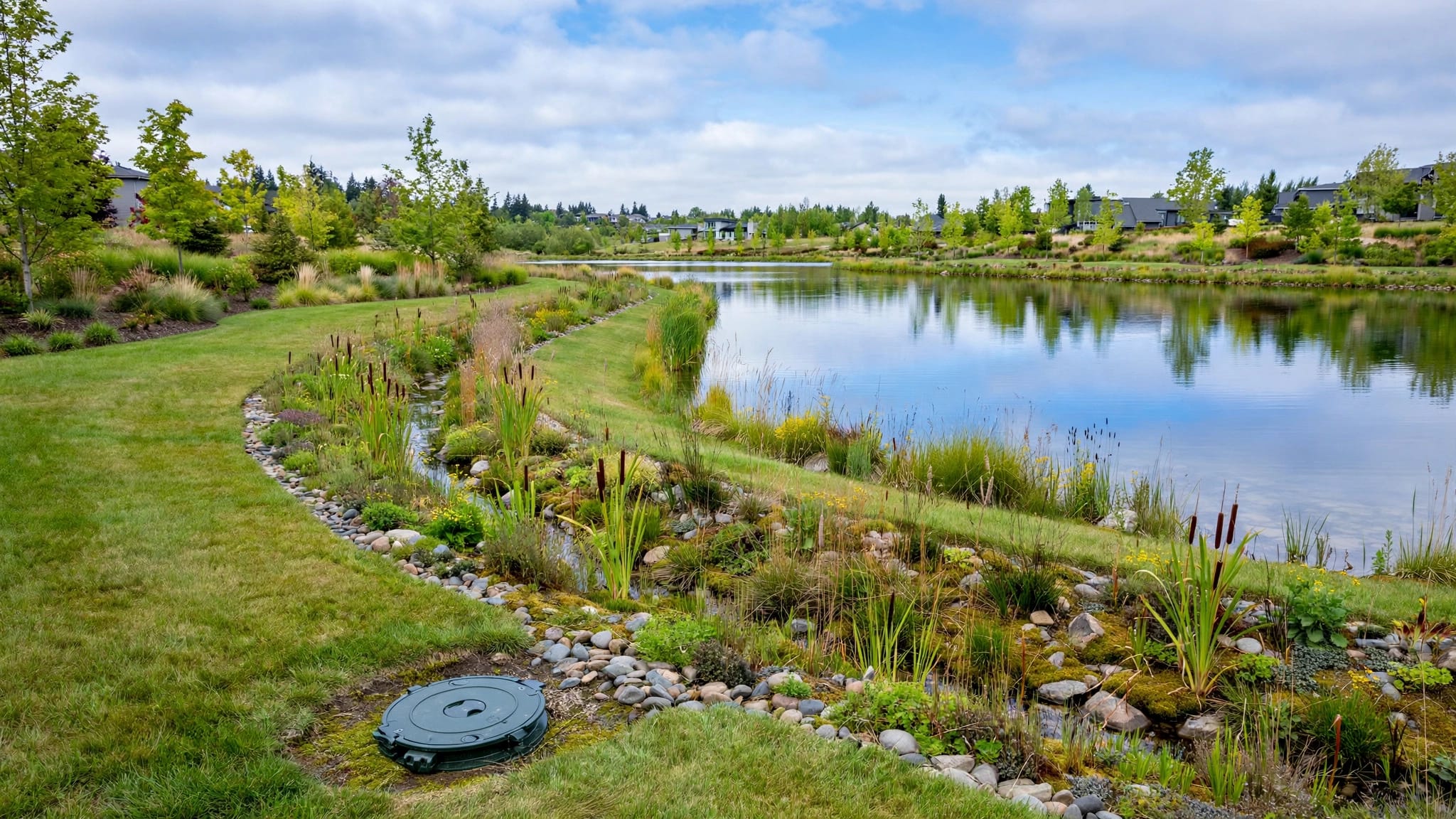
In HOA settings, the layout matters too. Decorative curves, dead-end coves, and narrow channels can trap stagnant water. The lake may look balanced from a patio view, yet parts of it are struggling out of sight.
That is why community lakes need regular checks, not just seasonal attention. A problem that starts as a slight drop in oxygen can turn into foul odor, fish stress, and cloudy water in a short time.
Warning signs you can spot from the shore
Low oxygen rarely hides well for long. It leaves a trail that shows up in fish behavior, smell, color, and water movement.
Look for these common warning signs:
- Fish gasping at the surface early in the morning, especially near fountains, inflows, or the shoreline.
- Fish hanging close to the top or crowding shallow edges where the water seems better mixed.
- Dead fish or weak fish near the bank, dock, or inlet.
- A rotten-egg or swamp smell that gets stronger on hot, still days.
- Murky, dull, or tea-colored water that seems to change fast after a storm.
- Thick algae mats or surface scum that build up in quiet corners.
- Still zones with little movement where the water seems flat and lifeless.
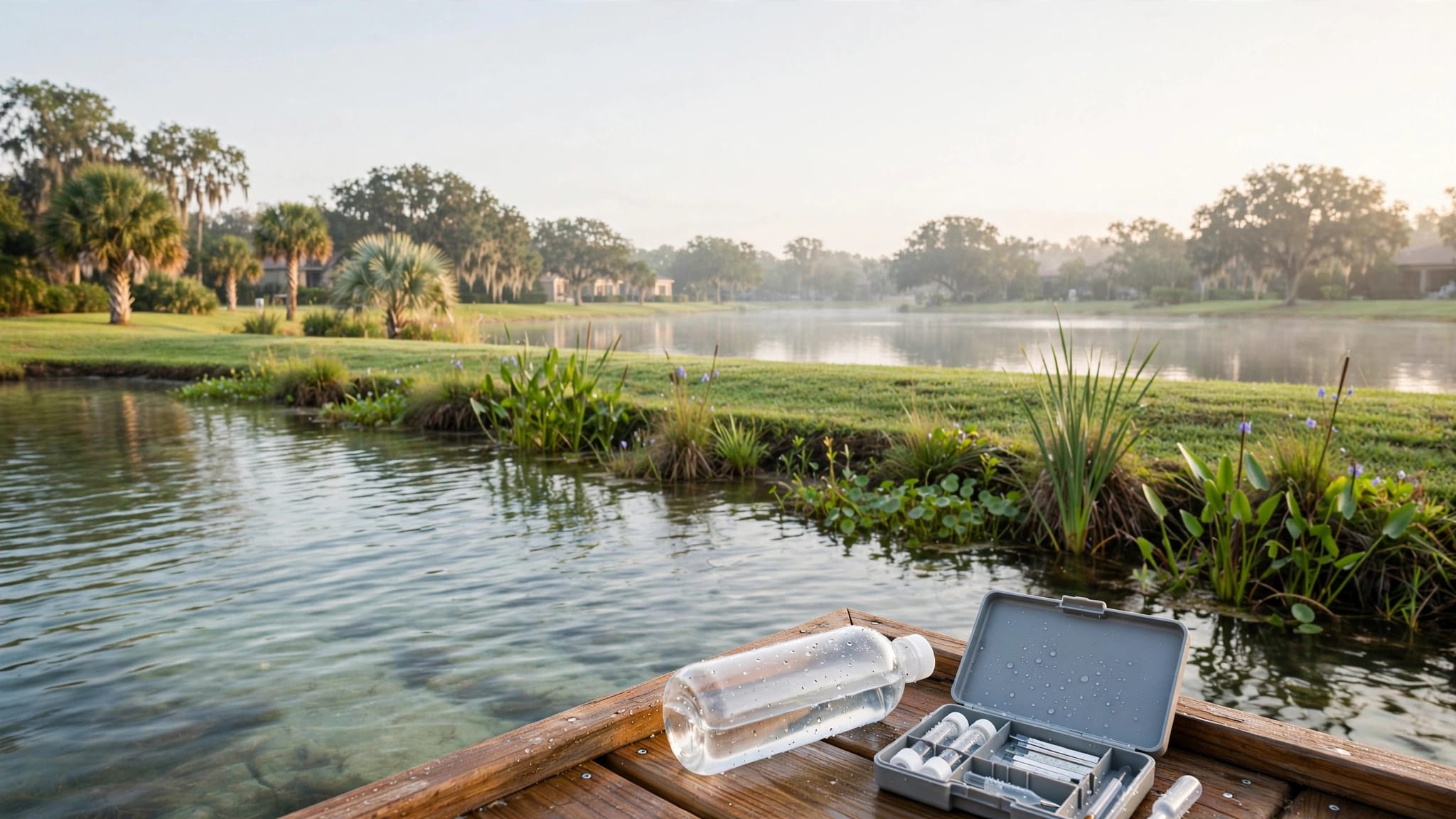
Morning matters most. Oxygen usually runs lowest before the sun has had time to warm the water and wake up plant activity. If fish seem fine at noon but struggle at dawn, the lake may have a real oxygen issue.
A lake can look better in the afternoon and still be in trouble at sunrise.
One more clue is behavior around fountains. Fish often gather there because surface agitation offers a little relief. That does not always mean the entire lake is low, but it often means the water column needs closer attention.
What low oxygen does below the surface
Low oxygen hits more than fish. It changes how the entire lake works.
Fish become stressed first. They stop feeding normally, move less, and gather where oxygen is slightly higher. Sensitive species feel it first, but even hardy fish suffer if the condition lasts.
Then the lake's cleanup crew slows down. Beneficial bacteria need oxygen to break down organic matter. When oxygen drops, muck builds up faster, leaves and grass decay more slowly, and the bottom gets softer and darker.
Algae can also take over. Once the water becomes stagnant and nutrient-rich, algae growth often increases. When that algae dies, it breaks down and consumes even more oxygen. The cycle feeds itself.
That is how a lake slips from "a little off" to a visible problem. Water clarity drops. Odor rises. Bottom muck thickens. The shoreline starts looking neglected even when the landscaping is fine.
For HOA managers, that matters because the lake is part of the property, not a separate feature. When the water looks stressed, residents notice. So do guests, buyers, and board members.
How aeration helps community lakes recover
Aeration gives the lake more movement and helps oxygen reach more of the water column. In Florida, that can make a big difference in lakes that sit still for long periods.
Surface fountains help with appearance and top-layer agitation. Diffused systems go deeper and help circulate water where oxygen problems often start. That matters in retention ponds and larger HOA lakes, where bottom water can stay weak for hours or days.
Lake and pond aeration systems are one of the most useful tools for that job because they support circulation and help the lake resist stagnation. When used with algae control, debris removal, and routine maintenance, aeration can help stabilize water quality over time.
A fountain can improve the view, but it does not always fix oxygen levels near the bottom.
The right setup depends on lake depth, size, shape, and use. A small pond near a clubhouse does not need the same approach as a connected lake system in a large gated neighborhood. That is why a quick visual fix is rarely enough.
Aeration works best when the whole lake is treated as a living system. Nutrient input, shoreline runoff, muck buildup, and plant growth all affect oxygen. If one piece gets ignored, the water can slide backward again.
When to bring in a lake maintenance specialist
If you see two or more warning signs at once, it is time for a site visit. Fish gasping at dawn, surface odor, and sudden algae growth usually mean the lake needs attention soon.
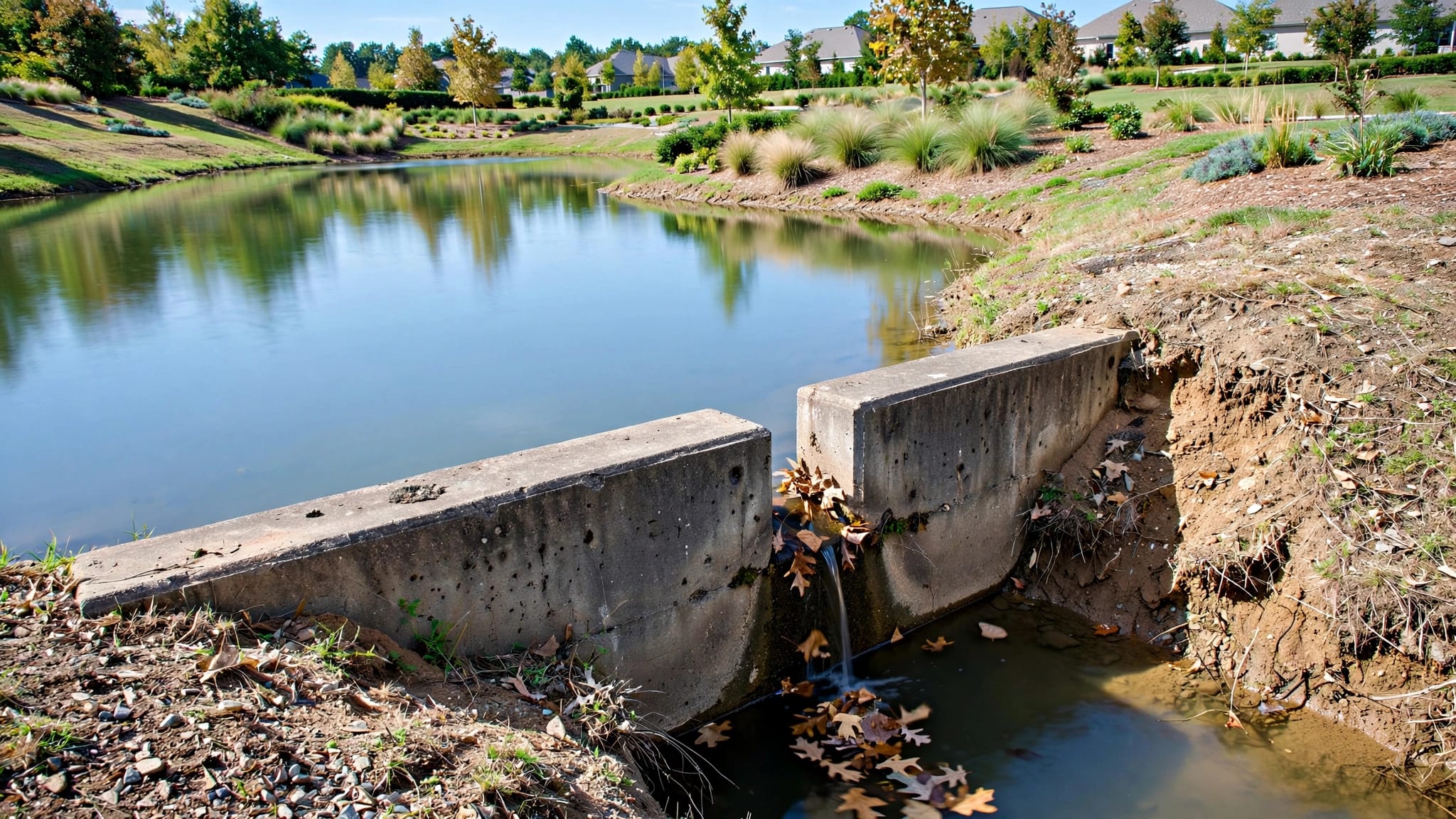
A good inspection should look at dissolved oxygen, circulation, nutrient load, shoreline runoff, plant growth, and any dead zones in the water. It should also account for how the lake functions inside the community, because a retention pond near a drainage path behaves differently than a decorative lake near a clubhouse.
Seabreeze Lake Maintenance works on retention ponds and lakes in gated communities, golf courses, and other multi-lake properties across Southwest Florida. The team holds Commercial Applicator License #CM28291 and State-Licensed Specialty Contractor #SCC131152136.
If your lake is showing early warning signs, Get a Free Quote for a call and lake inspection.
Conclusion
A calm shoreline can hide a stressed lake. In Florida HOA communities, low dissolved oxygen often shows up first as fish at the surface, foul odor, murky water, or algae that keeps coming back.
The earlier you catch those signs, the easier it is to protect the lake, the fish, and the look of the property. Regular checks, the right aeration, and steady maintenance keep small problems from turning into costly ones.
When a lake starts sending warning signals, it pays to listen early.
Recent Posts