Lake Chemical Spill Response Plans for HOA Lakes
A chemical spill can turn a community lake into a safety and environmental concern within minutes. A sound lake chemical spill response plan gives HOA boards, golf course managers, and property teams clear instructions before confusion slows the response.
Retention ponds and lakes often connect to storm drains, irrigation systems, control structures, and neighboring water bodies. That means one spill can affect more than the original pond. The right plan protects people first, limits contamination, supports accurate reporting, and guides safe lake recovery.
Key Takeaways
- Keep residents, guests, pets, and employees away from suspected contamination.
- Call 911 for immediate danger, then notify the appropriate property and environmental contacts.
- Never dilute, pump, treat, or move contaminated water without direction from qualified responders.
- Maintain site maps, chemical records, safety data sheets, and emergency contact information.
- Reopen the lake only after testing and clearance from the responsible environmental authorities.
Build the Emergency Plan Before a Spill
Emergency planning starts with knowing how water moves across the property. A map for a gated community or golf course should identify every lake, retention pond, inlet, outlet, culvert, pump station, irrigation intake, overflow structure, and stormwater connection. Mark areas where one lake could drain into another during heavy rain.
The plan should also list possible spill sources. These may include landscape chemical storage, fuel areas, maintenance buildings, pool chemical rooms, construction zones, fertilizer loading areas, and delivery routes. Golf courses need clear procedures for equipment yards and spray operations. HOAs should account for contractors who handle pesticides, cleaning products, fuel, or other materials.
Keep current safety data sheets, commonly called SDS documents, for every chemical stored or used on the property. The SDS can identify fire hazards, health risks, recommended protective equipment, and actions to avoid during a release. Store digital copies in a shared location, but keep a printed set where managers can access it during a power or internet outage.
Assign responsibilities in writing. The property manager or golf course superintendent may coordinate the site, while the board president, environmental consultant, spill contractor, and insurance representative handle separate notifications. Include phone numbers for local emergency services, the chemical supplier, the responsible contractor, and the lake maintenance company.
A useful plan also includes:
- A current property map and lake identification system
- A list of chemicals, storage locations, and estimated quantities
- Access instructions for emergency vehicles and sampling teams
- Locations of spill kits, drain covers, and protective equipment
- Instructions for resident, employee, and contractor notifications
- A written process for photos, measurements, reports, and invoices
Review the plan at least once a year and after major property changes. New drainage work, lake connections, chemical storage, or construction can change the response.
What to Do During the First Minutes
The first priority is human safety. If anyone is injured, exposed, threatened by fire, or affected by strong fumes, call 911. Keep people upwind and away from the spill area. Do not send employees or volunteers into a contaminated zone to identify the chemical.
Close access points to the lake when possible. Use gates, temporary barriers, and clear signs to stop swimming, fishing, boating, shoreline access, and pet activity. Tell residents to keep children and animals away, even if the water looks normal. Some contaminants have no obvious color or odor.
If the spill is still active, stop the source only when a trained person can do so without exposure. A worker should never handle a damaged container, leaking pipe, or unknown substance without the required protective equipment and instructions. A safe distance is more useful than a risky attempt at cleanup.
Notify the property's designated incident lead as soon as the area is secure. The incident lead should contact emergency responders, the appropriate environmental agency, the chemical supplier, the property insurer, and the lake management company. In Florida, suspected pollution can be reported to the Florida Department of Environmental Protection's State Watch Office at 1-800-320-0519. Immediate threats still require 911 first.
Record the basic facts while they are fresh:
- Identify the lake, spill location, date, and time.
- Describe the product if known, including the label name and SDS information.
- Estimate the quantity and explain whether the release is ongoing.
- Note recent rainfall, wind, water movement, and visible changes.
- Photograph the area from a safe location without touching equipment or water.
Do not guess about the chemical or announce an unconfirmed cause to residents. A wrong assumption can lead to unsafe cleanup or incorrect public instructions.
Treat unknown water as contaminated until qualified responders identify the substance and provide direction.
Property staff should not collect samples unless an environmental professional instructs them to do so. Improper sampling can expose workers and produce unreliable results.
Prevent the Spill From Reaching Other Lakes
Containment depends on the chemical, the release point, and the water flow. Some materials float, while others dissolve, sink, attach to sediment, or spread through the water column. A floating absorbent boom cannot control every type of contamination.
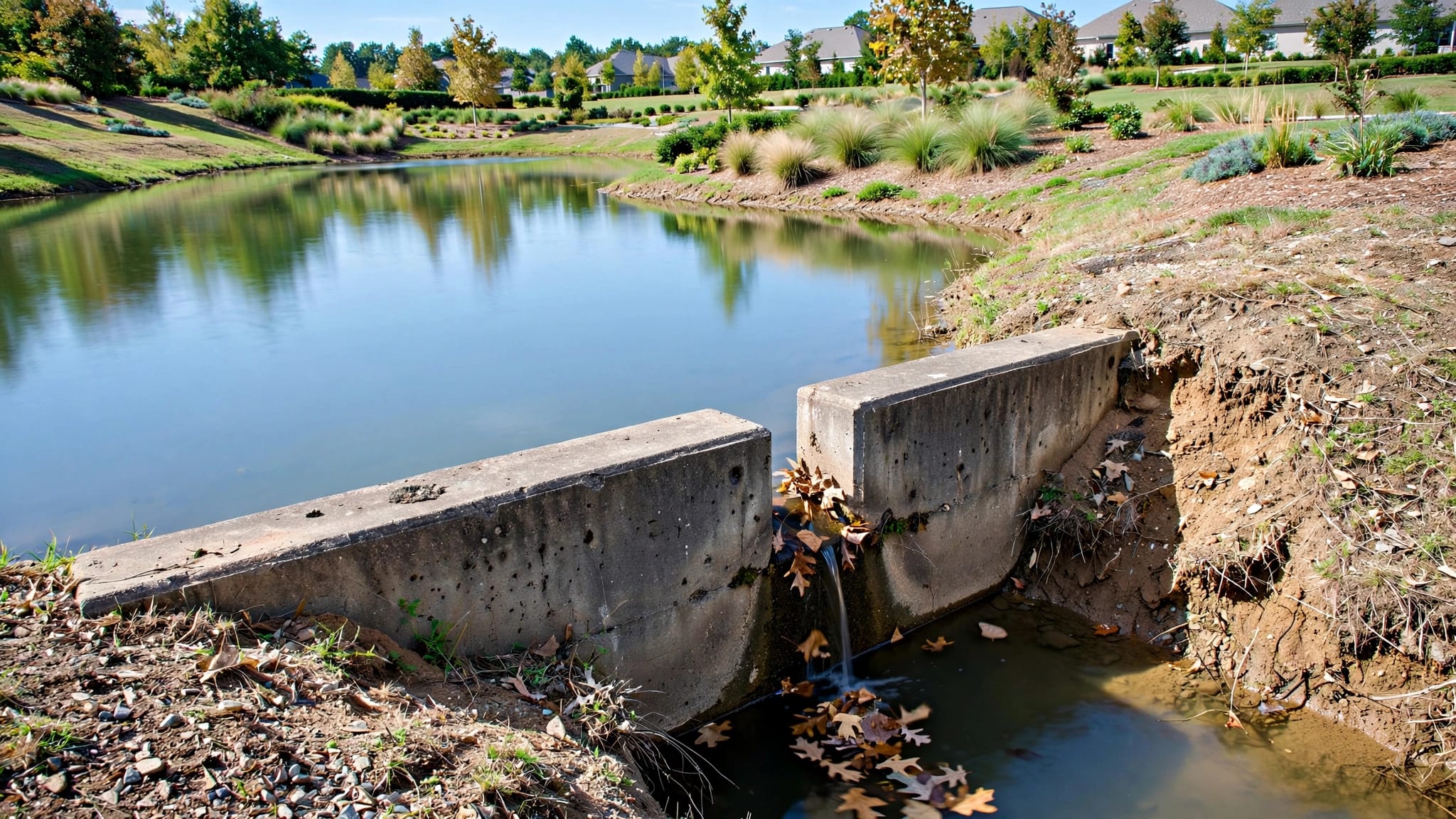
The property team should identify and report all possible pathways. These may include open outfalls, drainage swales, irrigation pump lines, interconnected lakes, and overflow structures. Responders may recommend temporary drain covers, shutoff valves, isolation of irrigation equipment, or other controls. Only trained personnel should install or operate them.
Do not flush the affected area with clean water. Do not pump the water into another lake, storm drain, wetland, or vacant area. Adding algaecide, herbicide, lime, absorbent material, or another product can worsen the release and create a second waste problem.
Aeration and circulation equipment require careful handling. Water movement can spread some contaminants, yet stopping aeration can reduce dissolved oxygen in a stressed lake. Staff should document the operating status and change pumps, fountains, or aerators only when emergency responders or an environmental professional directs them to do so.
Rain creates another concern. A storm can move spilled material through the property and carry it over an outfall. The incident lead should monitor weather forecasts and inform responders about expected rainfall. Keep people away from low areas, pond edges, and flowing discharge points during the response.
Lake maintenance professionals can help with site knowledge, water-flow observations, shoreline access, and follow-up inspections. However, routine aquatic treatment is not a substitute for hazardous-material response or environmental remediation. The spill plan should state who has authority to approve each action.
Test, Clean, and Reopen the Lake Carefully
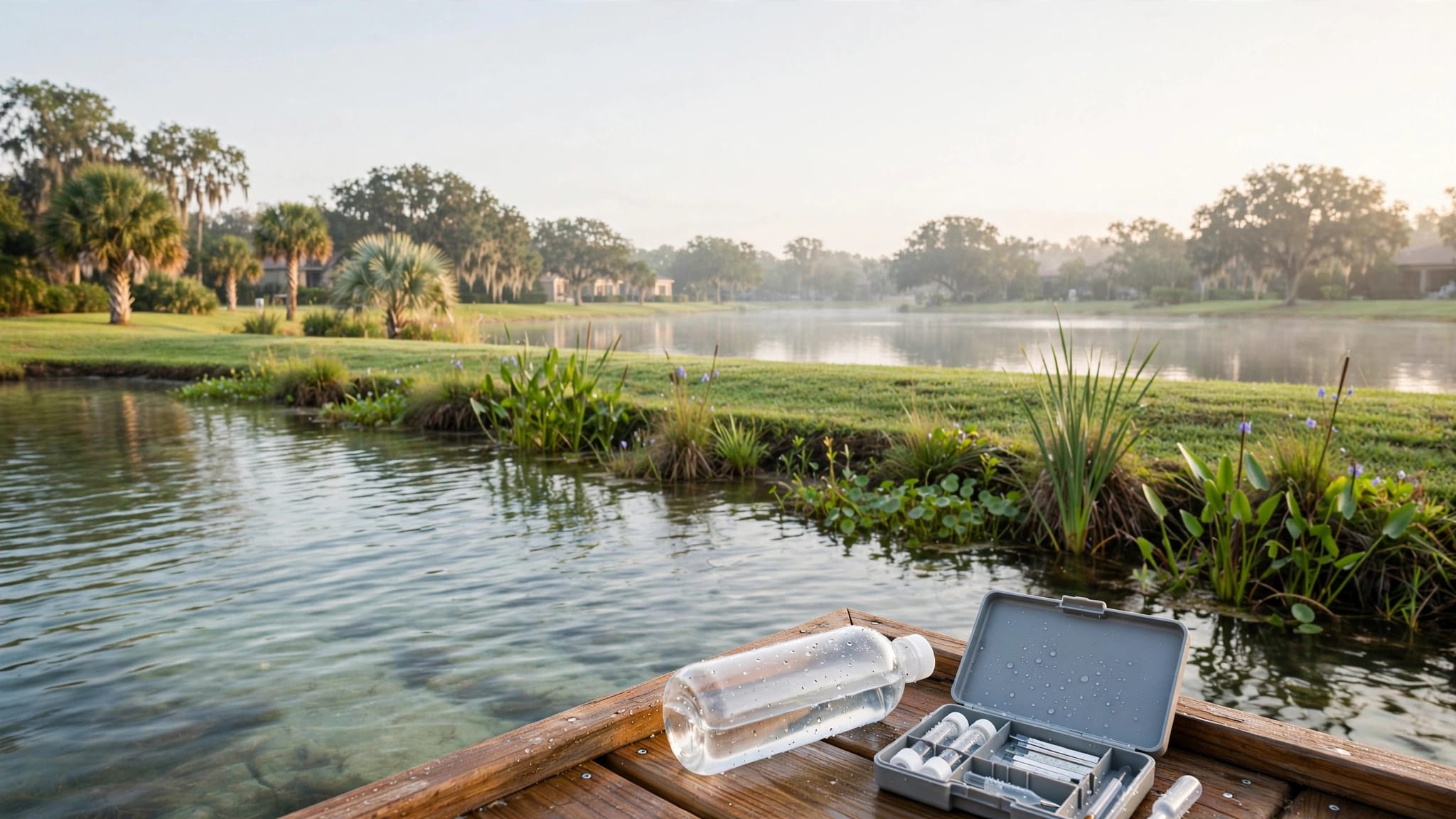
Testing should match the chemical and the suspected route of travel. A qualified environmental consultant or laboratory can recommend the right sampling locations and analytical methods. Samples may need to come from the release point, several depths, connected lakes, outfalls, nearby sediment, and an unaffected background location.
The sampling team should document collection times, locations, sample containers, handling, and laboratory transfer. This chain of custody helps preserve the reliability of the results. Testing only the visible surface may miss contamination below the surface or near the sediment.
Cleanup depends on the material. A fuel release may require recovery of floating product and impacted soil. A dissolved chemical may require a different approach. Contaminated sediment, shoreline soil, vegetation, or stormwater structures may need removal or treatment under an approved work plan.
Keep residents away during cleanup. Restrict irrigation if the system could draw contaminated water. Protect workers from exposure, and keep pets and wildlife out of the area. Wildlife concerns should go to responders or the appropriate wildlife agency instead of untrained volunteers attempting rescue or relocation.
The lake should remain closed until the responsible environmental authority and qualified professionals determine that access is safe. A clear-looking pond is not proof that contamination is gone. Reopening decisions may depend on laboratory results, cleanup records, agency instructions, and the intended use of the water.
After clearance, the property may need a recovery inspection. The team can check shoreline damage, dead vegetation, clogged structures, erosion, odors, water clarity, dissolved oxygen, and equipment condition. Aeration, irrigation, or fountain systems should return to service according to the approved recovery plan.
Routine monitoring should continue after the immediate incident. A follow-up schedule can catch delayed shoreline damage, fish stress, algae growth, or water-quality changes before they become larger maintenance issues.
Keep Residents Informed and Strengthen the Plan
Residents need clear instructions, not technical speculation. A first notice should identify the affected area, state that access is restricted, and tell people to keep children and pets away. Provide a contact for questions and explain when the next update will arrive.
Golf course managers should coordinate with the superintendent, irrigation staff, clubhouse personnel, and outside contractors. Employees need to know which paths, ponds, pump stations, and work areas are closed. The course may also need to pause irrigation, mowing, spraying, or maintenance near the affected water.
The board or property manager should keep one incident file. Include notifications, SDS documents, photographs, weather information, sampling reports, invoices, agency directions, cleanup records, and resident communications. Afterward, hold a short review and update the plan based on what caused delays or confusion.
Vendor agreements deserve the same attention. Ask how a lake maintenance company handles urgent site access, water-quality observations, stormwater connections, emergency communication, and work performed after a spill. Boards can use these tips for comparing lake service proposals when reviewing service contracts and emergency responsibilities.
Seabreeze Lake Maintenance holds Commercial Applicator License #CM28291 and State-Licensed Specialty Contractor #SCC131152136. Those credentials support responsible aquatic management and specialty lake work, while a chemical spill may also require emergency responders, environmental consultants, laboratories, and remediation contractors.
For a property in Southwest Florida, a planned inspection can identify drainage connections, shoreline concerns, and maintenance issues before an incident occurs. Communities and golf courses can Get a Free Lake Health Assessment to discuss lake conditions and response planning with Seabreeze Lake Maintenance.
Conclusion
A chemical spill near a retention pond demands fast safety decisions and careful environmental control. Keep people away, report the incident, preserve accurate information, and let qualified responders direct containment, testing, and cleanup.
A strong plan also protects the property after the emergency. Clear maps, current SDS records, defined responsibilities, and ongoing water-quality inspections help a community or golf course respond with less confusion and reduce the chance that one spill reaches several lakes. Safety and verified testing should determine when the water is ready for normal use again.
Recent Posts