Wind-Driven Algae Accumulation Along Community Lakes
A lake can look clear in the morning and have a thick green band along one shoreline by afternoon. The algae didn't necessarily grow that fast. Wind-driven algae accumulation often moves floating algae, foam, and organic debris into a narrow section of the lake.
This pattern matters for HOA communities, golf courses, and multi-lake properties. A concentrated algae line affects curb appeal, odors, wildlife, and resident concerns, even when the rest of the water looks normal. Wind helps explain where the problem appears, but water quality determines how much algae is available to collect.
How wind pushes algae toward a shoreline
Wind transfers energy to the lake surface. As surface water moves in the direction of the wind, floating material travels with it. Algae near the surface can collect along the downwind, or leeward, shoreline as the moving water reaches the bank.
Water doesn't simply stop at the shore. Some of it moves along the bank, while other water returns beneath the surface. This movement creates areas where floating material gathers, especially when the shoreline blocks further travel.
The effect becomes easy to see with filamentous algae. These algae form loose strands or mats that float, break apart, and drift across the water. Planktonic algae and some cyanobacteria can also concentrate near the surface under the right conditions. Wind may gather them into a visible slick even though algae exist throughout the lake at lower levels.
A long stretch of open water gives wind more distance to act. This distance is called fetch. A pond with a broad, unobstructed surface can develop stronger surface movement than a smaller pond surrounded by trees and buildings. However, trees and structures can also create irregular wind pockets that push algae into a specific cove.
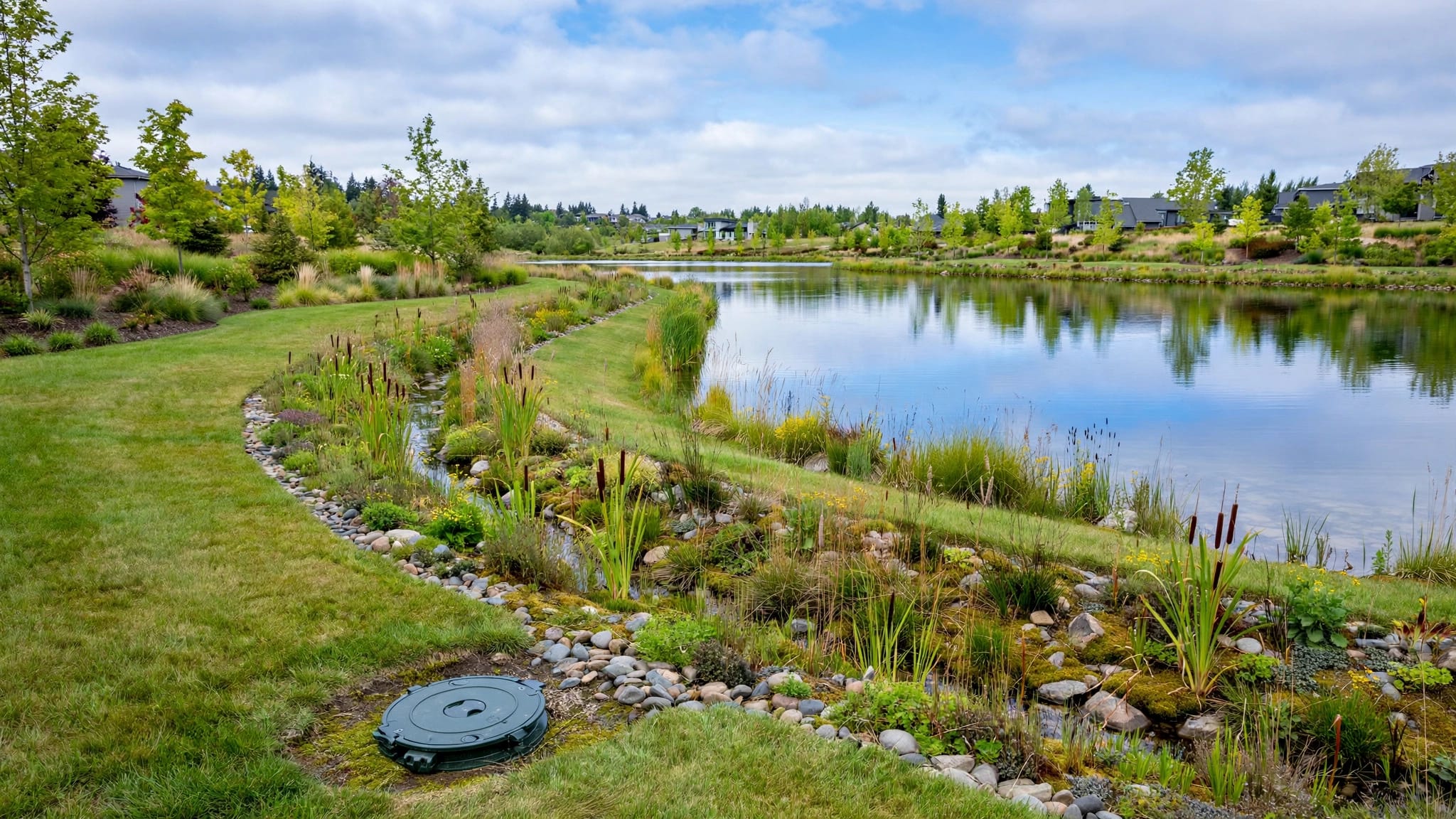
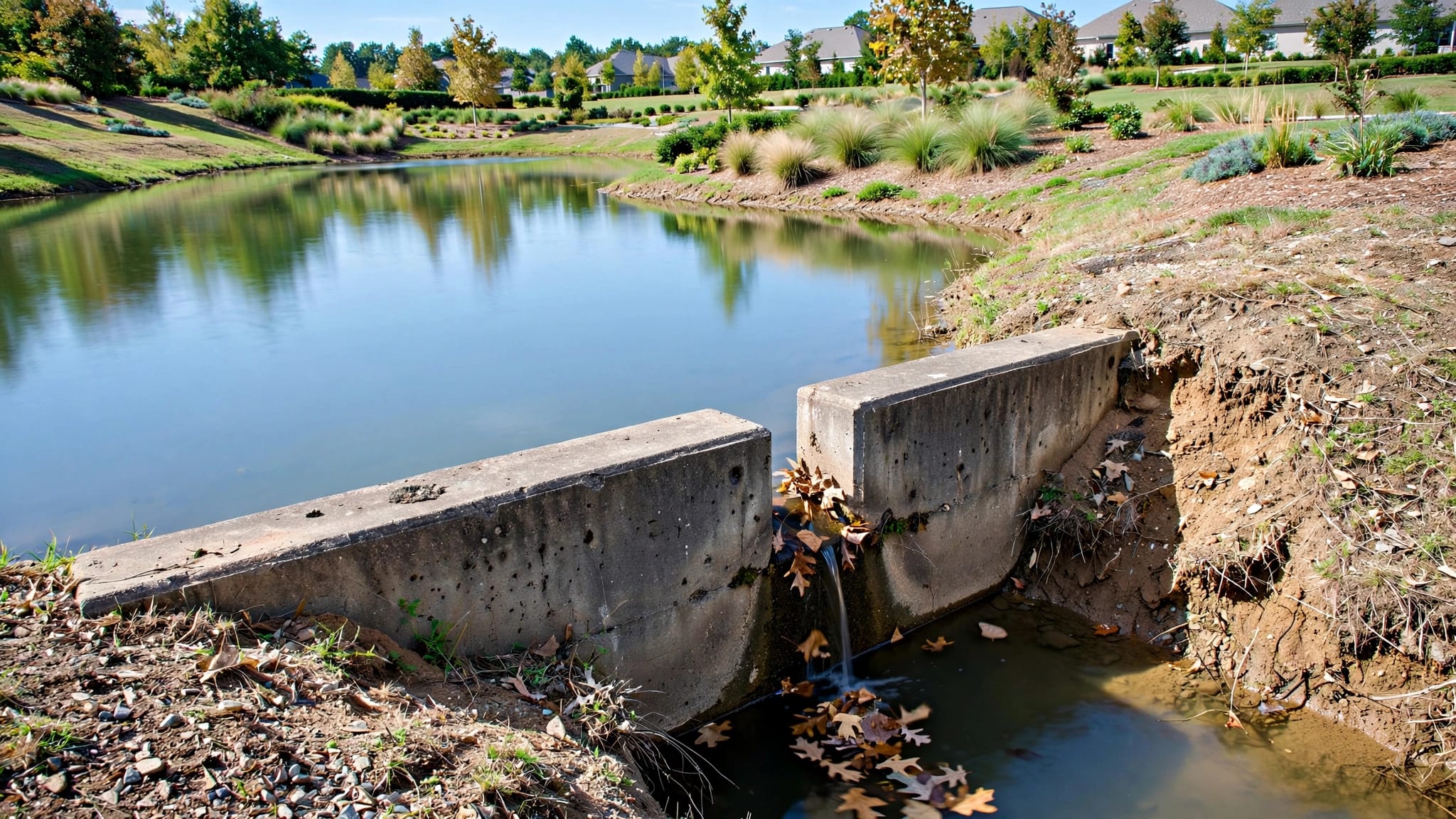
Shoreline shape changes the result. Curved banks, narrow points, outfalls, culverts, docks, and dense littoral plantings can trap floating material. A cove may collect algae because water circulation slows there. Another shoreline may stay clear because wind and surface currents carry material past it.
Wind usually concentrates algae that already exists. It doesn't create a bloom by itself.
Afternoon wind shifts can also move the accumulation. In Southwest Florida, changing daily wind patterns may push an algae mat toward one bank and then spread it along another. A single photograph can show where algae ended up, but it can't always identify where the bloom started.
Why some community lake shorelines collect more algae
The most visible accumulation often appears on the downwind shore, but several site conditions determine how thick the material becomes. Two lakes in the same community can respond differently to the same weather because their depths, shapes, and water inputs differ.
Shallow areas warm faster and often have slower circulation. Warm, nutrient-rich water supports algae growth, while wind moves the surface material into nearby edges. If the bottom is soft, sustained wind can also disturb shallow sediment and release nutrients into the water column.
Stormwater runoff is another major factor. Retention ponds receive water from roads, roofs, lawns, parking areas, and landscaped spaces. That runoff can carry fertilizer nutrients, soil particles, grass clippings, and other organic material into the pond. Nitrogen and phosphorus can support algae growth when enough sunlight and warmth are present.
A shoreline near a stormwater inlet may receive a fresh nutrient load after heavy rain. Wind can then carry the resulting surface material toward a different bank. This is why the worst-looking shoreline isn't always the source of the problem.
Several physical features can intensify accumulation:
- Coves and corners slow water movement and hold floating mats.
- Low spots and shallow shelves warm quickly and support surface growth.
- Docks and seawalls interrupt drifting material and create collection points.
- Dense vegetation catches algae, leaves, and other debris.
- Poor circulation allows nutrients and decaying organic matter to remain in place.
Filamentous algae often look like wet grass, cotton, or tangled green rope. Planktonic algae may make the water appear pea-green or cloudy instead. Cyanobacteria can form surface scums that vary in color and texture. Because appearance alone can't identify every type, lake managers should avoid treating an unknown bloom without an inspection.
Attached algae require a different response from floating algae. Algae growing on rocks, seawalls, or submerged surfaces won't move across the lake in the same way. Wind may push loose pieces around, but the growth source remains attached to the shoreline or bottom.
What wind-driven algae accumulation tells lake managers
A recurring algae line is useful information. It shows where surface currents carry material and which shoreline conditions allow it to remain. HOA boards and property managers can use that pattern to improve inspections rather than treating every lake edge the same way.
Start by recording the location, date, recent rainfall, wind direction, and water appearance. Photos taken from the same viewpoints help show whether the accumulation is expanding, moving, or breaking apart. Staff should also note odors, dead fish, unusual foam, and changes in water color.
Inspect the entire lake, not only the visible shoreline. Look at stormwater inlets, outlet structures, shallow shelves, drainage swales, and areas with submerged vegetation. A downwind shoreline may be the collection point while an inlet, fertilized slope, or disturbed sediment area supplies the nutrients.
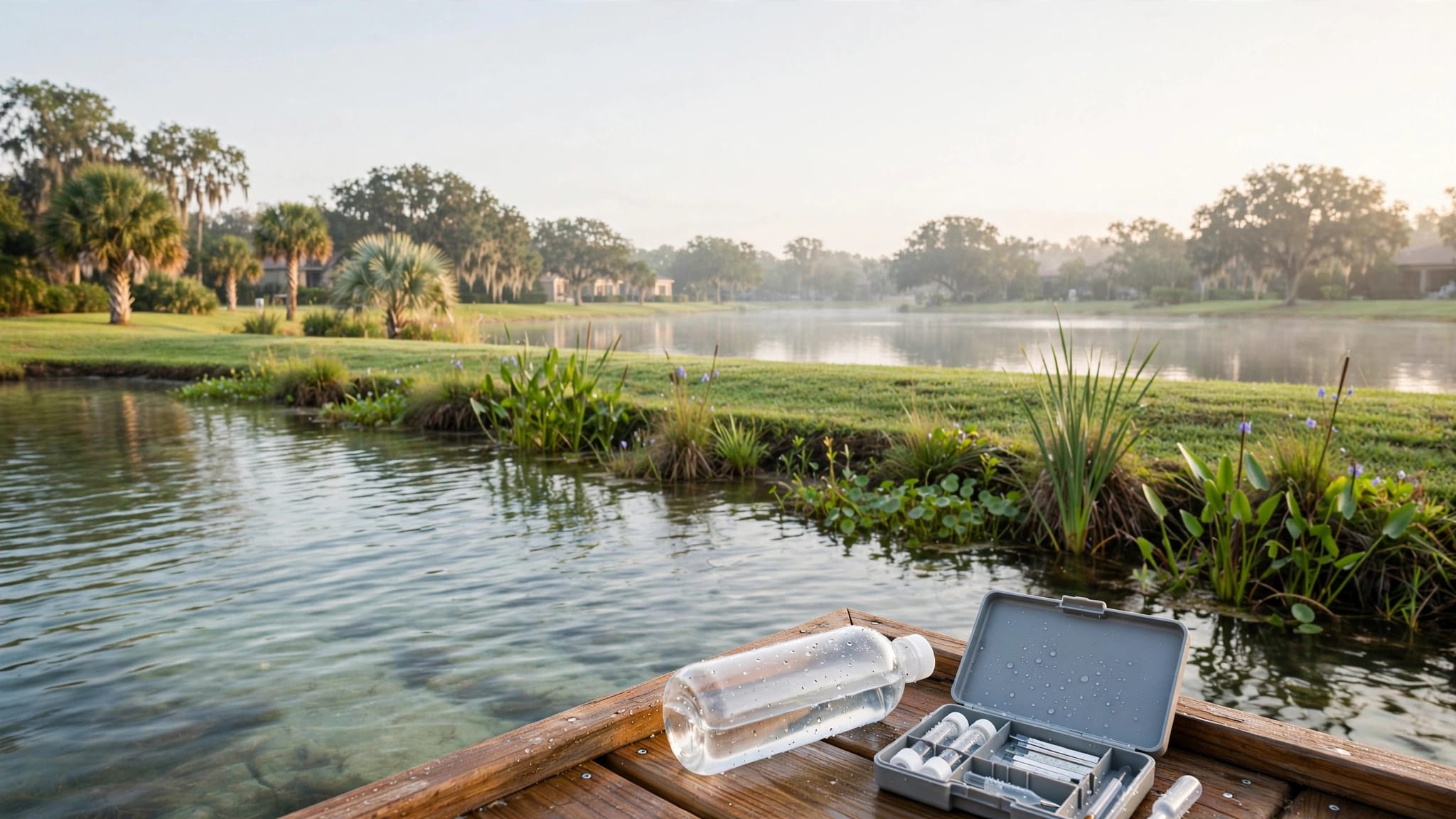
Water testing can add useful information. Depending on the site, testing may include nutrients, pH, dissolved oxygen, temperature, turbidity, and chlorophyll. Testing can't replace a field inspection, but it can help identify whether repeated algae events relate to nutrient loading, poor circulation, or seasonal conditions.
Treatment decisions should match the algae type and lake conditions. A surface mat may need mechanical removal, targeted treatment, or both. A widespread planktonic bloom requires a different plan. Treating the visible shoreline without addressing circulation or nutrient sources often produces a short-lived result.
Heavy algae treatment also requires care. As algae die and decompose, bacteria consume oxygen. A large treatment in warm, still water can increase stress on fish and other aquatic life. Professionals should follow product labels, account for water uses, and apply products only when conditions support a safe response.
For community managers, the goal isn't to chase every windblown patch. The goal is to understand whether the accumulation is an isolated collection event or evidence of a larger water-quality problem.
A practical response for HOAs and golf courses
When residents report a green shoreline, property staff should first keep people and pets away from suspicious surface scums. Children, dogs, and wildlife may come into contact with water before anyone identifies the material. Staff should avoid stirring the bloom with rakes, boats, or pumps until a qualified person evaluates it.
Next, document the conditions. Record which shore is affected and whether the wind has pushed material into the bank. Take photographs of the surface, shoreline, nearby inlets, and any dead fish or distressed wildlife. Note recent rain, irrigation runoff, fertilizer work, and mowing near the water.
A lake professional can then assess:
- Whether the material is algae, duckweed, aquatic weeds, pollen, or organic debris.
- Whether the accumulation is floating, attached, or growing through the water column.
- Whether nutrients or sediment enter through stormwater structures.
- Whether aeration or circulation equipment operates correctly.
- Which treatment method fits the lake's size, depth, use, and environmental conditions.
Communities with several lakes should compare patterns across the property. If the same downwind edges collect algae in multiple ponds, wind exposure may be the main factor. If only one pond develops repeated blooms, that lake may have a separate nutrient, drainage, or circulation issue.
Ongoing maintenance helps managers catch changes before algae becomes a resident complaint. Weekly or biweekly inspections can identify thin surface growth, clogged inlets, failing aeration, shoreline erosion, and new debris. Early treatment generally requires less intervention than a thick, decomposing mat.
A licensed provider also helps the community maintain proper records and follow Florida requirements. Seabreeze Lake Maintenance holds Commercial Applicator License #CM28291 and State-Licensed Specialty Contractor #SCC131152136. Communities can Get a Free Lake Health Assessment to schedule a lake inspection and discuss recurring algae conditions.
Reducing repeated algae buildup along the bank
Wind cannot be controlled, but managers can reduce the amount of algae available for wind to collect. Nutrient control is usually a long-term priority. Communities should review fertilizer practices, irrigation overspray, landscape clippings, exposed soil, and drainage paths near the lake.
Healthy shoreline vegetation can slow erosion and capture some runoff before it reaches open water. However, overgrown or poorly selected plants can also trap floating mats and restrict access for inspections. Shoreline planting should support bank stability without blocking necessary maintenance.
Aeration and circulation may improve water movement in areas that remain stagnant. Equipment needs the right placement and operation schedule for the pond's depth and shape. Aeration isn't a substitute for algae identification or nutrient control, but it can support healthier circulation when designed for the site.
Debris removal also matters. Leaves, grass clippings, and decaying organic material add nutrients as they break down. Removing accumulated debris near inlets and collection zones reduces the material available for decomposition and helps staff see developing problems.
Treatment plans should include more than a single cleanup. A reliable maintenance schedule tracks wind-related patterns, inspects inflows, checks equipment, and adjusts care as lake conditions change. That approach protects appearance while addressing the reasons algae keeps returning.
Conclusion
Wind-driven algae accumulation can make a lake problem look worse in one location than it is across the entire water body. Surface currents push floating algae toward downwind shorelines, while coves, docks, shallow shelves, and vegetation hold it in place.
The visible mat is only part of the story. Nutrients, warm water, runoff, sediment, and poor circulation determine how much algae the wind has to move. When communities document wind patterns and inspect the whole lake, they can choose treatments that address both the shoreline buildup and its source.
A clean-looking bank is easier to maintain when lake inspections, water-quality management, and responsible algae control work together.
Recent Posts