How to Evaluate HOA Lake Fish Stocking Requests
A resident's request for HOA lake fish stocking can sound simple, especially when a community wants better fishing or fewer aquatic weeds. However, adding fish to a shared retention pond affects water quality, wildlife, stormwater performance, maintenance costs, and resident expectations.
Before approving any stocking plan, the board should know why the fish are needed, which species are legal, how many the lake can support, and who will monitor the results. A practical evaluation starts with the lake itself.
Why the reason for stocking matters
Fish stocking is a management decision, not a landscaping purchase. The right species and quantity depend on the lake's size, existing fish population, water quality, vegetation, and long-term purpose.
Start with the stated purpose
Ask the requester to define the desired result in writing. Common goals include:
- Creating a recreational bass and bluegill fishery
- Providing catfish fishing for residents
- Controlling a documented aquatic plant problem
- Replacing fish after a documented fish kill
- Improving the appearance of a lake
Each goal requires a different response. A bass and bluegill program needs a balanced predator-prey system. A catfish plan follows different stocking assumptions. Vegetation control may require permitted triploid grass carp, but grass carp aren't a general solution for every weed problem.
Fish also won't correct low dissolved oxygen, nutrient pollution, poor drainage, erosion, or thick algae growth. If the lake has one of those problems, stocking may add expense without solving the cause.
Protect the pond's stormwater role
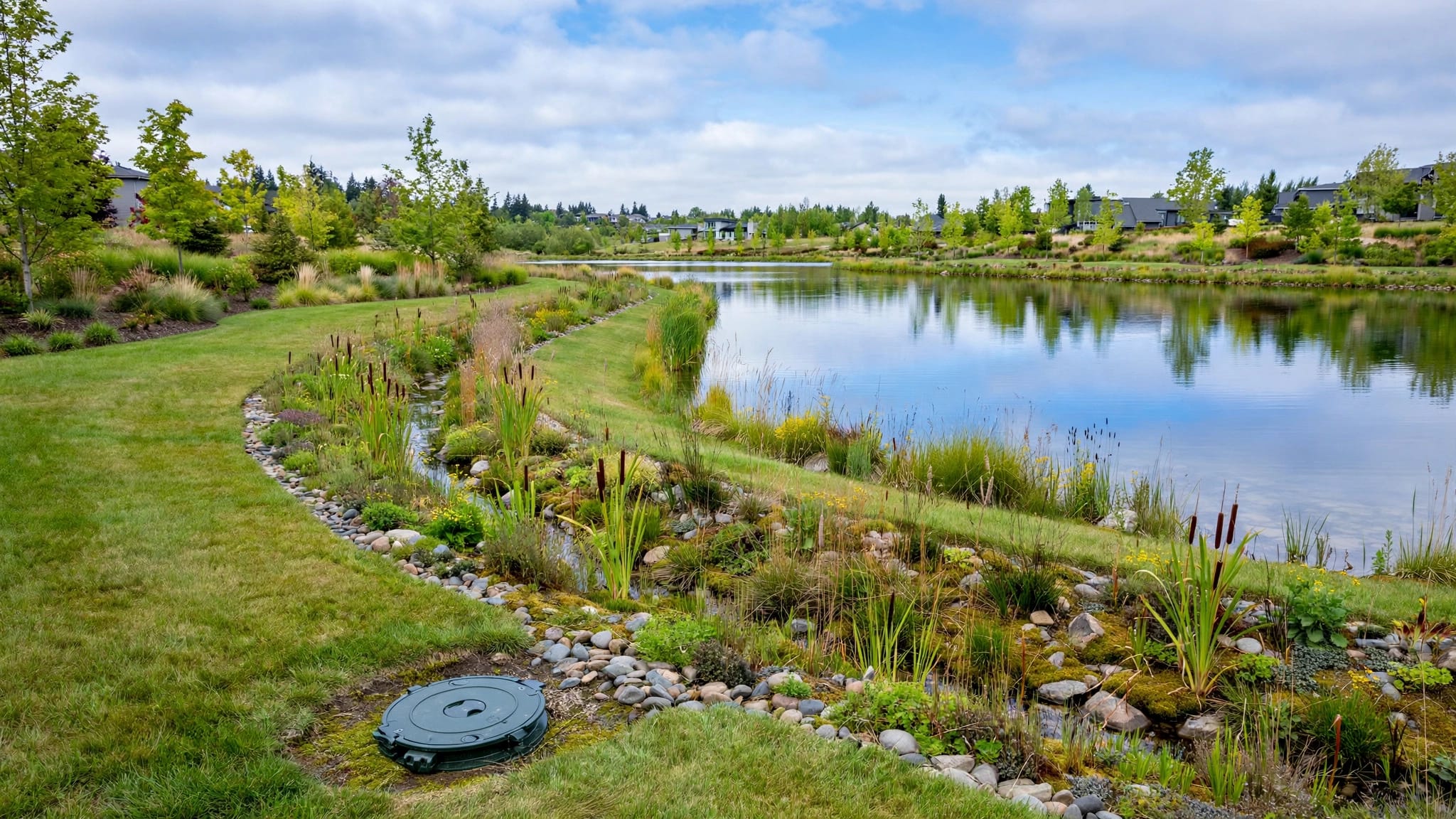
Many community waterbodies are retention ponds, not recreational lakes built only for fishing. Their primary function is to hold stormwater and manage runoff. A board should confirm the waterbody's design and function before approving changes.
A retention pond usually holds a permanent pool, while a detention pond may temporarily hold water before releasing it. The distinction affects maintenance, water levels, drainage structures, and the type of fish program the site can support. Review this retention pond and detention pond guide before treating every pond on a multi-lake property the same way.
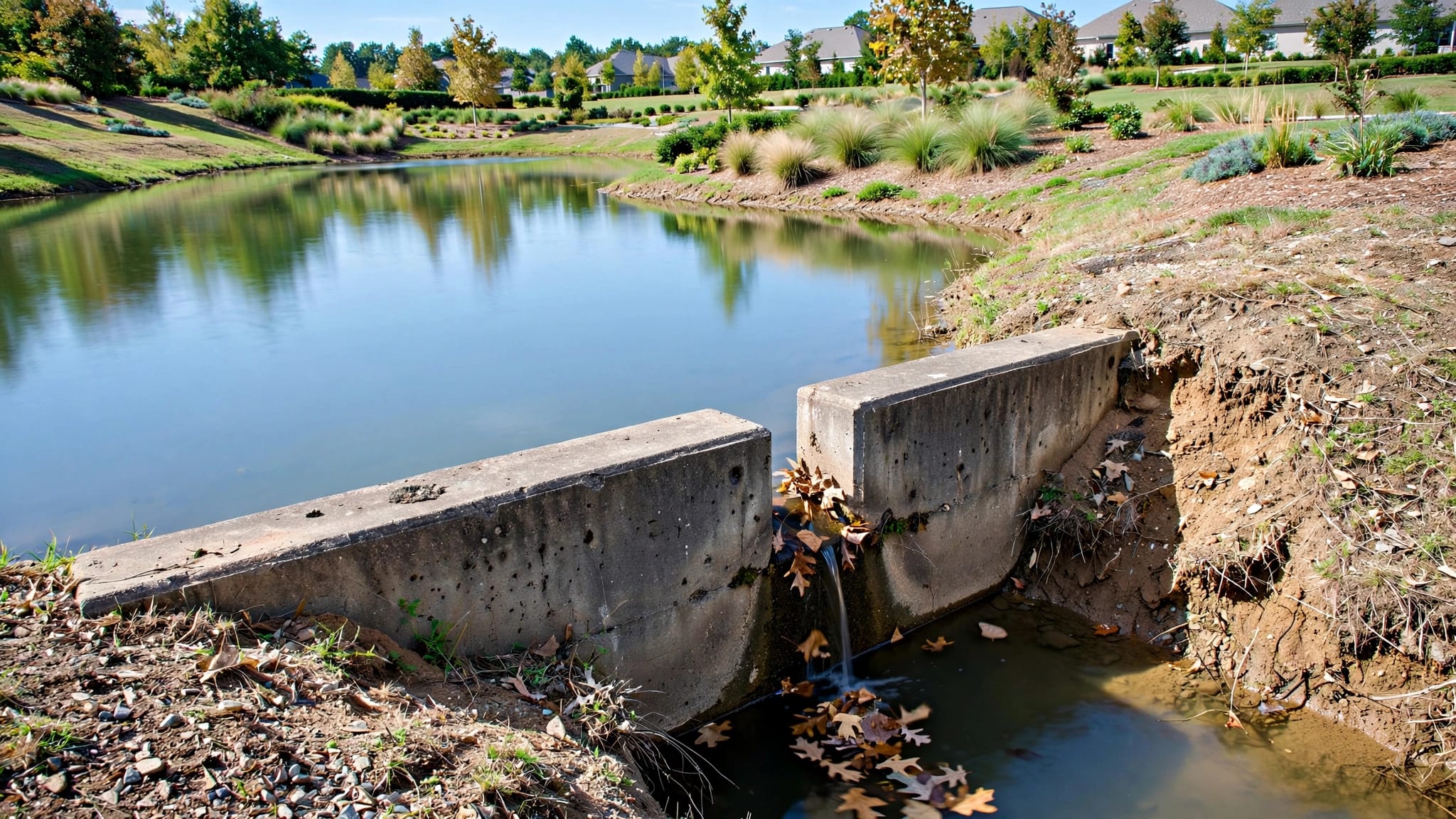
Overflow pipes, control structures, canals, and storm connections also matter. Fish can move between waterbodies during high water. Therefore, a stocking plan for one lake may create concerns across the entire community.
Assess the lake before approving HOA lake fish stocking
A responsible request should include an inspection and baseline information. Without those details, the board is approving a guess.
Measure the waterbody and its connections
Stocking rates are calculated per acre, so the actual surface area is the first number to verify. A rough estimate from a satellite image may not be enough for a formal plan, particularly when a lake has irregular edges or fluctuating water levels.
The assessment should record:
- Approximate surface acreage
- Average and maximum depth, if available
- Inlets, outlets, overflow structures, and connected lakes
- Aeration equipment and operating condition
- Shoreline access and resident fishing areas
- Areas with dense vegetation, muck, or exposed soil
- Recent water-level changes or storm damage
The board should also check whether the lake is accessible to children, pets, maintenance crews, golfers, or wildlife. A fish release near steep banks, deep water, or unstable shorelines may create safety and liability concerns.
For a broader baseline, use a Florida HOA lake inspection checklist that covers the water surface, shoreline, drainage features, and conditions after heavy rain.
Review fish, vegetation, and water quality
A lake may already contain fish introduced by previous owners, stormwater movement, birds, or natural reproduction. Stocked fish then compete with an existing population. UF/IFAS advises stocking new or reclaimed ponds as soon after filling as possible, before wild fish become established.
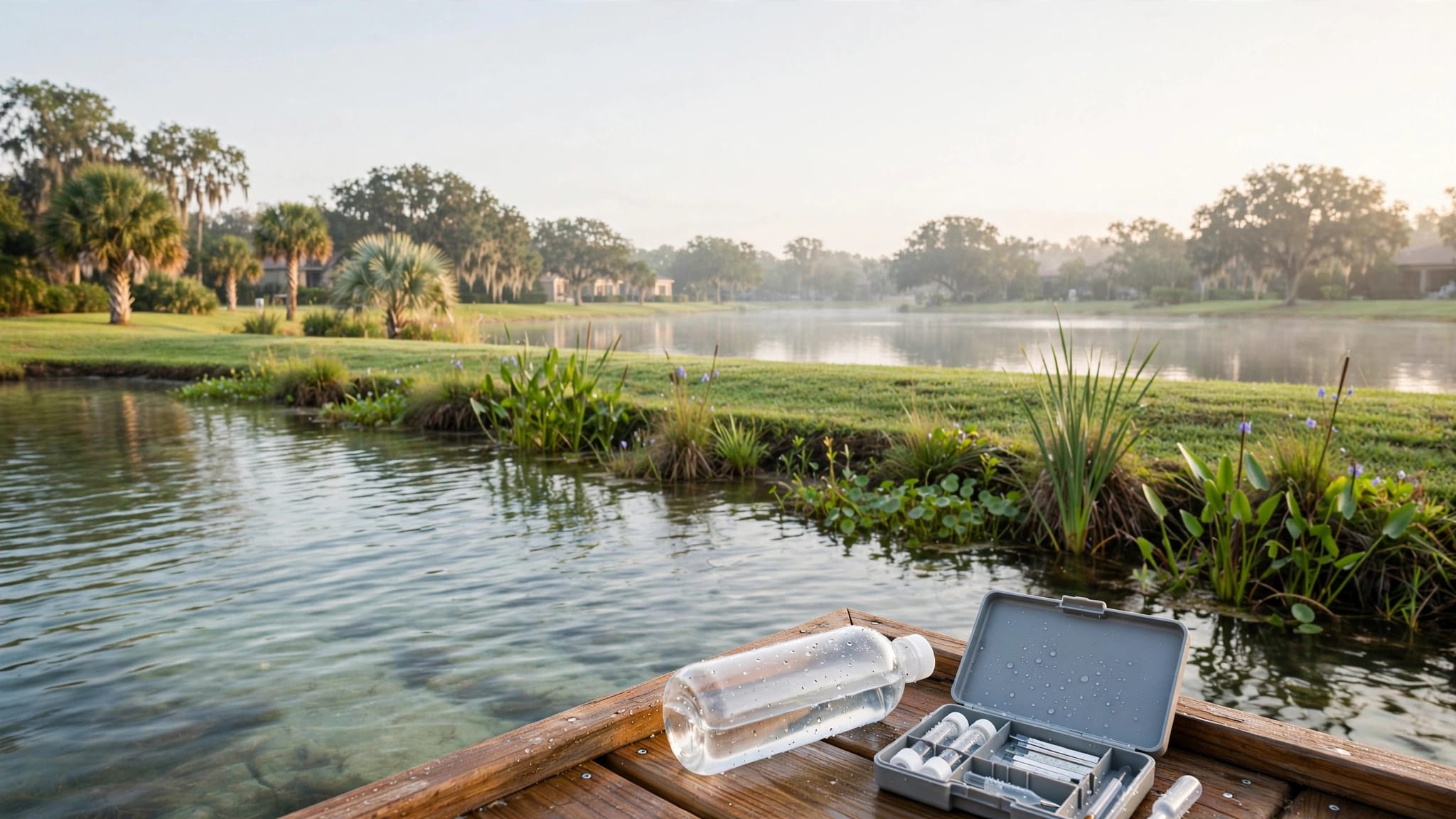
The inspection should document visible fish activity, fish size, dead fish, surface gasping, unusual odors, and signs of predation. Water testing should review the parameters that fit the concern, such as dissolved oxygen, pH, ammonia, nutrients, and clarity. A board can use this guide to read HOA lake water quality results before treating a test report as a simple pass-or-fail document.
Aquatic vegetation also needs identification. A request that says "stock fish to remove weeds" isn't detailed enough. The manager should identify the plant, estimate coverage, and determine whether mechanical removal, herbicide treatment, aeration, shoreline work, or permitted grass carp would be appropriate.
A lake with low oxygen or heavy nutrient loading needs a water-quality response before it needs more fish.
What HOA lake fish stocking requests should prove
The request should connect the proposed species and quantity to verified lake conditions. A vendor or consultant should explain the plan in plain language, including what could go wrong.
Match fish to the stated objective
Florida's most common pond fish are largemouth bass, bluegill, and channel catfish. Their roles differ, so the board should avoid approving a species because it is popular elsewhere.
| Proposed fish | Reason it may fit | Main concern |
|---|---|---|
| Florida-strain largemouth bass | Predator fish for a bass and bream fishery | Requires enough forage and legal sourcing |
| Bluegill or other bream | Forage for bass and recreational fishing | Can become unbalanced without predator control |
| Channel catfish | Fishing interest and a separate catfish program | Needs a plan suited to the lake's objective |
| Triploid grass carp | Control of certain noxious aquatic plants | Restricted species, permit required |
The takeaway is simple: stocking should follow the lake's objective , not replace one. A bass and bluegill fishery is a different management project than vegetation control or catfish fishing.
Treat stocking rates as a plan, not a shopping list
UF/IFAS publication FA001 lists a normal Florida pond rate of 100 largemouth bass, 500 bluegill, and 100 channel catfish per acre for a typical mixed fishery. It also describes a larger-fish option using 50 bass measuring 8 to 12 inches, 200 bluegill measuring 4 to 5 inches, and 50 to 100 catfish measuring 8 to 12 inches per acre.
Those figures are reference points, not automatic HOA lake fish stocking instructions. Existing fish, water depth, vegetation, oxygen levels, and fishing pressure can change the recommendation. Overloading a small or stressed pond may produce stunted fish, poor growth, oxygen problems, or repeated fish kills.
For a new bass and bream pond, Florida guidance commonly places bluegill in the fall and bass the following spring. This timing gives the forage population a chance to establish before predators are added. A community lake with an established fish population needs an assessment before anyone follows that sequence.
Catfish-only plans also require separate calculations. The board should reject a request that gives one total fish count without naming the lake's acreage, fish sizes, species mix, and stocking schedule.
Florida compliance checks before approval
Legal review belongs in the request process, especially when a supplier is located outside Florida or when a proposed species is restricted.
Verify bass species, source, and permits
The Florida Fish and Wildlife Conservation Commission says private waters generally require Florida-strain largemouth bass for stocking. FWC also states that northern largemouth bass may not be stocked anywhere in Florida. A narrow northern-Florida intergrade exception applies north and west of the Suwannee River, which doesn't cover Southwest Florida communities.
For Florida bass, FWC requires a no-cost Importation and Transportation Permit for people stocking Florida bass or for freshwater fish dealers selling fish. The supplier should provide the fish's species, source, size, quantity, and documentation before delivery.
A board shouldn't rely on a salesperson's verbal assurance. Put the legal species and permit responsibility in the approval letter or service agreement. FWC's freshwater stocking information also makes clear that its routine stocking program focuses on carefully selected public waters, not private HOA ponds.
Review grass carp and private pond rules
Triploid grass carp are restricted fish in Florida. FWC requires a permit before possession and authorizes permits for specific uses, including noxious aquatic plant control in private lakes and ponds. The permit process matters because grass carp can alter vegetation that supports fish, birds, and water quality.
A community should also review whether it qualifies for any Private Fish Pond License. FWC describes that license for ponds larger than 20 acres that are entirely within the property. Many HOA water systems include multiple ponds, drainage connections, shared ownership, or public access, so the board shouldn't assume the license applies.
When legal status is unclear, ask FWC or a qualified Florida fish supplier before purchase. The board should keep permits, invoices, species records, and stocking dates with the community's lake files.
Set conditions for a responsible approval
An approval should create accountability after the fish are released. Without follow-up, the community may not know whether the plan worked or caused a new problem.
Fund monitoring and resident education
The budget should include more than the fish purchase. It may need water testing, fish surveys, aeration checks, vegetation control, shoreline access work, and follow-up inspections. A multi-lake property should also decide whether each waterbody needs its own plan.
Resident rules matter as well. Excessive feeding adds nutrients to warm Florida water, which can increase algae, muck, and odor. Share a written policy explaining whether fishing is allowed, where residents may access the shoreline, which bait or equipment is permitted, and whether feeding fish is prohibited. Boards can reference this guide on preventing fish feeding damage.
The community should define warning signs that trigger a review, including fish gasping at the surface, sudden deaths, foul odors, cloudy water, or a rapid increase in algae. These signs may point to low oxygen or nutrient stress. The causes of fish kills in Florida HOA lakes deserve attention before another stocking event.
Use a written decision standard
A board can approve, revise, or decline a request using a consistent standard.
Approve the plan when the objective is clear, acreage is verified, the species is legal, the water quality is suitable, and the community has funding for monitoring.
Request revisions when the fish population is unknown, the proposed quantity lacks a per-acre calculation, the lake has active oxygen or algae problems, or the supplier has not provided documentation.
Decline the request when the plan involves prohibited species, unpermitted grass carp, an informal fish release, a stormwater-connected site with unacceptable escape risk, or no maintenance budget. This framework is for shared retention ponds and lakes in gated communities, golf courses, and other multi-lake properties, not koi ponds or decorative backyard features.
For a professional baseline before the board votes, request a Get a Free Lake Health Assessment. Seabreeze Lake Maintenance serves Southwest Florida communities and holds Commercial Applicator License #CM28291 and State-Licensed Specialty Contractor #SCC131152136. Those credentials support related lake work such as aquatic weed control, water-quality management, aeration, debris removal, shoreline stabilization, and erosion control.
Conclusion
A fish stocking request deserves the same care as any other change to shared community infrastructure. The board should confirm the lake's purpose, measure its conditions, check Florida requirements, match species to the objective, and fund follow-up monitoring.
The strongest decision is based on the lake's capacity rather than resident enthusiasm or a supplier's standard package. Good HOA lake fish stocking protects the waterbody's function while giving the community a clear way to measure the result.
Recent Posts