What Causes an Oily Sheen on Florida HOA Lakes

Seabreeze Lake Maintenance • June 1, 2026

Share this article

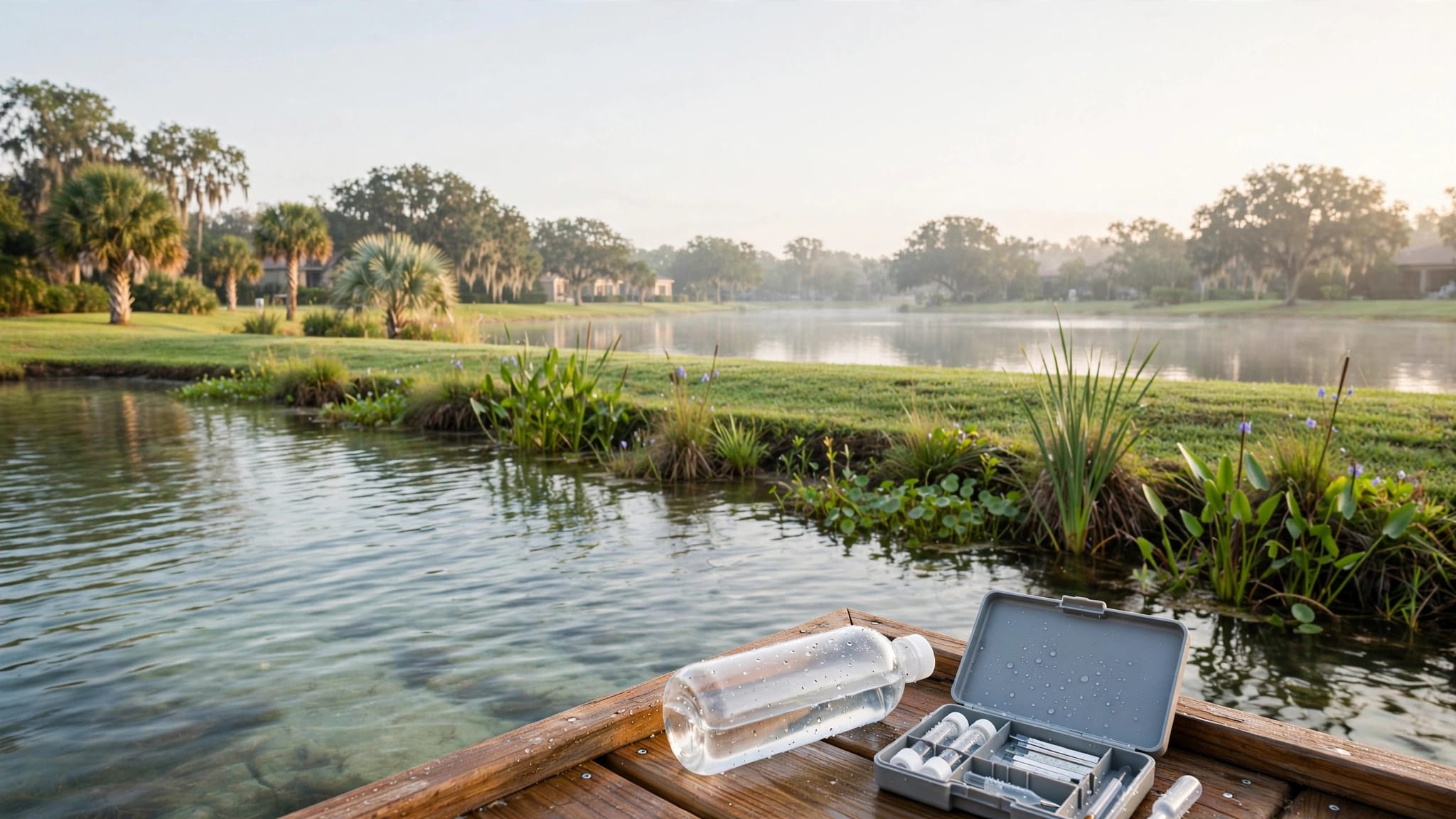
A slick-looking film on the water can be unsettling, especially when it shows up in a lake your community sees every day. In Florida HOA lakes, that sheen often has less to do with a spill and more to do with heat, runoff, plant decay, and low water movement.

That matters because a retention pond or community lake can change fast after a storm. What looks like oil may be a natural surface film, but it can also point to a larger maintenance issue that keeps coming back.

Why Florida HOA Lakes Get Sheen So Fast

Florida gives lake problems a head start. Warm water speeds up decay, heavy rain pushes debris into ponds, and long dry stretches can leave water still and stale. When that happens, a thin film has an easy time forming and spreading across the surface.

Shared water bodies in gated communities, golf courses, and multi-lake properties face extra pressure. Fertilizer, mulch, grass clippings, landscape runoff, and road residue all wash toward the water. Even small amounts can gather at the surface and create an oily look.

The lake may also be handling more than one issue at once. A sheen after mowing season may have a different cause than a sheen that appears after a big storm. In other words, the timing often tells you as much as the color.

A shiny surface doesn't always mean petroleum. It can come from decaying plant matter, runoff, or bacteria acting on organic debris.

Common Sources Behind the Film

A few sources show up again and again in Florida HOA lakes. The table below gives a quick way to sort through the most likely ones.

Source Common clue Why it shows up
Decaying leaves, grass, and shoreline debris Film appears after mowing or storms Organic material breaks down and rises to the surface
Pollen and plant oils Sheen is more noticeable during heavy bloom periods Wind and rain carry fine material into the lake
Algae and bacterial activity Water may smell musty or look dull Microbes change surface conditions and create a thin film
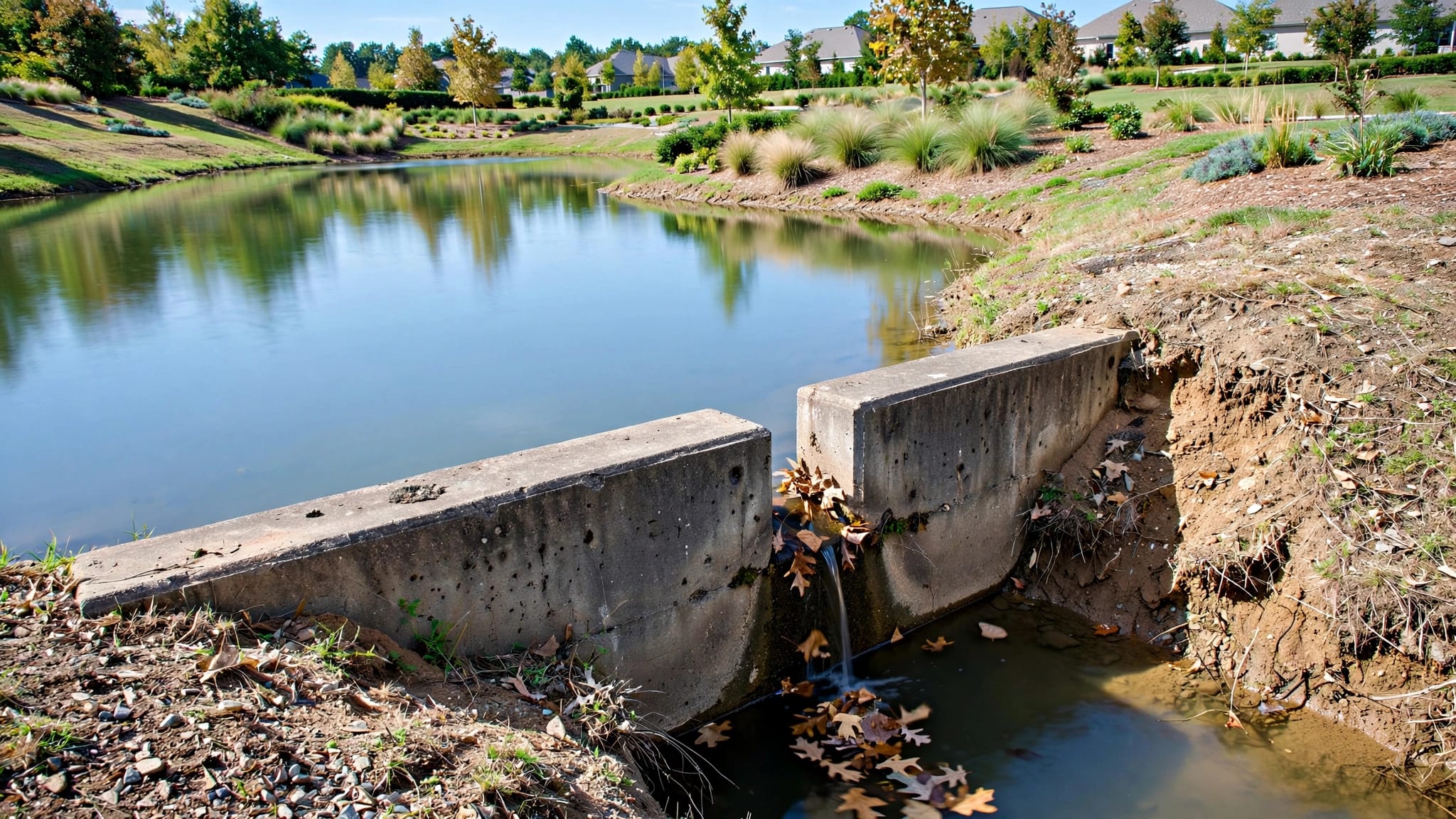
Stormwater runoff Sheen appears near drains or after rainfall Parking lots, sidewalks, and landscaped areas wash residue into the pond
Fuel or maintenance residue Rainbow colors stay in one spot near access points Small leaks from equipment, carts, or service activity can leave a true oil film

The key is to look at the setting around the water. A sheen near a storm drain often points to runoff. A film that appears after leaf drop or mowing may be tied to organic matter. If the water also has algae, cloudy patches, or a sour smell, the pond may be carrying a heavier nutrient load.

A community lake can also collect whatever the surrounding property sends toward it. That includes fine soil, fertilizer, and tiny bits of debris you might not notice on the bank. Once those materials hit calm water, the surface acts like a mirror that shows every trace.

When the Sheen Points to Water Quality Trouble

Some sheens fade on their own. Others keep returning because the lake has poor circulation or too much organic buildup. When water sits still, surface films gather the way dust settles on an unused shelf. The problem gets worse after hot spells, light winds, or long periods without circulation.

Low oxygen is another common factor. When oxygen drops, organic matter breaks down in slower and messier ways. That can support bacteria and algae, which then add more surface film, odors, and color changes. For that reason, a sheen is often a sign to check the whole system, not just the top layer.

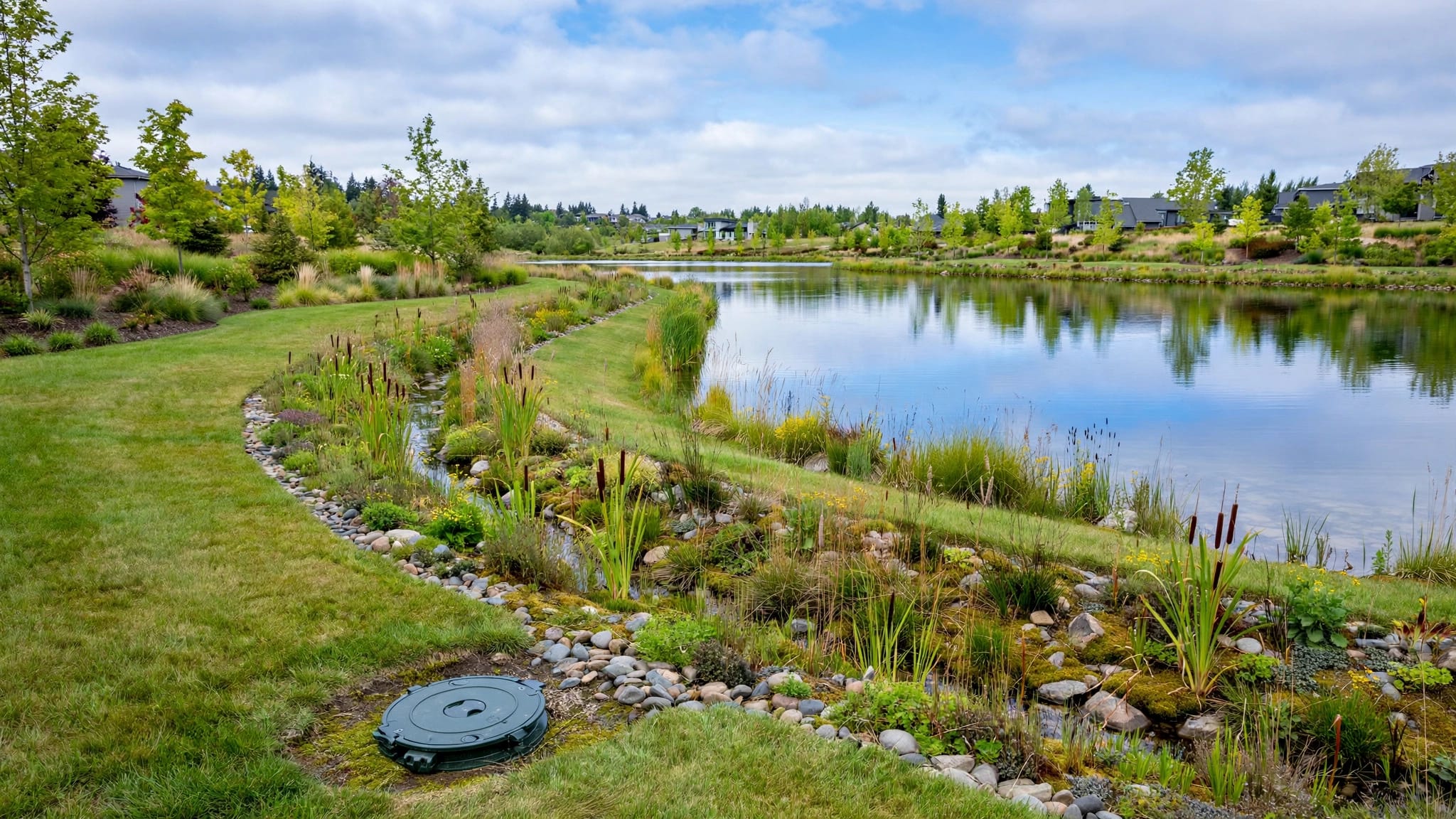
This is where circulation and aeration matter. In many communities, lake and pond aeration systems help move water, reduce stagnant zones, and support better water quality over time. That doesn't fix every sheen on its own, but it can make a big difference when low oxygen and still water are part of the problem.

If the sheen keeps returning after rain, mowing, or hot weather, a full inspection is worth it. Get a Free Quote for a lake inspection if your community needs help sorting out the cause and the right next step.

Licensed treatment also matters. Seabreeze Lake Maintenance holds Commercial Applicator License #CM28291 and State-Licensed Specialty Contractor #SCC131152136, which is important when a Florida HOA lake needs careful, compliant service.

Practical Signs Your HOA Lake Needs Attention

A quick visual check can tell you a lot before the issue grows. Look for these signs around the shoreline and surface:

  • The sheen returns after every storm.
  • The water near the outfall looks slicker than the rest of the lake.
  • Algae, odor, or cloudy water shows up at the same time.
  • Grass clippings, leaves, or mulch collect along the edge.
  • The film stays in place instead of breaking apart.

If several of those signs show up together, the lake is probably dealing with more than a temporary film. The source may be repeated runoff, weak circulation, or buildup along the banks. At that point, the right fix usually includes more than skimming the surface.

Routine care helps here. Shoreline cleanup, debris removal, water testing, and aeration all support a cleaner lake. So does watching what enters the pond from nearby landscaping and hard surfaces.

Conclusion

An oily sheen on Florida HOA lakes usually has a simple first explanation, but the full cause is often more layered. Warm weather, runoff, decaying plant matter, and poor circulation all play a part.

The best clue is often the pattern. If the sheen shows up after storms, mowing, or long stretches of still water, the lake is telling you where to look next. A careful inspection can separate a short-lived film from a water quality problem that needs ongoing maintenance.

Recent Posts

By Seabreeze Lake Maintenance June 2, 2026
A Florida HOA lake can look calm one day and turn risky the next. When blue-green algae warning signs show up, the water can move from an eyesore to a safety concern fast. That matters even more in gated communities, golf courses, and multi-lake properties. Residents notice th...
By Seabreeze Lake Maintenance May 31, 2026
Florida heat can make a lake level drop fast enough to worry any HOA board or property manager. Still, a falling waterline does not always mean a leak. In gated communities, golf courses, and multi-lake properties, the difference matters because one is normal and the other can...
By Seabreeze Lake Maintenance May 30, 2026
A green lake surface can fool people fast. Duckweed and algae can spread across Florida HOA ponds in days, yet they behave very differently, so the fix changes with the growth. That difference matters in gated communities, golf properties, and other multi-lake sites. A wrong t...