Evaporation vs. Leakage in Florida HOA Lakes: How to Tell the Difference
Florida heat can make a lake level drop fast enough to worry any HOA board or property manager. Still, a falling waterline does not always mean a leak. In gated communities, golf courses, and multi-lake properties, the difference matters because one is normal and the other can lead to costly damage.
That distinction gets blurry during long dry stretches, windy afternoons, and weeks with little rain. A clear pattern, a few simple checks, and the right inspection can save time, money, and a lot of guesswork.
Why Florida HOA lakes lose water so fast
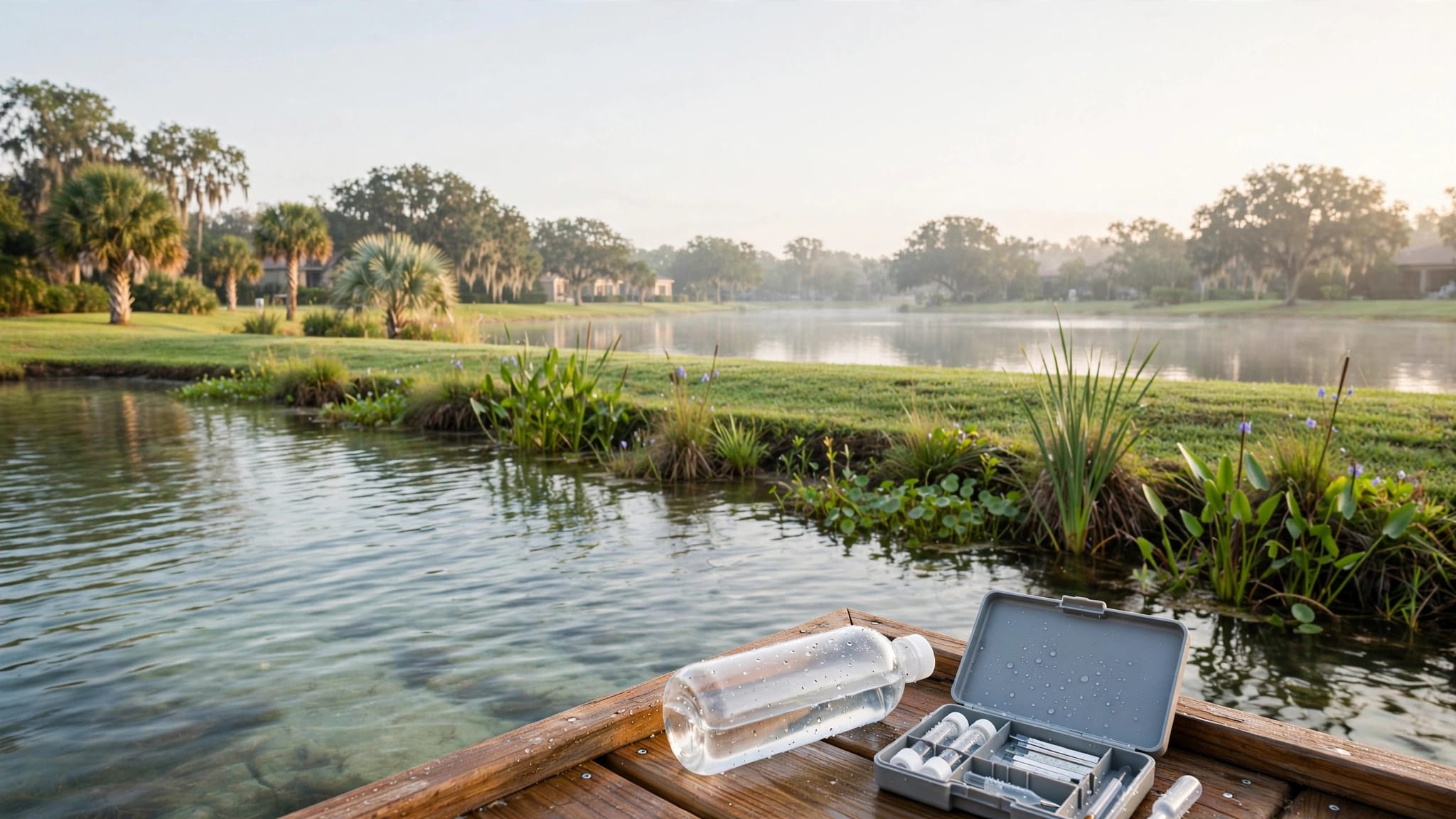
Sun and wind pull water from open ponds all day long. In Florida, that effect is stronger because warm temperatures last longer and humidity swings from one week to the next.
Shallow shorelines lose water faster than deeper basins. Broad lakes also lose more than narrow ones because more surface area is exposed. That matters for stormwater ponds, retention lakes, and decorative community lakes that sit in open neighborhoods with little shade.
Rain can hide the problem for a while. Then a dry stretch makes the level dip again, and everyone assumes the worst. However, a normal seasonal drop usually follows the weather in a predictable way. It does not pick one lake and spare the others for no reason.
If several lakes across the same property fall at the same pace, weather is often the main cause. If one lake drops much faster than the rest, the problem may be local.
When Florida HOA lake leakage is the real issue
Leakage usually shows up as a pattern that does not match the weather. The water keeps falling after rain. The drop may also continue overnight, when evaporation slows.
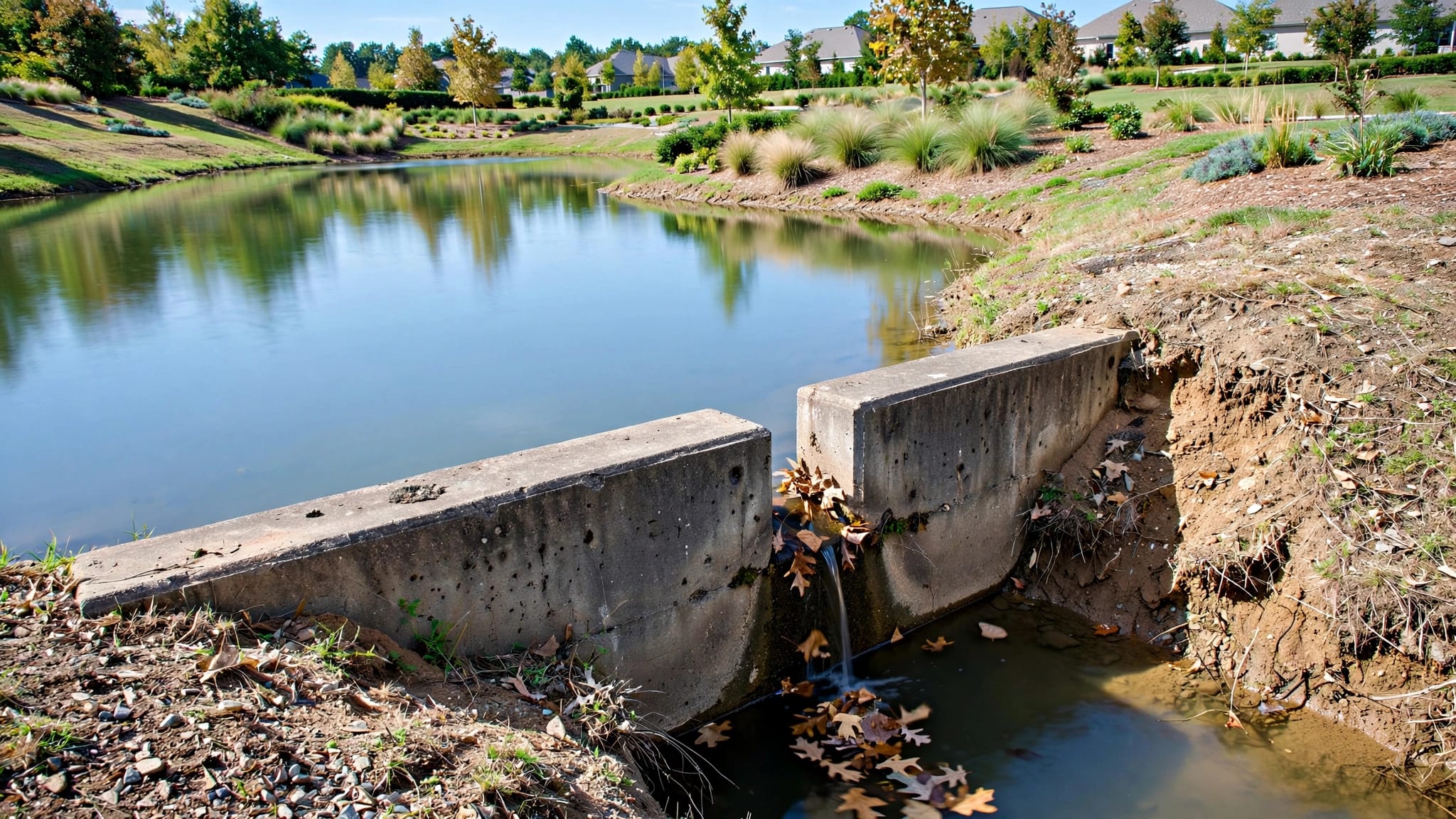
Bank conditions matter too. Wet soil near the edge, soft ground, sink areas, or fresh erosion can point to a problem below the surface. So can water that seeps around pipes, risers, outlets, or concrete structures.
Look at the shoreline with a careful eye. A leak often leaves clues that evaporation never will.
- One pond sits lower than nearby ponds with the same sun and wind exposure.
- A bank stays damp even after several dry days.
- Rip rap shifts, settles, or washes out near a structure.
- Exposed pipe joints or cracked concrete appear around control points.
- Water loss continues after a steady rain or irrigation shutoff.
Florida HOA lake leakage often starts at a structure, an undercut bank, or a failed connection. It usually does not begin with a dramatic sign. Instead, it starts as a small drop that slowly grows into a bigger problem.
A lake that drops with hot, dry weather may be behaving normally. A lake that keeps dropping without that pattern needs an inspection.
Evaporation vs. leakage: a side-by-side check
A simple comparison helps boards and managers avoid chasing the wrong fix.
| Clue | Evaporation | Leakage |
|---|---|---|
| Rate of loss | Slow, steady, tied to heat and wind | Faster or irregular |
| Weather pattern | Matches hot, dry stretches | Keeps going after rain or cooler weather |
| Location | Similar across nearby lakes | Often affects one pond or one shoreline |
| Shoreline condition | Dry, stable banks | Wet spots, slumping, erosion, or sink areas |
| Recovery | Water level improves after rain | Water stays low until the source is repaired |
The takeaway is simple. Evaporation follows the weather, while leakage ignores it. When the pond level keeps moving in the wrong direction, the issue deserves a closer look.
How to confirm the source before repairs start
A good inspection starts with measurements, not guesses. Check the water level at the same time each day for several days. That gives you a clean pattern instead of one-off readings.
Next, compare the pond to nearby lakes on the same property. Shared weather usually creates similar changes. A pond that behaves differently often has its own issue.
Then inspect the usual trouble spots. Focus on pipes, outfalls, control structures, inlets, concrete collars, shoreline edges, and any place where water can move below grade. If the pond has a liner, look for exposed edges or damaged seams. Also check for animal burrows, settling soil, and undercut banks.
A short log helps, especially after rain. It shows whether the water level rebounds, stalls, or keeps dropping.
When the job calls for a qualified team, use a contractor who handles aquatic systems and shoreline work. For Florida communities, that means someone with the right credentials for the site, including Commercial Applicator License #CM28291 and State-Licensed Specialty Contractor #SCC131152136.
If a lake keeps dropping and the weather does not explain it, Get a Free Quote for a lake inspection before the problem spreads.
Why water loss affects the whole property
A low lake is more than a cosmetic issue. It can expose shoreline material, weaken slopes, and reduce the storage volume needed for stormwater control. In an HOA, that can create both safety concerns and repair costs.
Low water also changes the balance of the pond itself. As the level falls, shallow areas warm up faster. Nutrients become more concentrated. Algae can take off. Debris can collect in exposed edges. For golf courses and community entrances, that kind of change is hard to hide.
Once the water level is stable again, other maintenance steps can help the system recover. If water quality has slipped, lake and pond aeration systems can support circulation and reduce stagnant areas that often follow low-water events.
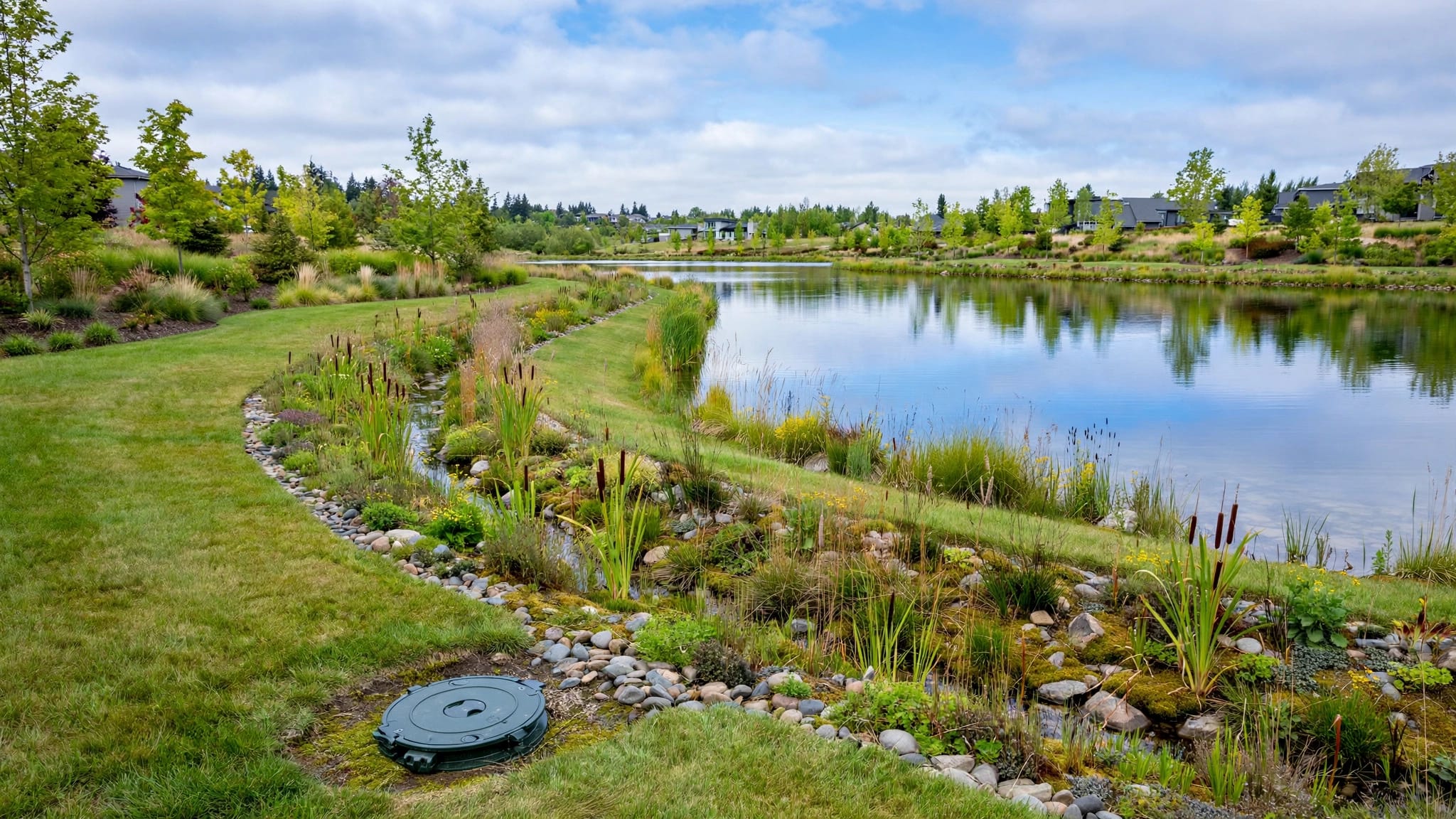
The best approach is steady care, not panic repairs. That means regular checks, shoreline review, and fast action when a pond stops behaving like the others on the property. Retention ponds and lakes in gated communities work best when the board treats water loss as a system issue, not a one-time annoyance.
Conclusion
Evaporation is part of life in Florida, but it leaves a pattern. Leakage does something different, and that difference is what protects the property. When one lake drops faster than the rest, or the bank stays wet long after rain, it is time to look closer.
A careful log, a shoreline inspection, and a qualified lake contractor can separate normal water loss from a real problem. That simple step keeps HOA lakes, golf course ponds, and community water bodies working the way they should.
Recent Posts