What High Phosphorus Means in Florida HOA Lakes
Green water often starts with a nutrient problem. In Florida HOA lakes, high phosphorus usually means the lake is getting more plant food than it can handle.
That extra nutrient can push a retention pond or community lake into algae blooms, low oxygen, and cloudy water. It also makes routine lake care harder for HOAs, golf courses, and property managers.
Because these lakes sit near lawns, drains, parking lots, and shoreline slopes, the source is often outside the water itself. Finding that source matters just as much as treating the surface.
What high phosphorus means in a Florida lake
Phosphorus is a nutrient plants need in small amounts. In a lake, it works like fuel for algae and other aquatic growth.
A little phosphorus is normal. Too much changes the balance fast. Warm weather, strong sunlight, and frequent rain make the problem worse in Florida because algae can grow quickly once the nutrient is there.
In high phosphorus Florida HOA lakes, the water often shifts from clear and stable to green and unstable. That change can happen after a single heavy rain if runoff carries enough fertilizer, soil, or organic waste into the pond.
The lake does not need to be covered in scum for a phosphorus issue to exist. Often, the problem starts before the lake looks bad. The water may still seem fine from the bank while the nutrient load is building below the surface.
A lake can look calm and still be feeding the next algae bloom.
Where the extra phosphorus comes from
Most phosphorus problems in gated communities and multi-lake properties come from everyday sources around the site. Fertilizer is one of the biggest. Stormwater runoff is another.
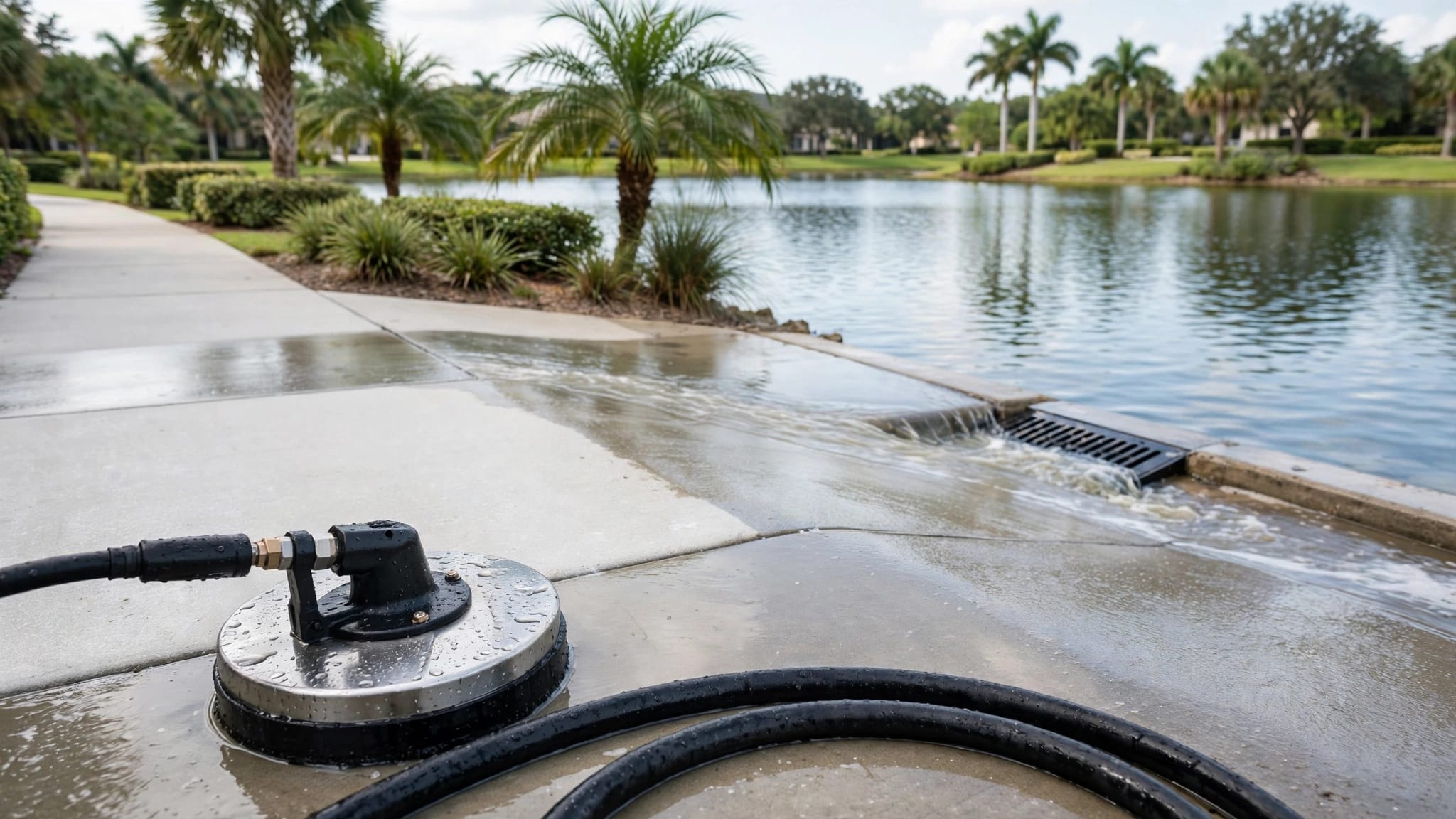
Florida's sandy soils and drainage patterns can move nutrients faster than many people expect. Once phosphorus leaves a lawn or parking area, it can end up in a lake basin, especially after rain.
Here is a simple look at the most common sources.
| Source | How it reaches the lake | What it often looks like |
|---|---|---|
| Lawn fertilizer | Washed off turf during irrigation or rain | Sudden algae growth near landscaped edges |
| Stormwater runoff | Carries water from roofs, roads, and lots | Dirty water entering inlets after storms |
| Eroded soil | Moves from bare banks or disturbed ground | Brown water and sediment buildup |
| Wastewater or septic leaks | Enters through failed lines or drainage areas | Persistent nutrient problems and odor |
| Decaying plants and debris | Breaks down inside the lake | Mats, sludge, and repeated bloom cycles |
The takeaway is simple. A phosphorus problem is usually a watershed problem, not just a pond problem. That is why shoreline care, drainage control, and turf practices all matter.
Signs the lake is loading up with algae
High phosphorus does not always announce itself with a bright green bloom. More often, the signs build one by one.
Look for these changes:
- Green tint in the water that appears after rain or heat
- Surface scum or paint-like film near wind-blown shorelines
- Cloudy water that blocks light below the surface
- Odor that gets stronger in still weather
- Thick shoreline growth where nutrients collect
A lake with these signs may also have algae clinging to edges, docks, or fountains. Sometimes the bloom stays light on the surface but grows dense below. That is one reason visual checks alone can miss the full problem.
Water clarity matters too. When algae blocks sunlight, underwater plants struggle. That changes the lake's habitat and can push the system toward more frequent bloom cycles.
What happens when oxygen drops
Phosphorus does not only feed algae. It also starts a chain reaction after the bloom grows and dies.
As algae decay, bacteria use oxygen to break it down. That can lower dissolved oxygen in the water, especially overnight or after a large bloom collapses. Fish feel that change first.
Low oxygen can stress fish, kill sensitive species, and create dead zones near the bottom. It also makes the lake less stable, because the water has less room to recover after a storm or heat wave.
High phosphorus can also support some blue-green algae, also called cyanobacteria. Those blooms can produce toxins that harm pets, wildlife, and people. That risk is one reason HOA lakes need more than a cosmetic fix when nutrient levels rise.
The effect is not limited to the lake itself. Bad water can affect views, property appeal, and the way residents use the community. A lake that smells off rarely stays a minor concern for long.
How to confirm the problem
A good diagnosis starts with water testing and a site walk. The test should look at phosphorus, but the surrounding conditions matter too.
Timing matters. A sample taken after rain can tell a different story than one taken during a dry stretch. That is because runoff often spikes nutrient levels right after storms.
A useful inspection usually checks:
- Water quality data , especially phosphorus and clarity
- Inlet and outlet areas , where runoff enters or leaves
- Shoreline erosion , since loose soil carries nutrients
- Nearby turf and landscape areas , where fertilizer may wash off
- Signs of decay , such as thick plant matter or debris buildup
A lake manager should also look at the whole drainage pattern. One pond may receive water from several roofs, streets, or adjacent basins. In those cases, a single problem area can feed more than one lake.
Testing alone is not enough if nobody knows where the nutrient is coming from. The source has to be found before the fix can last.
Practical next steps for HOAs and golf communities
Once phosphorus is high, the goal is to reduce what enters the lake and improve how the water responds. That takes a mix of maintenance and source control.
Start with these steps:
- Cut runoff at the source. Keep fertilizer off hard surfaces, clean debris from drains, and watch irrigation overspray.
- Stabilize shorelines. Bare banks and eroded edges wash soil into the water after heavy rain.
- Maintain lake circulation. Aeration can help reduce stagnant zones and support healthier water conditions.
- Treat visible algae early. Small blooms are easier to manage than a lakewide problem.
- Inspect on a schedule. Routine checks catch nutrient issues before they become recurring complaints.
Communities should also keep detailed records of blooms, rainfall, treatments, and shoreline changes. Patterns often show up when the same pond turns green after certain storms or landscaping cycles.
For HOA boards and property managers, licensed help matters too. Seabreeze Lake Maintenance holds Commercial Applicator License #CM28291 and State-Licensed Specialty Contractor #SCC131152136, and that level of licensing helps support proper lake inspections and treatment plans.
If your community lake keeps showing the same warning signs, Get a Free Quote and schedule a lake inspection.
Conclusion
High phosphorus in a Florida HOA lake usually means the system is getting too much nutrient load from runoff, soil, fertilizer, or wastewater sources. Once that happens, algae grows faster, oxygen drops, and the lake becomes harder to manage.
The real issue is rarely just the green water. It is the chain reaction beneath it, and that starts long before most residents notice a problem.
The sooner a community identifies the source, the easier it is to protect water quality , curb algae, and keep the lake looking like part of the property, not a problem on the map.
Recent Posts