What High Nitrogen Means in Florida HOA Lakes
When nitrogen runs high in a Florida HOA lake, the first problem is often invisible. The water may still look calm, then algae, odor, and low oxygen start to show up.
For retention ponds and lakes in gated communities, golf courses, and multi-lake properties, high nitrogen means the water is getting more nutrients than it can handle. In warm Florida weather, that extra fuel can turn into a fast-moving problem.
The warning signs usually start small. After that, they spread across the surface, the shoreline, and the bottom muck.
What High Nitrogen Really Means in a Florida HOA Lake
Nitrogen is a normal part of lake life. Plants need it, algae use it, and healthy water systems contain some of it.
The trouble starts when there's too much. In a lake, excess nitrogen acts like fertilizer. It pushes algae and unwanted plant growth harder than the system can balance.
A test may show nitrogen in forms like nitrate or ammonia, or it may show high total nitrogen. Most HOA boards do not need the chemistry lesson. They need the result: the lake is receiving more nutrients than it should.
That matters because a lake can look clear and still carry a heavy nutrient load. Clear water can fool people. The surface may seem fine while the bottom and shoreline are already under stress.
In high nitrogen Florida lakes, problems often appear in a chain. Nutrients feed algae. Algae grows fast. Then the algae dies and breaks down. That process uses oxygen. Once oxygen drops, fish stress rises, odors can form, and the water loses balance.
Think of nitrogen as fuel. A little fuel keeps the system running. Too much turns a calm lake into a problem that keeps feeding itself.
Where the Extra Nitrogen Comes From
Most HOA lakes do not get hit by one big source. They get a steady trickle from everyday activity around the property.
The most common sources are easy to miss because they look ordinary.
| Source | How it gets in | Common result |
|---|---|---|
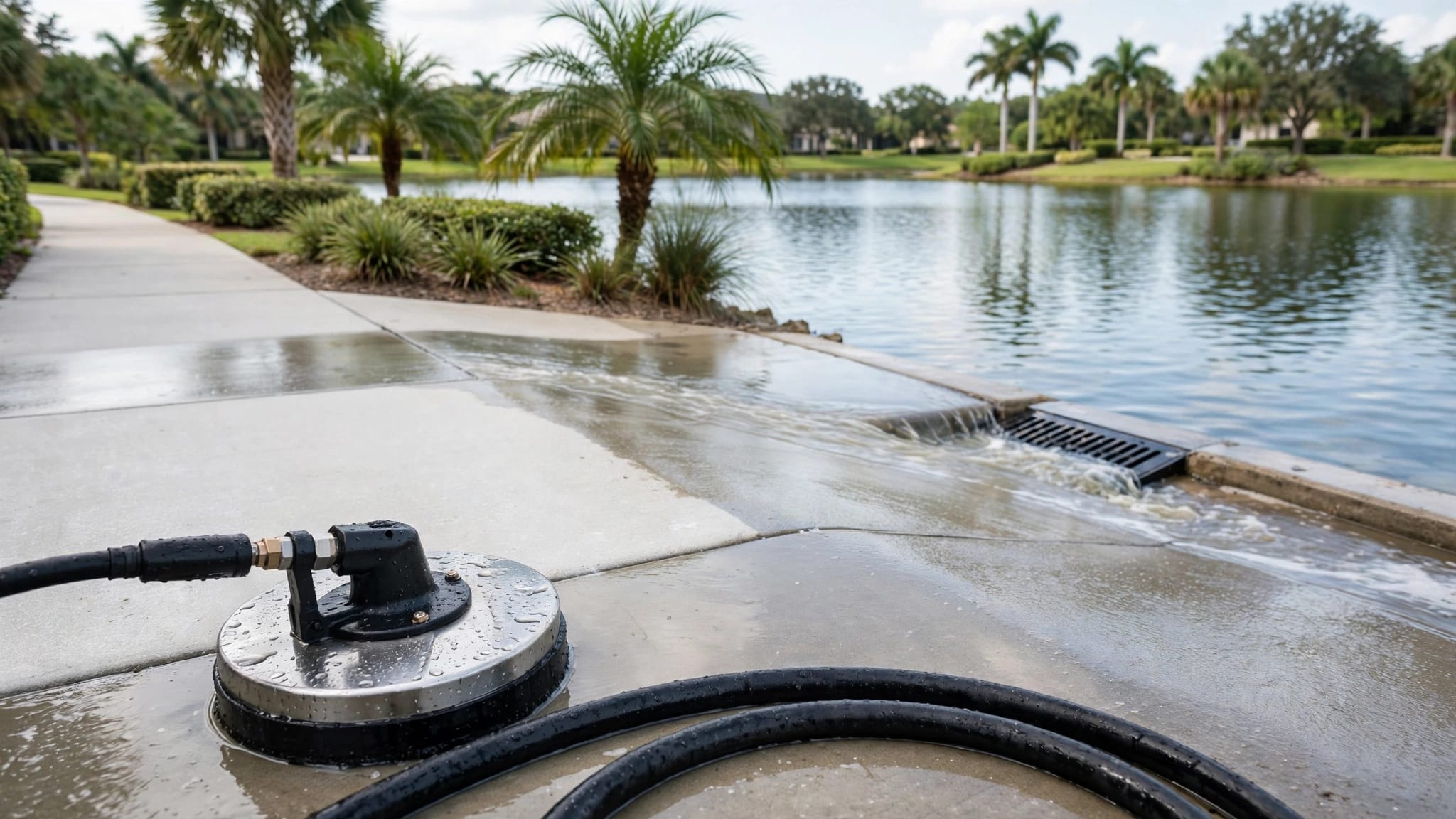
| Fertilizer runoff | Rain and irrigation wash lawn fertilizer into swales and drains | Fast algae growth and cloudy water |
| Decaying leaves and grass | Dead plant material breaks down near the shoreline | More nutrients and bottom muck |
| Waterfowl and pet waste | Waste washes in during storms or heavy irrigation | Localized nutrient spikes and odor |
| Soil erosion | Bare soil moves into the lake from slopes or construction areas | Turbidity and nutrient-rich sediment |
| Reclaimed water or septic influence | Nearby systems can add nutrients over time | Ongoing pressure on water quality |
The key point is simple. Nitrogen usually enters the lake in small pieces, not one dramatic event. One rainstorm can carry a lot of it, though, especially when lawns, drains, and bare ground all feed the same water.
That is why HOA lakes often show the worst issues after a wet week. The lake does not have time to clear itself before the next load arrives.
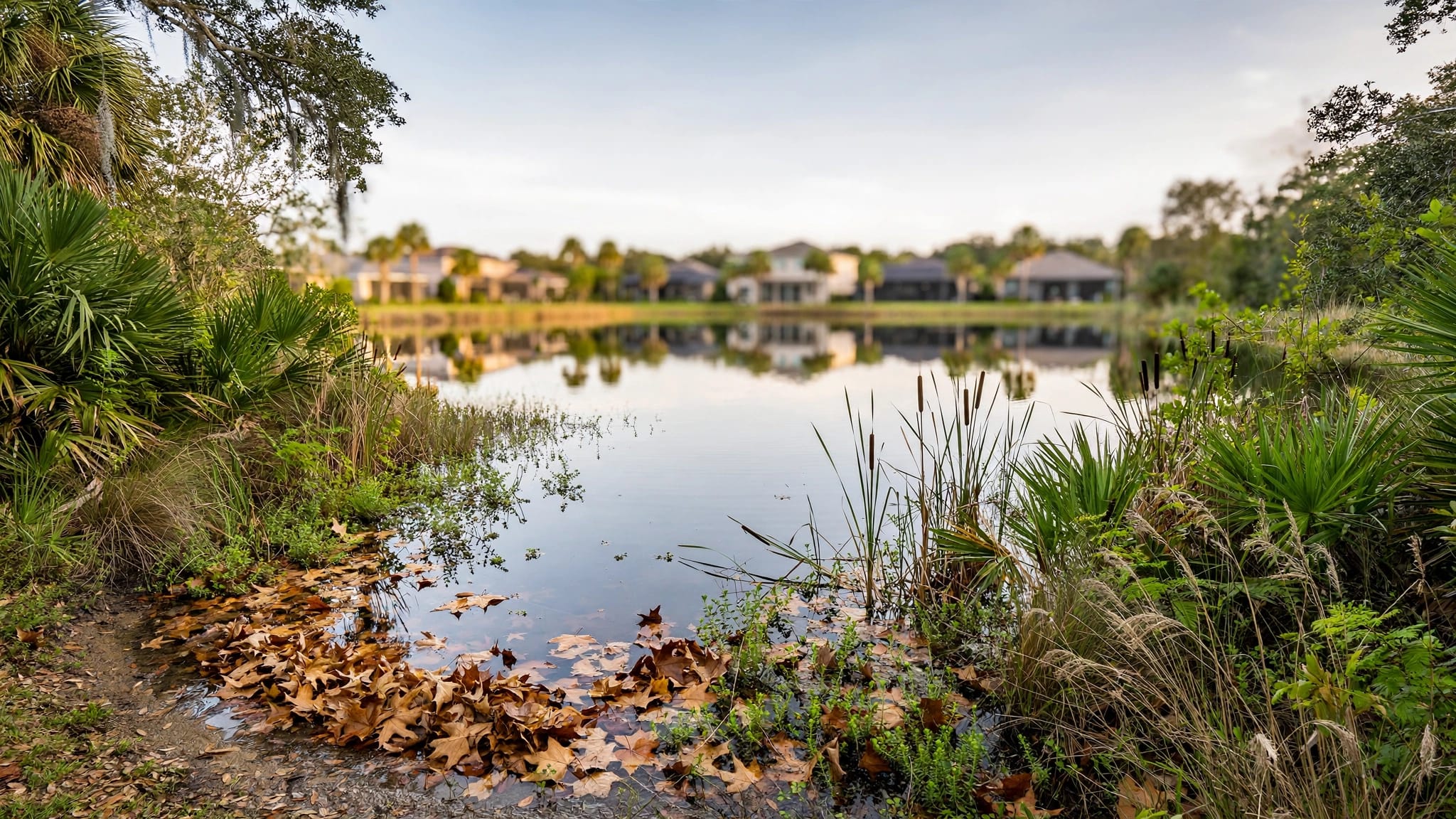
In some communities, the shoreline itself becomes part of the problem. If grass clippings, leaves, or soil sit at the edge, they slowly break down and feed the water below. The lake keeps receiving nutrients even when no one notices the source.
Signs Residents and Managers Notice First
Nitrogen problems do not always start with a water test. Often, residents see the signs first.
A few of the most common signs include:
- Water that turns green, dull, or tea-colored after rain.
- Surface scum or slimy mats near the edges.
- Strong smells on hot afternoons.
- More weeds or filamentous algae along the shoreline.
- Fish stress, especially in shallow areas with little movement.
- Soft, dark muck building up near the bank.
None of those signs prove high nitrogen on their own. Together, they point in that direction.
Another clue is timing. If the lake looks worse after fertilizer season, summer storms, or heavy irrigation, nutrients are likely part of the story. A lake that changes fast after rainfall usually has runoff pressure.
The shoreline can tell a lot too. When edges get slick, slimy, or covered with stringy growth, the lake is holding more nutrients than it should. That growth may start in one spot, then spread into coves or around inflow areas.
A lake does not need to look bad from across the street to have a nitrogen problem.
That is why routine checks matter. A lake can look presentable during one board meeting and show major stress a month later.
Why Florida Weather Makes the Problem Worse
Florida gives algae a head start. Warm water, strong sun, and long growing seasons all help plant life move fast.
In cooler places, a lake may get a break during winter. Florida lakes rarely get that pause. When nitrogen enters warm water, algae can use it almost right away.
Storms add another layer. Heavy rain washes nutrients off roads, roofs, turf, and drainage areas. Then the sun comes back out, and the water heats up. That combination can turn a minor nutrient load into a visible bloom.
Many HOA lakes and retention ponds also have poor circulation. Water may sit for long periods. When that happens, nutrients stay near the surface or settle into the bottom, where they can keep feeding growth later.
This is where circulation matters. Moving water helps keep nutrients from settling into the same stagnant pattern. It also helps oxygen reach more of the lake.
Lake and pond aeration systems can help in this kind of setting, especially when a lake deals with repeated algae, odor, or low-oxygen stress. Aeration does not remove every nutrient source, but it can make the water less inviting to the problems that follow.
For HOA lakes, golf course ponds, and multi-lake properties, that extra movement can make a visible difference over time.
What HOA Boards Can Do Next
The first move is not guessing. It is measuring and tracing the cause.
A practical response usually starts with these steps:
- Test the water for nitrogen and related water quality issues.
- Check where runoff enters the lake after rain.
- Look for erosion, bare soil, or clippings near the shoreline.
- Review irrigation patterns, especially near slopes and drains.
- Add or improve circulation where the lake stays still.
That order matters because treatment without source control only buys time. If the lake keeps receiving nutrients, the same issue comes back.
Boards should also think about the shoreline itself. Eroding banks, thin turf, and trapped debris all feed the system. Cleaning those areas and managing them on a schedule helps reduce the load.
In many communities, the best results come from a combined plan. That can include water testing, algae treatment, debris removal, shoreline care, and aeration. When those pieces work together, the lake has a better chance of staying stable.
Seabreeze Lake Maintenance works on HOA lakes, commercial properties, and golf course water bodies throughout Southwest Florida. The company holds Commercial Applicator License #CM28291 and State-Licensed Specialty Contractor #SCC131152136, which matters when a property needs work done the right way.
If your community lake is showing signs of nutrient stress, Get a Free Quote and schedule a lake inspection.
Keeping Florida HOA Lakes Healthy
High nitrogen is more than a number on a water test. It is a sign that the lake is getting pushed harder than it should.
In Florida HOA lakes, that pressure often shows up as algae, odor, shoreline slime, and oxygen loss. The faster a board spots the pattern, the easier it is to manage.
A healthy lake does not happen by accident. It comes from watching the water, tracking the sources, and acting before the shoreline starts to tell the story.
Recent Posts