What High Alkalinity Means in Florida HOA Lakes
High alkalinity in an HOA lake can look harmless on paper. In practice, it changes how the water reacts to rain, heat, runoff, and treatment. For Florida communities, that matters because retention ponds and amenity lakes are part of the property, not just scenery.
When alkalinity stays high, the water can hold pH more tightly. That sounds stable, but it can also make algae control, water testing, and long-term maintenance harder to predict.
What high alkalinity means in an HOA lake
Alkalinity is the water's buffer. It tells you how well the lake resists sudden pH swings. In simple terms, a lake with higher alkalinity has more dissolved minerals, usually bicarbonates and carbonates, that help steady the chemistry.
That is different from pH. pH tells you how acidic or basic the water is right now. Alkalinity tells you how hard it is to change that pH.
For Florida HOA lakes, that difference matters. A lake can have high alkalinity and still have a pH that moves during the day. It can also stay stubbornly high after storms, heat waves, or heavy runoff. That is one reason the same treatment can work well in one basin and fall flat in another.
High alkalinity is a buffer, not a fix.
That buffer can help protect water from wild swings. Still, when alkalinity gets too high for the lake's conditions, it can narrow the range of options for maintenance. A community lake, retention pond, or golf course water body needs balance, not a chemistry fight after every storm.
Why Florida community lakes often test high
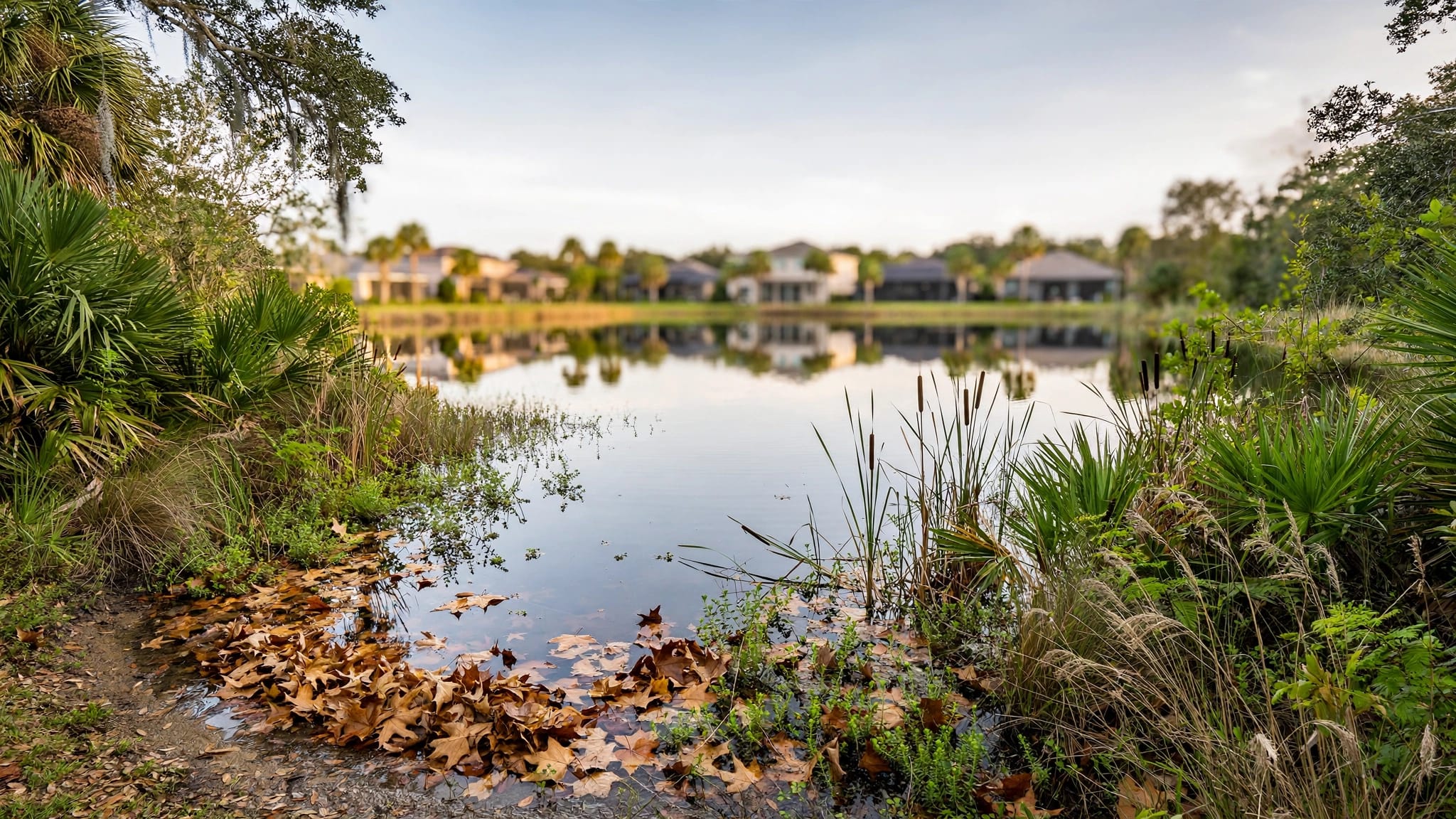
Florida weather puts constant pressure on lake chemistry. Heavy rain washes lawn fertilizer, dust, and organic debris into stormwater systems. Hot weather speeds up algae growth. Long dry stretches can also concentrate dissolved minerals as water levels drop.
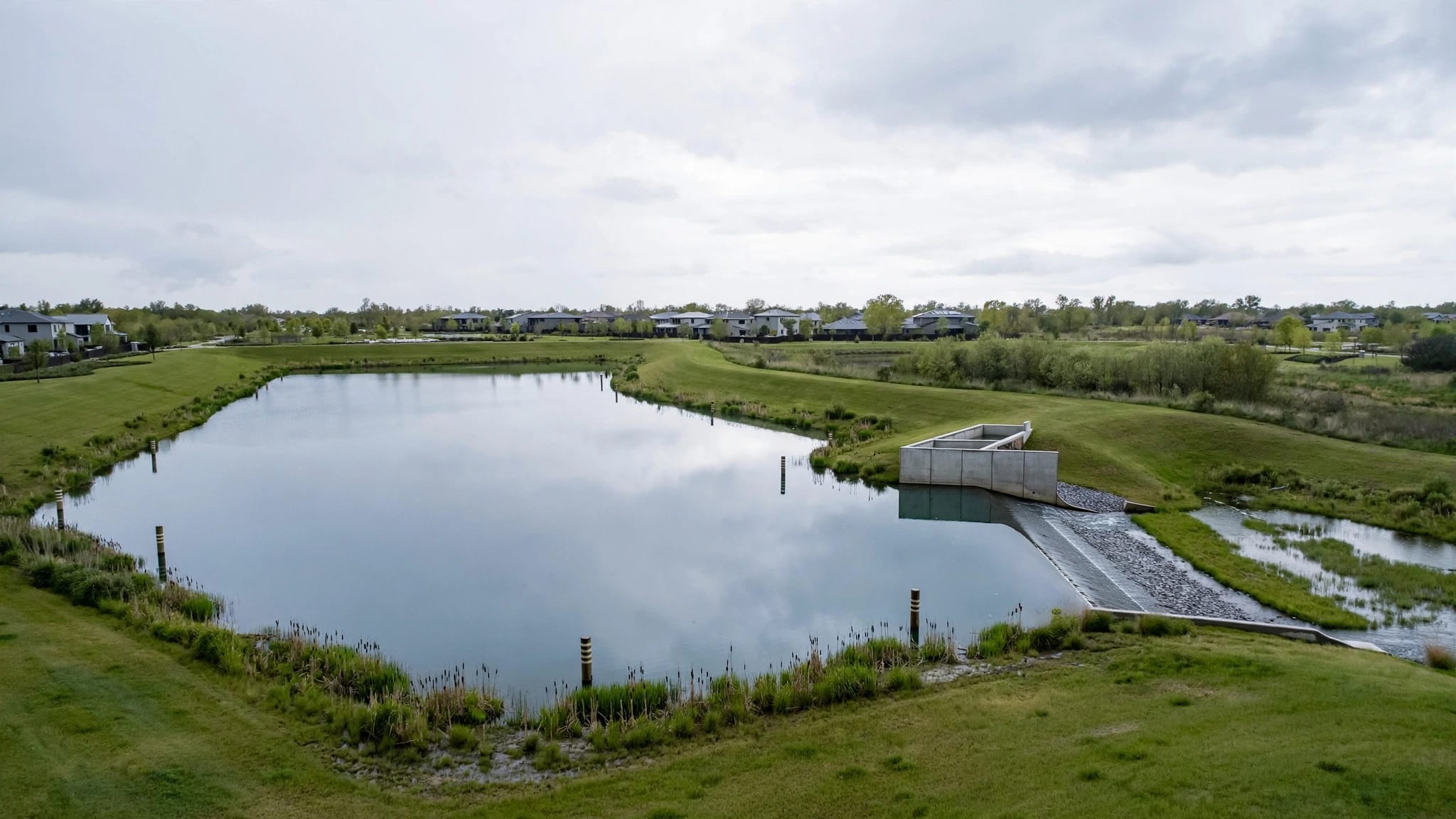
That is especially true in gated communities and multi-lake properties. Those lakes collect runoff from roads, roofs, sidewalks, and turf areas. In many cases, one lake receives overflow from another. So the chemistry in one basin can influence the next.
Several local factors push alkalinity upward:
- Runoff from landscaped areas carries minerals and nutrients into the water.
- Evaporation leaves dissolved material behind when water levels fall.
- Turf management and irrigation can add more mineral load over time.
- Sediment buildup can change how the lake holds and moves nutrients.
The result is a lake that may look calm while the water chemistry keeps shifting under the surface. That is why Florida HOA lake maintenance works best on a schedule, not a rescue plan. A one-time treatment might improve the look for a week. It will not solve a runoff problem that keeps feeding the lake.
In multi-lake communities, the issue can spread faster than people expect. One pond may show algae first. Another may show cloudy water. A third may have the same alkalinity problem but different symptoms because of depth, shade, or circulation.
What high alkalinity changes day to day
High alkalinity does not always create an obvious emergency. More often, it changes how the lake behaves over time. That makes it easy to miss until the same issues keep coming back.
Common signs include:
- pH stays steadier than expected, even after rain.
- Algae returns after short-term treatment.
- Water looks stable, but tests keep showing the same chemistry pattern.
- Different areas of the property behave differently, even with the same weather.
The lake can feel predictable at first. Then a warm spell, storm runoff, or nutrient spike pushes it off track. Because the buffer is strong, the lake may not swing fast, but it can stay in a problem range longer.
That matters for algae control. Warm Florida water already gives algae a head start. Add steady nutrients and a strong chemical buffer, and the lake can keep feeding growth after each rain event. The surface may look fine for a few days, then a green film or odor shows up again.
High alkalinity can also affect treatment timing. Some products work better when the water chemistry falls within a certain range. If the lake chemistry is not checked first, a treatment plan can miss the mark. That wastes time and money, and it can frustrate residents who expect the lake to improve after one service call.
How to manage alkalinity without chasing one number
Good lake care starts with the full picture. A single reading rarely tells the whole story. The right plan looks at alkalinity, pH, dissolved oxygen, nutrients, water movement, and sediment pressure together.
A lake might need testing more than treatment. Another may need better circulation before anything else. When the water sits still, oxygen drops near the bottom and organic matter builds up. That can feed algae and odors, even if the surface looks clean.
Aeration is often part of that plan. Better circulation helps keep water moving, supports healthier oxygen levels, and reduces the stagnant conditions that feed algae. For many Florida properties, lake and pond aeration systems are one of the most practical tools for improving long-term water quality.
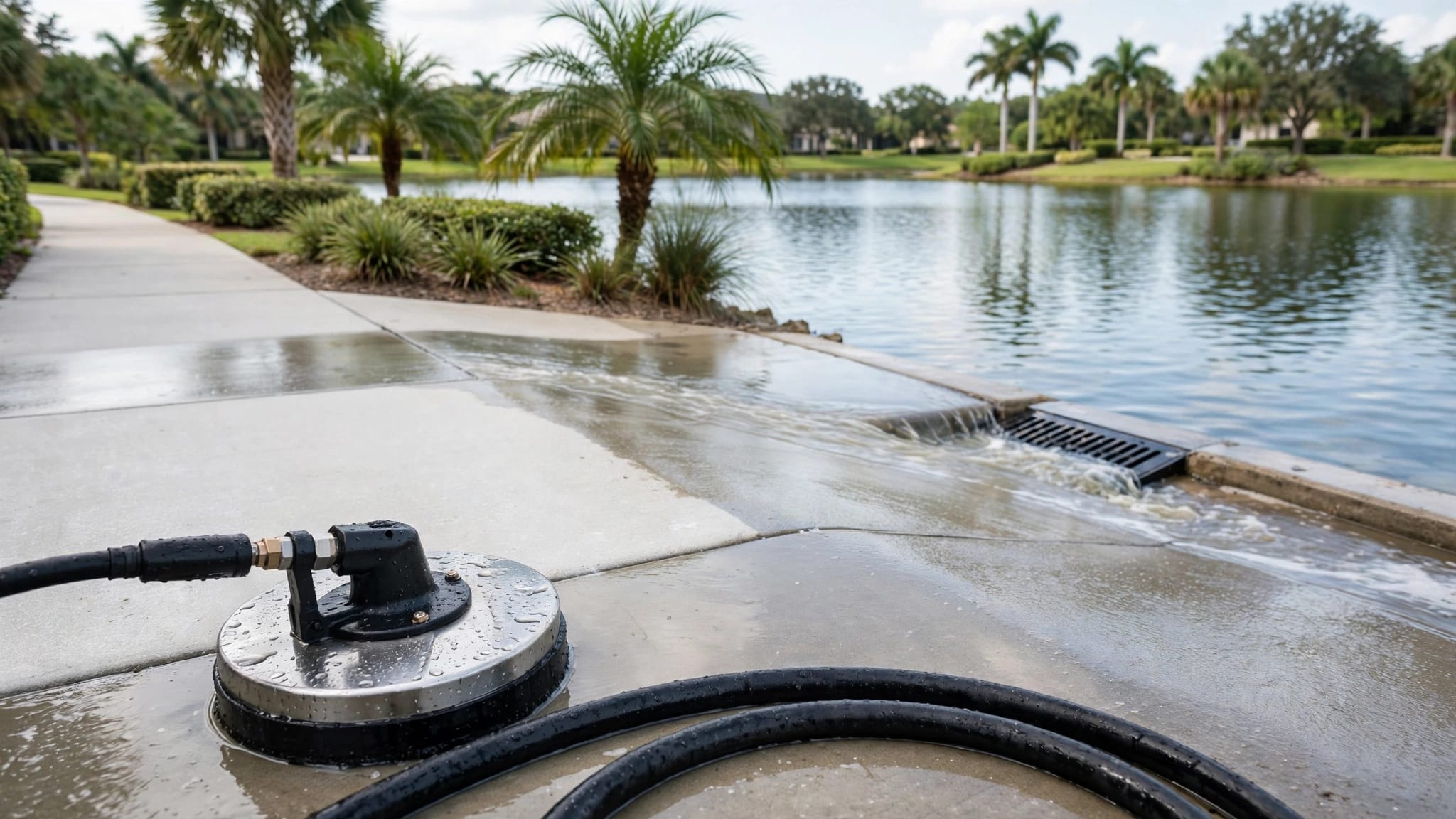
Runoff control matters too. If turf, mulch, or sediment keep washing in, the lake will keep carrying a heavy mineral and nutrient load. Shoreline care, debris removal, and erosion control all play a role. So does scheduling service before problems get obvious.
In other words, the goal is not to chase every test result. The goal is to keep the lake steady enough that small problems do not turn into constant repairs. That approach saves communities from reacting to the same algae bloom over and over.
When a lake needs a professional plan
A community lake needs outside help when the chemistry stays out of range, the water keeps turning green, or different basins on the property keep showing different problems. It also needs help when staff are guessing instead of testing.
That is where regular inspection pays off. A trained team can sample each lake, compare patterns, and spot the difference between a runoff issue, a circulation problem, and a sediment problem. That matters in HOA communities, golf courses, and commercial properties, where one mistake can affect curb appeal and resident safety.
Seabreeze Lake Maintenance works with retention ponds and lakes across Southwest Florida, including Fort Myers and Naples. The team holds Commercial Applicator License #CM28291 and State-Licensed Specialty Contractor #SCC131152136, which matters when treatments need to be applied the right way and on the right schedule.
If your lake keeps testing high or the same algae keeps coming back, Get a Free Quote for a lake inspection and a maintenance plan built around your property.
Conclusion
High alkalinity in a Florida HOA lake is a chemistry signal, not a surface problem alone. It means the water has a strong buffer, which can help with stability but also make the lake harder to manage when algae, runoff, or poor circulation show up.
For retention ponds and amenity lakes, the answer is steady testing, smart treatment, and a plan that fits the whole property. When the water is managed with the right balance, the lake stops acting like a surprise and starts behaving like part of the community infrastructure.
Recent Posts