How to Identify Fanwort in Florida Community Lakes
A submerged plant can look harmless until it forms a dense underwater bed near a shoreline, inlet, or stormwater outfall. Fanwort is one of those plants. Accurate identification helps an HOA, golf course, or community manager choose a focused response instead of treating the wrong species.
When a community board searches for "fanwort identification Florida," it needs more than a surface photo. This guidance is for Florida retention ponds, stormwater lakes, gated communities, and multi-lake properties, not koi ponds. Start by checking the plant's leaf shape, stem arrangement, growth pattern, and location.
What Fanwort Looks Like in a Florida Lake
Fanwort is the common name often used for Cabomba caroliniana , also called Carolina fanwort. It is a submerged aquatic plant that grows from roots anchored in lake or pond sediment. Its stems rise through the water column and may reach the surface in clear or shallow areas.
The submerged leaves provide the strongest visual clue. They are finely divided and shaped like small fans, with many narrow sections spreading outward from a central point. The leaves usually attach to slender stems in opposite pairs. From above, a thick patch may look soft and feathery. Underwater, the fan shape is easier to see.
Fanwort can also produce smaller floating leaves that look different from its underwater foliage. These leaves are narrower and may rest on the water surface near the flowering stems. When flowers appear, they are small and light-colored, often white with a yellow center, and rise above the surface on thin stalks.
A single plant may be easy to miss beside a large retention pond. Several rooted stems can create a dense stand that blocks visibility below the surface. Growth often becomes most noticeable near quiet shorelines, shallow shelves, coves, and areas where water movement is limited.
Color alone isn't a reliable way to identify fanwort. Green plants can change shade because of depth, water clarity, sunlight, and surrounding vegetation. The fan-shaped submerged leaves and opposite stem arrangement provide better evidence.
Fanwort Identification Florida: Field Clues That Matter
Reliable fanwort identification in Florida depends on several features viewed together. A close inspection should answer four basic questions:
- Do the underwater leaves spread into a flat, fan-like shape with fine divisions?
- Do the leaves attach in opposite pairs along a slender stem?
- Are the stems rooted in the bottom rather than floating freely?
- Does the plant form a submerged bed that reaches toward the surface?
The phrase "fanwort identification Florida" can lead property teams to quick image comparisons, but online photos rarely show the plant's full growth habit. A photograph may capture a leaf that looks similar to milfoil, coontail, or another submerged species. Take more than one image, including the whole patch, a close view of the leaves, and the water's edge.
For "fanwort identification Florida" work, leaf structure and growth habit matter more than color alone.
Check whether the plant remains anchored when the water moves slightly. Avoid pulling it out to test the roots, since broken stems can spread through the water. If a small piece is already loose, place it in a sealed container for identification rather than returning it to the lake.
A good maintenance record includes the date, lake name, shoreline location, approximate depth, patch size, and nearby features. Note whether the growth is close to an inlet, outfall, aerator, fountain, or connecting channel. Those details help a lake professional compare future inspections and spot expansion.
Separate Fanwort from Similar Florida Lake Plants
Several aquatic plants can look feathery underwater. Misidentification can lead to an ineffective treatment or unnecessary damage to desirable vegetation.
Hydrilla usually has narrow leaves arranged in whorls around the stem. Its leaves often have small teeth along the edges, while fanwort leaves spread outward in a distinct fan shape. Hydrilla can also produce underground tubers, but property staff shouldn't dig into the sediment to confirm a diagnosis.
Coontail has stiff, forked leaves arranged in dense whorls. The stems often have a bottlebrush appearance. Its leaves don't form the flat, delicate fans associated with fanwort.
Watermilfoil has feathery leaves, but those leaves typically appear in whorls around the stem. Fanwort's divided leaves usually look more open and fan-like. A close underwater photograph can help separate the two, although a field inspection is more dependable when plants are mixed together.
Water pennywort is another common source of confusion, especially when residents report a floating plant. Pennywort has rounded, coin-like leaves that sit on or above the water surface. It doesn't have fan-shaped submerged foliage. Review this water pennywort identification guide when a community lake has round floating leaves along the shoreline.
The comparison becomes harder when algae, leaves, and several aquatic plants grow together. In that situation, focus on the rooted plant beneath the surface instead of identifying the entire mass by its top layer.
How to Inspect a Retention Pond Without Spreading Fanwort
Residents and board members shouldn't wade into a retention pond to inspect aquatic weeds. Steep banks, soft sediment, submerged debris, wildlife, and poor water conditions can create safety problems. A shoreline inspection with a phone camera or zoom lens is safer and often provides enough information for the next step.
Use this process when a suspected patch appears:
- Photograph the entire shoreline section before moving closer. Include a fixed reference, such as a sign, dock, drain structure, or shoreline marker.
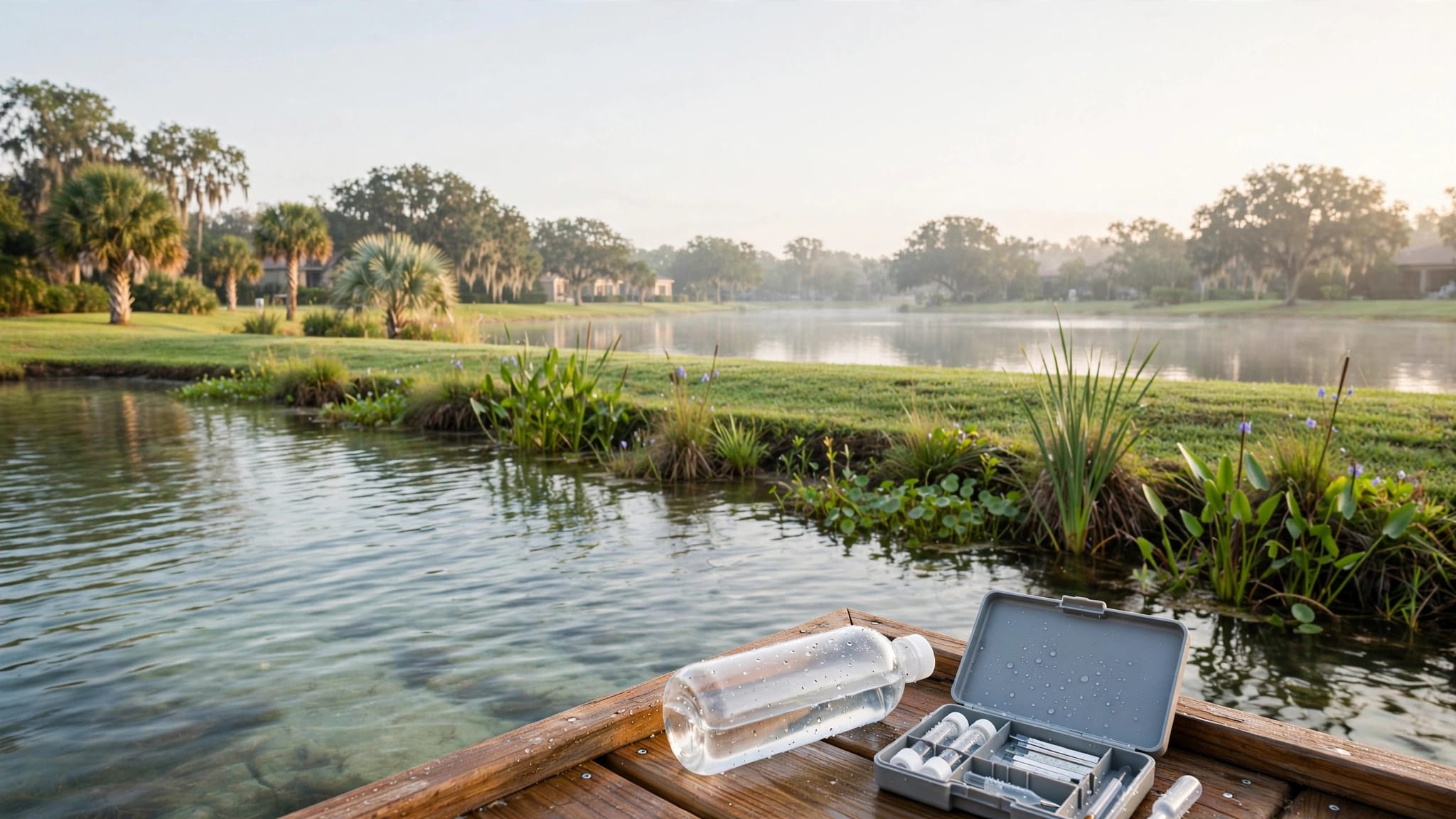
- Take close images of the submerged leaves and stems from above the water. If conditions allow, photograph the plant through clear water without touching it.
- Record the lake name, side of the pond, date, approximate coverage, and distance from the nearest inlet or outfall.
- Check whether loose fragments are collecting along the shoreline. Don't rake, cut, or pull a large stand without a plan for containing and removing the plant material.
- Send the images and site notes to a qualified aquatic plant professional for confirmation.
A suspected plant near an inlet deserves prompt attention because water movement can carry fragments into another section of the property. The same applies to a channel connecting multiple community lakes. One photo may confirm that a problem exists, but repeated records show how quickly it is changing.
Why Early Identification Changes Lake Treatment
Identification should come before herbicide selection, mechanical removal, or a broad lake treatment. Fanwort's rooted stems and dense growth can make control difficult when a patch has been left unchecked. Established aquatic weeds can also resist incomplete or poorly timed work, as described in this guide to why mature aquatic weeds resist lake treatments.
A treatment plan should account for the plant species, coverage, water depth, water movement, nearby desirable plants, and intended use of the lake. Retention ponds may receive stormwater runoff, while golf course lakes can sit near turf, irrigation systems, cart paths, and landscaped shorelines. Those conditions affect how a professional approaches the work.
Aquatic herbicide labels provide required directions for application, water use, rates, and precautions. Only a properly licensed applicator should choose and apply these products. A community should never copy an application rate from a social media post or treat a lake based on an uncertain plant identification.
Large areas of dying vegetation can add decaying organic matter to the water. That process may reduce dissolved oxygen, especially when warm weather and limited circulation already place stress on the lake. A responsible plan may treat manageable sections, remove loose material, and inspect the results before addressing additional areas.
Mechanical cutting also requires care. A cutter that leaves fragments in the water can spread a rooted plant to new locations. If removal is appropriate, the crew needs a way to collect and dispose of the material rather than allowing it to drift into another pond.
For HOA boards and golf course managers evaluating a provider, Seabreeze Lake Maintenance holds Commercial Applicator License #CM28291 and State-Licensed Specialty Contractor #SCC131152136. A site review can confirm whether the suspected plant is fanwort and identify conditions that may support continued growth. Communities can Get a Free Lake Health Assessment to discuss an inspection and maintenance plan.
Monitor Fanwort Across Connected Community Lakes
Treating one visible patch may not solve the problem if several ponds share inlets, outlets, pipes, swales, or overflow routes. A fragment that moves through the system can establish in another lake before anyone notices new growth. Read more about weed spread in community lake systems when a property contains multiple connected water bodies.
Create a simple map of each lake and mark suspected fanwort locations. During weekly or biweekly maintenance, compare the same shoreline sections instead of relying on memory. Record whether the patch is shrinking, expanding, returning after treatment, or appearing in a new basin.
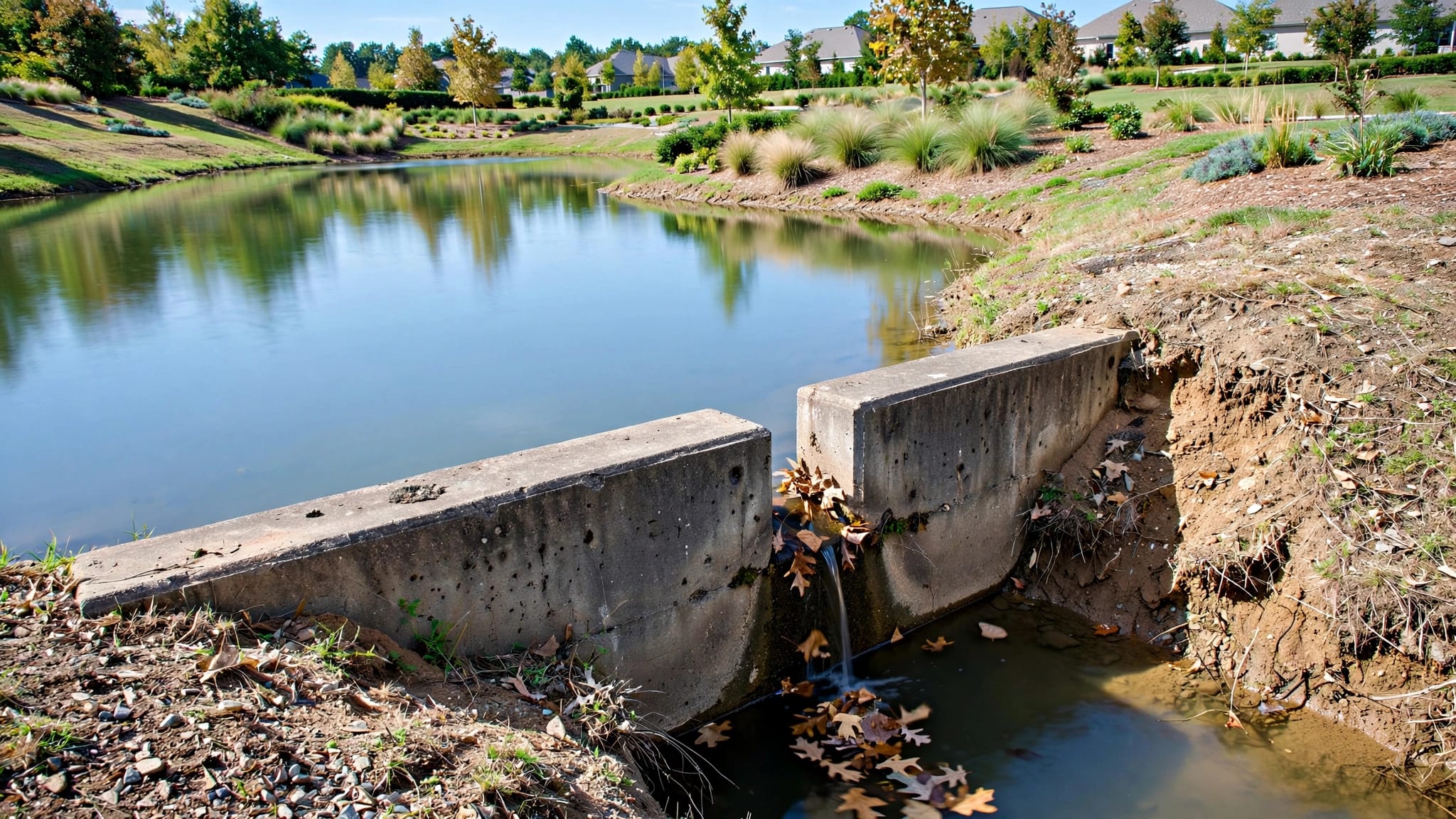
Inlets and outfalls deserve regular attention because they can collect plant fragments and carry them between ponds. Crews should also check areas with weak circulation, heavy sediment, nutrient-rich runoff, or repeated shoreline disturbance. These conditions don't identify fanwort by themselves, but they can help explain why aquatic weed growth persists.
Conclusion
Fanwort identification Florida communities can trust starts with the underwater leaf. Look for finely divided, fan-shaped leaves on opposite sides of rooted stems, then compare the plant with hydrilla, coontail, milfoil, and pennywort before choosing a treatment.
Photograph suspected growth from shore, document its location, and avoid pulling or cutting a stand without fragment control. For a gated community, HOA, or golf course, early identification gives the maintenance team a better chance to protect water quality, shoreline appearance, and the health of connected lakes.
Recent Posts