When Lake Sediment Releases Phosphorus Back Into the Water
When lake sediment releases phosphorus back into the water, it can feed recurring algae growth even after a surface bloom is treated. This process, called internal phosphorus loading , occurs when phosphorus stored in bottom sediment returns to the water column.
For HOAs, golf courses, and gated communities, the distinction matters. A lake may be receiving new nutrients from runoff, recycling nutrients already in its sediment, or experiencing both. Understanding the source helps property managers choose a response that fits each basin.
What internal phosphorus loading means
Stored phosphorus versus new inputs
Phosphorus reaches community lakes through stormwater, fertilizer, eroded soil, grass clippings, and decaying plants. Some settles with fine particles and organic material, adding to the sediment on the lake bottom. Over time, those deposits can become an internal source of phosphorus.
That differs from external loading , which brings new nutrients into the lake through runoff or drainage. Treating the water without addressing a continuing inflow may leave the main source untouched. Likewise, reducing runoff may not immediately resolve a problem if sediment continues to contribute phosphorus.
Why the distinction matters to a property
A lake that turns green repeatedly may have more than one source of nutrients. For example, a basin could collect runoff from landscaped areas while also holding phosphorus-rich bottom sediment. A surface algae treatment may control visible growth, but it doesn't automatically remove the nutrients that support another bloom.
On a multi-lake property, each waterbody can receive different drainage and sediment inputs. Accounting for internal and external phosphorus sources helps a board compare likely sources instead of assuming every pond has the same problem.
How phosphorus builds up in lake sediment
Runoff carries more than water
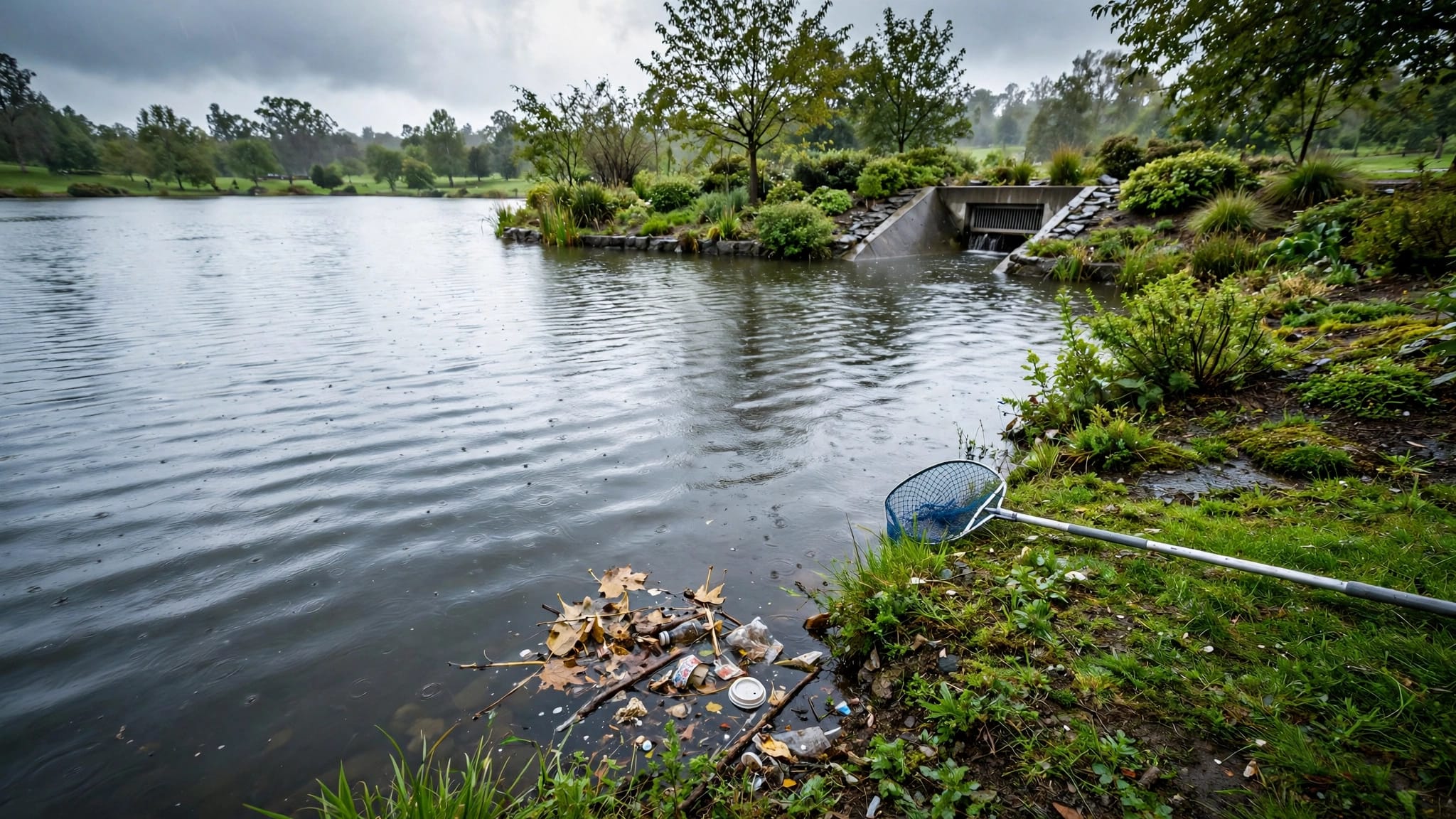
Rain can wash fertilizer, exposed soil, leaves, mulch, and grass clippings into inlets and shorelines. These materials add nutrients directly or carry particles that settle in the basin. Eroding banks and disturbed ground can add more sediment, especially where runoff repeatedly follows the same path.
In a connected lake system, drainage from one basin may affect another. A single inlet or outfall can deliver material from roads, lawns, or adjacent waterbodies. That's why a shoreline walk should include drainage paths and the areas around them, not just the water's surface.
Organic material adds to the bottom deposits
Leaves and aquatic vegetation that sink and decay contribute organic matter to bottom muck. The resulting sediment can hold nutrients from both the original plant material and particles carried in by runoff. Bottom disturbance during maintenance or other activity can also make settled material more noticeable in the water.
A nutrient problem may build before the lake looks unhealthy. The water can appear calm while phosphorus accumulates in sediment or enters through regular runoff. Tracking rainfall, visible changes, and maintenance activity can help identify patterns that a one-time observation misses.
Signs that phosphorus may be part of a recurring problem
Look for patterns, not one isolated bloom
Green water, surface scum, cloudy conditions, and recurring algae can point to nutrient pressure, but none proves that sediment is the source. Timing offers useful context. If water quality worsens after rain, inspect inlets, outfalls, bare banks, and landscaped areas for incoming runoff.
A bloom that returns after surface treatment may also justify a closer look at phosphorus sources. However, algae treatment and nutrient management have different roles. An algaecide can address active growth, but it doesn't bind phosphorus in the sediment or stop new nutrients from entering.
Compare lakes across the property
One lake may collect golf course runoff, while another receives stormwater from roads or homes. A third may have different sediment deposits or circulation patterns. Therefore, a property-wide average can hide the basin that needs attention most.
Keep records for each lake, including test results, rainfall, visible algae, water clarity, and maintenance work. Repeated changes around the same inlet or after similar conditions can help guide an inspection. The goal is to connect the observed problem with a plausible source before choosing a treatment.
What testing can reveal
Pair water results with sediment evidence
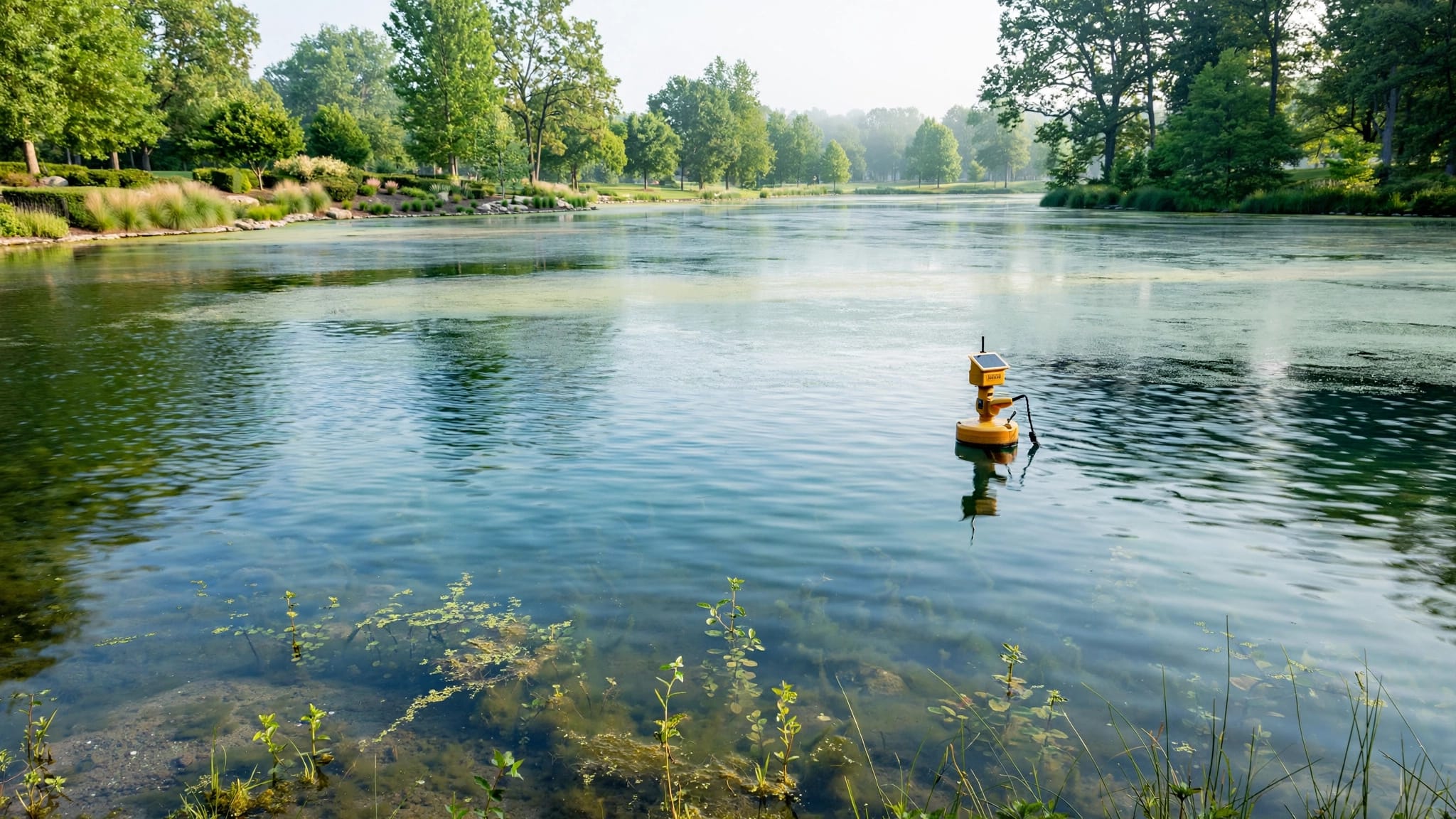
Water testing can show phosphorus levels in the water column, but it doesn't always identify where the phosphorus came from. Sediment core samples can help show how much phosphorus is available in bottom deposits. Together, the results provide a clearer basis for assessing whether internal loading may be contributing to a recurring issue.
A broader water-quality picture may include total phosphorus, soluble reactive phosphorus, pH, alkalinity, dissolved oxygen, temperature, and turbidity. The right sampling plan depends on the basin and the management question. Testing lake water and sediment before alum treatment is particularly relevant when a board is considering a phosphorus-binding treatment.
Inspect the watershed as well as the water
Testing works best when paired with a site inspection. Look at storm drains, swales, inlets, outfalls, eroded banks, exposed soil, and places where grass clippings or leaves collect. Review fertilizer practices and irrigation that may send water across paved areas or toward the shoreline.
For communities with several lakes, sample and assess each basin separately. One pond's result cannot reliably describe another pond with a different drainage area or sediment history. Reliable water quality testing for community lakes can help boards connect sample records with maintenance decisions.
How to interpret phosphorus results
There isn't one threshold for every Florida lake
A phosphorus result needs context. Florida DEP criteria vary with factors such as water color, alkalinity, and nutrient region. Examples include 0.03 mg/L, 0.09 mg/L, and 0.49 mg/L under different conditions, so these values aren't interchangeable universal action limits.
Compare results with the lake's own history and applicable criteria. A change from the basin's normal pattern may deserve attention even when a number cannot be judged in isolation. See lake-specific nutrient monitoring thresholds for more context on interpreting results for Florida HOA lakes.
Separate diagnosis from treatment choice
Elevated phosphorus can reflect runoff, sediment, or both. A high reading alone doesn't establish that sediment treatment is the right next step. The board should weigh water results, sediment evidence, drainage conditions, and patterns across the property before selecting a response.
A lake nutrient budget can help organize those sources over time. It can include fertilizer, stormwater, erosion, organic debris, and sediment, along with water-quality trends. This creates a practical record for budgeting and for comparing the outcome of maintenance changes.
Management options for a phosphorus problem
Reduce new nutrient inputs first
Source control helps prevent additional phosphorus from reaching the basin. Communities can review fertilizer practices, keep clippings and leaves out of drains, remove accumulated debris, and repair erosion where runoff carries soil into the water. Stabilized shorelines and appropriate vegetation can also help limit soil movement.
Aeration may improve circulation and oxygen conditions where stagnant areas are a concern. However, aeration doesn't remove every nutrient source, including phosphorus already stored in sediment. It works best as part of a broader plan that also addresses runoff, debris, and water-quality monitoring.
Consider alum only when the data support it
Alum, or aluminum sulfate, can be used to bind phosphorus in lake sediment. In water, it forms a floc that settles through the lake and can capture phosphorus and fine particles. The approach requires lake-specific planning, because alum consumes alkalinity and can lower pH.
Testing should inform whether the treatment fits the basin and how it should be planned. Sediment conditions, water chemistry, application scope, and follow-up monitoring all matter. A treatment may reduce the effect of sediment phosphorus, but it won't stop fresh nutrients from entering through stormwater. It also doesn't replace ongoing inspection and source control.
Managing several lakes on one property
Give each basin its own maintenance plan
A gated community or golf course may have several ponds with different depths, drainage areas, and sediment conditions. One may need closer attention to an inlet, while another may require investigation of bottom sediment or shoreline erosion. Assigning the same treatment to every basin can miss those differences.
Keep a separate record for each waterbody. Note test results, stormwater observations, algae activity, treatment dates, aeration conditions, and shoreline changes. Over time, these records can help boards see which maintenance actions correspond with more stable water quality.
Build decisions around measurable conditions
Before approving a major treatment, define the issue it should address and the results that will be monitored. A written scope can identify sampling locations, pre- and post-treatment tests, and follow-up reporting. That record also helps future boards understand why a project was selected and what it achieved.
At Seabreeze Lake Maintenance, we assess community lakes and retention ponds across Southwest Florida. Our team holds Commercial Applicator License #CM28291 and State-Licensed Specialty Contractor #SCC131152136. A free lake health assessment can help identify whether the next step is source control, testing, or another maintenance measure.
Key Takeaways
- Internal phosphorus loading occurs when phosphorus stored in lake sediment returns to the water.
- Runoff and sediment can contribute at the same time, so visible algae alone doesn't identify the source.
- Water testing, sediment cores, and a site inspection provide more useful context than one result by itself.
- Florida phosphorus criteria vary by lake conditions, and each basin on a multi-lake property needs its own assessment.
- Alum may address sediment phosphorus when the chemistry and treatment plan support it, but it doesn't stop new runoff inputs.
Frequently Asked Questions
Does recurring algae prove that sediment is releasing phosphorus?
No. Recurrent algae can reflect runoff, sediment, or multiple nutrient sources. Water testing, sediment sampling, and an inspection of drainage and shoreline conditions help distinguish among them.
Will aeration stop internal phosphorus loading?
Aeration can improve circulation and support oxygen conditions, but it doesn't remove all phosphorus stored in sediment. It should be considered alongside nutrient source control and lake-specific monitoring.
Can alum prevent all future algae blooms?
No treatment can prevent fresh nutrient inputs from entering through runoff. Alum can bind phosphorus in sediment when a lake's conditions support its use, but ongoing maintenance and runoff control remain important.
Should every pond in a community receive the same treatment?
No. Drainage, sediment, depth, and water quality can differ between basins, even within one property. Decisions should reflect the conditions in each lake.
Conclusion
Sediment can keep contributing phosphorus after the runoff that first carried nutrients into a lake has passed. That's why recurring algae calls for a source-based diagnosis, not only another surface treatment.
For communities and golf courses, the strongest plan combines lake-specific testing, inspection of runoff pathways, and maintenance suited to each basin. Understanding where phosphorus comes from is the first step toward managing it well.
Recent Posts