Can Golf Course Pesticide Runoff Affect Lake Water?
Yes, golf course pesticide runoff can affect community lake water quality when rain or excess irrigation carries turf chemicals into drainage systems. However, a lake's location beside a fairway doesn't establish pesticide contamination.
For HOA boards and golf course managers, the priority is source control supported by useful water-quality records. Start by separating runoff pathways, nutrient problems, and pesticide concerns rather than treating every change in lake appearance alike.
Key Takeaways
- Rainfall, irrigation runoff, drains, and swales can connect treated turf to community lakes.
- Algae and cloudy water don't prove pesticide contamination.
- Routine water-quality measurements and pesticide-specific laboratory testing answer different questions.
- Prevention requires coordination between turf crews, lake managers, and licensed applicators.
How Golf Course Pesticide Runoff Reaches Lakes
Rain, irrigation, and connected drainage
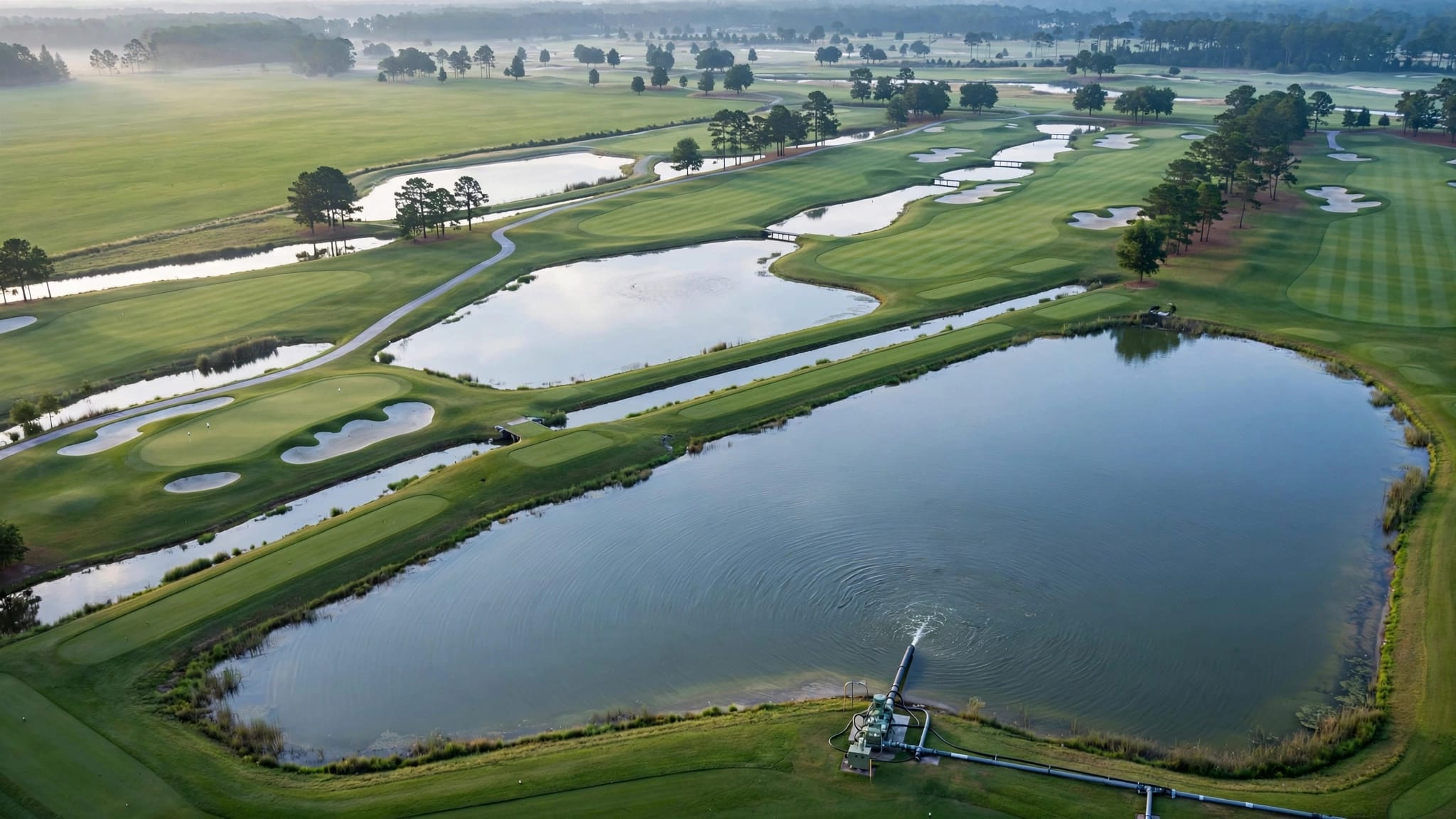
Retention ponds collect stormwater, so surrounding land management matters. Fairways, landscaped beds, cart paths, and maintenance areas can drain toward the same basin.
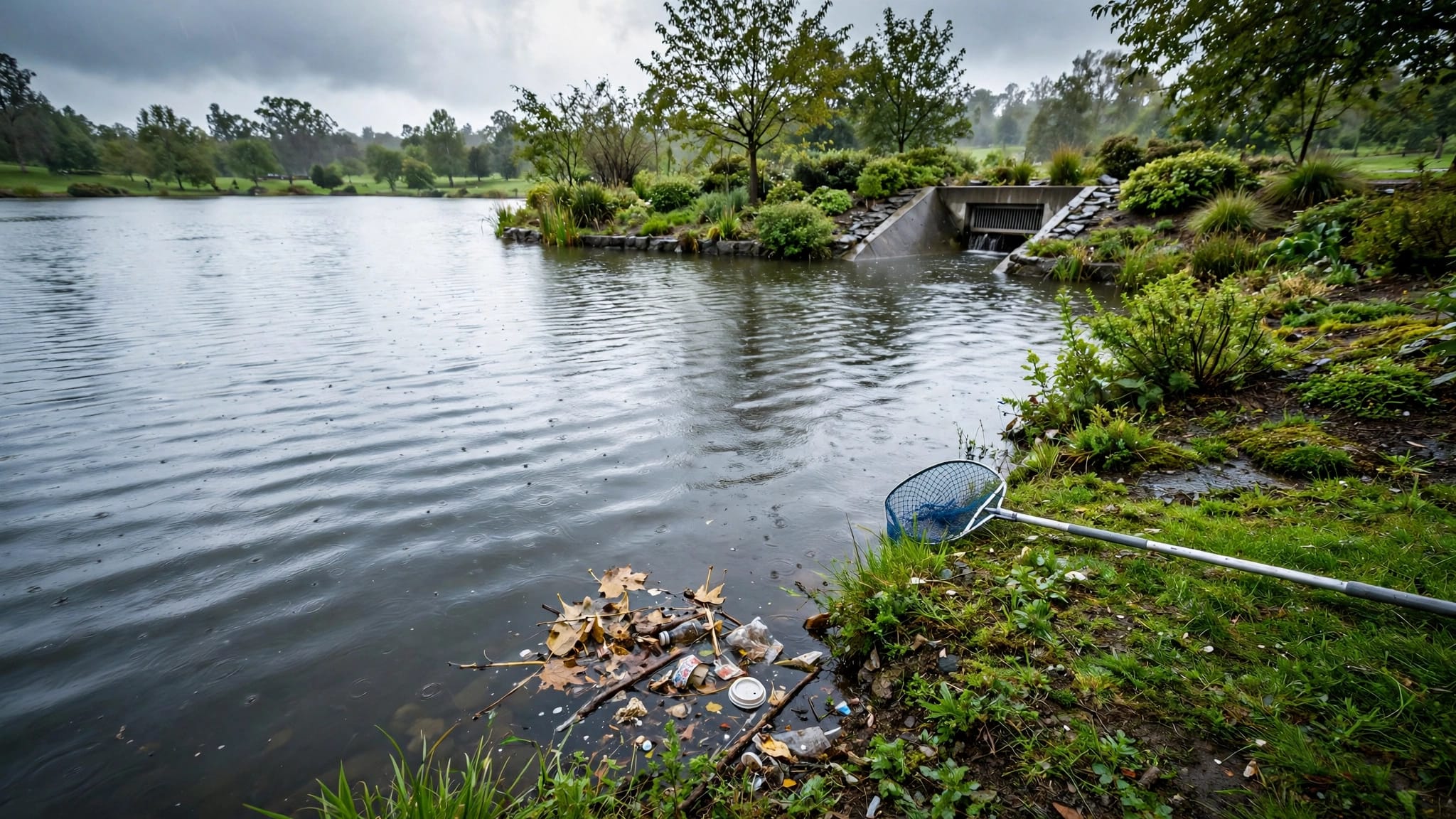
After rainfall, inspect inlets, swales, and discharge points for runoff patterns, sediment deposits, and damaged banks. Excess irrigation can also create a route between treated areas and lake water.
On multi-lake properties, map those connections. Water entering one pond may continue into another through pipes or overflow structures. Addressing only the most visible shoreline problem can leave the upstream source unchanged.
Pesticides and fertilizer create different concerns
Pesticides control pests, including weeds, insects, and plant diseases. Fertilizers supply nutrients. Although both may leave managed turf with runoff, they require different investigations.
Nitrogen and phosphorus can support algae and nuisance vegetation. Therefore, green water after rain may warrant nutrient testing rather than an assumption about pesticide exposure.
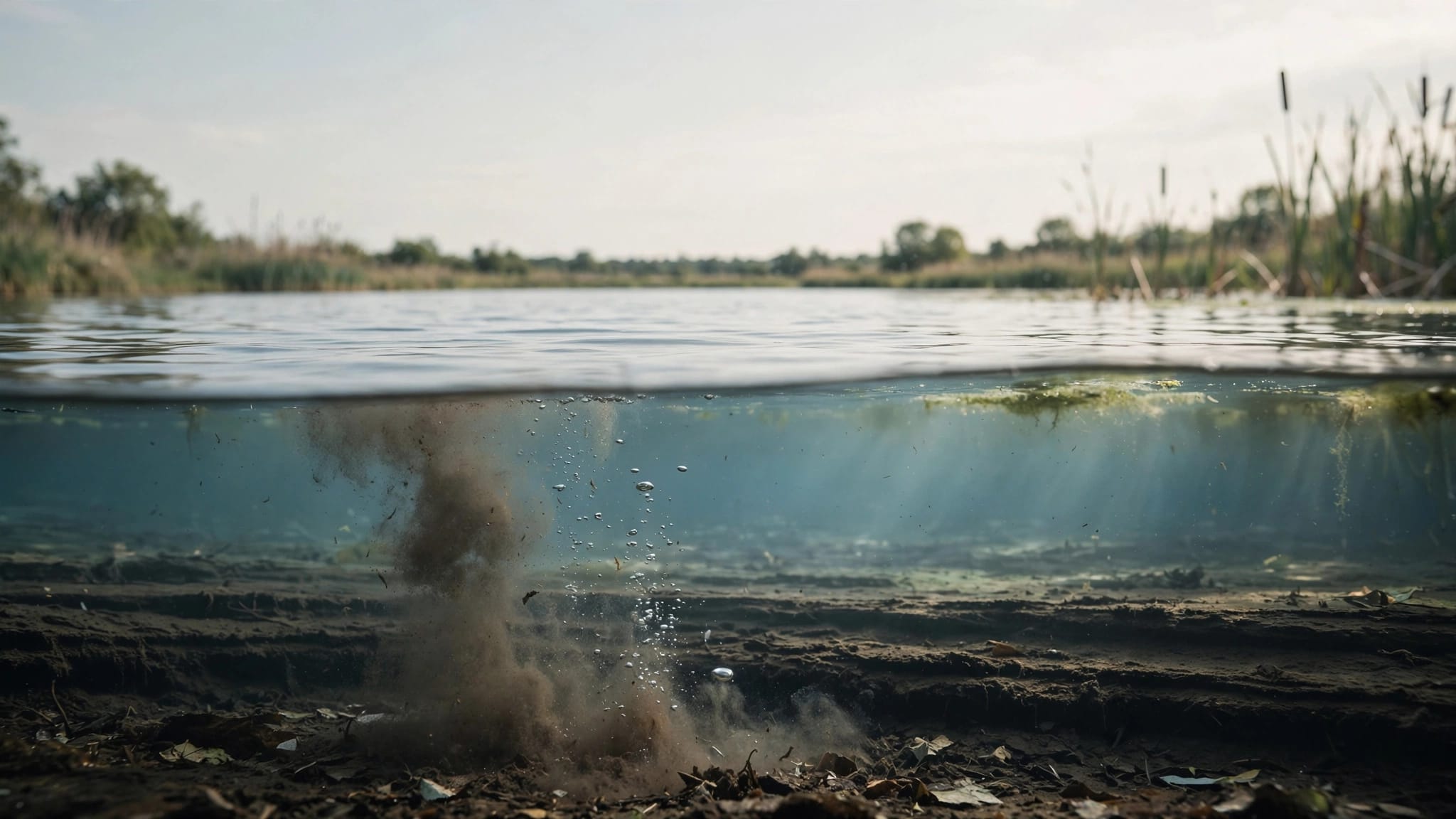
Understanding how fertilizer runoff affects lakes helps boards distinguish recurring nutrient problems from concerns requiring chemical-specific investigation. Sediment, decaying vegetation, and poor circulation can also change lake appearance without establishing a pesticide source.
What Water Testing Can Tell Your Community
Establish the lake's baseline conditions
Routine monitoring provides context before a complaint becomes an emergency. Useful field measurements include temperature, dissolved oxygen, pH, conductivity, and water clarity.
Laboratory testing may add phosphorus, nitrogen forms, chlorophyll-a, and turbidity. Together, these measurements help distinguish nutrient pressure, suspended sediment, and oxygen problems.
Keep records for each basin rather than averaging the entire property. Include rainfall, irrigation changes, turf applications, aquatic treatments, and photographs from consistent locations. Our guidance on multi-lake water sampling plans explains how a structured program supports comparisons across connected lakes.
Match pesticide testing to the actual concern
A routine nutrient panel doesn't answer whether a particular pesticide is present. Chemical-specific investigation requires the product's active ingredient and a laboratory method suited to that substance.
Application records help define the question. Record the product, application area, date, weather, and drainage route. Then a qualified environmental professional can design sampling around the suspected pathway.
Timing and location matter because a sample collected far from an inlet may describe different conditions than stormwater entering the lake. Similarly, a laboratory result describes the sampled conditions, not every rainfall event or every connected pond.
Reduce Runoff Before Adding More Treatments
Prevention starts with turf management. Use integrated pest management, which combines pest identification, monitoring, cultural practices, and targeted pesticide use when warranted.
Applicators must follow product labels, including application rates, precautions, setbacks, and restrictions related to water. Weather planning and irrigation management should reflect those directions rather than a generic waiting period.
Vegetated shoreline buffers and stable banks can help intercept sediment and slow overland runoff. However, they won't intercept water that bypasses them through a pipe. Keep drainage structures functional while addressing pollutant sources upstream.
Turf pesticides and aquatic herbicides also require separate treatment decisions. An aquatic treatment plan must follow the applicable label and account for lake use. Large amounts of dying vegetation can increase decomposition and reduce dissolved oxygen, especially during warm weather. Staged treatment and follow-up inspections may be appropriate.
At Seabreeze Lake Maintenance, we support Southwest Florida communities with water-quality management, shoreline inspections, and routine lake care. Our credentials include Commercial Applicator License #CM28291 and State-Licensed Specialty Contractor #SCC131152136.
Frequently Asked Questions
Does algae after rain mean pesticides entered the lake?
No. Stormwater can carry fertilizer nutrients, soil, grass clippings, and other organic material. These inputs can contribute to algae growth or cloudy water. Appearance alone can't identify a pesticide, establish its source, or explain every water-quality change.
Compare observations with rainfall, application records, and appropriate testing before choosing a response.
Can aeration solve a pesticide runoff concern?
Aeration supports circulation and dissolved oxygen management, but it isn't a substitute for source control or chemical-specific investigation. A working fountain also doesn't establish that water quality is acceptable throughout the lake.
If residents report sudden fish distress or an unusual discharge, seek prompt professional assessment rather than adding another treatment without a diagnosis. Keep residents informed about any applicable water-use restrictions.
Protect Lake Water by Managing the Drainage Area
Golf course pesticide runoff deserves a focused investigation, not a diagnosis based on water color. The strongest plan connects turf practices, drainage routes, lake-specific records, and testing that answers the actual concern.
For recurring runoff problems or unexplained changes, Get a Free Lake Health Assessment to schedule a call and lake inspection with our team. Reducing what enters the lake gives routine maintenance a stronger foundation.
Recent Posts