Florida Cattail Control for HOA Lake Shorelines
Cattails can turn a clean pond edge into a dense wall of tall, brown-stemmed growth in one growing season. For a Florida HOA, that affects curb appeal, shoreline access, drainage visibility, and the community's maintenance budget.
The right response depends on the size of the infestation, the pond's purpose, and how much shoreline the association wants to preserve. Effective cattail control in Florida usually combines removal, targeted aquatic treatment, water management, and follow-up inspections. First, the property team needs to understand the specific factors driving the growth to develop a successful long-term pond management strategy for the community.
Key Takeaways
- Cattails spread rapidly through underground rhizomes, which is why simple cutting or mechanical removal of the tops rarely solves the problem long-term.
- Effective solutions involve a combination of mechanical removal, the precise application of aquatic herbicides, and selective thinning to address specific shoreline conditions.
- HOA boards should balance shoreline aesthetics with environmental health by protecting native plants while still managing cattail growth near access points, drainage structures, and common viewing areas.
- For large or multi-lake properties, a comprehensive lake management strategy is essential, including a written treatment plan, detailed application records, and recurring inspections.
- Seabreeze Lake Maintenance holds Commercial Applicator License #CM28291 and State-Licensed Specialty Contractor #SCC131152136.
Why Cattails Spread Along Florida Lake Edges
Cattails, which belong to the Typha species, thrive in shallow water and saturated soil. They spread efficiently through wind-dispersed seeds and a persistent root system, which consists of thick, horizontal stems that produce new shoots. Once these rhizomes occupy the soft bottom along a pond shoreline, small patches can quickly expand into dense, aggressive stands. In many Florida waterbodies, these plants act as an invasive species that can rapidly overtake managed landscapes.
Florida's warm climate provides cattails with an exceptionally long growing season. Factors such as fluctuating water levels, high nutrient input from fertilizer runoff, sediment buildup, and damaged shorelines create more shallow habitat suitable for their expansion. A pond that once featured a narrow plant shelf may develop a broad cattail band after years of sediment accumulation.
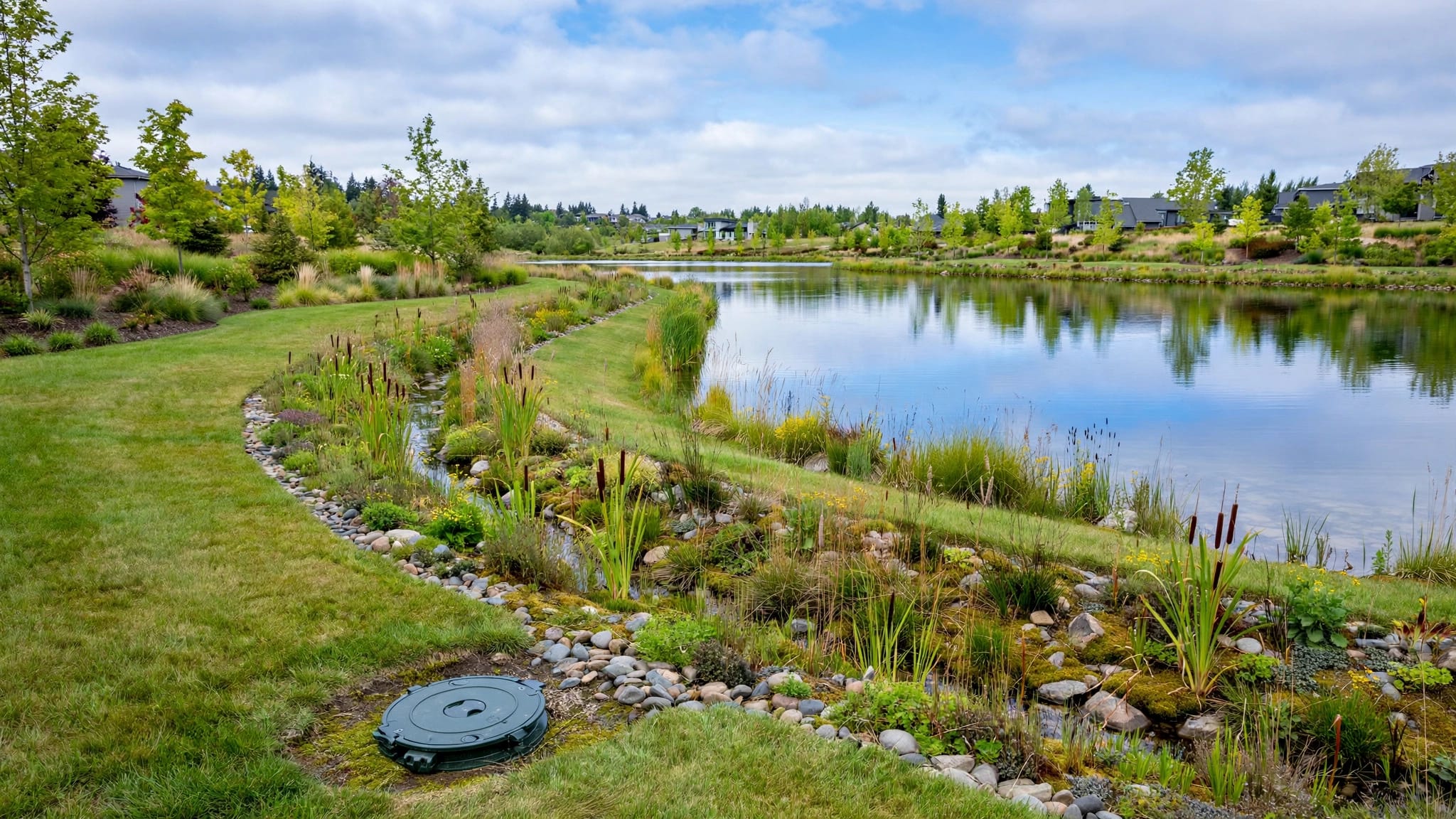
Cattails are not automatically a problem. A controlled stand can provide essential wildlife habitat and help absorb excess nutrients from the water. The concern typically begins when growth blocks stormwater inlets, conceals signs of erosion, limits public access, or spreads across areas the community specifically designed for open water and attractive views.
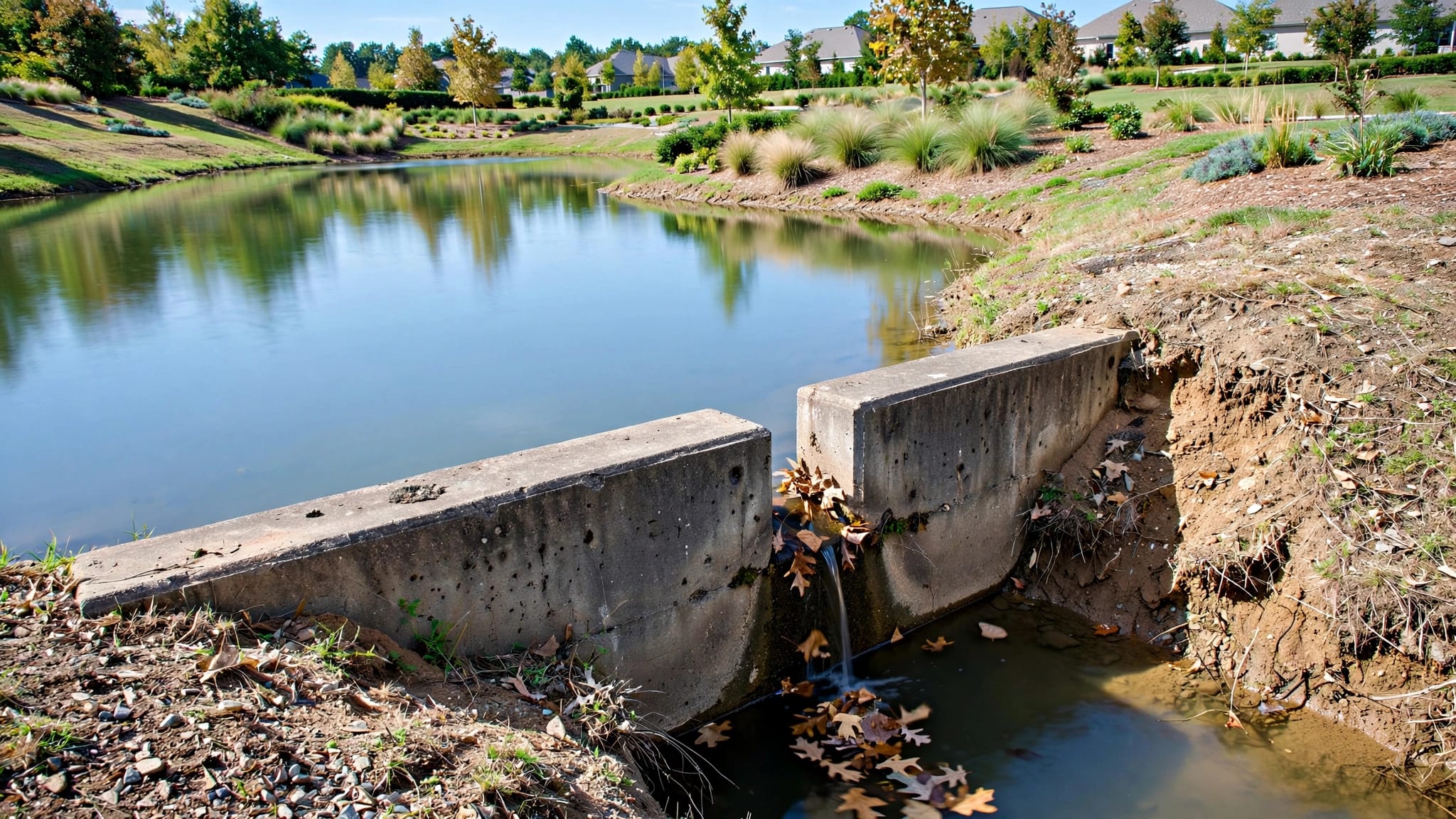
Location matters just as much as plant density. Growth near a discharge pipe can interfere with routine inspections and proper drainage. Growth beside a walking path may create a hidden edge where residents cannot see the water. Around golf courses, cattails can affect play areas and restrict maintenance access. On a large HOA property, scattered patches may require different management strategies than one continuous stand.
Before selecting a control method, a lake professional should identify the vegetation correctly. Cattails often grow alongside bulrush, pickerelweed, maidencane, and other native shoreline plants. Broad treatment without precise plant identification can remove desirable vegetation and leave the original overgrowth problem unresolved.
The initial inspection should also evaluate water depth, bottom conditions, shoreline grade, nearby inlets, and the location of native littoral plants. These details help determine whether the primary goal is total removal in a defined area, gradual thinning, or long-term containment.
Cattail Control Options for HOA Shorelines
No single treatment fits every retention pond or lake. A professional plan may use one method or combine several methods during different phases of the work.
| Control option | Best fit | Main limitation |
|---|---|---|
| Hand-pulling or excavation | Small patches and accessible edges | Labor-intensive and may disturb the bottom |
| Mechanical cutting and hydro-raking | Temporary access and biomass removal | Rhizomes remain and regrowth is common |
| Aquatic herbicide | Dense stands and hard-to-reach areas | Requires licensed application and careful planning |
| Water-level management | Sites with controllable water levels | Most HOA ponds cannot be drained or adjusted freely |
| Selective thinning | Shorelines where habitat and appearance both matter | Requires repeat inspections and precise work |
Mechanical removal
Hand-pulling can work on young plants or small patches when workers remove the rhizomes and dispose of the plant material. Pulling only the visible leaves leaves underground growth behind. Excavation can remove more of the root zone, but it may stir sediment, damage shoreline grades, and disturb nearby littoral plants. For larger projects, hydro-raking serves as an effective method for dredging shallow edges and removing invasive vegetation.
Mechanical cutting is useful when the immediate need is access. Crews may cut tall stems around an outfall, walking route, or inspection area. However, the plant can send up new growth from its rhizomes. Cutting should therefore be treated as a short-term measure unless the work also addresses the underground plant structure. Proper biomass removal is essential because cut vegetation should stay out of the water. Floating stems can collect at culverts, decompose along the edge, and add excess organic material to the pond.
Aquatic herbicide treatment
Aquatic herbicides can control dense stands when mechanical work is not practical. Systemic herbicide products move through actively growing plant tissue to reach the rhizomes, while contact products provide faster results on exposed foliage. Licensed applicators often choose between EPA approved tools, such as glyphosate for systemic control or diquat for fast-acting contact treatment. In many cases, using selective herbicides allows the technician to target invasive growth while sparing desirable native flora.
The correct product, rate, timing, and treatment area depend on the label and site conditions. A licensed applicator must account for nearby desirable plants, irrigation intakes, fish, wildlife, water movement, and any restrictions on the product label. Treating a large dense stand all at once can also create a heavy load of decaying vegetation, which may reduce dissolved oxygen as it breaks down.
For that reason, staged treatment often makes sense. A contractor may treat one section, manage the debris, inspect the result, and then address the next section. This approach keeps more open water available and gives the crew a chance to protect plants the HOA wants to retain.
Water-level adjustments
Lowering water levels can expose cattail roots and make removal easier, but most community retention ponds do not have the equipment or approval needed for major water-level changes. Stormwater function, downstream discharge, groundwater conditions, and local requirements all matter.
Water-level work should never interfere with a pond's drainage role. It also will not solve the issue if the water returns to the same shallow, nutrient-rich conditions without follow-up maintenance.
Selective thinning and replacement
Some communities do not need a bare shoreline. They need a controlled edge with clear sightlines and stable vegetation. Selective thinning can remove cattails from priority areas while preserving beneficial littoral plants elsewhere.
After treatment, the open space may need appropriate shoreline vegetation or erosion control. Bare soil can wash into the pond during heavy rain, creating new shallow areas for cattails and other weeds. A planting plan should match the water depth, shoreline slope, and maintenance goals of the property to ensure long-term stability and aesthetics.
How HOAs Can Build a Practical Cattail Management Plan
A board should treat cattail removal as an ongoing component of integrated pest management rather than a one-time landscaping project. The first step involves creating a shoreline map that identifies each patch, access point, stormwater structure, high-visibility area, and any protected shoreline buffer zone.
Next, divide the work into clear priorities. A practical order may address blocked outfalls, unsafe access areas, severe view obstructions, and expanding patches near open water. Lower-priority habitat areas can remain under observation if they do not interfere with drainage, water quality, or community use.
The management plan should answer several basic questions:
- Which areas require cattail removal, and which areas will remain as managed habitat?
- Does the property need access for inspections, fishing, or emergency lake management work?
- Which native plants should crews protect during treatment to maintain a healthy shoreline buffer?
- How will the team handle cut or treated vegetation?
- When will staff inspect the shoreline again?
A recurring inspection schedule is vital because cattails can return from missed rhizomes or nearby seed sources. Inspections should record patch size, water depth, regrowth, shoreline condition, and any new obstruction around pipes or structures. These observations help boards assess how current efforts are impacting long-term water quality.
HOAs should also coordinate with their professional lake management company before approving broad shoreline work. A low-cost cutting job may look effective for several weeks, yet rapid regrowth can eventually make the total cost higher. A written scope should identify treatment areas, follow-up visits, debris removal, notifications, and any planting or erosion repairs.
For properties with several lakes, the contractor should track each water body separately to optimize pond management. Conditions often vary between individual ponds, even within the same community. One lake may need targeted herbicide treatment, while another requires sediment or shoreline repairs before vegetation control can yield lasting results.
Safety, Licensing, and Florida Compliance
Aquatic weed treatment requires significantly more care than typical landscape maintenance. Products must carry an EPA approved label for aquatic use, and professional aquatic applicators must strictly follow all label directions. These instructions outline essential requirements, such as application rates, environmental setbacks, water-use restrictions, necessary personal protective equipment, site posting, and re-entry intervals. By adhering to these standards, you protect the overall water quality and ecological balance of the community shoreline.
Residents should receive clear notice whenever upcoming maintenance may affect their access to the water. The HOA property manager should also identify irrigation intakes, fountains, electrical equipment, and popular fishing areas before any treatment begins. As a safety precaution, pets and residents should remain away from treated areas for the duration specified on the product label.
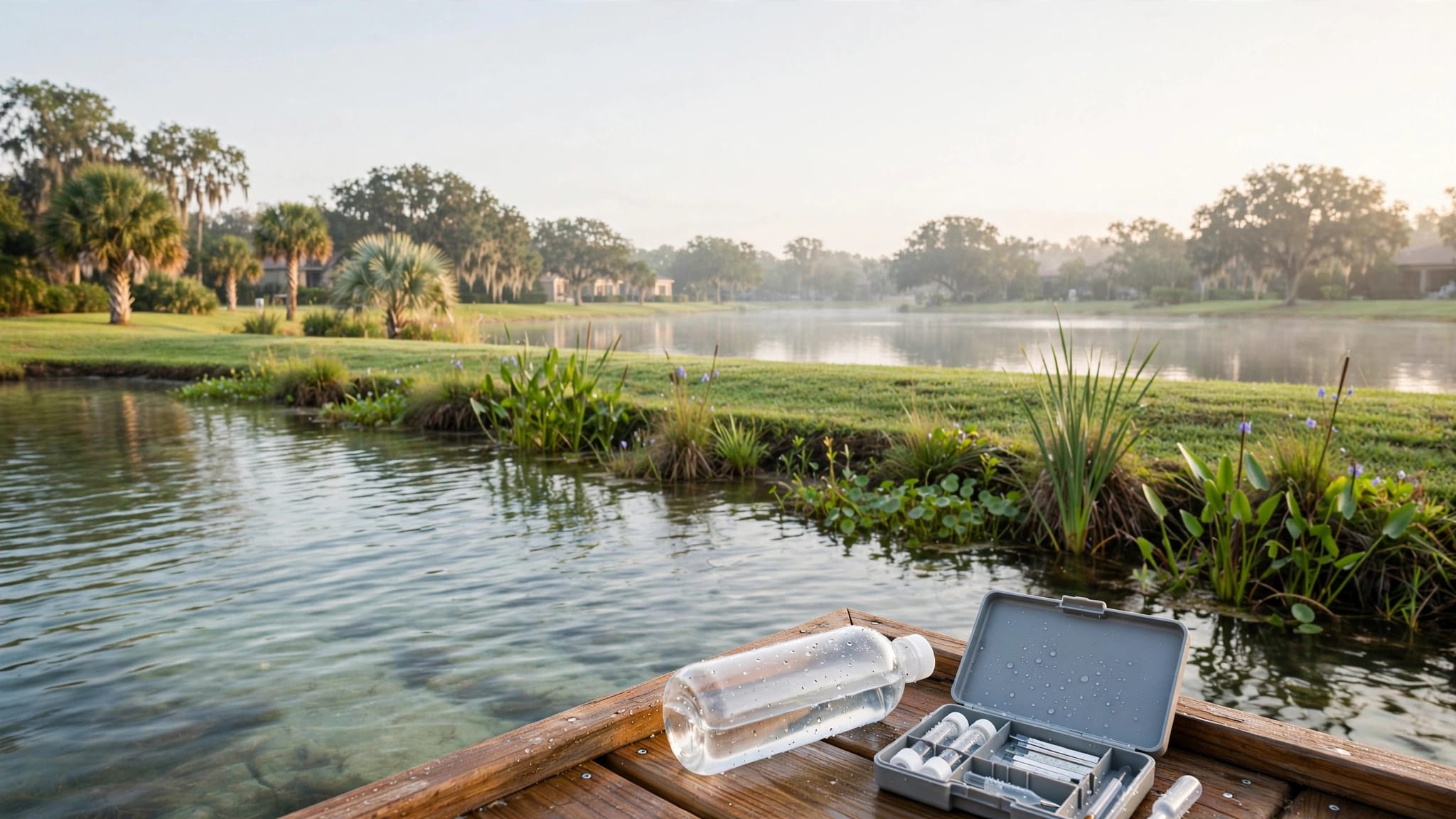
Maintaining thorough documentation helps the board answer resident questions and establishes a reliable property history. Records should include the date of service, the specific water body, the target plant, the treatment area, the exact product used, weather conditions, applicator details, and follow-up observations.
Seabreeze Lake Maintenance operates with Commercial Applicator License #CM28291 and State-Licensed Specialty Contractor #SCC131152136. Hiring professional aquatic applicators ensures that your management plan complies with Florida regulations while protecting the shoreline and the association's long-term records.
A cattail problem is easier to manage when the contractor treats the cause, the plant roots, and the shoreline conditions together.
When an HOA Should Bring in a Lake Maintenance Contractor
Professional help is often the best approach when cattails cover a large area, grow near critical drainage structures, return after repeated cutting, or appear alongside algae and other forms of aquatic vegetation. Seeking expert lake management also proves beneficial when an HOA manages multiple water bodies that feature different depths and complex shoreline designs.
A professional contractor can inspect the property, accurately identify the plants, mark specific treatment zones, and recommend a strategy that aligns with the lake's drainage requirements and aesthetic goals. Furthermore, a professional team can coordinate debris removal and schedule necessary follow-up visits, which are often overlooked when board members attempt to manage pond management tasks through several separate vendors.
Boards can Get a Free Quote for a comprehensive lake inspection and a professional cattail removal plan tailored to the unique shoreline conditions of their community.
Frequently Asked Questions
Why does cutting cattails rarely kill them?
Cattails grow from deep, underground root structures known as rhizomes that store significant energy. Simply cutting the visible stalks ignores the root system, which allows the plants to quickly generate new, aggressive growth after trimming.
Can I use store-bought herbicides to treat cattails on my own?
Managing aquatic vegetation in Florida requires specific products that are EPA-approved for water use and typically necessitates a commercial applicator license. Using the wrong chemicals can harm the pond's ecosystem, violate local regulations, and fail to kill the entire plant structure.
How often should my HOA schedule cattail maintenance?
Because cattails can spread from seeds or remaining root segments, an effective management plan should include recurring inspections throughout the growing season. A professional maintenance schedule allows for early intervention, keeping the plants from forming dense stands that obstruct drainage or degrade property views.
Conclusion
Effective Florida cattail control works best when the HOA treats the shoreline as part of a larger, integrated lake system. While mechanical cutting may provide immediate access and excavation may fit smaller patches, these methods are only pieces of a broader strategy. Utilizing aquatic herbicides for established stands is often necessary, but these treatments must be balanced with a focus on long-term health.
The strongest management plan prioritizes the protection of drainage structures, preserves beneficial native plants, and ensures the regular removal of dead aquatic vegetation. By viewing cattail removal as an ongoing process rather than a one-time task, communities can maintain a healthy pond shoreline that supports local wildlife. With clear priorities and professional, licensed lake maintenance, a dense cattail edge can become a manageable and aesthetically pleasing part of the community's routine lake care.
Recent Posts