HOA Trash Rack Inspection Checklist for Florida Communities
A clogged trash rack can turn a routine rainstorm into a drainage problem near homes, roads, cart paths, or common areas. A thorough HOA trash rack inspection helps boards catch blocked flow, damaged metal, and bank erosion before water backs up where it shouldn't.
For Florida gated communities, golf courses, and multi-lake properties, these inspections belong in regular lake maintenance. This checklist focuses on retention ponds, stormwater lakes, inlet structures, outlet structures, and discharge points, not ornamental koi ponds.
What a Trash Rack Does for a Retention Lake
A trash rack is the metal bar screen or grate placed in front of an inlet, outlet pipe, riser, control structure, or overflow opening. It catches branches, plastic bags, aquatic vegetation, and other floating material before debris enters a pipe or blocks a smaller opening.
Its purpose is simple, but the consequences of neglect aren't. A rack may look partly clear from a shoreline, while a dense layer of leaves or hydrilla blocks the water path below the surface.
Know which structure you are inspecting
Start with the property's drainage plans, as-built drawings, permits, and operation and maintenance documents. Identify every structure that has a rack, grate, pipe, weir, skimmer, or control box.
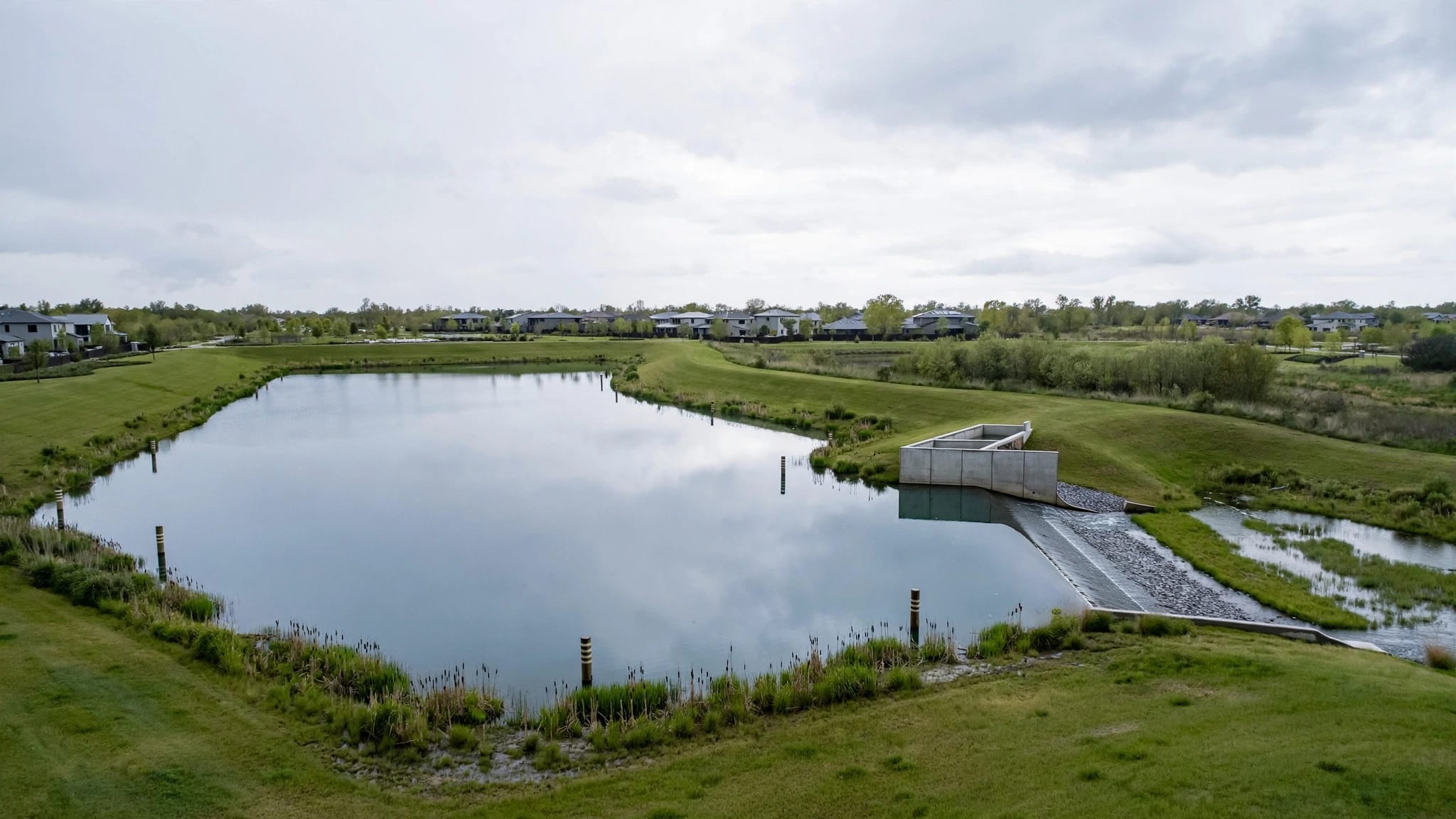
A permanent-water retention lake may include a discharge structure hidden near the bank. A dry detention area often relies more directly on inlets, outlets, pipes, and overflow paths. Boards that manage both should understand the differences outlined in this retention and detention pond guide.
Treat debris control as drainage maintenance
Palm fronds, landscape mulch, litter, grass clippings, and floating weeds tend to collect where water narrows. During a storm, that material can press tightly against a rack and reduce drainage.
A rack that is clear before rainfall can clog within hours when wind and runoff push debris toward the outlet.
Inspect the approach channel too. Sediment in front of the structure can direct debris into the rack or reduce the flow path before water even reaches it.
Set a Florida Inspection Schedule
Florida's wet season changes lake conditions fast. A fixed schedule gives managers a baseline, while storm checks address the events most likely to create blockages.
SWFWMD operation and maintenance guidance calls for routine inspections, often monthly or quarterly, plus checks after major rain events. The property permit may require a different schedule, so the association should follow its recorded documents first.
Use routine visits to spot gradual changes
For most occupied communities, inspect accessible trash racks at least monthly. During the rainy season, more frequent visits may be appropriate for racks near large drainage basins, low-lying roads, or homes.
A recurring visit should note changes in debris volume, vegetation growth, corrosion, water level, sediment, and bank condition. Review the site's complete Florida HOA lake service schedule when setting service intervals for multiple water bodies.
Inspect after heavy rainfall when conditions are safe
SWFWMD's pond operation guidance recommends checking a facility after a storm that produces more than one inch of rain in 24 hours. The suggested timing is about 24 to 48 hours after the rain, when staff can see whether the system drained as intended.
Never require employees or vendors to approach a rack during dangerous flow. A post-storm visit can wait until standing water, lightning, unstable banks, and fast-moving discharge conditions no longer create a hazard.
HOA Trash Rack Inspection Checklist
Use the same inspection form for every pond, lake, and drainage structure. Give each location a clear name, such as "Lake 3 north outlet" or "Clubhouse basin overflow," so reports do not become vague.
During every HOA trash rack inspection , check the following items:
- Look for leaves, branches, plastic, mulch, fishing line, algae mats, and floating vegetation caught on the bars or around the opening.
- Confirm water can reach the rack. Remove sediment, vegetation, or accumulated debris in the approach channel when it restricts flow.
- Check for bent, missing, loose, or broken bars. Record cracked welds, loose bolts, failed fasteners, and detached sections.
- Look for rust, corrosion, sharp edges, or metal loss that could weaken the rack or create a resident safety issue.
- Inspect the pipe, orifice, weir, or grate behind the rack from a safe location. Note visible blockage, unusual water staining, or material wedged in the opening.
- Observe the water level and compare it with recent weather. A high water level after rainfall may indicate slow drainage, while an unusual low level can point to another issue.
- Photograph the rack, upstream side, downstream side when visible, and nearby shoreline. Take photos from the same locations each visit.
- Record the condition as clear, partially obstructed, blocked, damaged, or unsafe to inspect. Add the corrective action and completion date.
The board does not need to guess whether every item is normal. A useful report identifies what the inspector saw, what was removed, and which issue needs repair or engineering review.
Check the Inlet, Outlet, and Shoreline Together
A trash rack is only one part of the stormwater system. Water must reach the rack, pass through the structure, and move away without cutting into the bank or flooding adjacent areas.
Inspect the inlet side for runoff problems
Walk the swales, curb inlets, catch basins, pipes, and low spots that feed the lake when access allows. Look for mulch lines, washed-out soil, standing water, displaced sod, and sediment deposits.
These conditions show where stormwater carries material toward the lake. If runoff repeatedly delivers grass clippings or landscape waste to one location, adjust maintenance practices rather than clearing the same rack every week.
Inspect the outlet and discharge area
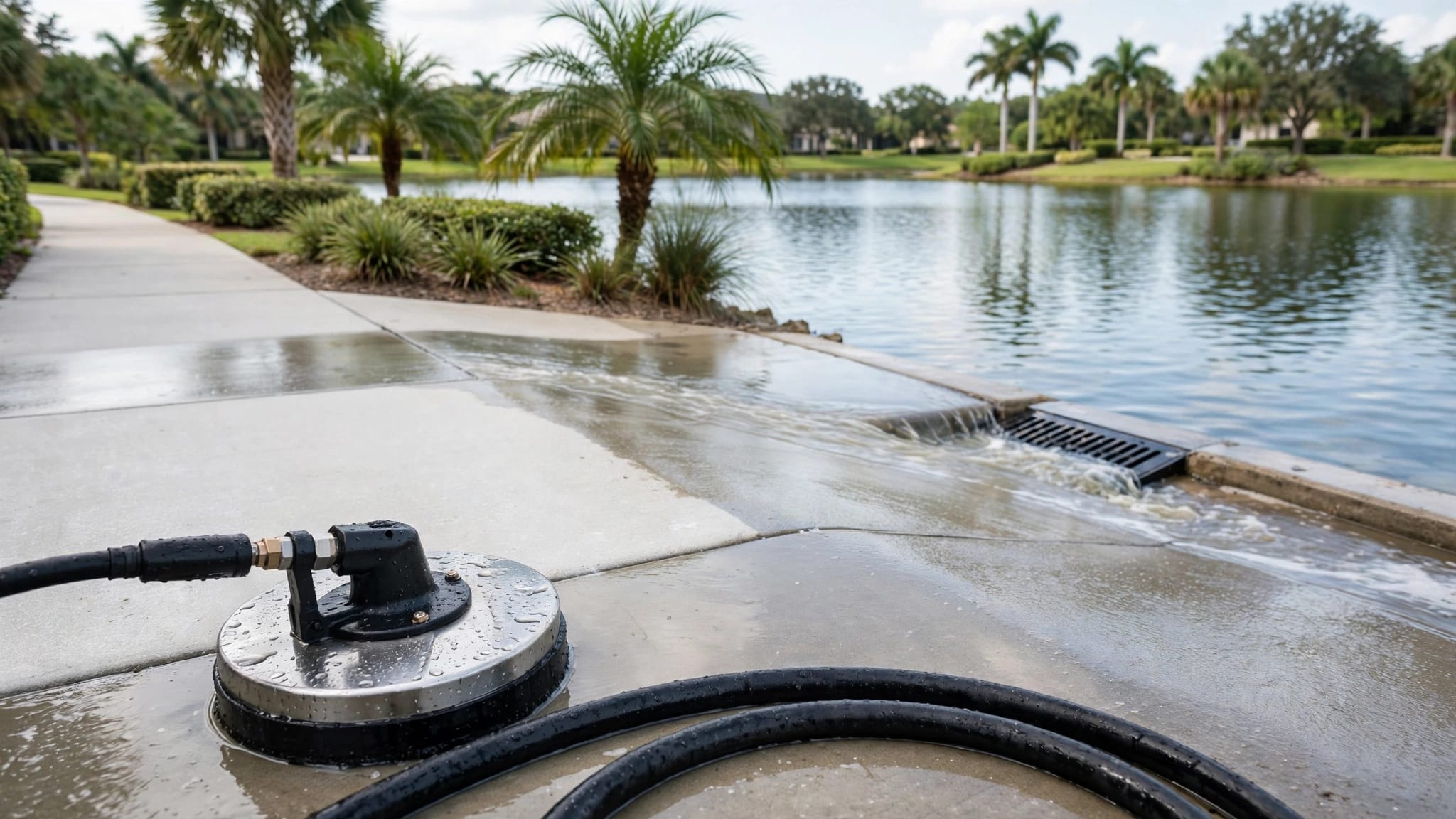
Look beyond the rack at the visible outlet pipe, apron, riprap, control box, and discharge channel. Water can bypass a blockage, scour soil around a structure, or create a new flow path across the bank.
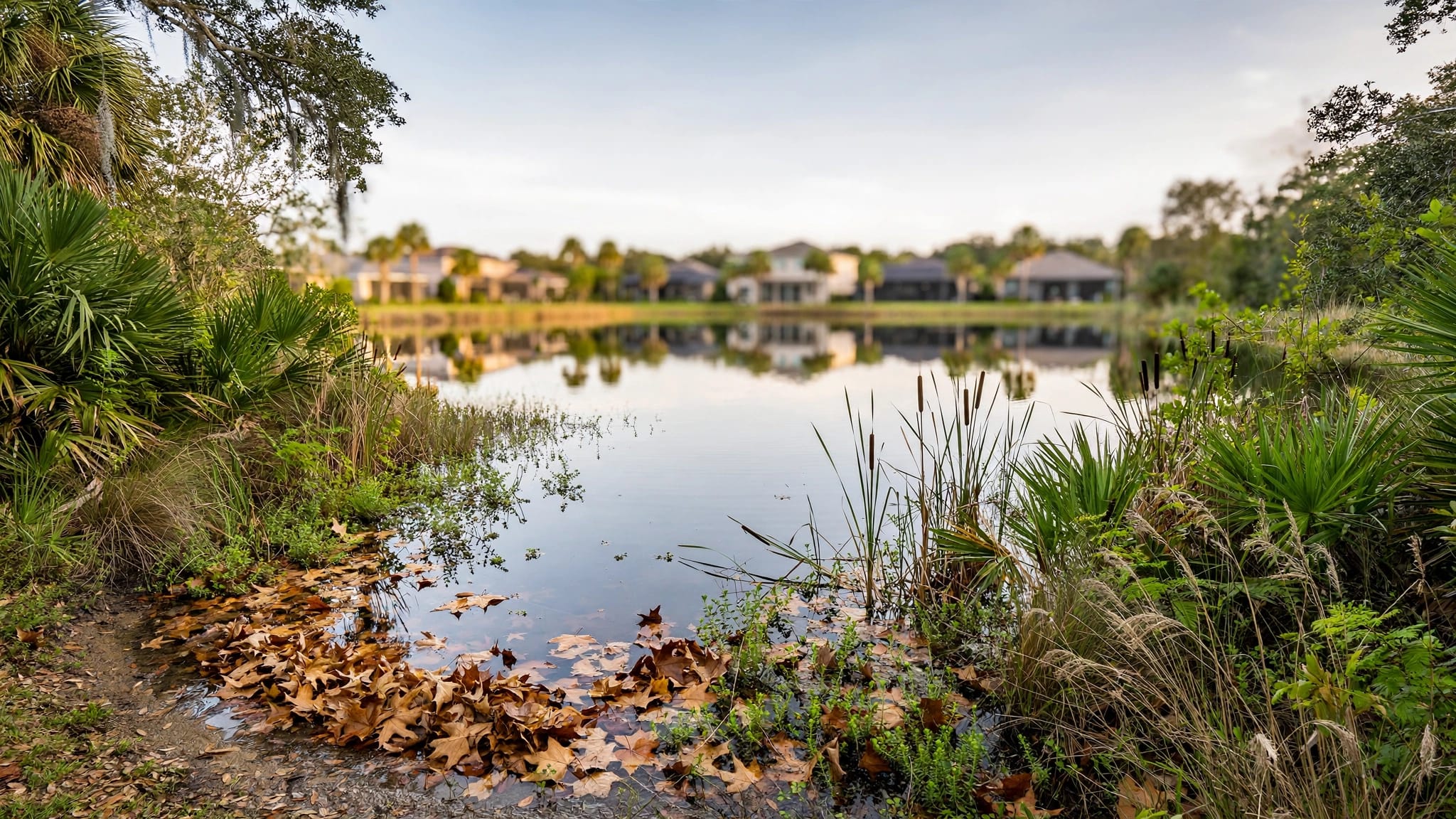
Exposed pipe, sinkholes, settling soil, undermined concrete, and loose riprap call for prompt review. Keep an eye on plant growth around the structure as well. Cattails, torpedo grass, and dense floating plants can reduce access and trap more debris near the outlet.
For a wider property walk, use a Florida HOA lake inspection checklist that includes water quality, erosion, shoreline conditions, and visible drainage concerns.
Keep People Safe Around Drainage Structures
Trash racks often sit in low areas with wet banks, steep slopes, deep water, and changing flow. A blocked structure needs attention, but nobody should take risks to clear it.
Stop work during high flow or lightning
Do not reach through a rack, climb into a control structure, or enter water to remove debris. Fast water can pull a person toward a pipe or outlet, even when the surface looks manageable.
Postpone the work if lightning is nearby, water is moving quickly, the bank is soft, or the structure cannot be approached safely. Restrict access with cones, temporary barriers, or signage when a damaged rack creates a hazard near a path or common area.
Account for wildlife and resident activity
Florida lake edges may have alligators, snakes, fire ants, and wasp nests. Keep a safe distance from every alligator. If an alligator at least four feet long appears to threaten people, pets, or property, contact the FWC Nuisance Alligator Hotline at 866-FWC-GATOR (866-392-4286).
Also schedule work with residents in mind. Crews should know gate procedures, keep equipment away from pedestrian routes, and avoid leaving debris piles where children or pets can reach them.
Document Conditions and Escalate Repairs
Inspection notes protect the HOA's maintenance history and make recurring problems easier to spot. A single photo may show a blockage. Six months of dated photos can show why it keeps happening.
Build a usable inspection record
Each entry should include the date, weather, recent rainfall, lake or basin name, structure location, condition observed, photo numbers, work completed, and follow-up needed. Include a note when access was blocked or conditions were unsafe.
SWFWMD guidance calls for records of inspection findings, corrective work, and routine and non-routine maintenance. Florida DEP also maintains stormwater facility inspection Form 62-330.311(3), which can help boards understand the type of details regulators may review.
Use a shared folder or property management platform so board members and managers can retrieve the history when budgets, resident questions, or permit reviews arise.
Know when routine cleaning is not enough
Call for a qualified review when the rack repeatedly clogs, bars are damaged, the outlet does not drain after storms, or erosion develops near the control structure. Sediment removal, structural repair, pipe flushing, shoreline stabilization, or engineering analysis may be needed.
Do not authorize alterations to a permitted stormwater structure without reviewing the permit file and consulting the appropriate professional. Replacing a rack with a different size, changing an outlet opening, or modifying an overflow elevation can affect drainage performance.
Put Trash Rack Work in the Lake Maintenance Contract
The association's service agreement should state who inspects racks, how often visits occur, and what happens after heavy rain. "Lake maintenance" alone is too broad for a drainage system that protects common areas and nearby homes.
A well-written scope should name each lake and control structure, set photo-reporting rules, define debris removal, and identify who approves extra repairs. Boards can use this HOA lake service RFP guide to build inspection and reporting requirements into a bid request.
Verify credentials for the work involved
Aquatic weed and algae treatment requires the proper pesticide licensing. Structural installation, repairs, and contractor-class work may require separate credentials based on the proposed scope.
For Southwest Florida communities, Seabreeze Lake Maintenance holds Commercial Applicator License #CM28291 and State-Licensed Specialty Contractor #SCC131152136. Treatment records should still identify the individual applicator, products used, treatment area, weather conditions, and follow-up observations.
If your community needs a documented assessment of drainage structures, shoreline conditions, and lake health, Get a Free Lake Health Assessment.
A Clear Rack Supports a Healthier Community Lake
A Florida community lake is part of the property's drainage system as well as its curb appeal. Regular HOA trash rack inspection keeps debris, plant growth, corrosion, and sediment from becoming hidden drainage failures.
The strongest routine is simple: inspect on schedule, check again after significant storms when safe, document each finding, and address structural concerns before the next heavy rainfall. Consistent records and timely repairs give boards a clearer picture of every lake they manage.
Recent Posts