How to Audit a Multi-Lake Maintenance Contract
A service report says "ponds treated," but which ponds did the crew visit? If your community has several retention ponds or lakes, that gap makes it hard to confirm what you paid for.
A useful audit compares the multi-lake maintenance contract with the map, visit records, treatment notes, invoices, and conditions at each waterbody. Start by checking whether the agreement describes the property you manage today.
Match the multi-lake maintenance contract to every basin
Contracts often name the community but leave its individual waterbodies unidentified. That makes it difficult to spot a missed pond or assign a recurring problem to the right service history.
Build one reliable lake inventory
List every retention pond and lake using the names or numbers on the property map. Add access points, inlets, outlets, fountains, aerators, and known shoreline trouble spots. Then compare that inventory with the contract's service locations.
Use the same identifiers on inspection reports, work orders, photographs, and invoices. If a crew reports algae in "Pond 2" while the site plan calls it "East Lake," ask the contractor to reconcile the records. Duplicate or informal names can hide missed work across a large community.
Check what each waterbody receives
Mark the contracted tasks beside each lake: inspection, aquatic weed and algae control, debris removal, water-quality observation, equipment checks, and shoreline review. Note any task assigned only to certain basins.
Different ponds may need different attention. A basin receiving heavy runoff may need closer observation than one with stable conditions. For more context on reviewing multi-lake maintenance contracts, compare the written scope with each pond's condition rather than assuming one service description fits the entire property.
Verify the schedule against actual visits
A contract's visit frequency matters only when the board can confirm when crews arrived and which lakes they checked. Separate contractor visits from observations made by the property manager or golf course staff.
Compare promised visits with dated records
Find the agreed service interval for each basin and count the completed visits during the audit period. Look for dated reports that identify the waterbody, findings, work completed, and items requiring follow-up. A single monthly invoice doesn't establish that every lake received its contracted inspection.
The Florida HOA lake inspection checklist offers a useful way to organize observations. It separates frequent checks for visible weeds, algae, odor, litter, and erosion from broader reviews of shorelines, water levels, drainage structures, and aeration. Your contract should state its own chosen schedule clearly.
Look beyond calendar visits
Check what the agreement requires after heavy rain, storms, or a resident report. Is an extra inspection included, available at an additional charge, or left to the board's discretion? Who requests it, and how soon must the contractor respond?
Then review actual storm-related reports for debris, washouts, cloudy water, blocked structures, and new low spots. If access or weather prevented a scheduled visit, the record should show when the crew returned. An undocumented delay can look identical to a missed inspection months later.
Trace findings through treatment and follow-up
An inspection report is a starting point, not proof that a problem was resolved. For a multi-lake maintenance contract, the strongest audit trail connects each finding to an action and a later condition check.
Reconcile reports, work orders, and invoices
Select a few recurring issues, such as a floating weed mat or debris at an outlet. Follow each one through the inspection note, approved work order, service record, and invoice. Confirm that the documents identify the same lake and describe compatible work.
Record open items in one place, with an owner and next review date. A practical system for tracking lake maintenance can help managers keep recurring visits separate from corrective jobs. Without that distinction, a routine visit may appear to close a repair request that still needs attention.
Demand a record of what changed
Before-and-after photos are useful when they show the same bank or water surface from a consistent location. Notes should also explain when a treatment needs time to work or when follow-up is planned.
If algae returns repeatedly in one basin, don't count each treatment as a separate success. Ask whether the records point to runoff, poor circulation, or another continuing source. The audit should show whether the contractor raised that pattern with the board and proposed a response within the agreed scope.
Review treatment methods and safety terms
Aquatic treatment language deserves more scrutiny than a promise to "control weeds." The agreement should explain how work is selected, recorded, and communicated.
Check plant identification and application records
Look for documentation of the affected lake, target vegetation or algae, treatment date, method, and follow-up plan. Ask how the crew distinguishes plants it intends to control from littoral vegetation the community wants to retain.
For pesticide applications, confirm that the contractor's credentials fit the work and that crews follow the product label. Review how the agreement handles notices, access, irrigation concerns, and questions from residents about pets or wildlife. Avoid treating a general safety claim as a substitute for the instructions attached to a particular application.
Separate symptoms from water-quality testing
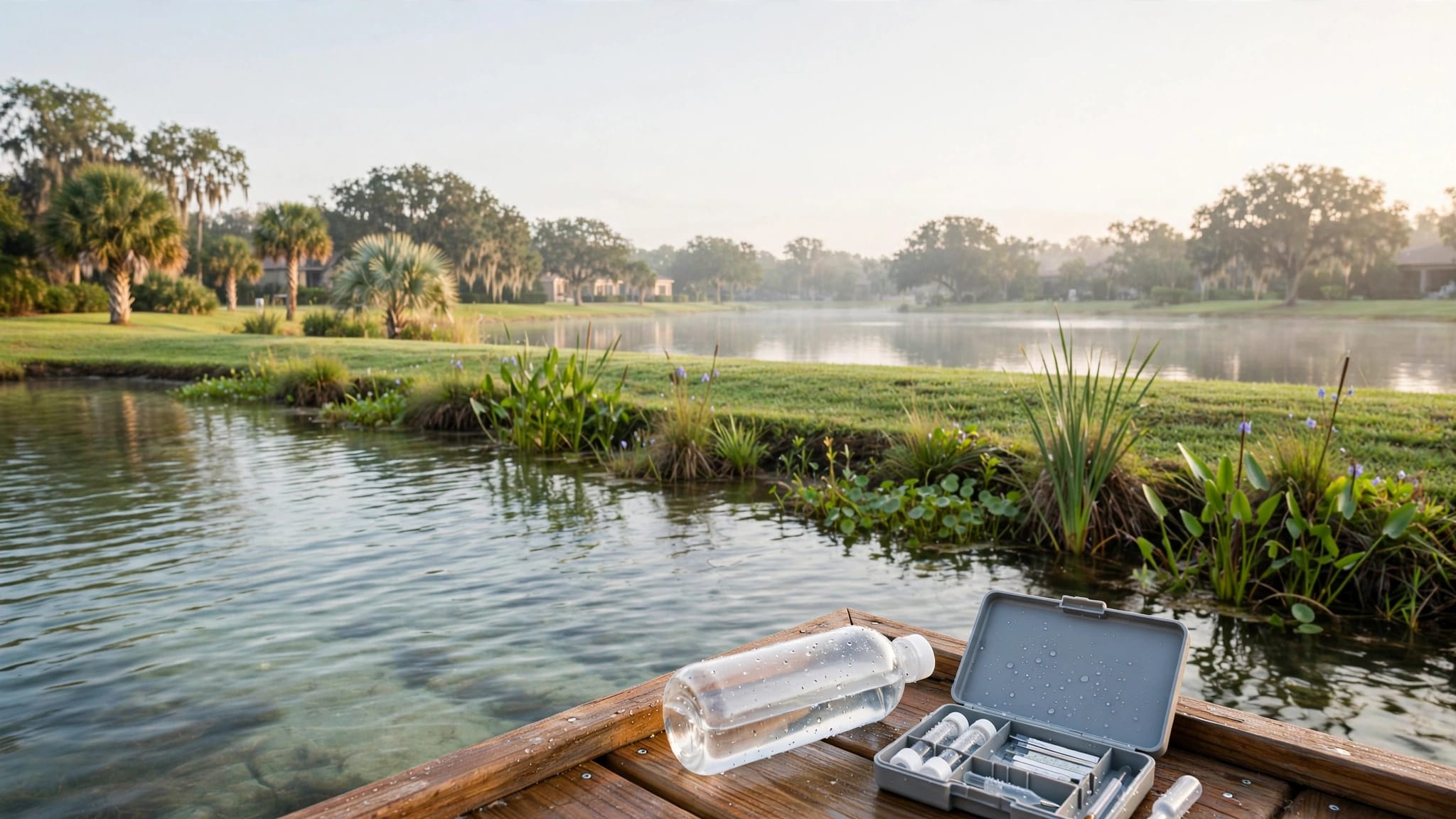
Visual checks can flag discoloration, low clarity, surface scum, odors, or fish stress. They can't, by themselves, establish the cause. Repeated problems may call for testing or a closer review of drainage and fertilizer practices.
The contract should say whether laboratory testing is included, who arranges it, and who pays. It should also identify who reviews results and recommends changes. Otherwise, a board may assume "water-quality management" includes testing when the price covers visual observations only.
Inspect drainage, shorelines, and equipment separately
Clear water can coexist with an eroding bank or a blocked outlet. An audit needs to examine those assets as well as the lake surface.
Confirm what crews inspect at the water's edge
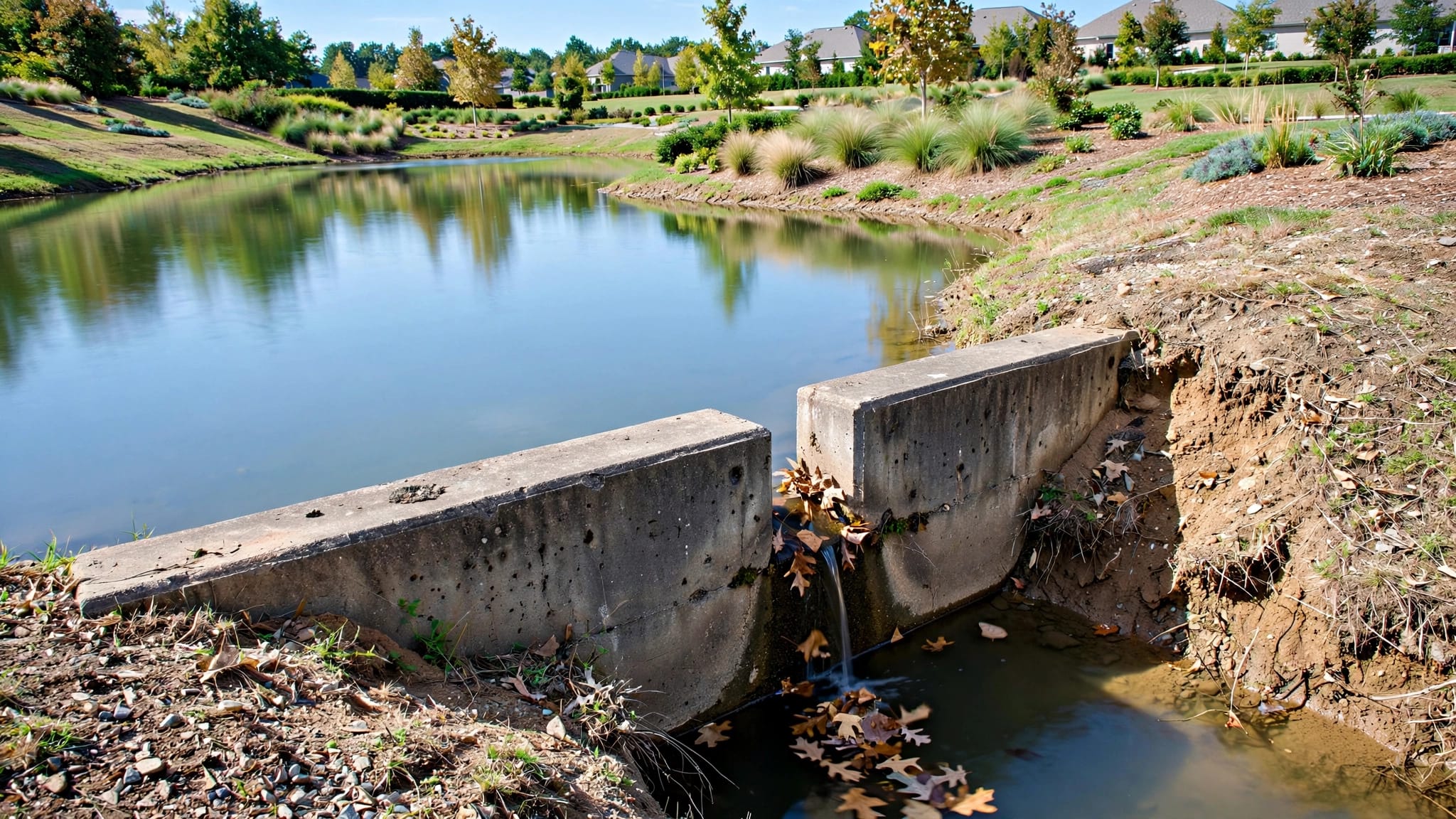
Check reports for bare soil, slumping banks, washouts, damaged littoral plantings, accumulated sediment, and debris near inlets or outlets. Compare the notes with dated photographs after heavy rain.
Next, identify the boundary between routine debris removal and larger work. Shoreline stabilization, structural repairs, and sediment removal may need a separate proposal or specialist review. The agreement should state who reports an unsafe condition and who can authorize corrective work. A visible problem shouldn't disappear from the record because it falls outside routine service.
Test the equipment scope
For each fountain or aerator, find out whether the contract covers visual inspection, operating checks, cleaning, repair, or replacement. Those are different commitments with different costs.
Compare the equipment list with what is installed at each lake. Service notes should identify units that are off, have reduced output, or need repair. If an equipment contractor handles repairs, the lake maintenance provider still needs a clear way to report failures. Otherwise, a failed unit can remain everyone's observation and nobody's work order.
Test response and reporting rules before an urgent call
A contract should tell the manager what happens when conditions change between visits. Vague language becomes a problem when a storm blocks an outlet or algae spreads near homes.
Identify the trigger and the person responsible
Read the response terms for storm damage, suspected spills, fish distress, blocked drainage, and resident complaints. Look for the contact method, the person who receives alerts, any agreed response time, and the process for work outside normal hours.
Also check who can approve extra treatment or repairs and the spending limit attached to that authority. If a board vote is required, the manager needs a process for urgent decisions. A Florida HOA lake service RFP can help define these expectations before the next round of bids.
Make reports useful to the board
A report should separate what the crew saw, what it did, and what remains open. For multi-lake properties, each observation needs a lake name or map location. Photos and treatment records should reach the manager through the agreed reporting channel.
Check whether the contract specifies when reports are due and how the vendor handles missed visits. If board members must reconstruct the month's work from emails and invoices, ask for a consistent report format at the next contract review.
Reconcile price, exclusions, and qualifications
Price comparisons fail when one bid includes debris removal and equipment checks while another bills for them separately. Audit the cost against the work the community needs, basin by basin.
Find the charges outside routine service
Review the agreement and recent invoices for additional visits, storm cleanup, testing, vegetation removal, equipment repair, shoreline work, and disposal. Check whether the contract requires written approval before those charges arise.
For lake maintenance budget planning, keep routine operating work separate from one-time repairs. Then examine renewal dates, price-change terms, termination notice, and ownership of service records. These clauses affect how easily a board can correct a weak contract or compare new bids.
Keep credentials with the contract file
Request current licensing information and an insurance certificate that matches the proposed work. Check coverage dates, the named insured, and any additional-insured requirement set by the community. Store those documents with the signed agreement and service history.
Seabreeze Lake Maintenance identifies Commercial Applicator License #CM28291 and State-Licensed Specialty Contractor #SCC131152136 in its materials. As with any provider, verify current documents and confirm that the credentials cover the tasks in the contract. A credential file is most useful when the manager can find it before approving treatment or shoreline work.
Make the audit a quarterly board practice
A quarterly review is often enough to catch record problems before renewal season. Bring the map, contract, visit log, open work orders, invoices, and recent photos to the same meeting.
- Confirm that lake names, access instructions, and equipment lists still match the property.
- Flag missed visits, repeat complaints, unresolved findings, and charges without clear approval.
- Assign each open issue to the contractor, manager, board, or another responsible party.
- Put agreed changes to scope, reporting, or response terms in writing.
The review should produce a short list of decisions, not another folder of observations. If the same outlet clogs after every storm, the board needs a plan for that location rather than another generic service note.
Key takeaways for HOA and property managers
- Identify every lake consistently across the contract, reports, photos, and invoices.
- Compare promised visits and tasks with dated evidence of completed work.
- Track open problems until a follow-up report shows what changed.
- Check exclusions, approval limits, credentials, and response terms before an urgent issue tests them.
A contract the board can verify
The phrase "ponds treated" shouldn't leave your board guessing which waterbodies received service. A sound audit links each lake's agreed scope to visits, findings, actions, costs, and unresolved work.
If the records don't match conditions on the property, start with a lake-by-lake inspection. Get a Free Lake Health Assessment to discuss a site review with Seabreeze Lake Maintenance.
Recent Posts