How to Build a Community Lake Treatment History
A lake can look clear during a board walk-through and develop an algae problem after the next heavy rain. If you manage several ponds, memory and monthly invoices won't tell you what changed or which basin received work. A lake treatment history connects each visit to the conditions before it and the results afterward.
For HOAs, gated communities, and golf courses, that record helps boards answer resident questions and make better maintenance decisions. Start by giving every waterbody a clear identity.
Give Every Lake a Name and a Baseline
A report labeled "community pond" is hard to use when a property has six lakes. Assign each retention pond, lake, or canal a permanent name or number, and use it on every map, work order, photo, and invoice.
Map the waterbody and the work areas
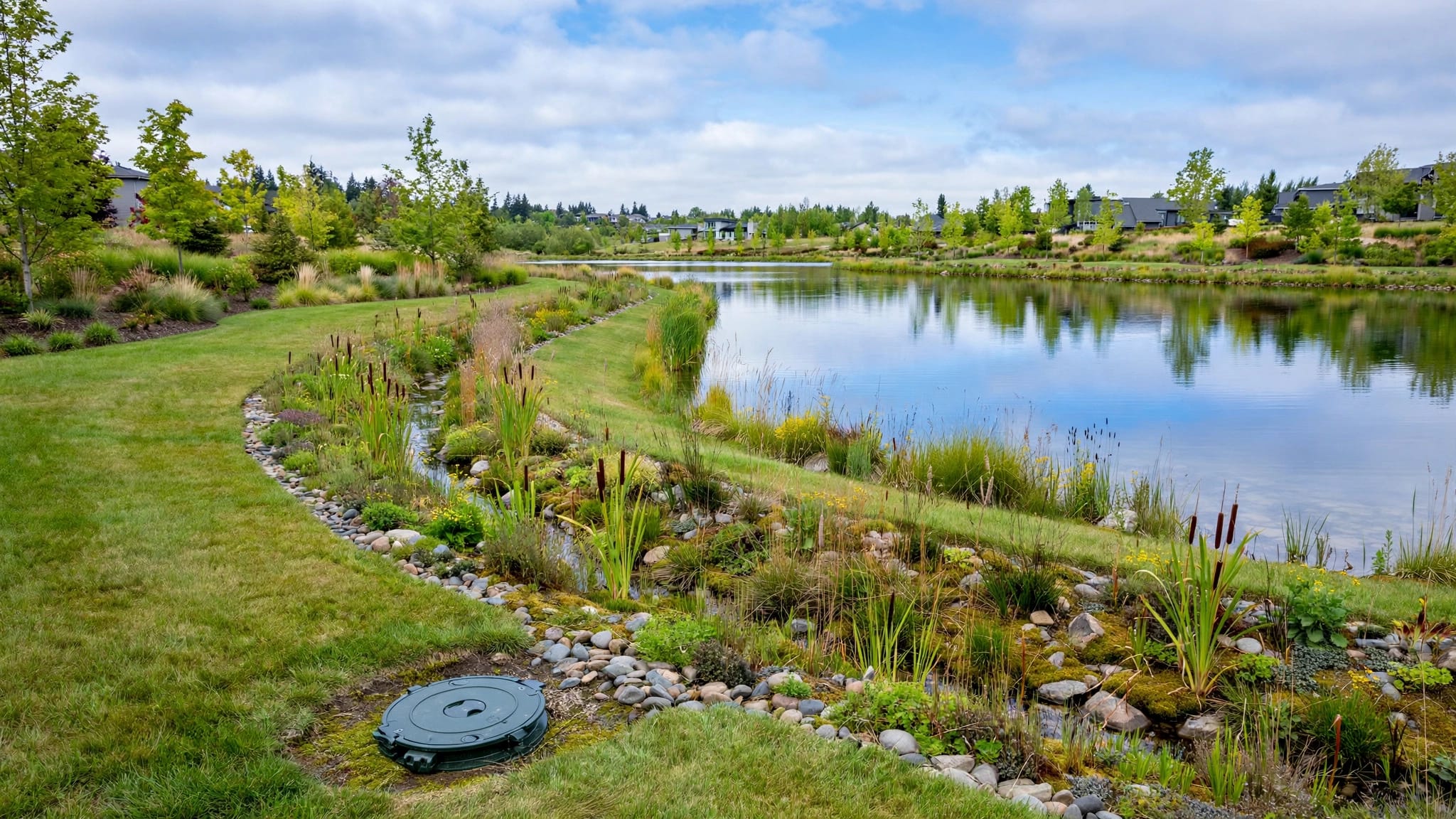
Keep a property map showing each lake's boundaries, access points, inlets, outlets, and connected drainage features. Mark practical treatment zones, such as the clubhouse shoreline or an inlet cove. Record the association's legal name, property address, and approximate acreage when available.
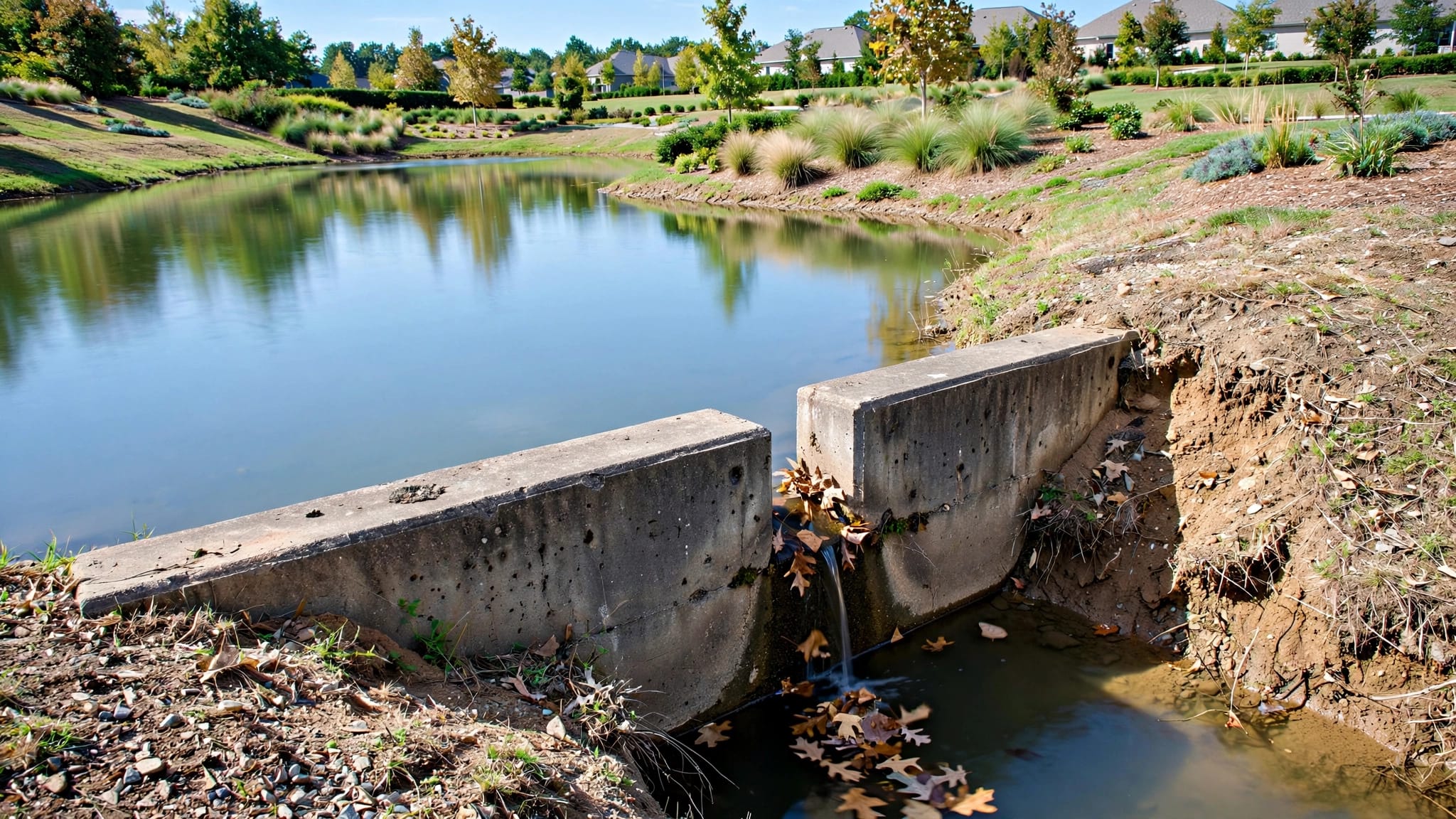
Also note whether the waterbody functions as part of a permitted stormwater system. Before changing banks, littoral plantings, or control structures, check the approved plans and applicable permit conditions. A pond's drainage function may limit what work the community can authorize.
Photograph conditions before treatment
Take dated photos from repeatable locations, such as a marked path corner or a fixed point beside an outfall. Capture affected areas and a wider view of the lake. Record visible weeds, algae, debris, shoreline erosion, water level, and equipment condition.
This baseline gives the next inspection something useful to compare. Without it, a brown patch after treatment may look alarming even when the target plants are declining as expected.
Record Each Treatment as a Separate Event
Each application needs its own entry under the correct lake and treatment zone. Keep records for separate basins on separate lines, even when the crew services them on the same day. The multi-lake inspection checklist after treatment offers a useful set of fields for connecting application records to later observations.
Capture what the crew did
Record the date and time, applicator, target plant or algae, product and active ingredient, treated area, and actual amount used. Add the weather, wind, relevant water conditions, and any area left untreated because of access or site conditions. Keep the product label with the job file.
Distinguish the planned work from completed work. If a crew couldn't reach a shoreline zone, the board should see that gap before it assumes the whole lake received treatment.
Keep notices and restrictions with the application
Save resident notices, sign photos, and records of access controls alongside the treatment report. Note who posted and removed signs. Identify affected irrigation intakes, docks, fishing areas, or paths when relevant.
Restrictions depend on the product label and the site. Record the directions that apply to that application rather than using a standard waiting period for every treatment. Keep any applicable permit or exemption documentation in the same file. For more detail, see documenting aquatic herbicide applications for Florida HOAs.
Close the Loop With Follow-Up Inspections
A treatment entry says what happened on service day. Follow-up notes show whether the target growth declined and whether another problem appeared. Set inspection timing around the treatment purpose, product label, weather, and lake conditions.
Compare the same places each time
Return to the baseline photo points. Compare plant coverage, algae mats, floating material, water clarity, and shoreline appearance. Record where growth remains or spreads into an untreated pocket.
Don't judge an application by water color alone. Dying vegetation can change the lake's appearance before the board knows whether control was effective. A dated note about the target species is more useful than a general statement that the pond "looks better."
Record unexpected conditions and the response
Check for blocked inlets, drifting mats, strong odors, unusual foam, or signs of fish stress. Note the precise location, take photos when safe, and report urgent concerns through the property's normal management process. Don't handle dead fish or wildlife as part of a routine visual inspection.
If a storm moves debris into a treated area, record it. The board can then distinguish a new inflow problem from an incomplete application. Assign an owner and a next inspection date to unresolved items.
Connect Water Testing to the Same Timeline
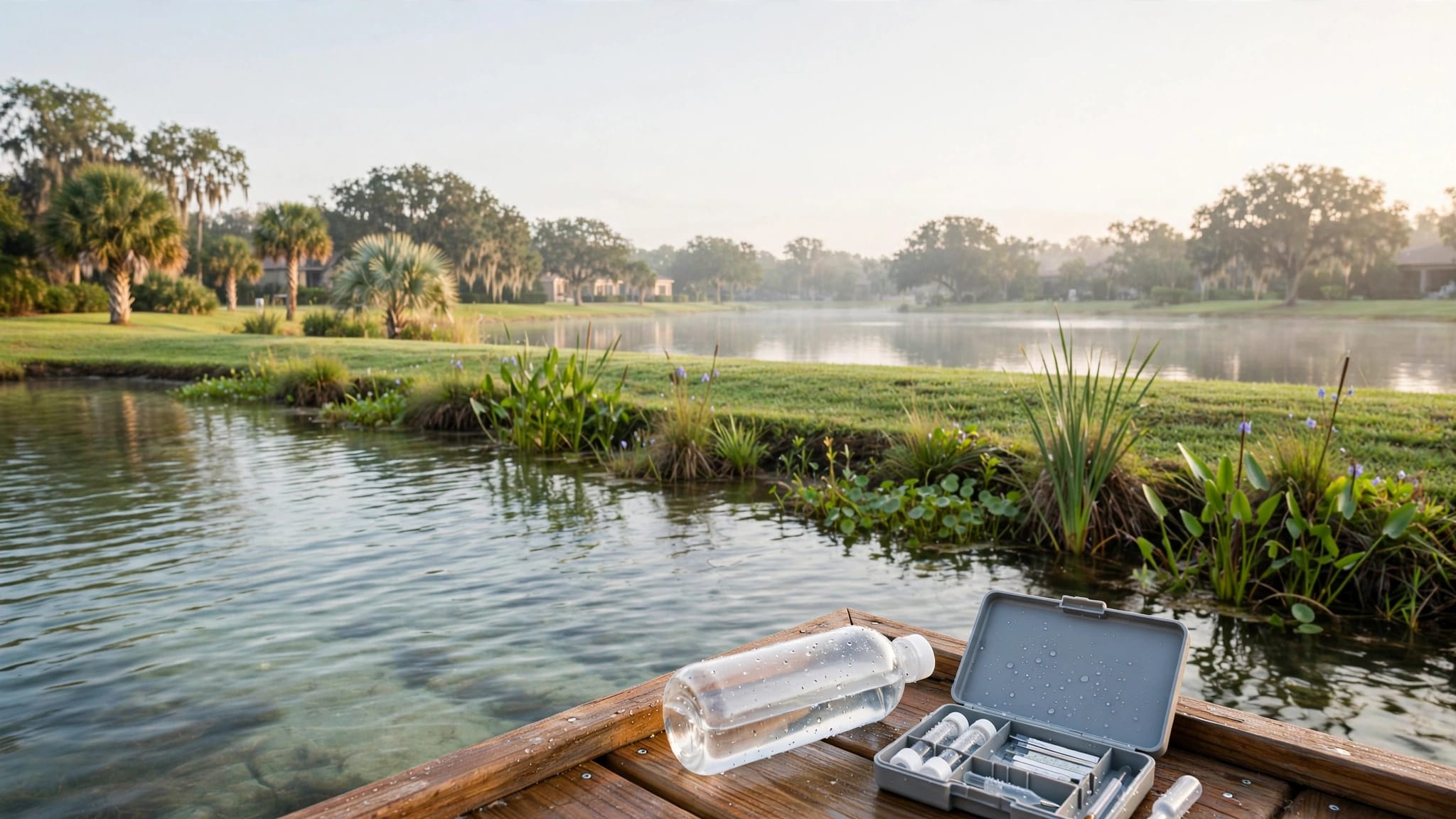
Water-quality results belong beside inspection and treatment records, not in an unrelated email thread. Label each sample with its lake ID, station, collection date, and reason for testing. Keep the laboratory report and field notes together.
Record recent rain, water level, visible discharge, odors, algae, and whether fountains, diffusers, pumps, or irrigation systems were running. Those conditions affect how a board interprets results. The water sampling chain of custody for community lakes explains how to preserve the link between a sample, its collection point, and surrounding conditions.
When recurring algae or fish stress prompts testing, ask the lake professional which measurements will answer the question. Dissolved oxygen and nutrient measurements may be useful, but the right test depends on the concern. Label pre-treatment and post-treatment samples clearly; they answer different questions.
Look for Patterns Before Repeating a Treatment
Once several visits are recorded, review each lake on its own timeline. Mark repeat weed beds, algae near particular outfalls, heavy inflow after storms, equipment problems, and shoreline washouts. A pattern is easier to see when dated photos and service notes use consistent lake IDs.
Repeated hydrilla growth, for example, calls for more than another entry saying "weeds treated." Compare where the plant returned, how much area was treated, and what follow-up showed. If low dissolved oxygen readings or heavy stormwater inflow appear in the same record, the board can ask whether aeration, runoff control, shoreline care, or treatment timing needs attention.
Check the service agreement against the history too. A monthly invoice alone doesn't confirm that every basin received its scheduled visit. Auditing a multi-lake maintenance contract starts with dated, lake-specific records of findings, work, and follow-up.
Store the History So the Next Board Can Use It
A lake treatment history loses value if reports disappear with a former manager's inbox. Keep a shared property file with a folder for each waterbody. Give the board and authorized property staff access, while protecting records that contain personal or sensitive information.
Use filenames that sort by date and lake
A name such as 2026-08-21_Lake-3_Treatment-Report.pdf
makes a file easier to find than pond visit final.pdf
. Store original photos, signed reports, lab results, maps, notices, labels, and invoices alongside the relevant entry. Keep revised maps without deleting earlier versions that explain past treatment zones.
A simple index can list the visit date, lake ID, issue, work completed, follow-up date, and links to the supporting files. That lets a new board member find an answer without opening every report.
Preserve context during a vendor change
Before a contract ends, confirm who will deliver the full record and in what format. Request outstanding follow-up items, current maps, and the latest equipment or shoreline concerns along with past application reports.
Check applicable record-retention obligations with the association's management and legal team. Keep records long enough to support permit responsibilities and future maintenance decisions, rather than relying on an arbitrary cleanup date.
Make Reporting Part of the Service Agreement
A good filing system can't repair reports that never identified the lake serviced. Name every waterbody in the contract and state the expected visit schedule, inspection scope, treatment reporting, photos, and follow-up process. Separate routine care from proposed repairs so the board knows what needs approval.
Review reports against the work promised
At each board review, compare the report with the last open issues. If an earlier visit identified weeds, look for a plant identification, treatment decision, or explanation of why work was deferred. If it flagged bank washout, look for a shoreline assessment or repair recommendation. Reviewing monthly lake service reports can help managers check that observations lead to clear next steps.
Ask who owns the next action
Every unresolved concern needs a responsible party. The lake contractor may inspect and recommend work, while the manager arranges approval or coordinates with an irrigation contractor. Record that handoff and the planned return date.
Qualifications matter when applications and specialty work are in scope. Seabreeze Lake Maintenance holds Commercial Applicator License #CM28291 and State-Licensed Specialty Contractor #SCC131152136. Ask any provider for current credentials, insurance, and sample lake-specific reports before approving service.
Key Takeaways
- Give every waterbody a permanent ID and map its treatment zones.
- Connect each application to baseline conditions, actual work, notices, and follow-up results.
- File photos and water-quality records with the lake and date they describe.
- Review recurring problems across visits before approving another routine treatment.
- Require reports that a future board or contractor can understand without guessing.
FAQ
How far back should a community lake treatment history go?
Gather the records the association already has, then start a consistent lake-by-lake timeline. Older permits, maps, lab results, and major repair reports can explain conditions that recent service notes don't. Check applicable retention requirements before discarding documents. If early records are incomplete, mark the gap rather than filling it with assumptions.
Does every inspection need a water test?
No. Routine visual inspections can document weeds, algae, debris, shoreline condition, and equipment status. Testing is useful when a defined concern requires measurements, such as recurring algae or suspected low oxygen. Record why a sample was collected, where it came from, and the conditions at collection so the result has context.
What should an HOA do if previous treatment reports are missing?
Request available reports, maps, and lab results from the current or former provider. Then commission a current inspection of each lake and establish dated baseline photos. Note which past applications can't be verified. Going forward, require the applicator's report and follow-up observations after every treatment.
Conclusion
A clear pond on one visit tells a board little about what happened before the next storm. A useful history ties each lake's conditions to the work performed and the response that followed.
Start with consistent lake IDs and baseline photos, then require complete records after every visit. If your property needs a documented starting point, Get a Free Lake Health Assessment to arrange a call and lake inspection with Seabreeze Lake Maintenance.
Recent Posts