Lake Maintenance Risk Matrix for Multi-Lake HOAs
A small algae patch near one shoreline can be a warning sign, while the same patch in another lake may be a minor cosmetic issue. The difference depends on drainage patterns, resident exposure, lake use, shoreline condition, and how quickly the problem can spread.
A lake maintenance risk matrix gives HOA boards and property managers a consistent way to make those calls. Instead of reacting to the most visible problem, you can rank threats across every retention pond or community lake and direct funds where they matter most.
The process starts with a clear inventory of each waterbody and the risks attached to it.
Start With a Complete Inventory of Every Lake
Multi-lake communities need more than a site map with lake numbers. Each pond or lake has its own drainage role, shoreline layout, maintenance history, and resident visibility. A matrix only works when those differences appear in the starting data.
Create one record for every waterbody, including connected ponds, fountains, aeration equipment, outfalls, culverts, and shoreline segments. Give each lake a simple name or number that matches community maps and contractor reports.
Record conditions that change risk
Document the details that affect both the chance of a problem and its consequences. For example, a lake beside the main entrance carries more appearance risk than one behind a maintenance area. However, a less visible pond may carry greater flooding risk if it receives runoff from a large parking lot.
Your lake inventory should include:
- Approximate surface area, depth, and whether the pond connects to another waterbody.
- Inlets, outfalls, culverts, catch basins, and visible signs of blocked flow.
- Shoreline slopes, bare soil, erosion, damaged seawalls, and washouts.
- Existing aerators, fountains, littoral shelves, and planted buffer areas.
- Past algae outbreaks, aquatic weed growth, fish kills, flooding, or resident complaints.
Separate shared risks from lake-specific risks
Some risks affect the entire property. Hurricane debris, nutrient-rich runoff, and contractor access limits can create issues across several lakes at once. Others belong to a single basin, such as a failed aerator or an eroding shoreline behind one group of homes.
Mark shared risks in every relevant lake record, but don't assume every lake deserves the same score. A drainage blockage at the low point of the community may affect several streets. That location should rank higher than a similar blockage in an isolated landscape pond.
How to Score a Lake Maintenance Risk Matrix
A practical lake maintenance risk matrix uses two scores: likelihood and impact. Each score should use the same scale across the property, usually 1 through 5. Consistency matters more than elaborate scoring.
Multiply the two numbers to produce a risk score. A likely problem with limited consequences may need routine monitoring. A lower-probability event with serious property or safety consequences can still demand early action.
Set a clear likelihood scale
Likelihood measures how likely a problem is to occur within the next maintenance cycle or year. Use inspection findings and maintenance records, not guesses.
| Likelihood score | Meaning | Example |
|---|---|---|
| 1 | Rare | Stable shoreline with no recent erosion |
| 2 | Unlikely | Minor debris accumulation after major storms |
| 3 | Possible | Seasonal filamentous algae growth |
| 4 | Likely | Repeated hydrilla or water hyacinth pressure |
| 5 | Expected | Recurring erosion at an active outfall |
A lake with persistent nutrient loading should not receive a low likelihood score because it looked clear during one inspection. Seasonal patterns matter.
Define impact before problems occur
Impact measures what happens if the issue worsens. Consider safety, stormwater function, repair cost, property appearance, regulatory exposure, and effects on adjacent homes.
| Impact score | Meaning | Example |
|---|---|---|
| 1 | Minimal | Isolated floating debris |
| 2 | Limited | Small weed patch away from residences |
| 3 | Moderate | Algae visible from common areas |
| 4 | Major | Shoreline loss near homes or paths |
| 5 | Severe | Restricted drainage or a failing outfall structure |
A low-cost nuisance can become high risk when it blocks a culvert, exposes soil, or sits next to homes where residents and pets have regular contact with the water.
Rank the Risks That Matter in HOA Lakes
Retention ponds and lakes in gated communities do more than provide a view. They often hold stormwater, protect downstream drainage, and shape the first impression of the property. Your matrix should rank conditions that interfere with those functions.
Aquatic weeds, algae, and water-quality decline
Invasive aquatic weeds can obstruct flow, crowd out desirable plants, and create habitat for mosquitoes. Dense surface growth also makes a lake appear neglected, especially along entry roads, golf course edges, and residential lots.
Algae needs a more careful score. Light seasonal growth may be manageable through monitoring and routine treatment. Thick mats, recurring blooms, foul odor, or low dissolved oxygen readings warrant a higher score. Nutrient sources may include fertilizer runoff, grass clippings, pet waste, decaying vegetation, or sediment buildup.
A treatment plan should match the plant or algae present, water conditions, and the lake's use. Broad treatment without correct identification can waste budget and leave the underlying cause untouched.
Shoreline erosion and drainage failures
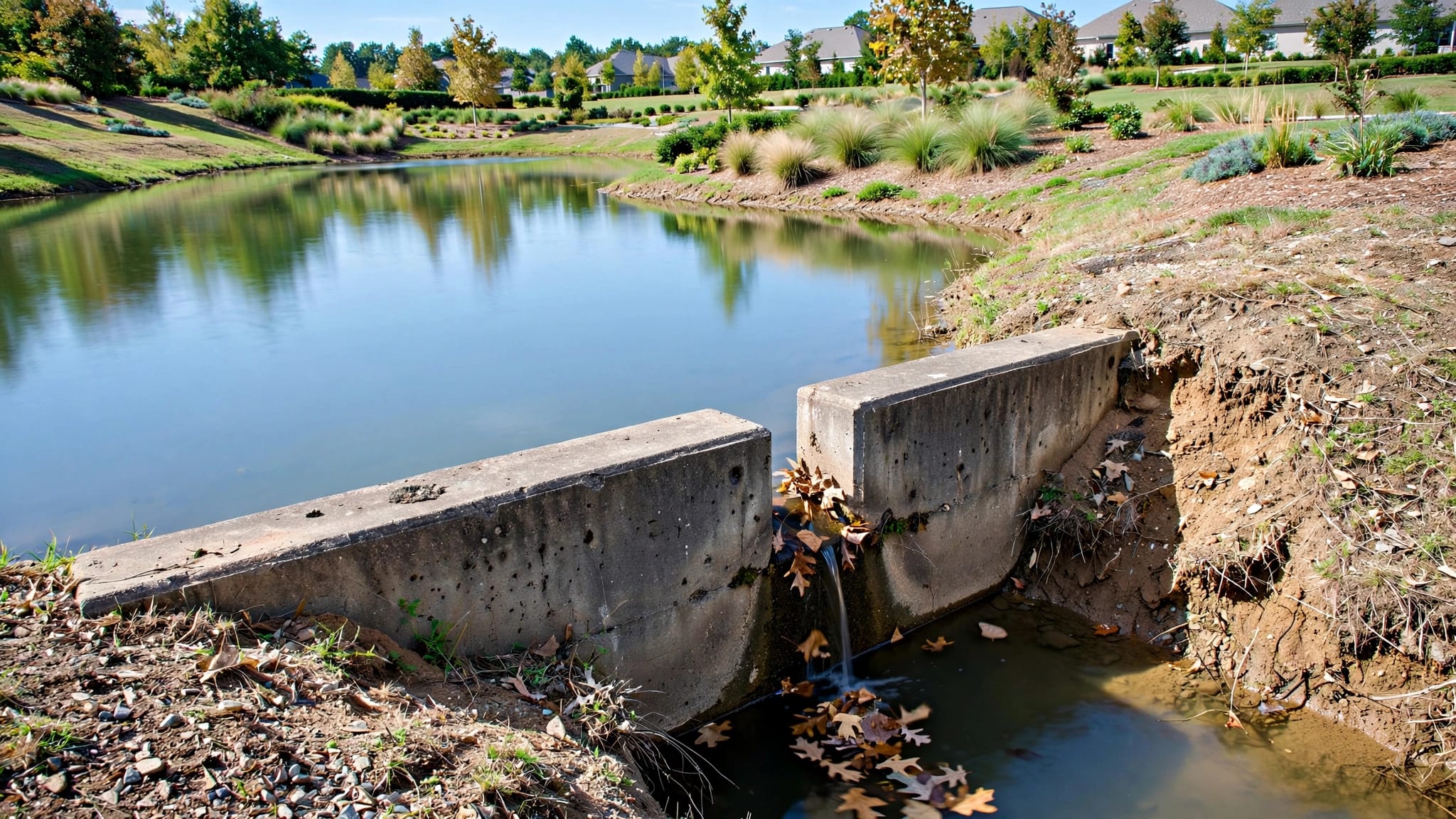
Erosion tends to worsen after heavy rain because runoff concentrates at weak points. Watch for exposed roots, slumping banks, sediment fans, undermined structures, or turf loss near downspouts and discharge areas.
Drainage structures need equal attention. A partly obstructed pipe may look harmless during dry weather, yet it can restrict stormwater movement during a major rainfall event. Assign high impact scores to outfalls and culverts that protect homes, roads, parking areas, or utility corridors.
Build Separate Profiles for Each Lake
A community with six lakes should not operate from one generic maintenance schedule. Lake 1 may need frequent algae management near the clubhouse. Lake 4 may need shoreline stabilization, while Lake 6 may need better debris control at a stormwater inlet.
The lake maintenance risk matrix turns those different needs into a board-ready priority list.
Use a simple matrix for every waterbody
Place each issue into a five-by-five grid, with likelihood on one axis and impact on the other. Then group scores into action levels that everyone understands.
| Risk score | Priority level | Management response |
|---|---|---|
| 1 to 4 | Low | Inspect during regular service visits |
| 5 to 9 | Moderate | Schedule preventive work and track trends |
| 10 to 15 | High | Set a corrective plan and review monthly |
| 16 to 25 | Critical | Act promptly and alert management or the board |
For example, scattered floating debris in a back pond may score 2 x 2 = 4. A recurring algae bloom beside a pool deck could score 4 x 4 = 16 because it affects appearance, resident use, and complaint volume.
Add exposure and visibility as decision notes
Two lakes can produce the same numerical score but need different communication plans. A high-visibility lake near the gate may require faster cosmetic cleanup. Meanwhile, a less visible basin with a failing outfall may require the larger budget allocation.
Use notes beside the score to record nearby homes, sidewalks, playgrounds, golf play areas, or roadways. This protects the board from making decisions based on appearance alone.
Turn Scores Into Practical Maintenance Plans
A risk matrix is only useful when it changes the maintenance calendar. Each high or critical item needs an owner, an action, a deadline, and a reinspection date.
Don't leave a high score as a vague instruction to "monitor." State what the contractor or maintenance team will inspect, treat, repair, or document.
Match the response to the problem
Aquatic weed risk may call for targeted herbicide applications, follow-up inspections, and removal of floating vegetation from outfalls. Recurring algae may call for water-quality testing, aeration review, nutrient-source control, and a treatment schedule based on conditions.
Erosion risk can require regrading, shoreline stabilization, littoral plantings, or repairs to the drainage feature causing concentrated flow. In Florida, properly selected littoral plants can help anchor soil and filter runoff, but they need time and protection to establish.
For chemical applications, work with a qualified provider. Seabreeze Lake Maintenance holds Commercial Applicator License #CM28291 and State-Licensed Specialty Contractor #SCC131152136.
Set budget triggers before an emergency
Boards can avoid delayed decisions by approving response thresholds in advance. For instance, a score of 16 or higher may trigger an immediate site review and contractor proposal. Scores between 10 and 15 may require a corrective plan at the next board meeting.
A professional inspection can clarify uncertain scores before they become expensive repairs. Communities can Get a Free Lake Health Assessment to review water quality, vegetation, shoreline conditions, and maintenance priorities across the property.
Inspect on a Schedule and After Major Storms
Monthly service visits provide the baseline for most managed lakes. However, risk scores should change when conditions change. Heavy rainfall, hurricanes, construction activity, irrigation failures, or a sudden bloom can move a moderate concern into the high-risk category.
Keep inspection forms consistent so trends are visible. Photos taken from the same shoreline points are especially useful for tracking erosion, plant coverage, and waterline changes.
Review the matrix with the board
Property managers should update the matrix before budget planning and after major storm events. Bring the board a short report that shows the top risks, completed work, open actions, and any scores that increased.
This record also helps new board members understand why a lake needs attention. Without it, a request for shoreline work or aeration can look like an unexpected expense rather than a documented maintenance need.
Keep Communication Clear for Residents
Residents often report lake conditions first. Their observations can help, but the community needs one channel for reporting and one process for evaluating concerns. Otherwise, repeated emails about visible algae can overshadow a serious drainage issue elsewhere.
Ask residents to report the lake location, date, photos, odor, dead fish, unusual water color, wildlife concerns, or debris. The manager can then route the report to the maintenance provider and compare it with the current matrix.
Explain priorities without minimizing concerns
A clear update builds trust. Let residents know when crews will remove debris, inspect a shoreline, or treat identified vegetation. Avoid promising instant results for conditions that need several visits, such as algae control or newly planted shoreline buffers.
The goal is a clean, functional lake system that supports the community's drainage needs and curb appeal. Regular communication makes that work easier to understand.
A Better Way to Protect Every Community Lake
The strongest lake maintenance risk matrix gives every lake a fair review, while directing attention to the problems with the greatest consequences. It replaces scattered complaints and emergency spending with documented priorities.
When boards score likelihood, impact, exposure, and maintenance history, they can budget with more confidence. A small issue caught early often remains a manageable maintenance item instead of becoming a major shoreline or drainage repair.
Recent Posts