Pet Waste Water Quality in Florida HOA Lakes
A single missed bag along a pond path can become a lake problem after the next Florida downpour. Pet waste water quality affects more than a community's appearance. It can raise bacteria levels, add nutrients that feed algae, and create avoidable stress for a retention pond or multi-lake property.
For HOAs, gated communities, apartment complexes, and golf courses, the issue is manageable when cleanup rules and lake maintenance work together. It starts with understanding where the waste goes once rain hits the pavement.
How pet waste water quality problems begin
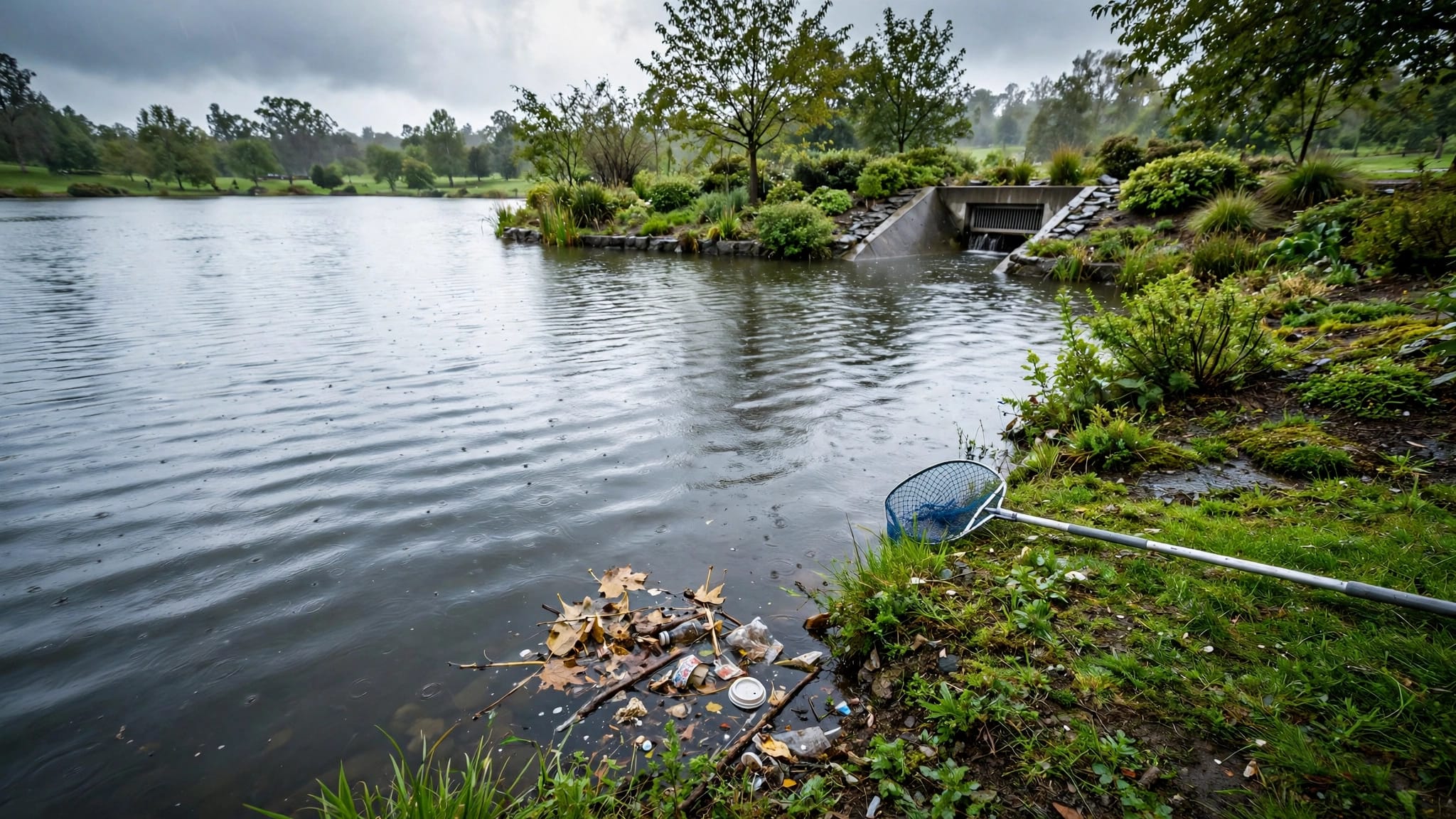
Dog waste left on grass, sidewalks, cart paths, and pond banks doesn't stay put. In Southwest Florida, heavy rain can move it quickly toward curb inlets, swales, and storm drains.
Unlike sanitary wastewater, stormwater runoff usually does not receive treatment before it enters a retention pond, lake, canal, or downstream waterbody. That makes collection at the source far more effective than trying to solve the problem after pollutants reach the water.
Feces add bacteria and parasites
Dog feces can carry fecal bacteria, parasites, and other pathogens. Brevard County's Watershed Program states that one pound of dog waste can contain more than 1.1 billion fecal coliform bacteria.
Those organisms can wash into shared water during a storm. Residents may never see the runoff route, yet a low spot beside a sidewalk or a clogged inlet can carry waste directly into the lake.
Pet waste can also expose people to pathogens when water contacts skin, eyes, or open cuts. That matters near fishing spots, lake overlooks, kayak launches, and any shoreline where children or pets play.
Urine and feces add nutrient pollution
Waste is also a nutrient source. Nitrogen and phosphorus support plant and algae growth, particularly in warm, slow-moving Florida water.
One dog waste deposit won't turn a healthy lake green overnight. However, repeated deposits across a community create a steady nutrient load. When fertilizer runoff, grass clippings, leaf litter, and eroded soil join the mix, the lake receives more fuel than its natural processes can handle.
A pet-waste issue often appears first as a runoff issue. The waste may be left far from the shoreline, then arrive at the lake through drains and swales.
Rain carries pollutants into retention ponds
Retention ponds hold stormwater and often maintain a permanent pool. They are designed to capture runoff, which means they can also collect pollutants that residents leave across the property.
A detention pond works differently because it stores water temporarily and releases it through a control structure. Still, both pond types need attention after rain. Boards that need a clearer distinction can review retention versus detention ponds before setting inspection priorities.
Watch the routes that lead to water
The highest-risk areas are easy to identify during a site walk. Look for dog-walking routes beside curbs, drains, swales, pond paths, mail kiosks, clubhouses, and parking areas.
Golf courses have additional exposure points. Dog-walking paths, maintenance yards, rest areas, and cart-path drainage can all direct runoff toward lakes. A small amount of waste left beside an inlet has more impact than waste in a well-vegetated area farther from the drainage system.
After a storm, staff should check for debris at inlets and outfalls. Blocked structures can trap organic material, slow water movement, and leave pollutants concentrated along an edge.
Florida's rainy season increases the stakes
Florida's summer rain often comes in intense bursts. That pattern can pick up waste before it dries, breaks down, or gets collected.
Irrigation can create a smaller version of the same problem. Overspray across sidewalks or drainage swales can move pet waste toward the water even between storms. Therefore, lake protection needs regular cleanup, not only a response after a visible algae bloom.
Nutrients can feed algae and lower oxygen
Phosphorus is a common driver of algae growth in freshwater lakes. Nitrogen also matters, especially where runoff and organic buildup are frequent.
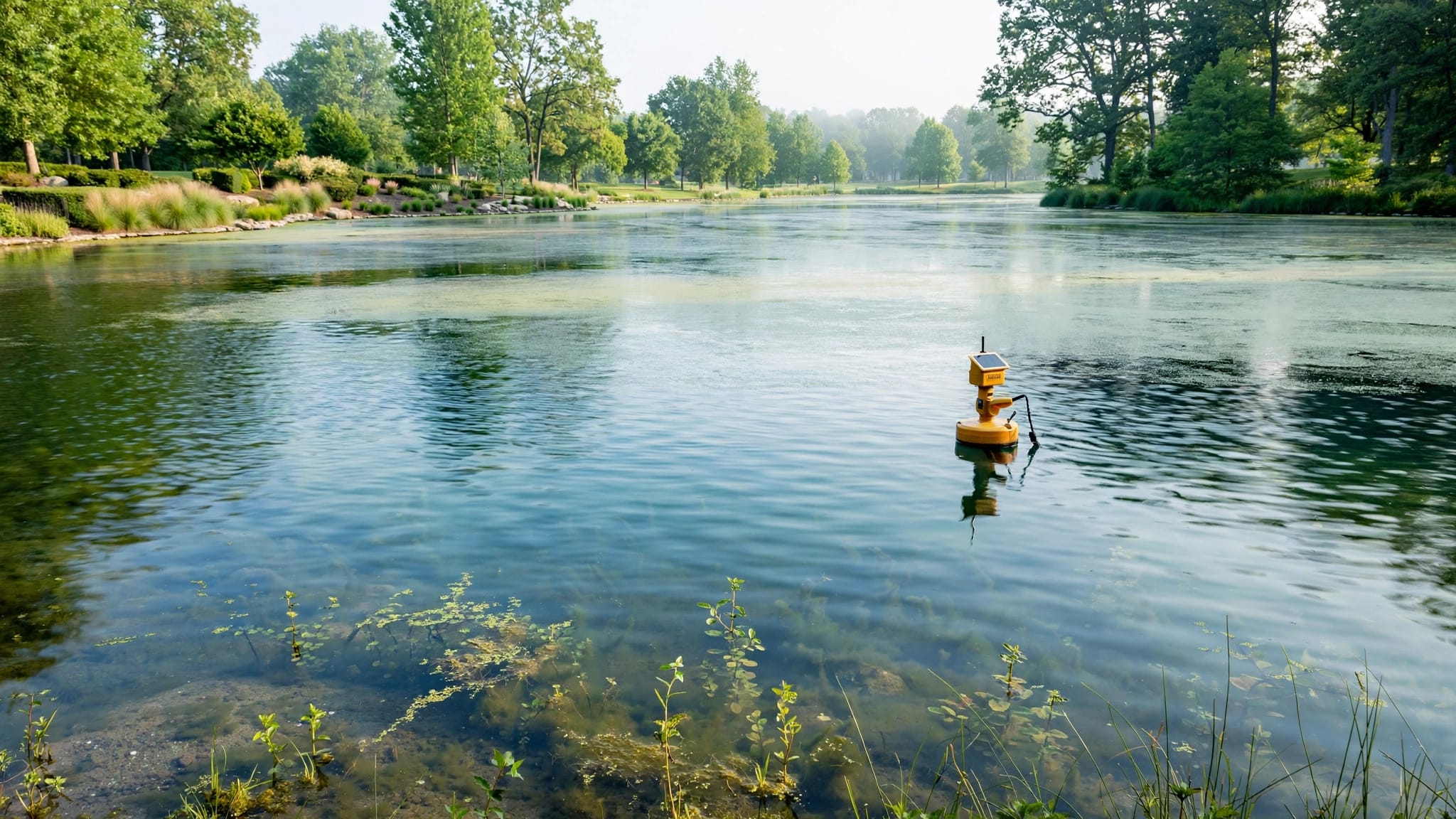
When nutrient levels rise, microscopic algae can multiply. The water may look cloudy or green, and floating algae may collect near shorelines. Some blooms include cyanobacteria, often called blue-green algae, which can produce toxins harmful to pets, wildlife, and people.
Algae is a symptom, not the whole problem
Algae control may improve a lake's appearance, but treatment alone doesn't stop new nutrients from entering. A recurring bloom often points to an ongoing source such as runoff, shoreline erosion, fertilizer misuse, fish feeding, or uncollected pet waste.
Boards should review high phosphorus in HOA lakes when algae returns after routine treatments. Phosphorus testing helps identify whether nutrients are part of the larger water-quality issue.
Organic matter draws down dissolved oxygen
Bacteria break down pet waste, leaves, and other organic material. That process consumes oxygen in the water. Algae also produce oxygen during daylight, but they use oxygen at night.
As a result, a nutrient-rich lake can develop low dissolved oxygen near dawn. Fish may gather near the surface, odors may develop, and stressed water conditions can worsen after several cloudy days or a large algae die-off.
Aeration can improve circulation and support oxygen levels. Yet it does not remove the nutrient source. Pet cleanup, drainage maintenance, and erosion control still need to be part of the plan.
Bacteria monitoring protects shared lake areas
Florida DEP uses fecal-indicator bacteria to assess surface-water conditions. For Class III freshwater, its guidance identifies an E. coli threshold of 410 colony-forming units per 100 milliliters. Florida uses enterococci for marine waters, with a Class III threshold of 130 colony-forming units per 100 milliliters.
Those figures are regulatory water-quality benchmarks, not a substitute for a site-specific lake management plan. Still, they show why bacteria is more than a cosmetic issue.
Test when the lake shows a pattern
Routine water testing can establish a baseline for each lake. Testing becomes especially useful when a pond develops odor, recurring algae, murky water, fish stress, or a noticeable change after rain.
A lake manager may review dissolved oxygen, temperature, nutrient levels, clarity, and other measures alongside bacteria testing when conditions call for it. The right testing plan depends on the lake's purpose, drainage area, shoreline use, and visible symptoms.
Florida DEP's bacteria restoration work focuses on finding pollution sources. That same approach helps communities. If results point to bacteria concerns, inspect the drainage system, dog-walking areas, bird activity, failing irrigation, and any runoff entering the basin.
Avoid assumptions about the source
Pets are one possible source of fecal bacteria, but they are not the only one. Wildlife, waterfowl, leaking sewer infrastructure, and upstream runoff can also affect results.
For that reason, a responsible pet waste water quality program pairs resident rules with observations and testing. Blaming one source without checking the site can waste time and leave the real problem untouched.
HOA pet-waste rules that residents will follow
A rule works when residents can follow it without searching for a bag dispenser or trash can. Stations placed only at the front gate rarely solve a problem along back-lake walking trails.
Place waste stations where people naturally walk their dogs. Refill them consistently, empty receptacles before they overflow, and keep signs clear without sounding hostile.
Put stations in practical locations
A community should consider stations near:
- Main dog-walking entrances, mail kiosks, clubhouses, and parking transitions.
- Pond-side sidewalks, common paths, and neighborhood exits.
- Golf-course access points and designated walking areas, where allowed.
- Areas upstream of storm inlets, swales, and drainage crossings.
Signs should plainly tell residents to bag waste and place it in a trash receptacle. They should also remind residents to keep waste out of storm drains, ditches, and waterways.
For communities with chronic noncompliance, a pet-waste patrol service may make sense. Regular pickup in known trouble spots can reduce nutrient and bacteria loading while the board improves long-term resident habits.
Give property managers a reporting process
Maintenance teams need a simple way to document overflowing stations, repeat problem areas, blocked inlets, and runoff concerns. Photos taken from the same locations can show whether conditions improve after the board changes station placement or signage.
Include pet-waste observations in a Florida HOA lake inspection checklist. Weekly surface checks and post-storm walks often catch small issues before they spread across a lake system.
Lake maintenance supports cleaner water, but doesn't replace cleanup
A healthy lake needs more than weed treatment. Water-quality management may include testing, algae control, debris removal, shoreline inspections, sediment review, erosion repairs, and aquatic plant management.
These services reduce the conditions that let nutrient pollution linger. However, they cannot fully offset a constant flow of new pet waste into the drainage system.
Match aeration to the lake's condition
Aeration can help reduce stagnant zones and support healthier dissolved oxygen conditions. It is most useful when the system matches the lake's depth, shape, and circulation needs.
A fountain may improve appearance, but it does not always provide the circulation a larger retention pond requires. Review aeration for Florida HOA lakes before approving equipment based only on a surface display.
Water testing should guide the decision. Dissolved oxygen readings at different depths, especially near dawn, can reveal whether the lake has an oxygen issue, a circulation issue, or both.
Maintain shorelines and drainage features
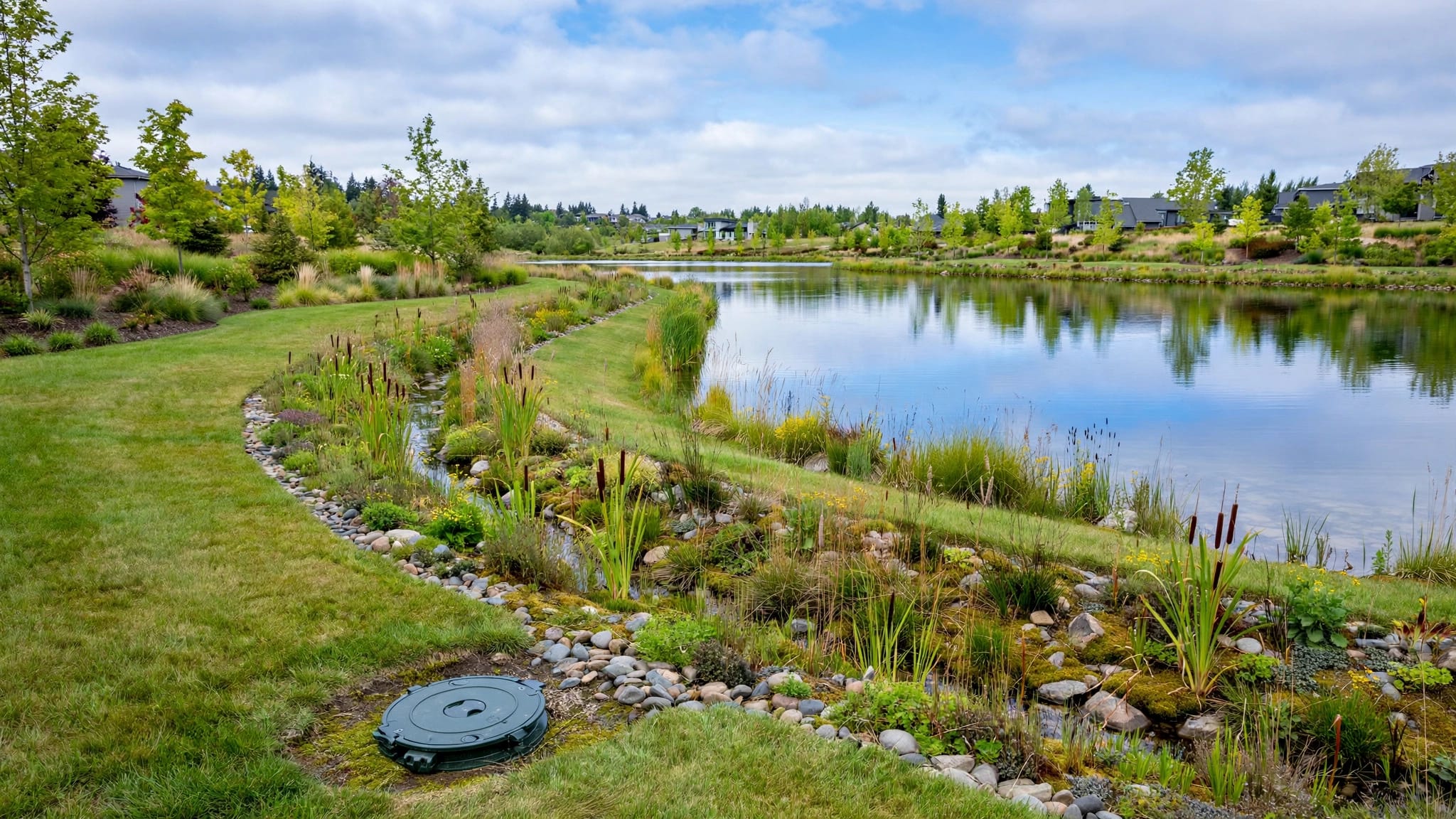
Bare, eroded banks send soil and attached phosphorus into the water. Shoreline plants can slow runoff, stabilize soil, and filter sediment before it reaches the lake.
Inlets, swales, and outfalls also need regular inspection. Clearing leaves, trash, and accumulated debris helps water move as designed. It also makes it easier to spot places where dog waste collects after rainfall.
Build pet waste controls into the annual lake plan
Property managers should include pet-waste stations, trash service, signage, and post-storm checks in the annual maintenance budget. These routine costs are generally smaller than repeated algae treatments, emergency debris removal, or erosion repairs after a preventable water-quality decline.
For multi-lake communities, keep records by pond. One basin may receive runoff from a dog park, while another collects water from fairways or parking areas. Each lake needs its own observations and priorities.
A professional site review can connect water testing, drainage patterns, shoreline conditions, and resident use. Seabreeze Lake Maintenance works with Florida retention ponds and lakes in gated communities, HOAs, golf courses, and other multi-lake properties under Commercial Applicator License #CM28291 and State-Licensed Specialty Contractor #SCC131152136.
If recurring algae, odor, or runoff has raised concerns, Get a Free Lake Health Assessment to schedule a call and lake inspection.
Conclusion
Pet waste water quality is a community maintenance issue because rain carries small, repeated sources of bacteria and nutrients into shared lakes. The strongest response combines resident cleanup, well-placed stations, drainage inspections, and lake care guided by real conditions.
A clean shoreline is helpful, but the deeper goal is less pollution entering the water in the first place . That protects lake appearance, stormwater function, wildlife, and the property's long-term appeal.
Recent Posts