Triploid Grass Carp Florida Lakes: When They Help
A retention pond can look clear at the surface while hydrilla builds a dense underwater bed. For communities researching triploid grass carp Florida permits and stocking options, these sterile fish can reduce certain submerged weeds, but they aren't a cure for every lake problem.
Triploid grass carp are a biological control tool for managed lakes, not ornamental koi ponds. The right choice depends on the plant species, lake connections, permit requirements, and the community's long-term maintenance plan. Start with the conditions that make stocking a reasonable option.
When triploid grass carp Florida lakes make sense
Triploid grass carp have three sets of chromosomes, which makes certified fish sterile. They feed on aquatic vegetation and can help reduce certain submerged weeds over time. In Florida, they are most often considered for larger private ponds, retention lakes, golf course water bodies, and connected multi-lake properties with persistent plant growth.
A community lake may be a good candidate when:
- The main problem is submerged vegetation, such as hydrilla, coontail, pondweed, or related plants.
- The lake has enough plant growth to provide forage without removing all useful habitat.
- The property owner can meet Florida Fish and Wildlife Conservation Commission requirements.
- The lake's inlets, outlets, and overflow structures can be reviewed for fish containment.
- The board accepts a long-term biological control method rather than expecting instant results.
Grass carp can lower the amount of submerged vegetation that crews need to treat or remove. That may help a golf course keep waterways playable, or help an HOA reduce recurring weed mats near homes and walking paths. However, the fish need time to feed and grow. They won't clear a pond in a few days.
This method also requires careful judgment. A lake with several connected basins may need a property-wide plan instead of a decision based on one visible weed bed. A fish population that works in one pond may be unsuitable for another with different depth, water flow, or plant growth.
Which lake weeds can grass carp control?
Plant identification is the first practical question. Residents may describe any green growth as algae, but submerged weeds and algae need different treatments. Grass carp primarily target aquatic vegetation, so they aren't a substitute for algae control, nutrient management, or shoreline maintenance.
| Lake condition | Fit for triploid grass carp | Reason |
|---|---|---|
| Dense hydrilla or similar submerged weeds | Often a good fit | These plants can provide the type of forage grass carp prefer. |
| Coontail, pondweed, or naiads | Possible fit | Results depend on plant preference, coverage, and stocking conditions. |
| Filamentous algae | Poor fit | Grass carp aren't an effective primary treatment for floating algae mats. |
| Duckweed or water lettuce | Usually a poor fit | Floating plants need a different control plan. |
| Cattails or mature shoreline plants | Limited fit | Emergent growth often requires shoreline or mechanical work. |
The table points to a common mistake: stocking fish for the wrong problem. If a pond has green water, surface scum, or filamentous algae, grass carp may leave the main issue untouched. The lake may need nutrient source control, circulation improvements, selective aquatic treatments, or debris removal.
Stocking too many fish can create a different problem. Heavy feeding may remove plant cover that supports fish, insects, and water clarity. It can also change the appearance of a lake that was meant to retain some beneficial vegetation. A target-based plan should identify which plants to reduce and which areas to protect.
Florida permits and containment requirements
Florida requires authorization for the possession, transport, and stocking of triploid grass carp. The Florida Fish and Wildlife Conservation Commission, commonly called FWC, oversees the process. Private ownership of a community lake doesn't automatically remove the permit requirement.
A permit review can involve the water body's location, ownership, acreage, plant problem, proposed stocking plan, and connection to other waters. The fish must come from an approved source and meet the state's triploid certification requirements. Communities should complete the approval process before purchasing or moving fish.
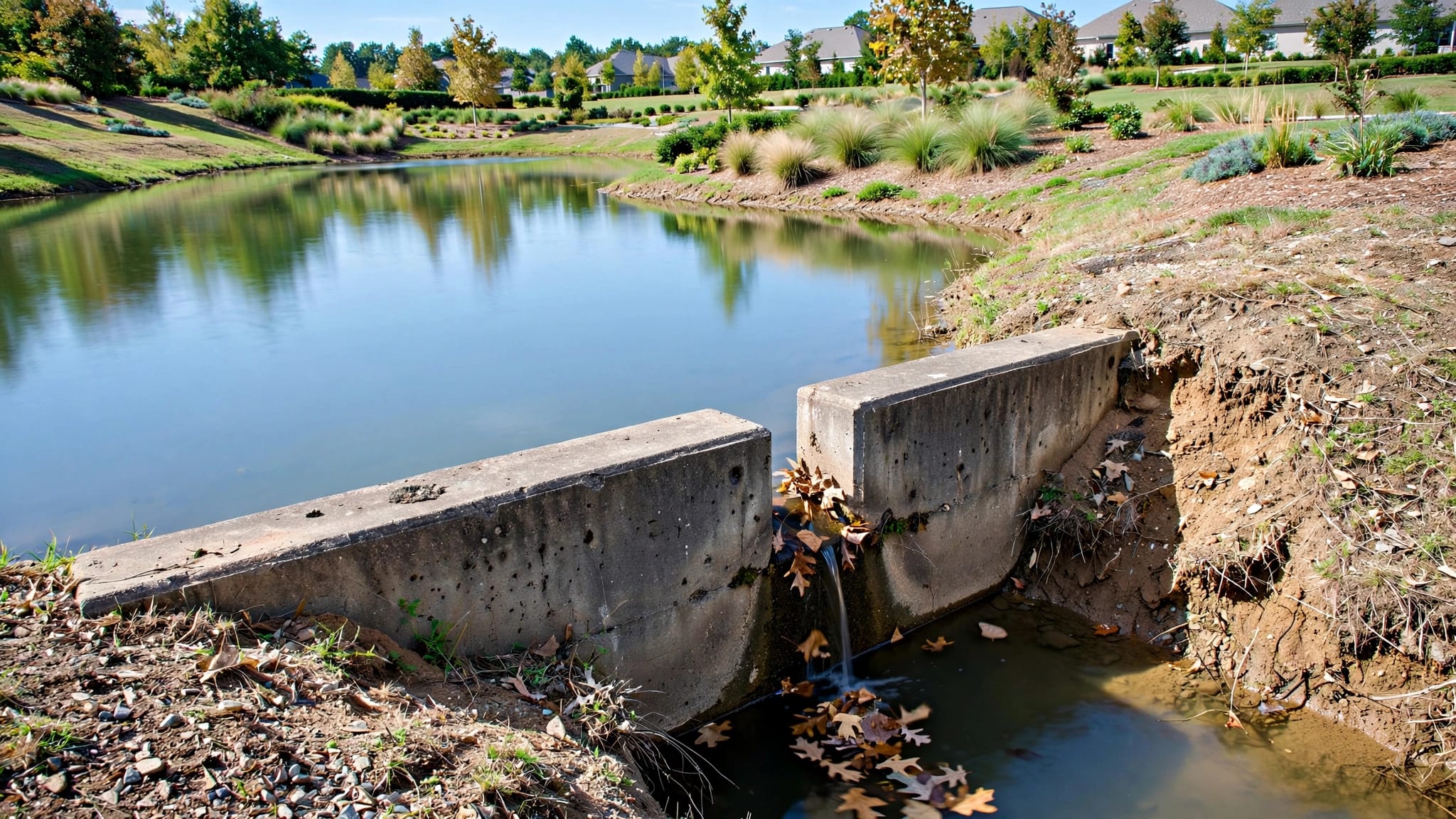
The phrase triploid grass carp Florida often brings up a second concern, containment. Retention ponds may connect through storm drains, culverts, control structures, canals, wetlands, or overflow weirs. During heavy rain, fish can move through openings that aren't obvious during a routine inspection.
A community's lake map should show:
- Where stormwater enters each basin.
- Where water leaves the property.
- Which lakes connect during normal flow or storm events.
- Whether outfalls have screens, barriers, or other approved controls.
- Which neighboring waters could receive escaped fish.
FWC may set site-specific conditions for stocking and containment. The exact requirements depend on the property and water system, so an HOA shouldn't rely on a stocking rate copied from another community.
Board members should keep the permit, fish purchase records, maps, inspection notes, and treatment history together. That documentation helps future board members understand why fish were stocked and what conditions apply. It also prevents a new manager from ordering additional fish without reviewing the original plan.
A licensed lake management company can help organize the assessment and treatment work, but an applicator license doesn't replace the FWC stocking permit. Seabreeze Lake Maintenance holds Commercial Applicator License #CM28291 and State-Licensed Specialty Contractor #SCC131152136. Those credentials support applicable aquatic treatment and lake maintenance work, while fish stocking still needs separate regulatory review.
Assess the whole property before stocking
A single green shoreline doesn't provide enough information for a stocking decision. The assessment should cover every lake on the property, especially when water flows between basins.
Start by identifying the plant. Hydrilla, pondweed, coontail, and filamentous algae can look similar from a distance. A close inspection should record where the growth is located, how deep it extends, and whether it covers the bottom, rises into the water column, or floats on the surface.
Next, map the affected areas. Note lake acreage, approximate depth, access points, aerators, fountains, inflow pipes, outfalls, and areas where water remains stagnant. A fish plan based only on shoreline visibility can miss large underwater beds.
Water quality also matters. Excess nutrients from fertilizer, grass clippings, eroded soil, mulch, and stormwater runoff can keep driving plant and algae growth. Aeration and circulation may support better conditions, but neither one replaces plant identification or source control.
A multi-lake property also needs attention to water movement. Preventing weed spread in community lakes starts with understanding where water enters, exits, and stalls. A small weed patch near an inlet can spread to another basin if crews ignore the flow path.
Grass carp are only one part of a larger plan. Integrated aquatic weed control may combine selective treatment, mechanical removal, shoreline work, debris control, and follow-up inspections. The best method can differ between two ponds on the same property.
What communities should expect after stocking
Stocking doesn't create an immediate visual change. The fish need time to feed, and control depends on their size, number, access to vegetation, water temperature, and the amount of plant growth present. A board should set expectations with residents before stocking begins.
Regular inspections should track the target weeds, beneficial plants, water clarity, shoreline conditions, and fish containment points. Photos taken from the same locations can show changes more reliably than informal reports from residents. Records also help determine whether the original plan is working.
Treatment timing requires coordination. If crews remove or treat too much vegetation at once, the fish may lose available forage. Large quantities of dying vegetation can also affect oxygen levels as decomposition occurs. Any herbicide or mechanical treatment should account for fish, dissolved oxygen, weather, and the lake's circulation.
Grass carp can grow large and remain in a lake for many years. Because they are difficult to remove after stocking, the decision deserves more review than a routine weed treatment. Escape prevention also remains important throughout the fish's life, especially after storms or repairs to drainage structures.
For Southwest Florida HOAs, golf courses, and gated communities, a lake inspection can identify whether submerged weeds, algae, poor circulation, or runoff is driving the problem. Get a Free Lake Health Assessment before the board commits to stocking.
The right role for grass carp in a lake plan
For communities comparing triploid grass carp Florida options, the strongest case involves persistent submerged weeds in a permitted, containable water body. The fish can reduce plant pressure, but they don't correct nutrient runoff, algae, poor water circulation, erosion, or shoreline access problems.
A careful plan identifies the plant, reviews every connected lake, confirms current FWC requirements, and sets a monitoring schedule. When those steps come first, grass carp can support lake maintenance without becoming a substitute for it.
The best stocking decision is measured by more than a clear shoreline. It protects the lake's intended function, keeps containment under review, and matches the biological tool to the actual weed problem.
Recent Posts