Why One HOA Lake Looks Worse Than the Others
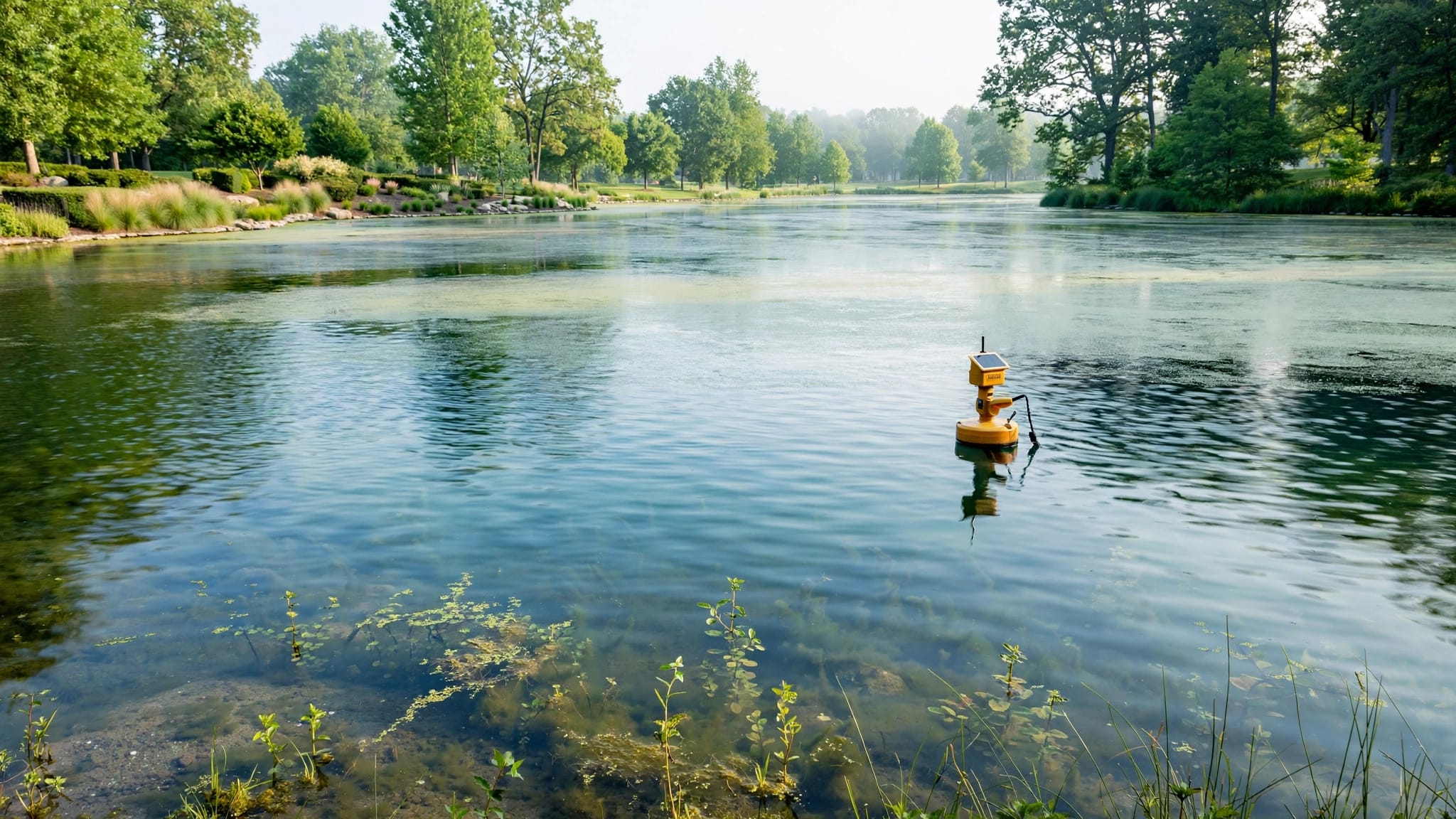
One HOA lake can turn green, weedy, and cloudy while the next one stays clean. That difference in HOA lake appearance usually has a clear cause.
On retention ponds and lakes in gated communities, golf courses, and multi-lake properties, each basin has its own runoff, depth, sun exposure, and maintenance history. So one lake can age faster than the others, even when they sit only a few hundred feet apart.
Water flow, depth, and sunlight shape each lake differently
Two lakes can share the same neighborhood and still behave like different systems. One may be shallow and warm up quickly. Another may be deeper and hold cooler water longer. That alone can change how fast algae grows and how quickly weeds take hold.
Water movement matters just as much. A lake with weak circulation traps nutrients, keeps debris in place, and gives algae time to spread. Wind also plays a role. One basin may collect floating trash, pollen, and plant matter along one edge, while another stays clearer because the wind pushes surface material away.
Sunlight is another major factor. A lake with full sun all day usually heats up faster. That gives algae a head start. On the other hand, heavy tree cover can drop leaves and organic debris into the water. Those leaves break down and feed future growth.
That is why the same property can have three different lake conditions at once. One lake may look healthy because it gets good flow. Another may struggle because it sits lower, gets more runoff, or has poor exchange with the rest of the system.
When circulation is weak, improving water quality with lake aeration can help keep the water more balanced and the surface more consistent. Aeration does not fix every problem, but it can change how a lake looks and functions over time.
Runoff and shoreline conditions change the color fast
A lake often looks worse where the bank is weakest. That starts with runoff. If one basin catches more water from lawns, roads, rooftops, or parking areas, it also catches more nutrients. Fertilizer, soil, grass clippings, and mulch all wash in during rain.
Those inputs feed algae. They also cloud the water and stain the shoreline. A lake near a sloped lawn or a low drain point can take the brunt of a storm, while a better-contained lake stays clearer.
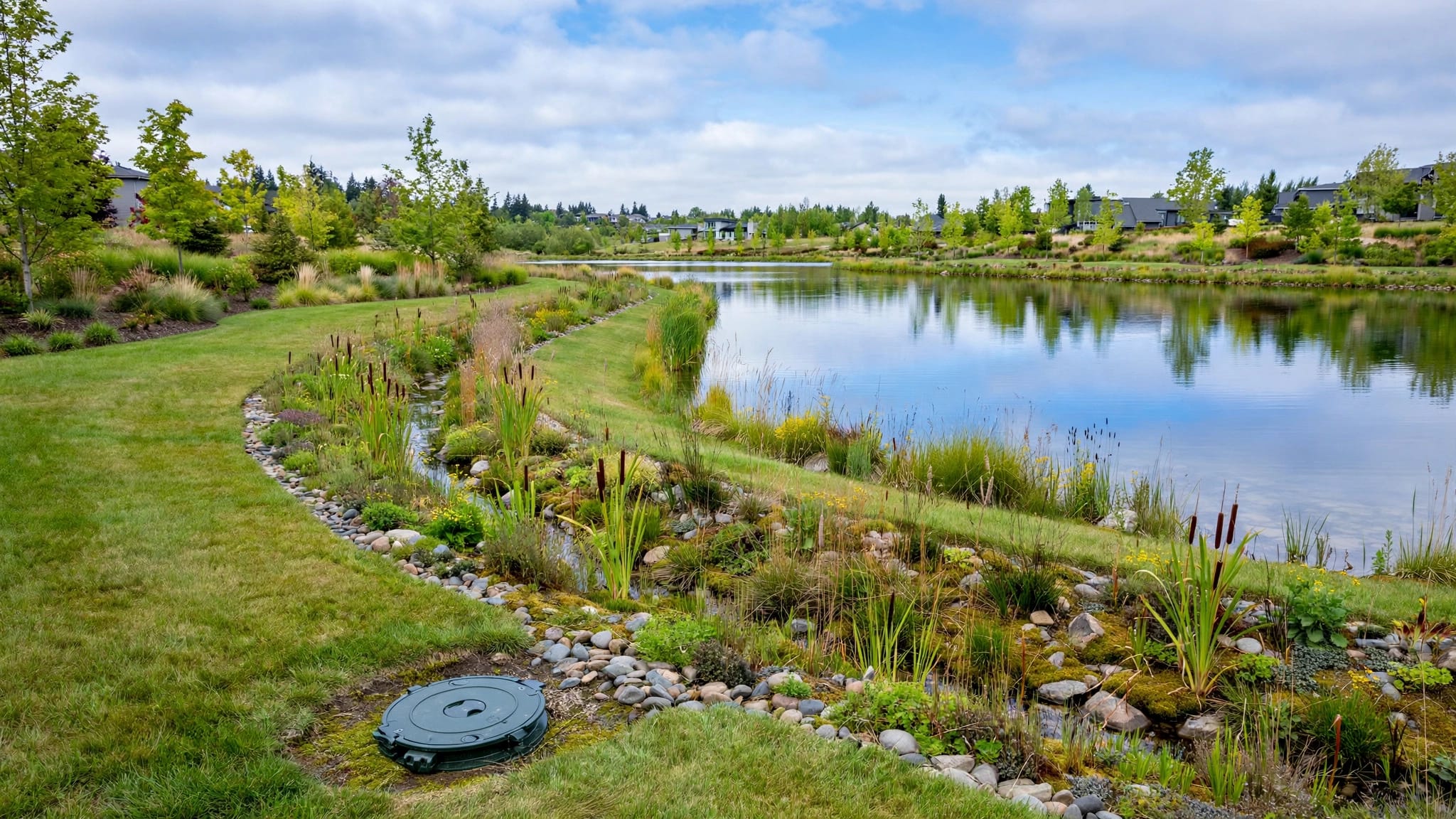
Shorelines matter too. Bare banks erode faster. Once the soil breaks loose, the water turns muddy and the edge starts to look ragged. Missing littoral plants can make that problem worse because there is less to hold the bank in place.
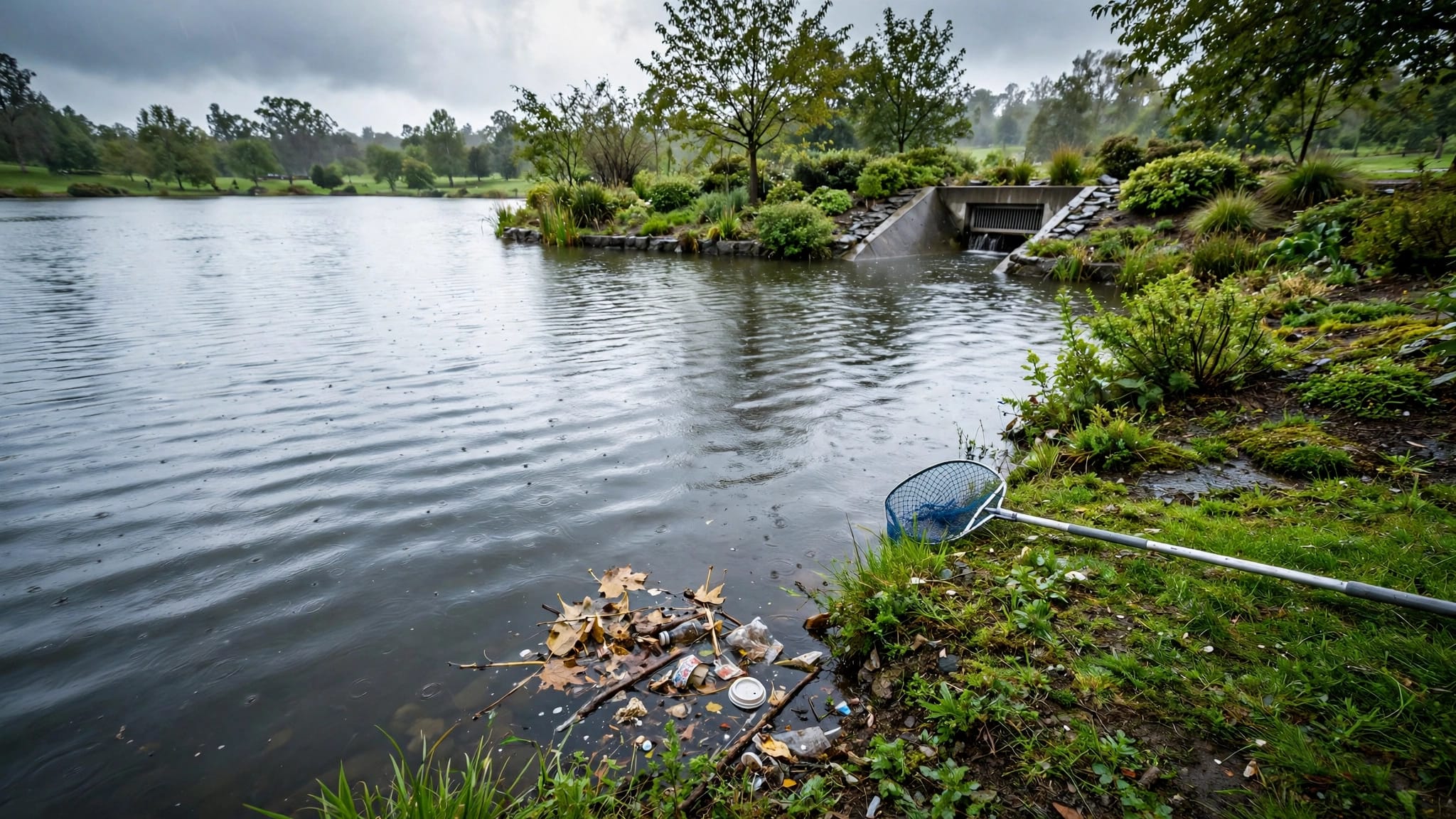
Floating debris adds another layer. Leaves, sticks, and grass mats collect in corners and coves. If nobody removes them, they rot in place and feed the next round of growth. Over time, the shoreline stops looking maintained, even if the water is still usable.
A lake can be healthy enough and still look rough if the shoreline is neglected.
This is why shoreline stabilization, litter pickup, and littoral plant care matter. They do more than improve looks. They protect the edge that everyone sees first.
Small maintenance gaps create big visual differences
The biggest surprises often come from small delays. One lake gets treated on time. Another waits a few extra weeks. That gap can show up fast in Florida heat.
The pattern is easy to spot when you know what to look for.
| What you notice | Common cause | What it usually means |
|---|---|---|
| Green water near one outfall | Heavy nutrient runoff | That basin gets a bigger load |
| Thick growth along the edge | Weak circulation or missed weed control | Weeds can spread quickly |
| Muddy or undercut banks | Erosion or foot traffic | The shoreline needs repair |
| Debris gathered in one corner | Wind and poor skimming | Organic matter is feeding the lake |
A table like this tells the story fast. One lake may not be "worse" because of a single failure. It may simply be the first one to show stress.
Seasonal weather adds pressure. Warm water speeds growth. Heavy rain sends in fresh nutrients. Long dry spells can drop water levels and expose edges. Then the next storm stirs up sediment and makes the basin look even rougher.
Routine care keeps that cycle from getting ahead of you. That means checking algae before it spreads, trimming weeds before they mat out, removing debris before it sinks, and watching the spots that collect runoff. A lake on a good schedule usually holds its look longer than one that gets attention only after it turns bad.
When one lake needs more than cosmetic fixes
Sometimes the problem is bigger than surface growth. If one lake keeps looking worse than the rest, there is usually a root cause underneath. The issue may be poor circulation, sediment buildup, an eroding bank, or a drainage pattern that keeps feeding the same basin.
That is where full lake management comes in. Aquatic weed control, algae treatment, water quality management, aeration, debris removal, and shoreline repair all work together. If you only treat the visible symptom, the same lake will often slide backward again.
For treatment and shoreline work in Florida, a licensed crew matters. Seabreeze Lake Maintenance holds Commercial Applicator License #CM28291 and State-Licensed Specialty Contractor #SCC131152136. That matters on HOA lakes, golf course water features, and commercial retention ponds where safety, compliance, and property value all depend on the work being done right.
If one basin on your property keeps falling behind, Get a Free Quote for a lake inspection and maintenance plan.
A lake that looks uneven across a property is usually telling you something. The next step is finding out what that lake is carrying that the others are not.
Conclusion
When one HOA lake looks worse than the others, the reason is usually a mix of flow, runoff, shoreline condition, and maintenance timing. Each basin has its own load, so each one needs its own care.
The most visible problems often start small. A little extra nutrient runoff, a weak edge, or a missed treatment window can change a lake's look faster than most people expect.
A consistent plan keeps the whole property balanced. That is what protects HOA lake appearance over the long run, not luck and not last-minute fixes.
Recent Posts