Developer Turnover Lake Checklist for Florida HOAs
A lake can look fine on turnover day and still hide years of missed maintenance. That matters for Florida HOAs, because the board often inherits retention ponds, drainage features, shoreline work, and budget pressure all at once.
A solid developer turnover lake checklist gives the board a clean way to review what's being handed over. This guide is for retention ponds and lakes in gated communities, golf courses, and other multi-lake properties, not ornamental koi ponds.
Key Takeaways
- Developer turnover is about documents, field conditions, and responsibility, not just signatures.
- Missing records make it harder to track drainage, shoreline work, and equipment history.
- Algae, sediment, erosion, and clogged structures often show up after the handoff.
- A clear maintenance contract and proper licensing help the board avoid costly guesswork.
- The first 90 days after turnover should lock in inspections, records, and response steps.
What changes when the developer hands off the lake system
A Florida HOA usually inherits more than water. It also inherits drainage function, shoreline care, vegetation control, access points, and the duty to keep records straight.
On a multi-lake property, each basin can behave differently. One pond may collect runoff from parking lots, while another may feed a wetland edge or protect a fairway. If the board treats every lake the same, small issues can spread fast.
The turnover packet should cover the basics before the developer steps away. Here is a simple way to review it:
| Turnover document | Why it matters | What the board should verify |
|---|---|---|
| As-built drawings | Shows the actual layout, depths, and drainage paths | Compare them to field conditions |
| Permits and approvals | Helps confirm the system was built as approved | Check dates, agency names, and scope |
| Maintenance logs | Shows what treatments and repairs already happened | Look for gaps and repeat problems |
| Equipment records | Covers aerators, fountains, pumps, and timers | Confirm model numbers and service history |
| Easements and drainage maps | Shows who can access what and where water moves | Match them to the site and plats |
If these items are missing, the board is already behind. The next step is to review HOA lake maintenance contracts before any long-term service plan starts.
Developer turnover lake checklist for Florida HOAs
Use this developer turnover lake checklist before the final handoff. It works best when the board walks the site, reviews the paperwork, and asks direct questions.
- Collect the full turnover file.
Ask for as-builts, permits, drainage plans, warranty information, prior service records, and vendor contacts. If the file is incomplete, note what is missing in writing. - Walk every pond and lake in person.
Look at shoreline edges, inlets, outlets, overflow structures, and access paths. Take dated photos. A board packet is easier to trust when the site matches the paperwork. - Confirm who owns each maintenance duty.
Some work belongs to the HOA. Some belongs to the developer for a short time. Some may fall under a separate contractor or association section. Put each duty on paper. - Review water quality and vegetation history.
Ask what treatments have been used, what problems came back, and whether the system had algae, invasive weeds, or low-oxygen issues. The past often explains the present. - Inspect aeration, fountains, pumps, and electrical access.
Equipment should be identified, serviced, and reachable. A beautiful lake with dead equipment can turn into a stagnant one fast. - Check shoreline stabilization and erosion points.
Look for washed-out banks, bare soil, sediment buildup, and weak turf near the waterline. These are early warning signs, not cosmetic issues. - Set the inspection schedule now.
Decide who inspects, how often, and what gets reported to the board. A lake plan without dates becomes a wish list.
A verbal handoff is not enough. If it isn't written down, the board will spend time proving what should have been clear on day one.
Common problems that surface after turnover
The first surprises usually show up after a few storms. Sediment moves into basins, algae blooms follow nutrient loading, and weeds take advantage of thin shorelines. Construction runoff can make the problem worse, especially if final grading or turf establishment is still settling.
When algae or invasive growth starts spreading, integrated algae and aquatic weed control may be part of the answer. Still, treatment alone is not enough if the pond keeps getting fed by runoff or eroding edges.
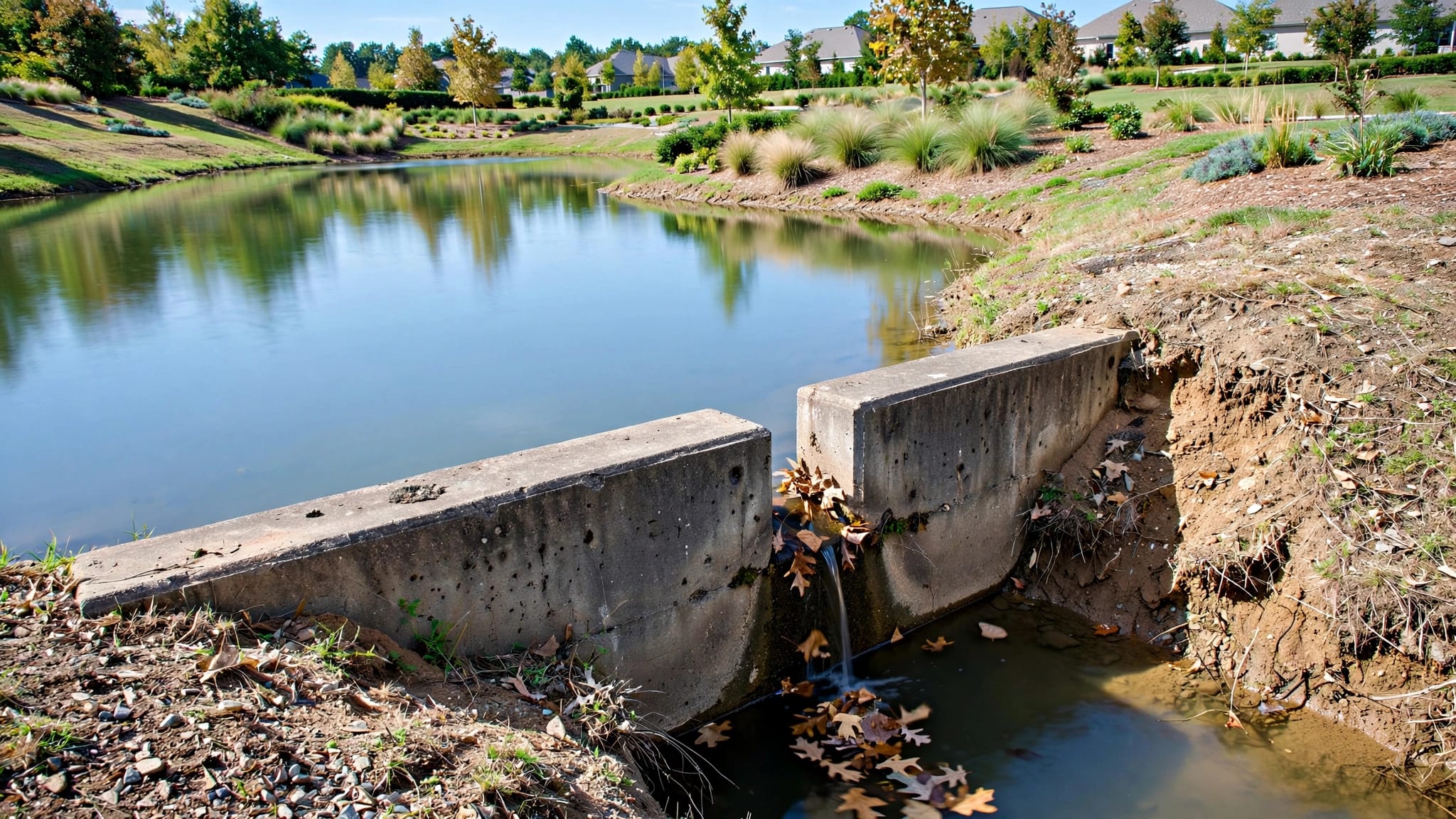
Blocked inlets and outlets are another common issue. After heavy rain, a small blockage can change water levels, stress shoreline plants, and create ugly overflow patterns. In plain terms, the lake starts telling on the drainage system.
Erosion often gets missed because it looks gradual. One month the bank is tight and green. The next month, the edge is cut back several inches, and repairs cost more than a routine cleanup would have.
Choosing a contractor before the turnover closes
The board should compare service providers before the developer handoff is final. Scope matters, and so does the company doing the work. Lake maintenance contracts should spell out inspections, treatments, reporting, and response time in plain language.
A strong contractor should also document insurance, licensing, and local experience in Southwest Florida. For example, Seabreeze Lake Maintenance works under Commercial Applicator License #CM28291 and State-Licensed Specialty Contractor #SCC131152136. That kind of documentation matters when the board is comparing bids or reviewing a turnover quote.
Ask for treatment logs, inspection notes, and photos from similar properties. A company should be able to explain why it recommends a certain treatment, how often it will inspect the site, and what happens after a storm or algae spike.
If the service scope is vague, the board pays for surprises later.
If your community is nearing turnover and needs a site review, Get a Free Quote for a lake inspection and a clear look at the next steps.
The first 90 days after turnover
The handoff is only the starting point. The first 90 days should turn the checklist into a routine.
- Week one, document the baseline.
Take photos of each lake, each shoreline section, and each structure. Save the date, location, and notes in one file. That baseline helps the board spot changes later. - Month one, fix the highest-risk issues.
Focus on blocked drainage, failing aeration, active erosion, and heavy algae growth. Quick wins matter because they stop small problems from becoming budget problems. - Month two, review the maintenance rhythm.
Set inspection dates, reporting deadlines, and treatment triggers. Make sure the board knows who gets called when water levels, weeds, or odor change fast. - Month three, compare results to the original plan.
Look at what improved, what stayed the same, and what still needs attention. Adjust the contract if the actual site conditions are different from the turnover packet.
A board that tracks the first 90 days carefully usually spends less time reacting later. The lakes still need care, but the work becomes easier to predict.
Conclusion
Developer turnover is where assumptions turn into obligations. A Florida HOA that asks for records, walks every lake, and reviews the contract line by line has a much better starting point.
The real value of a developer turnover lake checklist is simple. It helps the board protect the shoreline, the budget, and the long-term condition of the property.
Recent Posts