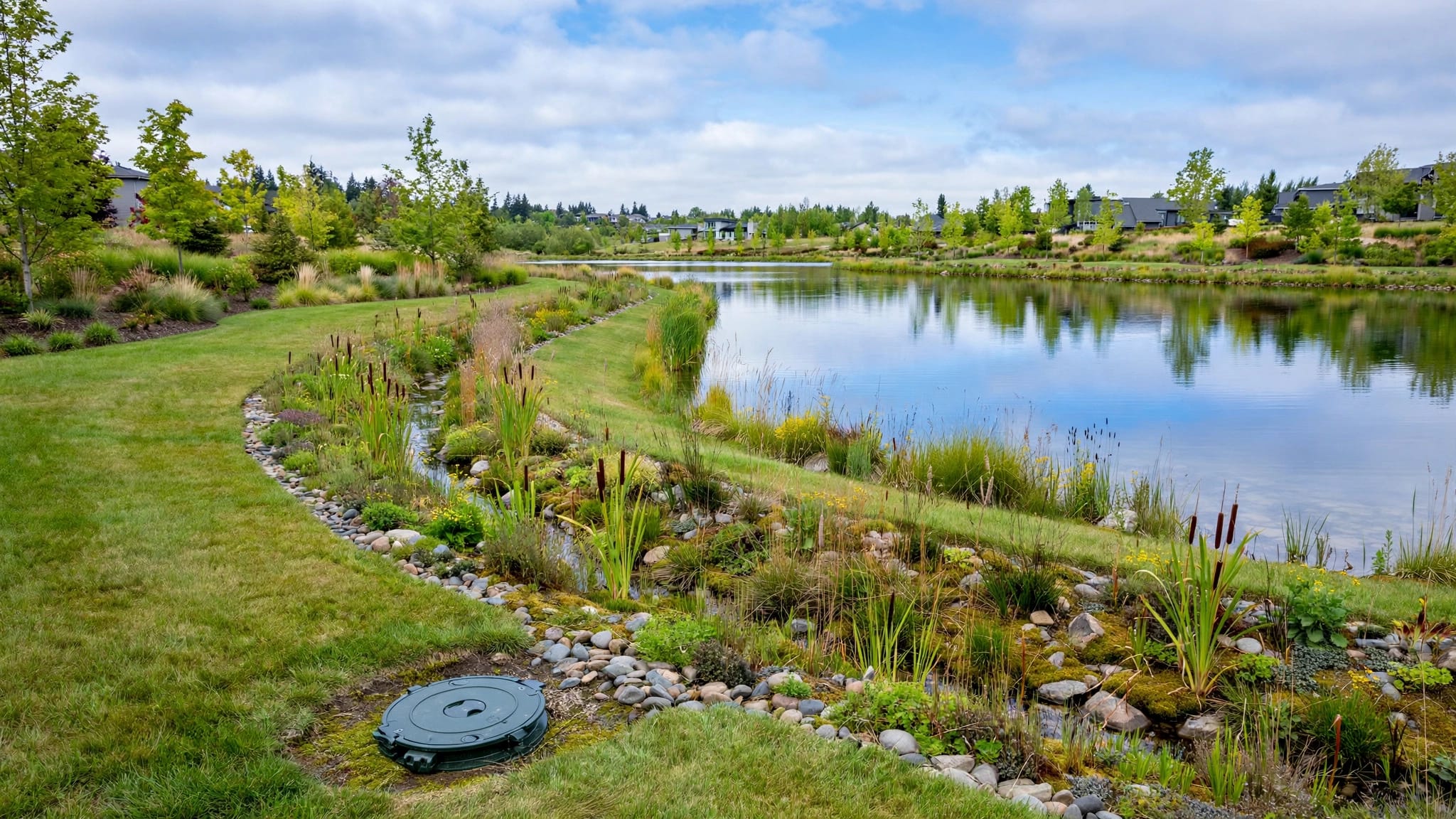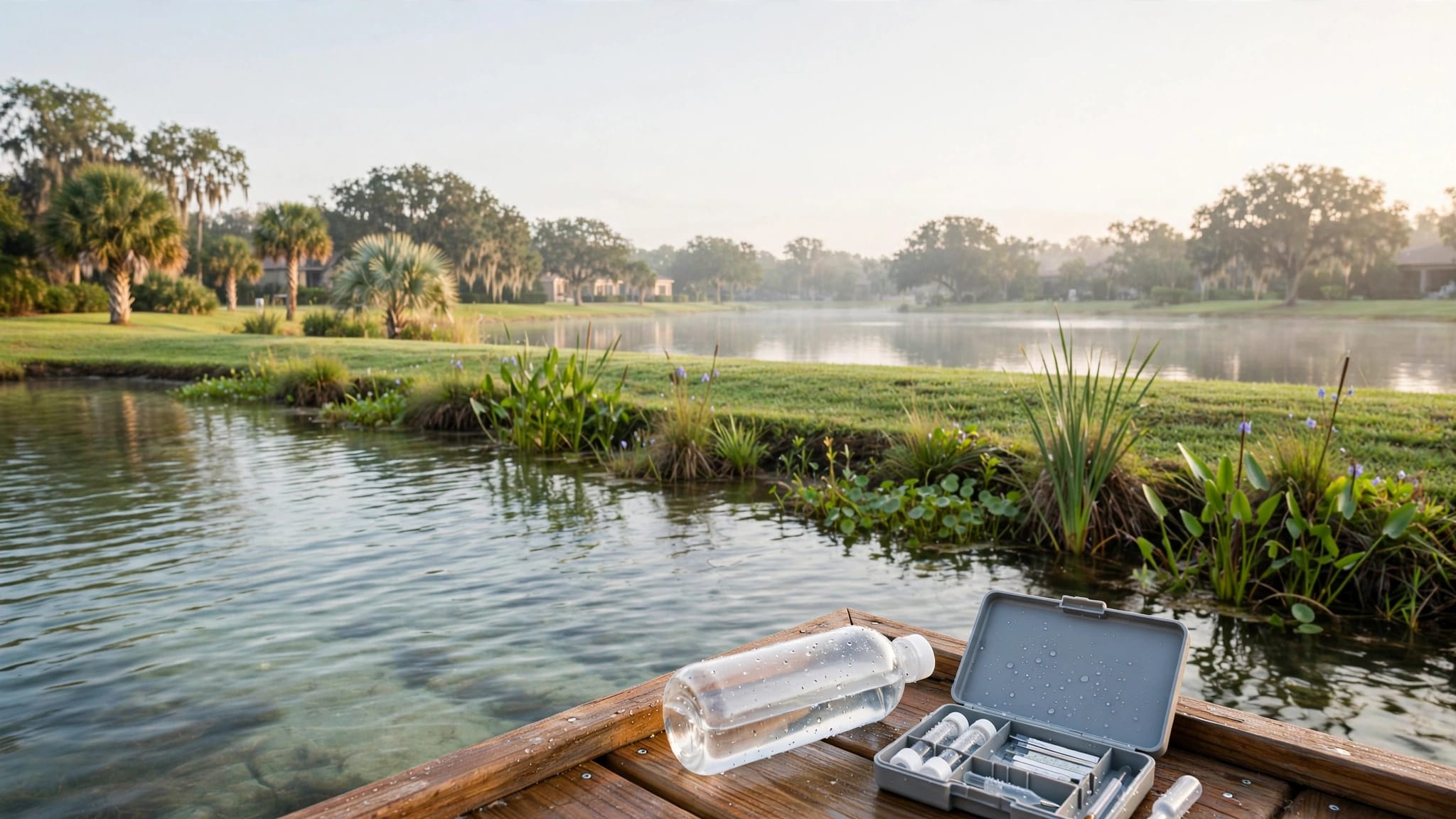
HOA Lake Inlet Inspection for Debris and Sediment
A lake can look clear from the clubhouse while a stormwater inlet is filling with leaves and silt. For an HOA, that hidden buildup can restrict drainage and send runoff around the structure, where it may wash soil into the lake.
A useful HOA lake inlet inspection checks more than the pipe opening. It follows the path water takes into each retention pond, documents what has changed, and separates safe cleanup from work that needs a qualified crew. Start by finding every place runoff enters the property's lakes.
Map the inlets before walking the shoreline
On a multi-lake property, the most visible inlet isn't always the one causing trouble. A roadside drain may feed a pipe beneath a path, while another lake receives overflow from the basin upstream.
Use plans to trace the flow
Review the property's drainage drawings or as-built plans. Mark visible inlets, culverts, swales, connecting pipes, and overflow routes. Then give each location a name that staff can use consistently, such as "Lake 3, inlet beside the north cart path."
The guide to reading a community lake as-built plan explains how to identify mapped structures and flow directions. Walk the accessible route afterward; plans won't show every later landscaping or drainage change.
Check what feeds each inlet
Look upstream for parking areas, roads, turf, construction activity, recent grading, and bare banks. These areas can send leaves, grass clippings, mulch, or soil toward the same opening after rain.
If one inlet repeatedly collects sediment while others remain clear, record what happens upstream before scheduling another cleanup. Removing the deposit without addressing its source can leave the crew facing the same problem after the next storm.
Set safe limits for the inspection
Inspect from firm ground with a clear view of the inlet and nearby bank. Keep back from steep slopes, soft mud, submerged edges, and areas where water is moving fast. A bank that looks solid from a path may be undercut beside the pipe.
Don't enter a pipe, culvert, control box, or flooded channel. Don't lift a grate or pull out a blockage if water is pushing against it. Sudden movement of trapped water or sediment can put the person clearing it at risk.
Bring a property map, phone or camera, and previous inspection photos. If plants hide the opening, note the limited view rather than stepping into an unsafe area. For inlets near sidewalks, homes, or golf cart paths, also check whether the inspection area is accessible to residents and players.
Check debris before it forms a blockage
Wind and runoff deliver different kinds of debris. Floating branches may collect at the lakeward end of a pipe, while grass clippings and litter can pack against a grate on the upstream side.
Look at the opening and its approach
From a safe viewing point, check for palm fronds, leaves, mulch, trash, cut vegetation, and algae mats. Note whether debris covers part of the opening or has gathered in the channel leading to it. Also look for a line of material caught in plants beside the inlet; rising water may push that material against the structure later.
Record whether water appears to be entering freely, pooling upstream, or flowing around the side. A dry-weather visit may reveal debris but can't show how the inlet performs during a storm.
Follow the debris downstream
At connected lakes, material that passes through one inlet may lodge at the next culvert or weir. Check the accessible downstream end and shoreline, too. The guide to how culverts and weirs affect HOA lake health describes signs of buildup around these connections.
Routine removal can address reachable floating litter. A packed opening, submerged blockage, or heavy mat against a structure calls for a closer assessment before anyone disturbs it.
Read sediment deposits for clues about their source
Sediment doesn't always look like a uniform layer of mud. It can form a fan where runoff meets the lake, settle inside a pipe opening, or collect behind a grate mixed with leaves.
Compare the deposit with earlier visits
Photograph the buildup from the same fixed spot each time. Note whether the sediment reaches farther into the lake, covers more of the opening, or appears after particular storms. Lower dry-season water levels may expose deposits that were hard to see during summer.
Avoid estimating a pipe's remaining capacity from a distant photo. Visibility, water depth, and submerged material can make an opening look clearer than it is.
Look for fresh soil entering the water
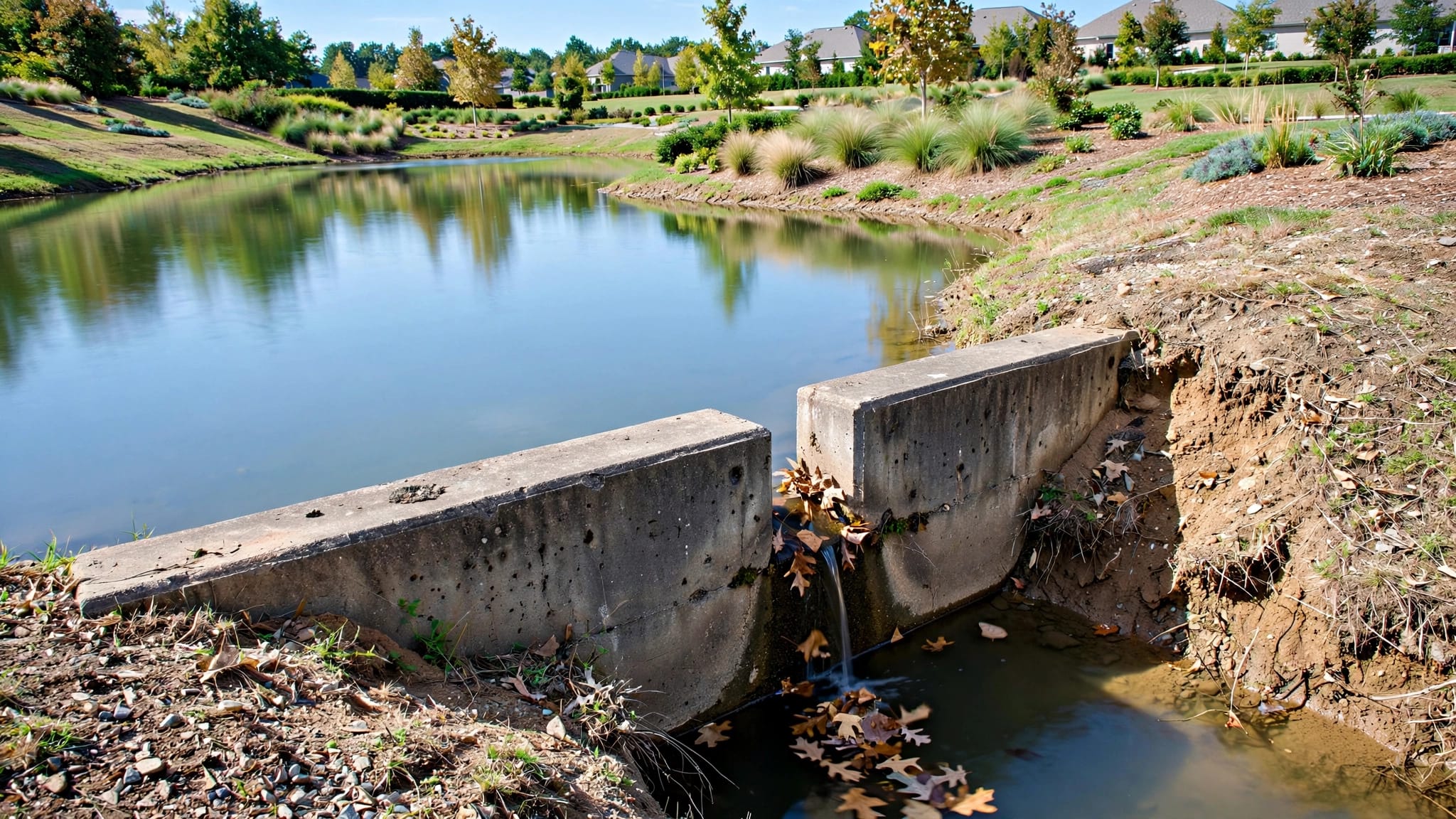
Check for bare ground, small channels, bank slumping, exposed roots, and muddy water near the inlet. A fresh washout beside a pipe suggests water may be bypassing its intended route. Sediment may also arrive from upstream grading or an eroding swale rather than the lake bank itself.
Water color alone won't identify the cause. If discoloration keeps appearing at one inflow, document its timing and location. A lake professional can then decide whether targeted sampling or a drainage review would help.
Inspect the structure and nearby bank
Debris and sediment can hide physical damage. From safe ground, look for broken or displaced grates, cracked concrete, exposed pipe joints, shifted sections, and soil missing beneath the structure. Note dense vegetation that blocks the view or catches floating material.
Check both sides when they're accessible. Water pooling before the inlet and fresh erosion beside it can point to a restriction, but the cause may sit farther inside the pipe. At the lakeward end, look for a growing sediment fan or a bank that has lost its original shape.
Pay close attention where drainage runs near homes, roads, sidewalks, utilities, or golf course paths. Photograph damage and keep people away from an unstable edge. Lake maintenance crews can document these conditions, while major pipe or bank repairs may need a drainage contractor, engineer, or approval from the responsible authority.
Make each HOA lake inlet inspection easy to compare
A photo labeled "clogged drain" won't help much if no one knows which lake it shows. Record the lake name, inlet ID, date, recent rainfall, water level, and the side of the structure photographed. Include a nearby landmark, such as a lot number or cart path crossing.
Take one wide photo showing the bank and drainage approach, then a closer photo of visible debris, sediment, or damage. Repeat those viewpoints on later visits. The Florida HOA lake inspection checklist pairs fixed-location photos with routine checks of shorelines, water levels, inlets, and outlets.
Give every finding a next step: monitor it, assign routine maintenance, or request prompt professional review. Name the person responsible and set a follow-up date. On a large property, separate work orders by lake and inlet so a blocked pipe doesn't disappear inside a general algae-treatment report.
Inspect on a schedule and after heavy rain
A calendar gives the board a baseline. Storms show whether the system is working under load. Both matter in Southwest Florida, where dry-season conditions can look different from the wet season.
Use routine visits to establish normal conditions
A practical property-manager schedule includes regular shoreline observations and a closer monthly review of inlets, outlets, water levels, and photos. During lower-water periods, look for exposed sediment, damaged banks, and openings hidden by vegetation.
The Florida lake maintenance calendar connects dry-season visibility with wet-season checks for blocked structures and washouts. Adjust visits for inlets that repeatedly collect debris or receive runoff from active construction.
Return when rainfall changes the picture
After heavy rain, check upstream ponding, high water, new erosion, cloudy inflow, displaced debris, and water running around a structure. Compare connected lakes: an unusual level in one basin may point to a problem between them.
For a first-year inspection plan, Seabreeze's control-structure guidance describes a possible review 24 to 48 hours after more than one inch of rain in 24 hours. That's a planning example, not a fixed rule for every HOA. If flooding or an unsafe bank is already visible, report it promptly rather than waiting for the next scheduled visit.
Decide what crews can clear and what needs assessment
A crew may be able to remove loose, accessible litter before it packs against an inlet. Sediment lodged inside a pipe, a heavy obstruction under pressure, or a damaged grate needs a different response.
Escalate restricted flow and structural damage
The HOA lake control structure inspection checklist flags damaged pipes, undermined soil, blocked openings, and water bypassing its intended route. It also cites UF/IFAS guidance on retaining at least 50 percent conveyance capacity. That figure isn't a substitute for a site assessment, and staff shouldn't guess capacity by eye.
Don't clear a structure blindly if the work could release trapped sediment or create a safety hazard. Send the photos and location record to the lake manager and the appropriate drainage professional.
Fix recurring sources, not only the deposit
When the same inlet fills repeatedly, review upstream erosion, mowing debris, landscaping materials, and drainage paths. Bank stabilization or changes to how runoff reaches the lake may be needed alongside debris removal.
Seabreeze Lake Maintenance serves HOA and multi-lake properties in Southwest Florida and holds Commercial Applicator License #CM28291 and State-Licensed Specialty Contractor #SCC131152136. If your team finds recurring buildup, erosion, or uncertain flow, Get a Free Lake Health Assessment to arrange a call and lake inspection.
Key Takeaways
- Map and label every inlet so photos and work orders point to the right lake.
- Check debris, sediment, the structure, and nearby banks from safe ground.
- Compare fixed-view photos after rain to spot changes that a single visit can miss.
- Escalate packed blockages, bypass flow, and structural damage instead of clearing them blindly.
Frequently Asked Questions
How often should an HOA inspect lake inlets?
Include inlets in a monthly property review and check them after heavy rain or storms. Inlets with recurring debris, erosion, or construction runoff may need closer attention. Match the schedule to each lake rather than assuming every basin has the same conditions.
Can maintenance staff remove sediment from an inlet?
Staff can document buildup and handle accessible routine debris within their scope. Sediment inside a pipe or close to damaged structures needs qualified assessment before removal. Disturbing it without a plan can move material downstream or expose an unsafe condition.
What should a board receive after an inspection?
Ask for the inlet location, dated photos, observed flow conditions, visible debris and sediment, bank or structure damage, and an assigned next action. Keep earlier records available so the board can see whether a deposit is new, stable, or growing.
Keep the inlet record current
The clearest lake view may hide the drainage problem that matters most. Consistent inlet records show where debris gathers, where soil enters, and which changes follow a storm.
When a blockage or washout appears, those records give the board a safer starting point for cleanup and repair.
Recent Posts