How to Identify Hydrilla in Florida HOA Lakes
Hydrilla can hide beneath clear water for weeks before dense growth reaches the surface. By then, a retention pond or community lake may already have a serious aquatic weed problem.
Correct hydrilla identification in Florida helps an HOA respond before fragments spread, water flow becomes restricted, or the lake loses its clean appearance. The goal is to separate hydrilla from similar submerged plants, document what you find, and arrange a professional inspection before treatment begins.
Key Takeaways
- Hydrilla has narrow leaves arranged in whorls around long, branching stems.
- Rough leaf edges and small bumps along the midrib help separate hydrilla from similar weeds.
- Dense growth often reaches the surface in mats, especially near shallow shorelines.
- Raking or pulling hydrilla can spread stem fragments into new areas.
- A licensed aquatic applicator should confirm the plant before selecting treatment.
Why Hydrilla Matters in HOA Retention Ponds
Hydrilla, scientifically known as Hydrilla verticillata , is an invasive submerged aquatic plant found in many Florida water bodies. It grows below the surface, attaches to the bottom, and sends long stems upward through the water column.
Growth can begin in a small patch near a shoreline, drainage inlet, or shallow shelf. As the stems branch, they form thick underwater stands. When the plant reaches the surface, it can create a bright green mat that covers large areas of a lake.
That growth affects more than appearance. Dense hydrilla can restrict fishing, interfere with boating and maintenance access, and collect floating debris. It can also compete with native plants and make routine shoreline inspections harder. When heavy vegetation dies back, decomposing material can reduce dissolved oxygen and create unpleasant water conditions.
For an HOA, the location of hydrilla matters as much as the plant itself. Growth near an outfall, culvert, pump intake, or stormwater connection may interfere with water movement. Growth along a landscaped shoreline can cover views and make the lake look neglected, even when the rest of the property is well maintained.
Hydrilla also spreads through small pieces of stem. A fragment can develop roots and establish a new patch under the right conditions. That is why a few visible stems shouldn't be treated as an isolated cosmetic issue.
A small patch near the shore may indicate a larger underwater stand that isn't visible from the bank.
Florida water temperatures allow hydrilla to remain active for much of the year. Growth rates vary with sunlight, water depth, nutrients, and weather, so an HOA shouldn't wait for a surface mat before requesting an evaluation.
What Hydrilla Looks Like
A reliable identification starts with the plant's structure. Looking at color alone can lead to mistakes because several aquatic weeds appear green and grow in similar locations.
Check the leaves and stem
Hydrilla usually has long, slender stems with leaves arranged in circles called whorls. Each whorl commonly contains three to eight leaves, although four or five leaves around a stem are common.
The leaves are narrow and pointed. Their edges have small teeth that may be visible with a close look. When you gently rub a leaf between your fingers, the midrib often feels rough because of tiny bumps or prickles. This rough texture is one of the most useful field clues.
The stems branch as the plant grows. Near the surface, hydrilla may form dense, tangled growth with many side shoots. Underwater plants can look sparse in one area and thick a few feet away, especially where sunlight reaches shallow bottom sections.
Look for roots, tubers, and flowers
Hydrilla usually anchors to the lake bottom with fine roots. It can also produce underground tubers and small above-ground structures called turions. These structures help the plant survive poor conditions and contribute to its ability to return after removal.
Small white flowers may appear at the water surface. However, flowers aren't a dependable identification feature because they may be absent, hidden, or difficult to see during a routine lake inspection. The plant's leaves, stem arrangement, and rough midrib provide better clues.
Hydrilla can grow in water that is only a few inches deep and in much deeper sections where enough light reaches the bottom. In a retention pond, inspect shallow shelves, gentle slopes, and areas around inflow points first. New growth may appear as scattered stems before it becomes a continuous bed.
Watch for surface mats
A hydrilla infestation often becomes easier to spot when stems grow toward the surface. The upper growth may form a thick, bright green layer that looks almost like a submerged lawn. Wind can push loose stems and floating pieces toward one shoreline, making the infestation appear larger on one side of the lake.
Surface growth alone doesn't confirm hydrilla. Other plants and algae can create similar patterns. A close sample is still needed, especially when the HOA is deciding whether to authorize treatment.
How to Tell Hydrilla Apart From Similar Plants
Florida lakes contain many submerged plants, including desirable native vegetation. Removing the wrong plant can damage habitat and create unnecessary costs, so comparison matters.
Hydrilla versus Brazilian elodea: Brazilian elodea, also called Egeria densa , has leaves that are often broader and larger. Its leaves may also form whorls, but they usually feel less rough along the midrib. A professional may need to examine several stem sections because plant size changes with growing conditions.
Hydrilla versus coontail: Coontail has stiff, forked leaves that give each stem a bristly appearance. It doesn't anchor to the bottom with true roots in the same way hydrilla does. When pulled from the water, coontail often looks like a bottlebrush.
Hydrilla versus southern naiad: Southern naiad has narrow leaves with noticeable teeth, so it can resemble hydrilla at first glance. Its leaves are typically arranged more irregularly, and the plant often has a more delicate, branching form. The rough midrib associated with hydrilla helps separate the two.
Hydrilla versus eelgrass: Eelgrass has long, ribbon-like leaves that grow upward in a basal cluster. It doesn't have the whorled leaves found on hydrilla.
Hydrilla versus algae: Filamentous algae feels slimy and appears as loose threads or tangled mats. It doesn't have defined leaves arranged around a stem. Planktonic algae colors the water rather than producing rooted stems.
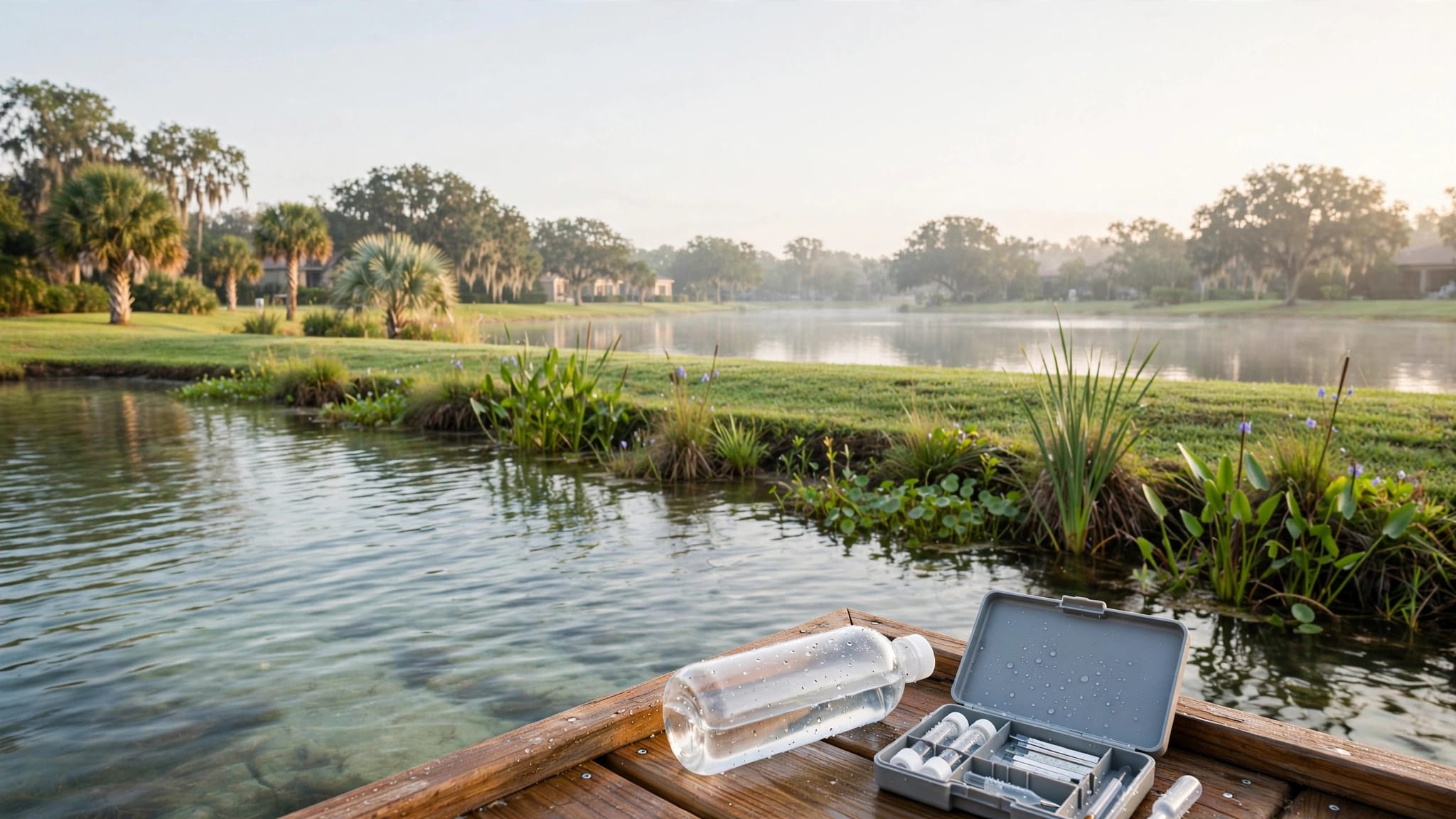
These differences aren't always obvious in a photograph taken from a dock. Clear close-up images of the leaf arrangement, stem, and bottom attachment are more useful than a wide lake view. If the plant can't be identified with confidence, the HOA should avoid authorizing a broad treatment based on appearance alone.
A Practical Hydrilla Inspection for HOA Boards
Board members, community managers, and lake committees can document suspicious growth without disturbing an entire bed. Start with a slow walk around the accessible shoreline. Note patches, water depth, nearby stormwater inlets, recent maintenance work, and areas where the plant reaches the surface.
Use a long-handled aquatic rake only when a sample is necessary and safe to collect. Pull a small amount toward the bank, then examine the stem and leaves. Avoid dragging a rake through a large infestation because broken pieces may spread to other parts of the lake.
Follow these steps during the inspection:
- Photograph the growth in place. Take a wide image that shows the patch location, followed by close images of leaves and stems.
- Check the leaf arrangement. Look for whorls around the stem, pointed leaves, serrated edges, and a rough midrib.
- Record the location. Mark the patch on a lake map or property plan, especially if it sits near an outfall or access point.
- Describe the density. Note whether growth is scattered, attached to the bottom, reaching the surface, or forming a continuous mat.
- Secure any sample. Keep plant material contained and prevent fragments from entering another water body.
Photographs and location notes give a lake maintenance company a useful starting point. They also help an HOA compare conditions during follow-up inspections.
Do not place removed aquatic plants in a storm drain, canal, neighboring lake, or open shoreline area. Dispose of them according to local requirements and the direction of the professional handling the inspection.
What to Do After You Suspect Hydrilla
Once hydrilla seems likely, notify the community manager, board, and lake maintenance provider. The next step should be confirmation across more than one area of the lake. A professional can inspect the plant, check water conditions, and determine whether the growth is isolated or widespread.
Treatment decisions depend on several factors. These include the plant's coverage, water depth, nearby desirable vegetation, irrigation use, fish habitat, stormwater function, and the lake's maintenance history. Herbicide labels and applicable Florida requirements also affect the treatment plan. A product that controls one submerged weed may not be the right choice for another.
Ask the provider how the plan will address:
- Plant identification and mapped treatment areas
- Protection of native littoral plants
- Required notices and water-use restrictions
- Possible effects on fish, irrigation, and wildlife
- Follow-up inspections and retreatment needs
- Removal or management of dead plant material
Mechanical removal can disturb the bottom and spread fragments, while chemical treatment may require careful timing and application. In some lakes, a combined plan works better than relying on one method. The right choice comes after an inspection, not from a general product recommendation.
HOA boards should also keep records. Save inspection photographs, treatment notices, lake maps, service reports, and follow-up observations. These records help the board track recurring growth and plan maintenance before hydrilla covers a larger section.
Provider credentials matter when treatments take place around homes, sidewalks, pets, irrigation systems, and shared amenities. Seabreeze Lake Maintenance lists Commercial Applicator License #CM28291 and State-Licensed Specialty Contractor #SCC131152136. The company serves Southwest Florida communities with aquatic weed control, algae treatment, lake aeration, water-quality management, and routine inspections.
If your board has found suspicious submerged growth, Get a Free Quote for a professional lake inspection and maintenance discussion.
Conclusion
Hydrilla identification starts with details that are easy to miss from the shoreline: whorled leaves, serrated edges, a rough midrib, branching stems, and dense growth that rises toward the surface. Those signs help separate hydrilla from coontail, eelgrass, algae, and other aquatic plants.
Avoid pulling large patches or approving treatment before the plant is confirmed. Early documentation and a professional inspection give an HOA a clearer plan for protecting lake function, shoreline appearance, and native vegetation.
Recent Posts