Mosquito Larvae in Community Lakes: A Board Guide
A retention pond can look clean from the clubhouse and still hold mosquito larvae along its quiet edges. A practical board guide to mosquito larvae community lakes starts with one distinction: open water isn't the same as productive mosquito habitat.
For HOA boards, golf courses, and property managers, mosquito complaints need a measured response. The lake may be involved, but clogged stormwater structures, shallow pockets, debris, or nearby containers may be the real source. Good lake management combines inspection, accurate identification, targeted treatment, and clear records.
Mosquito Larvae Community Lakes: What the Board Must Know
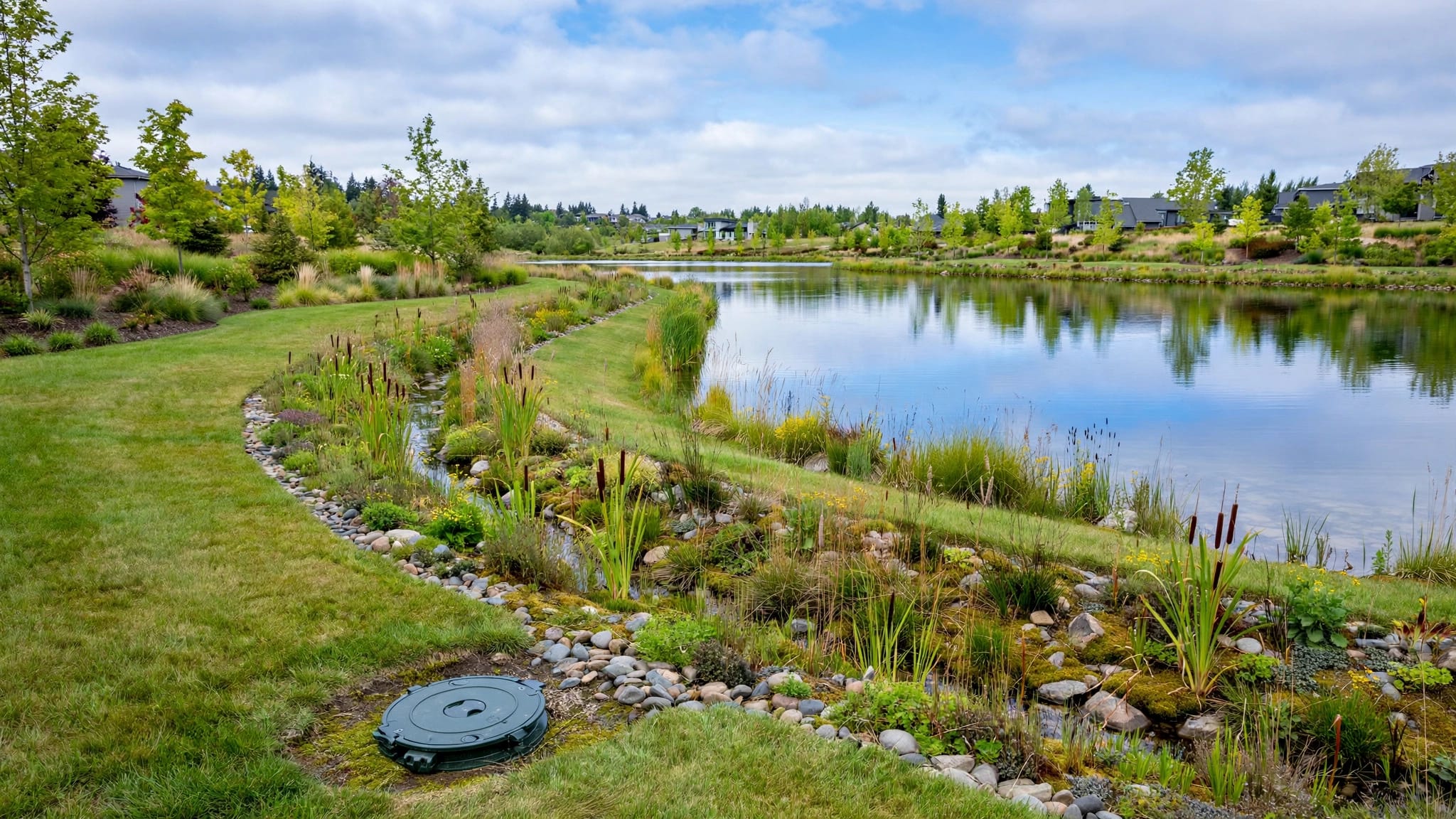
Mosquitoes lay eggs wherever water remains still long enough for the eggs to hatch. In a community lake, larvae often gather near sheltered shorelines, shallow coves, floating debris, dense vegetation, blocked inlets, or isolated puddles connected to the main basin.
Mosquito larvae live at the water's surface and rise frequently to breathe. They often make a quick wriggling movement when disturbed. The pupal stage follows the larval stage, and adult mosquitoes emerge from the pupae after the insect completes its development.
A healthy, moving lake isn't automatically free of mosquitoes. Aeration, fish, aquatic insects, and water movement can reduce suitable habitat, but they won't correct every stagnant pocket. Low water levels, heavy rainfall, storm debris, failed pumps, and clogged drainage structures can change conditions within days.
For a board, the main question is not whether mosquitoes exist somewhere on the property. The better question is whether the lake system contains repeatable breeding areas that management can correct .
A resident's report of adult mosquitoes identifies a problem, but it doesn't prove the community lake is the breeding source.
Retention ponds also have a stormwater function. They aren't koi ponds or ornamental water features. Any response must protect drainage capacity, shoreline stability, water quality, residents, pets, wildlife, and downstream areas.
Inspect the Entire Lake System, Not Only the Open Water
A central basin inspection can miss the places where mosquito larvae develop. Boards should ask for an inspection of the full property, including lake edges and stormwater connections.
The inspection should cover:
- Shallow shelves that lose connection with the main lake as water levels fall.
- Coves, corners, and protected areas with little circulation.
- Floating leaves, branches, trash, and other organic debris.
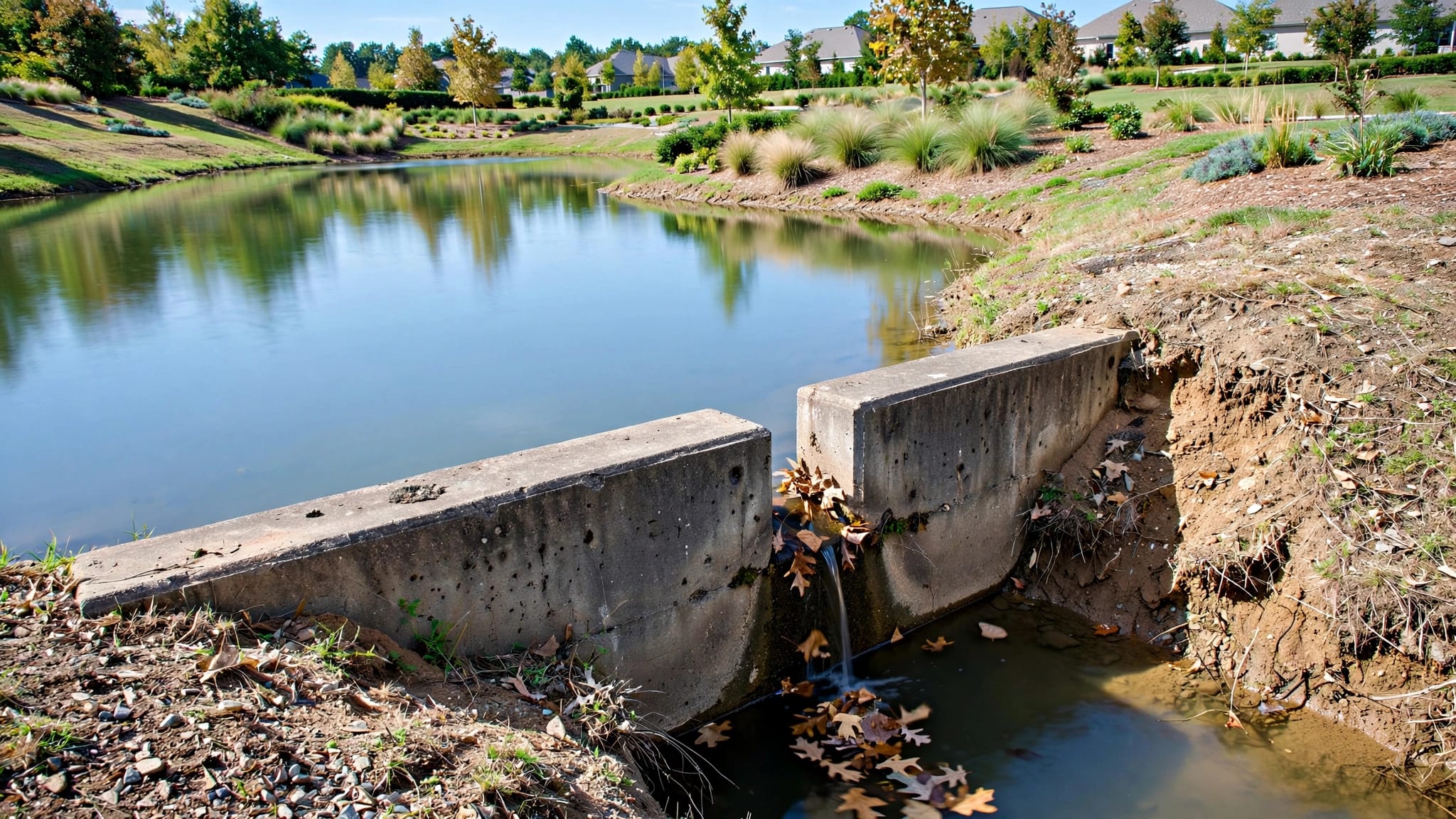
- Storm drains, outfalls, weirs, culverts, and discharge points.
- Dense emergent vegetation and overgrown shoreline areas.
- Pump stations, fountains, and aeration equipment.
- Construction depressions or low spots that hold rainwater.
- Nearby containers, landscape materials, tires, or clogged gutters.
A dipper sample from the open lake may show no larvae while a blocked outfall holds many. For that reason, the inspector should map findings by location and record the date, weather, water level, photographs, and recommended correction.
| Finding | What it may indicate | Board response |
|---|---|---|
| Larvae in a shallow isolated pocket | Water is trapped away from circulation | Correct the pocket or arrange targeted treatment |
| Larvae near a blocked outfall | Drainage structure is holding water | Request inspection and debris removal |
| Larvae among heavy debris | Organic material is providing shelter | Remove debris through an approved maintenance plan |
| Adult complaints with no lake larvae | Another breeding source may be nearby | Inspect containers, gutters, ditches, and low areas |
The pattern matters more than a single observation. If mosquito larvae community lakes concerns appear after every heavy rain, the board should review drainage and stormwater maintenance, not rely on repeated chemical treatment alone.
Adult mosquitoes can come from neighboring properties, roadside ditches, neglected yards, roof gutters, utility boxes, and small containers. A lake program should document those possible sources without assuming the lake is responsible for every complaint.
How to Confirm Mosquito Larvae Before Treatment
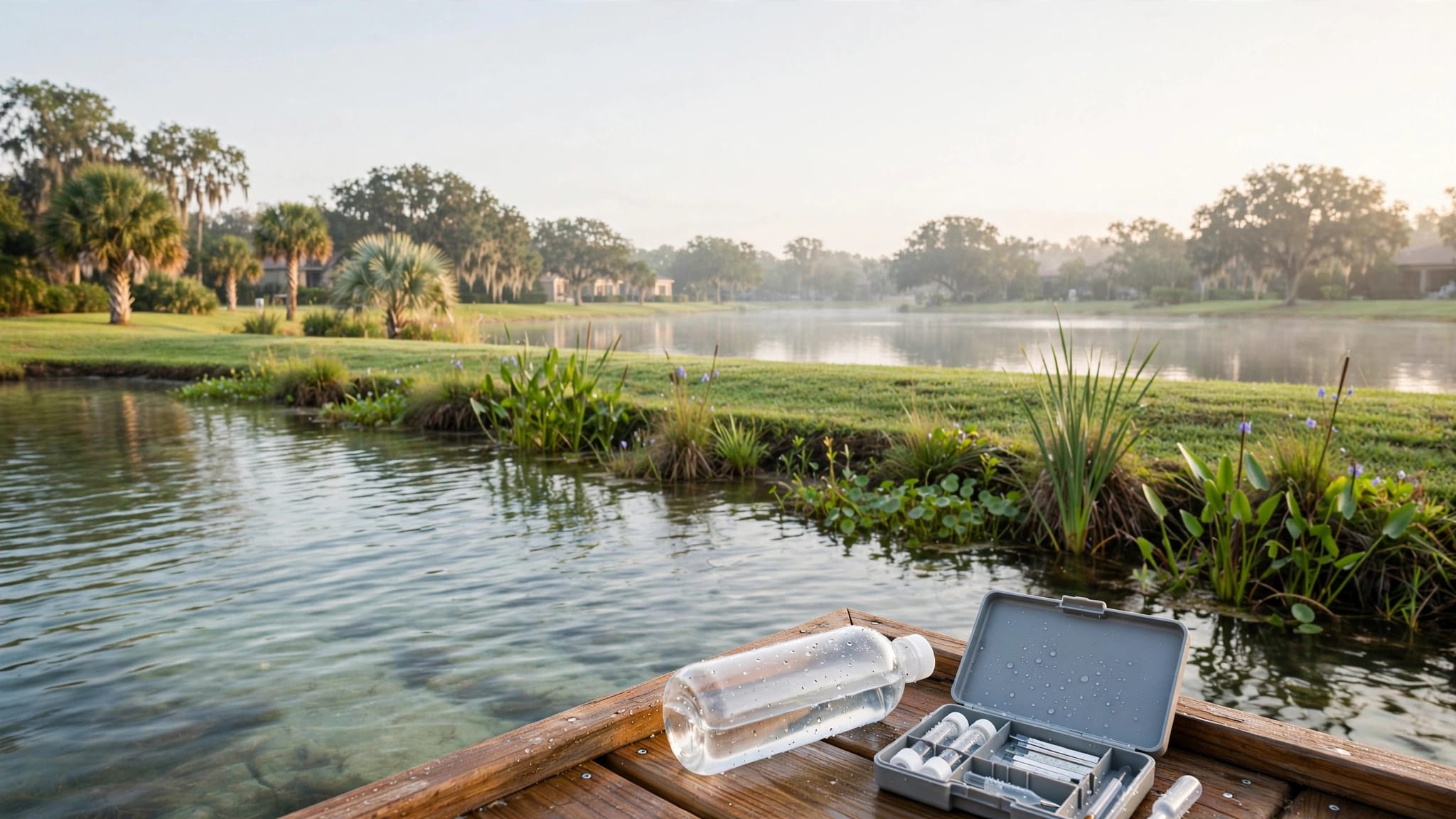
Several aquatic organisms can look similar at a glance. Mosquito larvae usually remain near the surface, where they hang at an angle and move with a quick wriggle. Mosquito pupae have a compact, comma-like shape and tumble through the water when disturbed.
Midge larvae, aquatic worms, and other small invertebrates may appear in the same shoreline areas. Some stay near the bottom or move differently. A trained inspector can collect samples with a mosquito dipper and identify whether treatment is appropriate.
Confirmation also helps the board communicate with residents. A report that says, "Larvae were found beside the blocked inlet on the east lake," is more useful than a general statement that mosquitoes are in the water.
The timing of inspection matters. Samples taken after rain, during low-water periods, or after equipment failure can reveal conditions that a routine visit misses. However, one negative sample doesn't prove that no breeding area exists. Weather, water movement, and insect life stages change quickly.
Boards should request a written service record that identifies:
- The location inspected and any larvae found.
- The conditions that supported breeding.
- The action taken during the visit.
- Any repair, debris removal, or vegetation work still needed.
- The date for follow-up inspection.
Accurate records help the board compare complaints with actual conditions. They also show whether a recurring problem needs structural correction instead of another isolated treatment.
Choose Lake Mosquito Control Based on the Source
The first control option is usually source reduction. Removing debris, restoring water movement, correcting drainage, and eliminating isolated pockets can reduce breeding habitat without treating the entire lake.
Vegetation management requires care. Dense, unmanaged growth can restrict circulation, but beneficial littoral plants also support shorelines and wildlife. Removing plants without a site plan can increase erosion or create new maintenance problems. Lake professionals should identify the plant type and recommend the right level of control.
Targeted larvicide treatments may be appropriate when mosquito larvae are confirmed and the source cannot be corrected immediately. Products containing Bacillus thuringiensis israelensis (Bti) or insect growth regulators such as methoprene are examples of tools used in mosquito management. The correct product, rate, timing, and application area depend on the label, site conditions, water use, and non-target organisms.
A treatment program should never rely on guesswork. Residents and board members shouldn't pour bleach, fuel, oils, or household insecticides into a retention pond. Those actions can harm fish and wildlife, damage water quality, violate product rules, and create liability for the community.
Aeration can improve circulation and support overall water quality, but it isn't a guaranteed mosquito treatment. Diffusers and fountains need proper placement, working equipment, and routine inspection. If a stagnant pocket sits outside the circulation pattern, adding equipment in the center of the lake may not solve the problem.
Adult mosquito spraying has a different purpose. It may reduce adult activity for a limited period, but it doesn't remove larvae developing in water. A board should ask whether a proposed service addresses the breeding source, the adult population, or both.
Seabreeze Lake Maintenance holds Commercial Applicator License #CM28291 and State-Licensed Specialty Contractor #SCC131152136. For a community dealing with recurring larvae reports, the board can Get a Free Lake Health Assessment and request an inspection of the lake, shoreline, and related drainage areas.
Build Mosquito Monitoring Into the Lake Maintenance Plan
Mosquito control works better when it is part of routine lake maintenance instead of an emergency response to every resident complaint. The board should set expectations before the wet season, when heavy rain can fill low areas and move debris into stormwater structures.
A Florida property needs a schedule that reflects changing conditions. Dry-season inspections can identify erosion, clogged structures, low-water pockets, and equipment problems. Wet-season visits should pay closer attention to stormwater inflows, floating debris, algae, water levels, and new stagnant areas. A Florida lake maintenance calendar can help boards organize inspections around seasonal risks.
The maintenance agreement should state how often the property is inspected, what mosquito-related observations are documented, and which services are included. It should also explain how the provider handles treatment recommendations, storm response, equipment repairs, vegetation issues, and follow-up visits.
Boards comparing vendors can review lake maintenance contract essentials before approving a proposal. A clear contract should identify the property areas covered, service frequency, treatment limits, reporting process, licensing, and charges for work outside the regular schedule.
Weekly or biweekly maintenance may fit some properties, while others need a different schedule based on lake size, shoreline conditions, stormwater design, and complaint history. The right frequency comes from site observations, not a standard package.
Resident communication also matters. Ask residents to report the lake location, date, time, and conditions connected to mosquito activity. Remind them to remove standing water from private patios and yards, since a single neglected container can produce mosquitoes even when the community lake is well maintained.
Conclusion
Mosquito larvae community lakes problems usually begin in specific places, such as stagnant margins, blocked drainage points, debris-filled pockets, or low areas separated from the main basin. A board can respond more effectively by confirming the larvae, correcting the source, and documenting the result.
Routine inspections, responsible treatments, functioning aeration, and a clear maintenance contract give the community a practical plan. When the lake is treated as part of the entire stormwater system, mosquito control becomes more precise and easier to manage.
Recent Posts