How to Verify Florida HOA Lake Maintenance Responsibility
An HOA can pay for lake work for years and still lack proof that it owns the waterbody or holds the maintenance duty. That gap matters when a retention pond fills with weeds, a shoreline erodes, or a storm damages an outfall.
Before approving Florida HOA lake maintenance, the board should trace responsibility through recorded documents, permits, plats, easements, and contracts. A pond may sit inside a gated community while another entity owns it, controls access, or must maintain its drainage structures.
Start with the paper trail, then match each lake to a written scope and a qualified contractor.
Why Lake Ownership and Maintenance Duty Are Different
Many boards assume that if residents see a lake from a common area, the HOA must pay for its care. Florida property records don't always support that assumption. A subdivision may include multiple tracts, drainage easements, conservation areas, and stormwater facilities with different responsible parties.
Ownership answers who holds title. Maintenance responsibility answers who must inspect, operate, treat, repair, or report on the feature. The declaration may assign common-area care to the HOA, while a recorded easement or permit places duties on a developer, master association, lot owner, city, county, or water management entity.
That distinction changes the board's next move. The HOA might need a routine lake service contract, an engineer's repair plan, approval from another property owner, or confirmation that a public agency handles a structure. Hiring a vendor before checking the documents can leave the association paying for work it can't authorize.
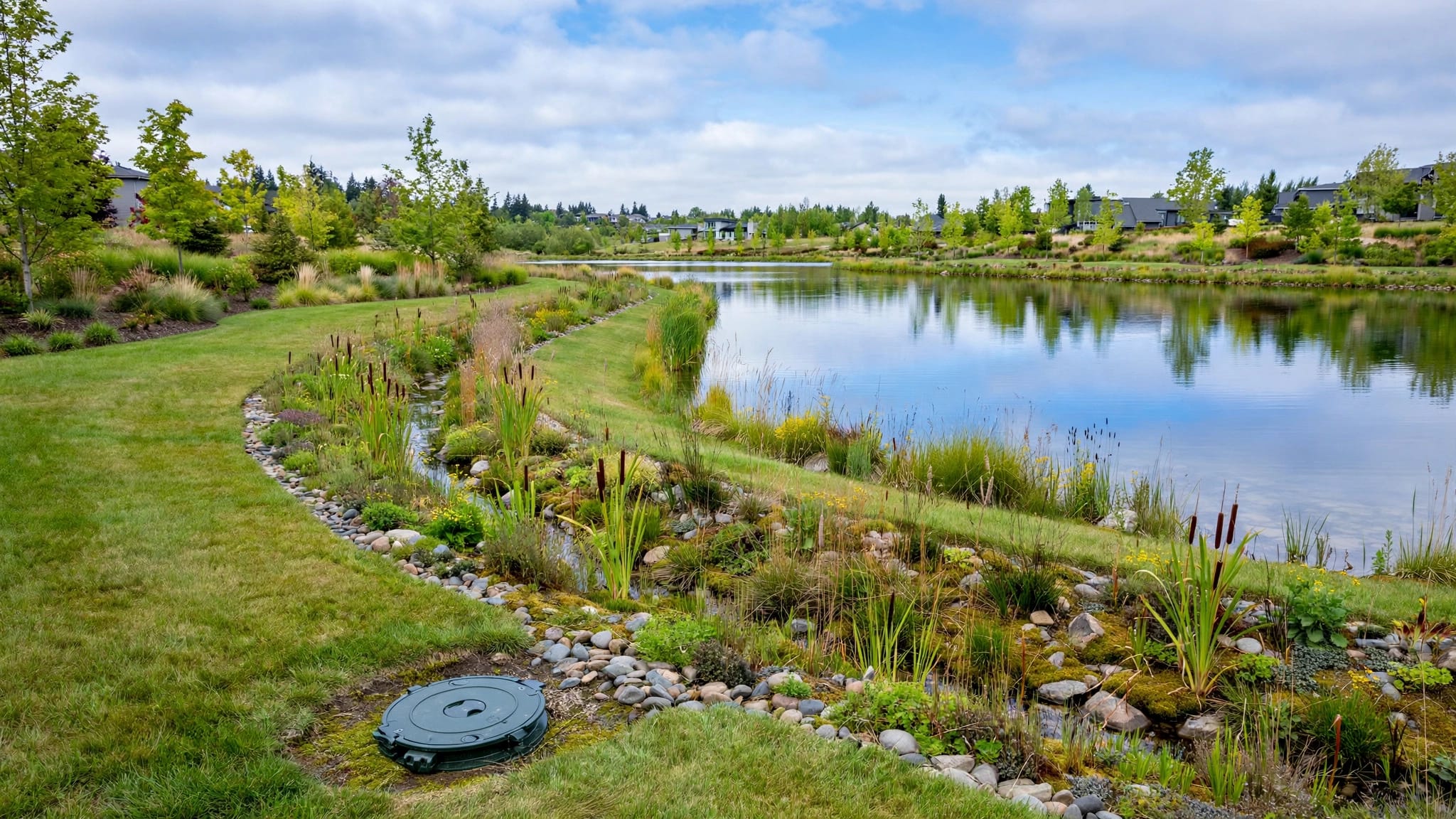
The process applies to retention ponds, detention ponds, and community lakes , not ornamental koi ponds. These waterbodies often support stormwater management, drainage, flood control, landscaping, or recreation. Their legal and maintenance requirements can differ.
Start With Recorded Property Documents
Ask the association's manager or title company for the recorded declaration, amendments, plat, survey, deeds, easements, and maintenance agreements. Search by the association's legal name and parcel numbers, not only the neighborhood's marketing name.
Read the legal descriptions and tract labels around every pond. Look for terms such as drainage tract, lake tract, retention area, conservation easement, access easement, operation and maintenance, and stormwater facility. A map shows where the feature sits, but the recorded text usually assigns the duty.
Check whether the declaration gives the HOA authority to enter, treat, remove debris, stabilize banks, or approve alterations. If the documents conflict, preserve both versions and ask a Florida HOA attorney or title professional to interpret them before the board votes.
Check Permits and Drainage Records
Next, obtain the approved site plan, as-built drawings, environmental resource permit, stormwater permit, and operation and maintenance documents available from the city, county, or applicable water management district. Permit files may identify the stormwater system, discharge points, control structures, access routes, and required inspections.
Permit records don't always settle title, but they can reveal obligations the declaration doesn't mention. A pond may look decorative while functioning as a required retention facility. Altering littoral plants, banks, inflow pipes, control structures, or discharge routes can create a compliance problem if the work falls outside the approved plan.
Use the retention versus detention ponds guide to identify what each waterbody does before assigning work. A site can contain both types, and the care plan should match each pond's drainage function.
How Florida HOA lake maintenance Responsibility Is Assigned
Once the records are collected, build a lake-by-lake answer. Don't label an entire community "the lake" when it has separate ponds, canals, outfalls, or wetland areas. Give each waterbody a name or map number, then record its parcel, function, owner, access rights, and maintenance party.
The responsible party may be the HOA, a master association, a developer, a golf club, a condominium association, or a private owner. A city or county may own a drainage system, while the HOA maintains the surrounding banks. A water management district may regulate the permit without taking over day-to-day care.
Golf course communities need extra care because the golf club and HOA often share views, roads, drainage features, or shoreline access. A service agreement should identify who authorizes treatments and who pays when a pond sits near both golf and residential property.
Separate Routine Care From Repairs
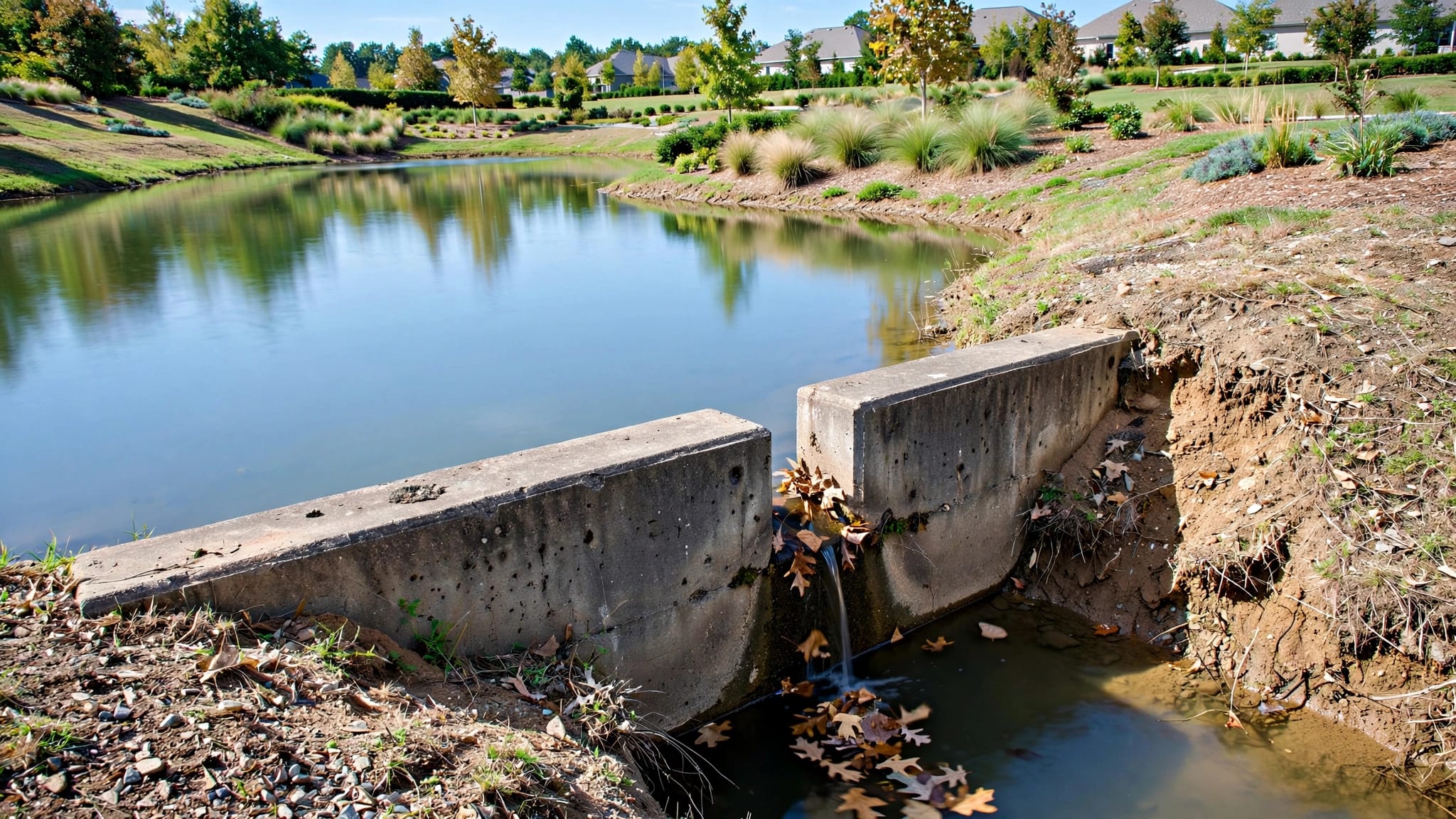
Responsibility also changes with the type of work. Regular aquatic weed control, algae treatment, debris removal, water-quality checks, aeration inspections, and shoreline observations may fit a maintenance budget. Rebuilding an eroded bank, replacing a failed control structure, repairing an outfall, removing sediment, or changing drainage usually needs a different approval path.
Read the governing documents for terms such as capital improvement, structural repair, casualty damage, and common expense. Ask the engineer or agency that issued the permit whether a proposed repair requires design, authorization, or a permit revision. A maintenance company can identify conditions, but the board shouldn't treat a field observation as permission to alter a permitted system.
Write down the answer in plain language. For example, the file might state that the HOA handles vegetation and litter on its tract, the golf club maintains its shoreline, and the recorded owner handles the control structure. The final assignment should cite the document and page supporting each duty.
A clear Florida HOA lake maintenance assignment prevents the board from confusing visual responsibility with legal or contractual responsibility. It also gives vendors accurate instructions before they visit the site.
Build a Written Verification File
Verbal assurances disappear when board members change. Keep a responsibility file that lets a new director understand why the HOA pays for a service and where the boundaries lie. Save the source document, the relevant page, the map, and the date someone confirmed the information.
Use these steps to organize the file:
- Mark each waterbody on the current site plan, including ponds, lakes, canals, outfalls, control structures, and shoreline areas.
- Pull the recorded documents connected to each tract, parcel, easement, and conservation area.
- Compare the declaration, plat, survey, permits, and maintenance agreements for conflicts or gaps.
- Confirm unclear duties with the property manager, title professional, engineer, public agency, or other named owner.
- Save written responses, inspection records, maps, photographs, and board decisions in one location.
A simple assignment matrix can also help during budget reviews. Include the waterbody name, parcel or tract, stormwater function, titled owner, maintenance party, access rights, approved routine work, repair authority, permit number, contact person, and confirmation date.
Confirm With Outside Parties
Ask the community's manager for existing contracts, turnover records, old inspection reports, and correspondence about lake care. Contact the city or county stormwater department for permit files, inspection history, and known maintenance agreements. If a district holds the records, request the permit and operation and maintenance provisions tied to the parcel.
Written confirmation matters when records use different names. Send a short request that identifies the pond, parcel, and proposed work. Ask the recipient to identify who handles routine vegetation, structural components, access, storm response, and repairs. Keep the reply with the board's records.
Walk the site with a map after the document review. Photograph access gates, outfalls, control structures, shoreline damage, and signs. Photos help match the legal description to the physical feature, but they don't replace title or permit review.
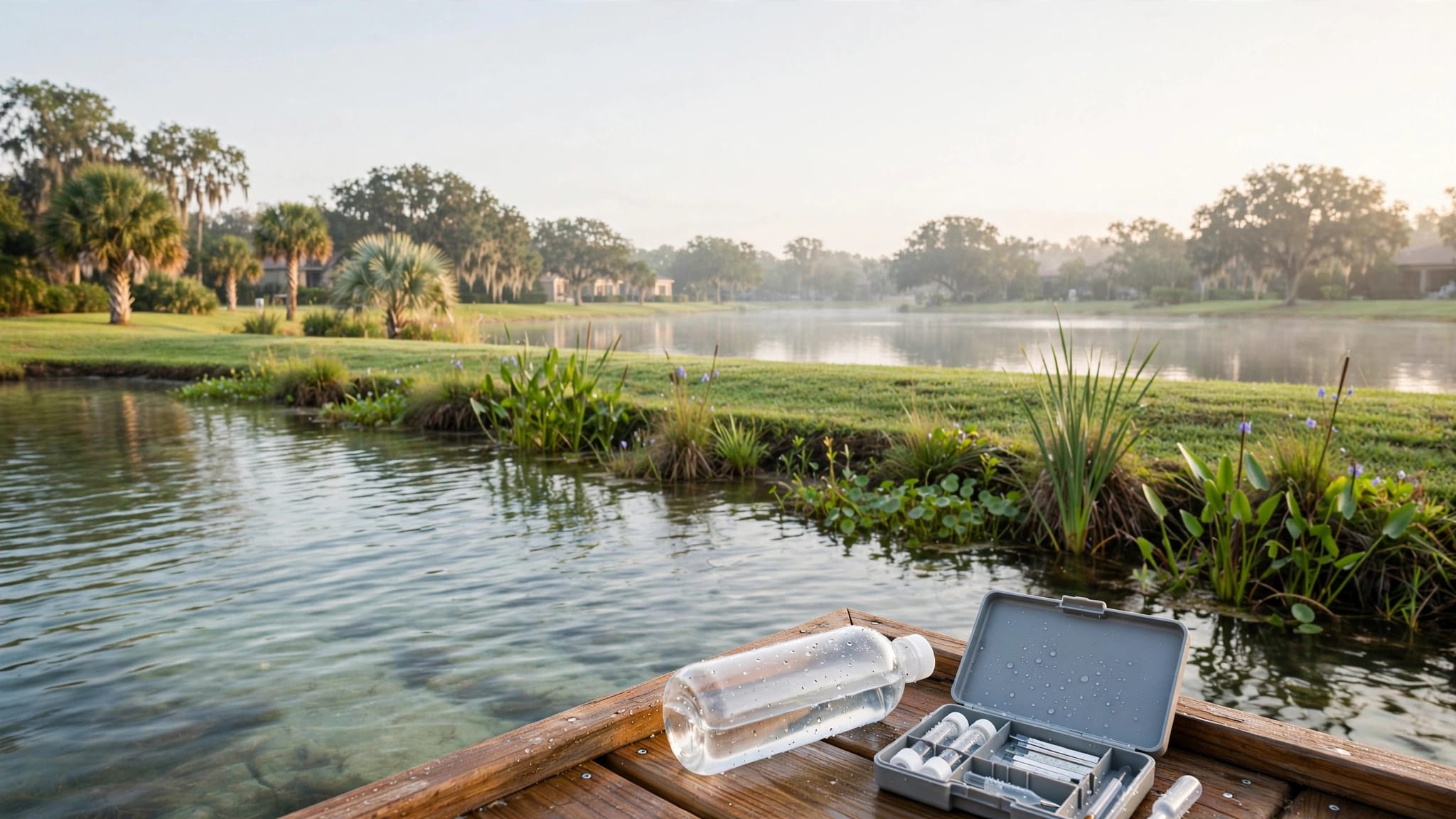
If the board needs a field review, Get a Free Lake Health Assessment can provide a starting point for documenting current conditions and identifying questions before the HOA contracts for work.
Turn the Finding Into a Clear Service Contract
After responsibility is verified, the board can request comparable proposals. A vague line for "pond maintenance" makes it hard to tell whether a low bid includes the work the community needs. Name every waterbody, state the visit frequency, and describe the tasks the vendor will perform.
For a gated community, golf course, apartment complex, or multi-lake property, the scope may cover:
- Inspections of water color, algae, aquatic weeds, trash, and shoreline condition.
- Treatment of weeds and algae under the approved plan and applicable requirements.
- Aeration checks and water-quality observations.
- Debris removal and reporting of unsafe conditions.
- Photos after visits, treatment records, and recommendations for repairs.
Add terms for erosion control, shoreline stabilization, sediment concerns, storm checks, and coordination with the owner of any structure. The contract should say which items are routine service and which require a separate proposal or engineer.
Licenses and insurance belong in the evaluation, not as an afterthought. Ask for current proof that matches the planned work. Seabreeze Lake Maintenance holds Commercial Applicator License #CM28291 and State-Licensed Specialty Contractor #SCC131152136. The board should still verify current documents, coverage, references, and experience with retention ponds and community lakes.
Review bids using the same scope and map. Comparing HOA lake service proposals can help a board check visit schedules, treatment limits, reporting, access, extra charges, and storm response without comparing prices in isolation.
Before signing, confirm who can authorize treatments, how residents will be notified, how rain affects applications, and who handles complaints about pets, wildlife, odors, or access. Florida conditions can change quickly, so the agreement should include a process for reporting urgent erosion, blocked flow, or damaged structures.
Ask how the vendor records chemical applications, inspections, photos, and follow-up work. Those records help the board track performance and provide a dated history if responsibility or compliance is questioned later.
Boards that need competitive bids can use a Florida HOA lake service RFP guide to organize property details, waterbody type, scope, schedule, reporting, pricing, and qualifications.
Keep Responsibility Clear Before the Next Treatment
An HOA should be able to point to the document, map, permit, or agreement that supports every lake-care duty. That record separates ownership from maintenance and routine service from structural repair.
Once each waterbody has an assigned party and written scope, the board can budget accurately, compare bids fairly, and respond faster when weeds, algae, erosion, or storm damage appear. The first step in reliable Florida HOA lake maintenance is proving who has authority to act.
Recent Posts