Building a Lake Access Policy That Works for HOA Communities
A community lake can improve curb appeal, support stormwater control, and create a pleasant view from every nearby home. However, without clear rules, a retention pond can also become a source of safety complaints, property damage, and disputes between neighbors.
A well-written HOA lake access policy sets practical limits before someone swims in a stormwater pond, builds an unapproved dock, or applies chemicals at the shoreline. It gives residents clear expectations while helping the board protect the lake's water quality, banks, wildlife, and intended function.
Start by Identifying What Each Waterbody Is For
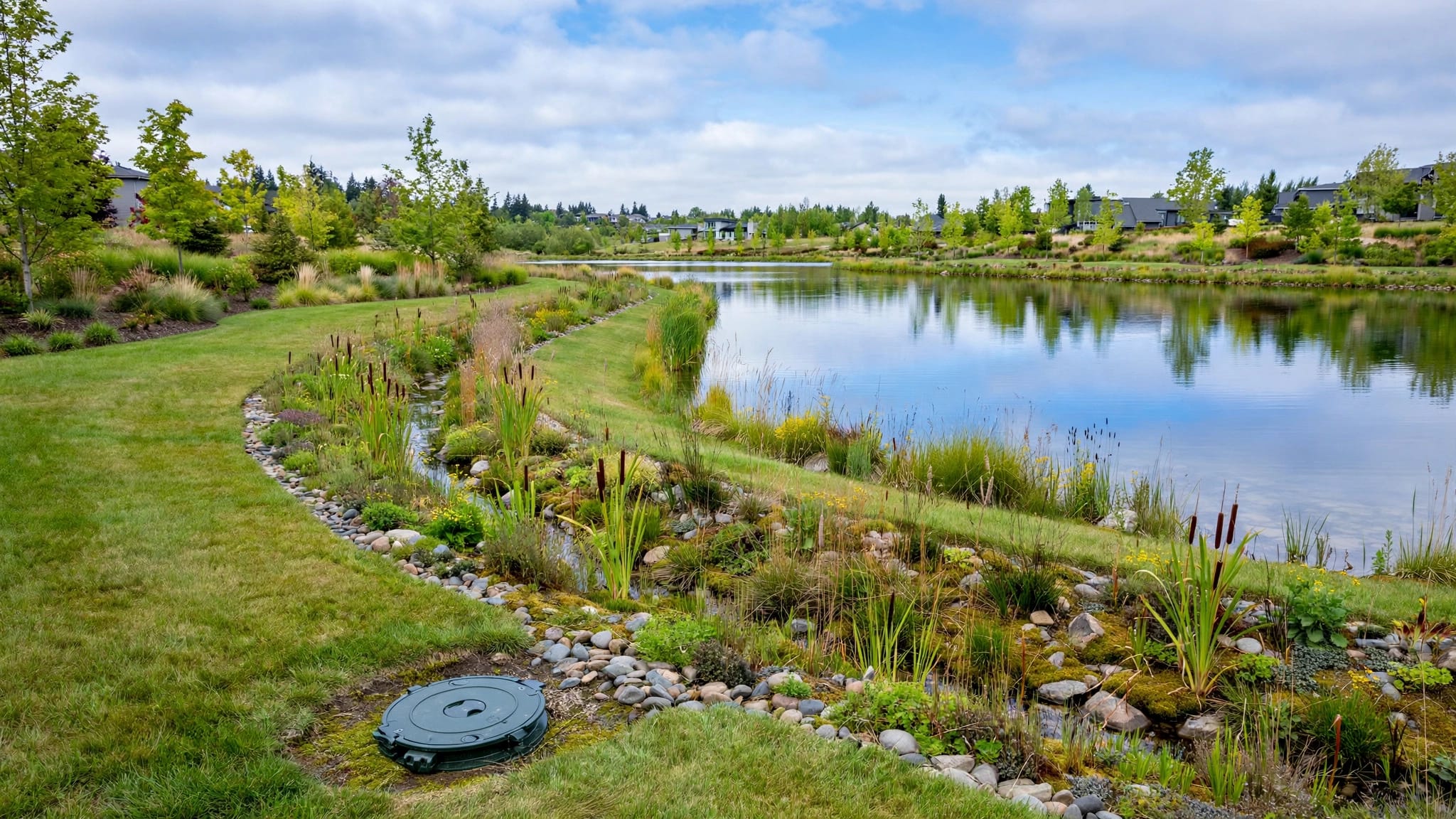
Many gated communities have several ponds or lakes, and they may not all serve the same purpose. One waterbody may collect runoff from roads and parking areas. Another may be an amenity lake near a clubhouse or golf course. A policy should identify each lake by name, number, or map location.
Stormwater retention ponds are built to hold, filter, and slowly release runoff. Southwest Florida Water Management District guidance warns that recreational use of stormwater ponds is not recommended. These ponds may contain sediment, oils, nutrients, pesticides, bacteria, and other pollutants carried by rainwater.
Separate maintenance areas from resident amenities
A pond bank that looks calm and grassy may still have steep slopes, soft muck, submerged pipes, or sudden drop-offs. Residents often cannot see those hazards from the sidewalk.
Therefore, label every waterbody in the policy as one of the following:
- A stormwater-management pond with no recreational access.
- A community lake with limited, board-approved access.
- A golf-course or commercial water feature reserved for maintenance operations.
- A designated amenity area with approved paths, platforms, or fishing locations.
The policy should also state who owns and maintains each lake. In some communities, an HOA owns common-area lakes. In others, a CDD, golf course, developer, or separate association holds responsibility. That distinction affects maintenance decisions, access rights, and enforcement.
Review the governing documents first
The declaration, plat, rules and regulations, easement agreements, permits, and recorded maintenance agreements may already restrict lake access. A board should review those documents before approving new use rules.
If the documents conflict with a proposed policy, the association may need an amendment or legal review. For example, an HOA should not promise fishing access where a drainage easement, management agreement, or safety restriction says otherwise.
Define the HOA Lake Access Policy by Use, Location, and Permission
A usable HOA lake access policy does more than say "use at your own risk." It identifies which activities are prohibited, which activities require written approval, and where limited access is allowed.
Post the same rules at common access points. Residents should not have to search through meeting minutes to learn whether a pond is off-limits.
Prohibit high-risk water activities in retention ponds
For most community retention ponds, swimming, wading, diving, bathing, and floating should be prohibited. The same restriction usually applies to kayaks, canoes, paddleboards, inflatables, and personal watercraft.
These activities create a risk for residents and first responders. They can also disturb aquatic plants, damage fragile shorelines, and interfere with drainage structures.
A clear rule can state:
Community retention ponds are stormwater-management systems, not recreational swimming areas. No lifeguard, rescue service, or recreational water monitoring is provided.
The policy should also prohibit residents from entering the water to retrieve balls, toys, pets, or personal items. Staff or an approved contractor can assess retrieval when conditions allow.
Make fishing a deliberate board decision
Fishing is often the most requested lake activity in residential communities. It can be permitted, restricted, or banned, but the policy should make the choice plain.
If fishing is allowed, limit it to named shoreline areas or an approved platform. Require adult supervision for children, prohibit trespassing through private yards, and ban littering, fish cleaning, unattended lines, and disposal of bait into the water.
Catch-and-release rules may fit some amenity lakes. Still, residents should not assume fish from a stormwater pond are safe to eat. Stormwater runoff can carry contaminants into the waterbody.
The board should also decide whether fishing is limited to residents and guests, whether barbed hooks are allowed, and how anglers must dispose of fishing line. Loose line can entangle turtles, wading birds, and other wildlife.
Set Rules for Shorelines, Docks, and Wildlife
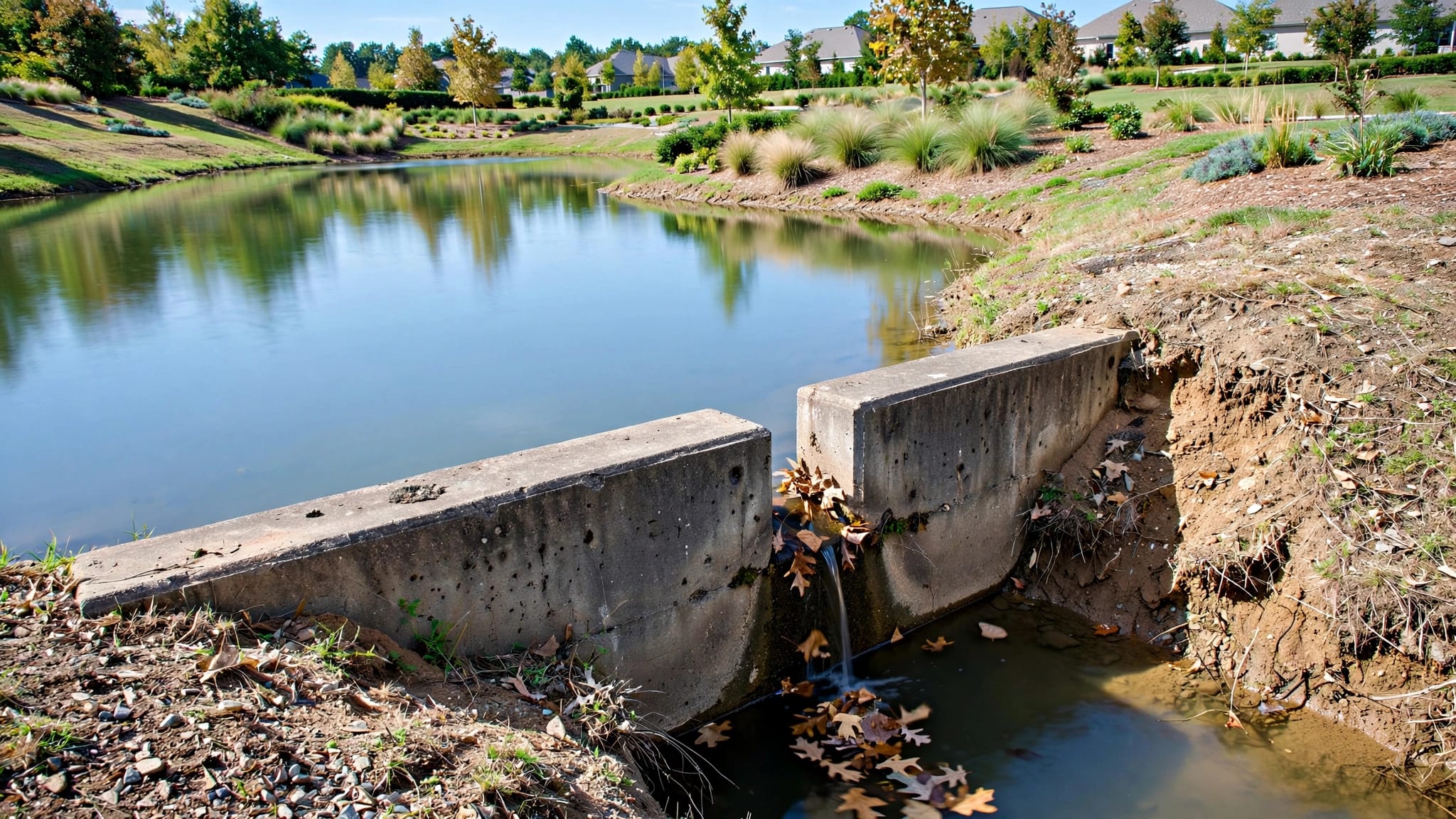
Most lake damage begins at the edge. Foot traffic wears away grass, dogs disturb planted littoral shelves, and well-meaning residents cut vegetation that holds a bank together.
The access policy should protect the shoreline as carefully as it controls water entry.
Require approval for any shoreline structure
Residents should never install a dock, pier, bench, launch point, fish feeder, fence opening, seawall, or shoreline lighting without written association approval. Even a small platform can affect drainage, bank stability, insurance exposure, and required permits.
Before the board approves a fishing pier, boardwalk, or overlook, it should review:
- Property boundaries, easements, and stormwater permits.
- Engineering needs and ongoing maintenance costs.
- Safety features such as railings, stable decking, and no-diving signs.
- Accessibility requirements for a common-area amenity.
- Contractor insurance and the association's insurance coverage.
An access point needs more than a pretty view. It needs a stable route, a defined purpose, and a maintenance plan.
Protect littoral plants and resident safety
Littoral plants are not weeds to be pulled at random. They can hold soil in place, filter runoff, provide habitat, and soften wave action along an exposed bank.
Prohibit residents from mowing to the waterline, removing aquatic plants, planting vegetation, fertilizing the shoreline, or applying herbicides without board authorization. Those actions can create erosion, trigger algae growth, or conflict with an aquatic plant-management program.
Wildlife rules should be equally direct. Residents must not feed ducks, geese, turtles, fish, alligators, or other animals. Feeding wildlife brings animals closer to homes and can increase nuisance behavior.
Keep pets leashed near lake banks. Report an alligator, aggressive animal, injured wildlife, or unusual fish activity to management promptly. Residents should never attempt to trap, relocate, or harass wildlife.
Build Safety Closures and Treatment Notices Into the Policy
Lake conditions change quickly after heavy rain, a power outage, or a treatment visit. The policy should give the manager, board, and authorized lake contractor the authority to close access areas when conditions are unsafe.
That authority should include temporary closures for shoreline repairs, algae treatment, herbicide applications, debris removal, aeration repairs, storms, wildlife activity, and low-water conditions.
Post treatment restrictions where residents will see them
Florida Administrative Code Rule 68F-20.0055 requires notice when aquatic herbicide treatments create water-use restrictions. The notice must identify the restricted activity and the dates the restriction applies. It must remain posted throughout the restriction period.
Place treatment notices at practical access points, not only on a community website. A notice should include the treatment date, the applicable restrictions, the expected end date, and a contact number for questions.
The exact restriction depends on the product label and application. For that reason, the policy should prohibit residents from removing signs or ignoring posted closure periods.
A qualified treatment provider also matters. Seabreeze Lake Maintenance operates under Commercial Applicator License #CM28291 and State-Licensed Specialty Contractor #SCC131152136. Licensed work helps communities keep treatment decisions, records, and resident notices under professional control.
Plan for emergencies without inviting unsafe access
Every policy should tell residents how to report a problem. A downed aerator cable, a blocked outlet, a damaged bank, or a dead fish event needs quick attention.
For an immediate threat to life or property, residents should call 911. For non-emergency issues, they should contact the property manager or maintenance provider with the lake location, photos when safe, and a short description.
The board should keep emergency-access routes open. It should also prohibit parking, storage, landscaping piles, and decorative barriers that block access to control structures or shoreline service areas.
Connect Access Rules to Routine Lake Maintenance
Access rules work best when the board knows what is happening in each waterbody. A policy should require the manager to document hazards, new shoreline damage, algae growth, trash, unauthorized activity, and treatment notices.
A Florida HOA lake inspection checklist gives managers a practical schedule for observing water surfaces, banks, inlets, outlets, and aeration equipment. Fixed photo locations also make slow changes easier to spot.
Match inspection frequency to lake conditions
A stable lake may need monthly professional service and regular property-manager checks. However, a lake with recurring algae, floating weeds, erosion, or poor circulation may need biweekly visits or added inspections after storms.
Review how often HOA lakes should be serviced when setting service expectations. Routine work should include more than herbicide treatments. It should cover water quality, debris, equipment operation, invasive plant growth, shoreline condition, and drainage structures.
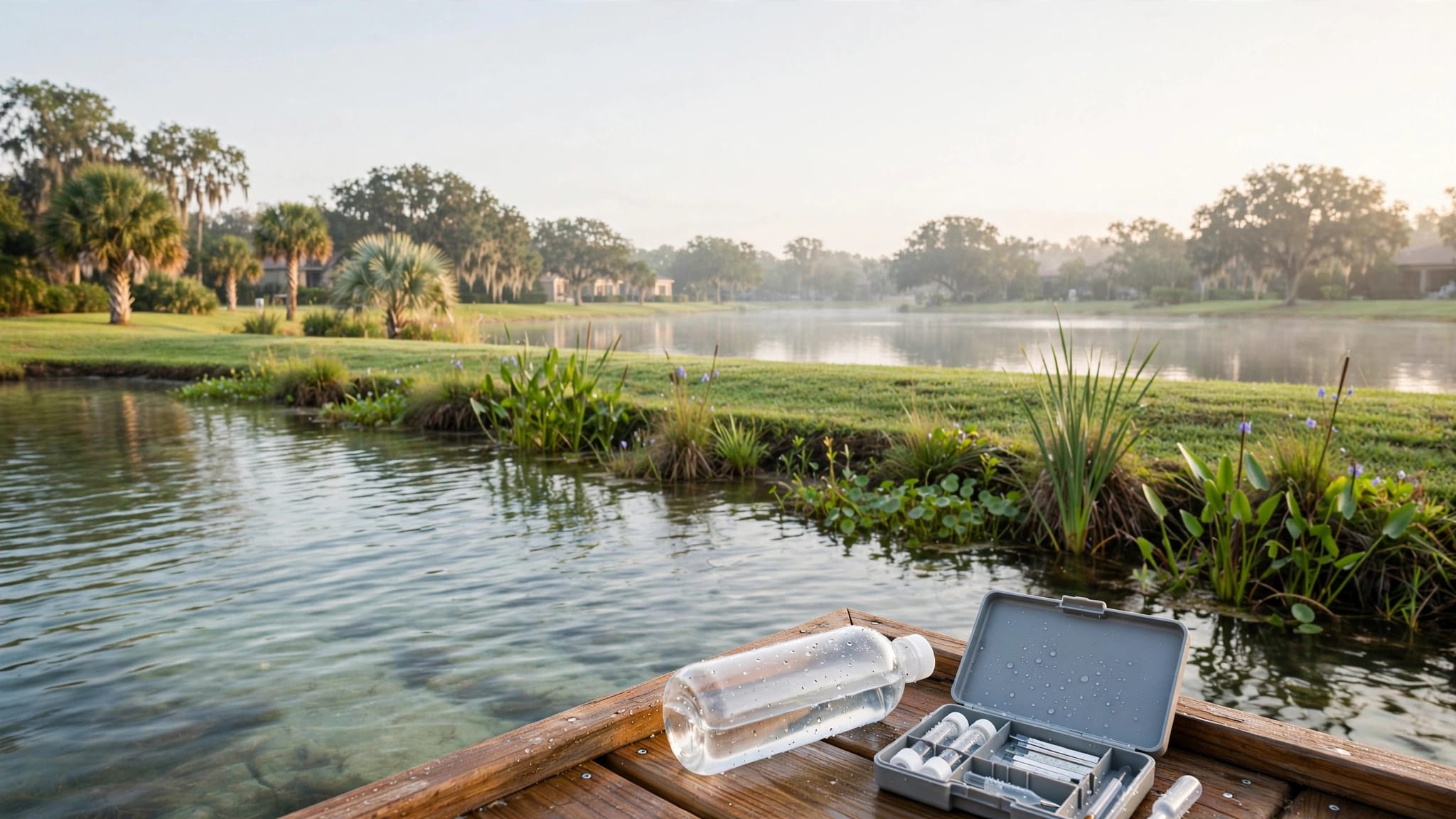
Water testing can also guide decisions when the lake develops odor, murky water, fish stress, or repeated algae blooms. High phosphorus and rising chlorophyll-a can point to algae pressure, while low dissolved oxygen may point to poor circulation or decaying organic matter.
Use maintenance findings to adjust access
The HOA lake access policy should allow the board to tighten rules when lake conditions warrant it. For example, a shoreline with active erosion may need barriers until repairs are complete. A pond under treatment may need fishing restrictions. A broken fountain or aerator may require a temporary closure around equipment.
Residents are more likely to respect restrictions when the board communicates the reason and anticipated duration. Brief updates also reduce calls, speculation, and accidental violations.
If a lake has persistent surface scum, expanding weeds, exposed soil, or recurring odor, review the signs your HOA lake needs professional attention. Early correction usually costs less than repairing a failed bank or recovering a badly stressed waterbody.
Adopt, Communicate, and Enforce the Rules Fairly
The board should adopt the policy through the process required by its governing documents and Florida law. Have association counsel review the final version, especially if the policy affects owner rights, fines, guest access, or existing amenities.
After adoption, provide the policy to owners, tenants, and property staff. Include it in new-resident materials, community rules, lease addenda where applicable, and digital communications.
Make signage clear and consistent
Use short signs with plain language at every practical entry point. Depending on the lake's purpose, signs may include:
- "Stormwater pond. No swimming, wading, or diving."
- "No boats, kayaks, paddleboards, or inflatables."
- "Fishing only in designated areas."
- "No feeding wildlife or dumping yard waste."
- "Temporary treatment restrictions apply as posted."
Translate rules into the languages commonly used within the community when needed. Also include the property manager's contact details so residents can report hazards instead of trying to solve them alone.
For a review of current conditions and access risks, Get a Free Lake Health Assessment. A documented inspection gives the board a better starting point for policy decisions and maintenance planning.
A Safer Standard for Community Lake Access
A clear lake policy protects more than the association's liability position. It protects residents from hidden hazards and preserves the stormwater system that helps safeguard the property.
The strongest HOA lake access policy matches each waterbody's real purpose, posts rules where people can see them, and changes access when maintenance or safety conditions require it. Clear boundaries keep a community lake attractive without asking residents to guess where the risks begin.
Recent Posts