Sediment Forebay Maintenance Checklist for Florida HOAs
A community lake can look clean while sediment fills the small basin that receives its stormwater runoff. For your HOA, sediment forebay maintenance starts with checking that collection area before buildup spreads into the main lake.
A useful checklist combines documented inspections with depth measurements, erosion checks, and site-specific cleanout decisions. It applies to retention ponds and lakes in gated communities, golf courses, and multi-lake properties, rather than ornamental koi ponds.
Start by confirming how each forebay fits into your property's approved drainage design.
Understand What Your Forebay Is Designed to Do
Identify the settling area and its boundaries
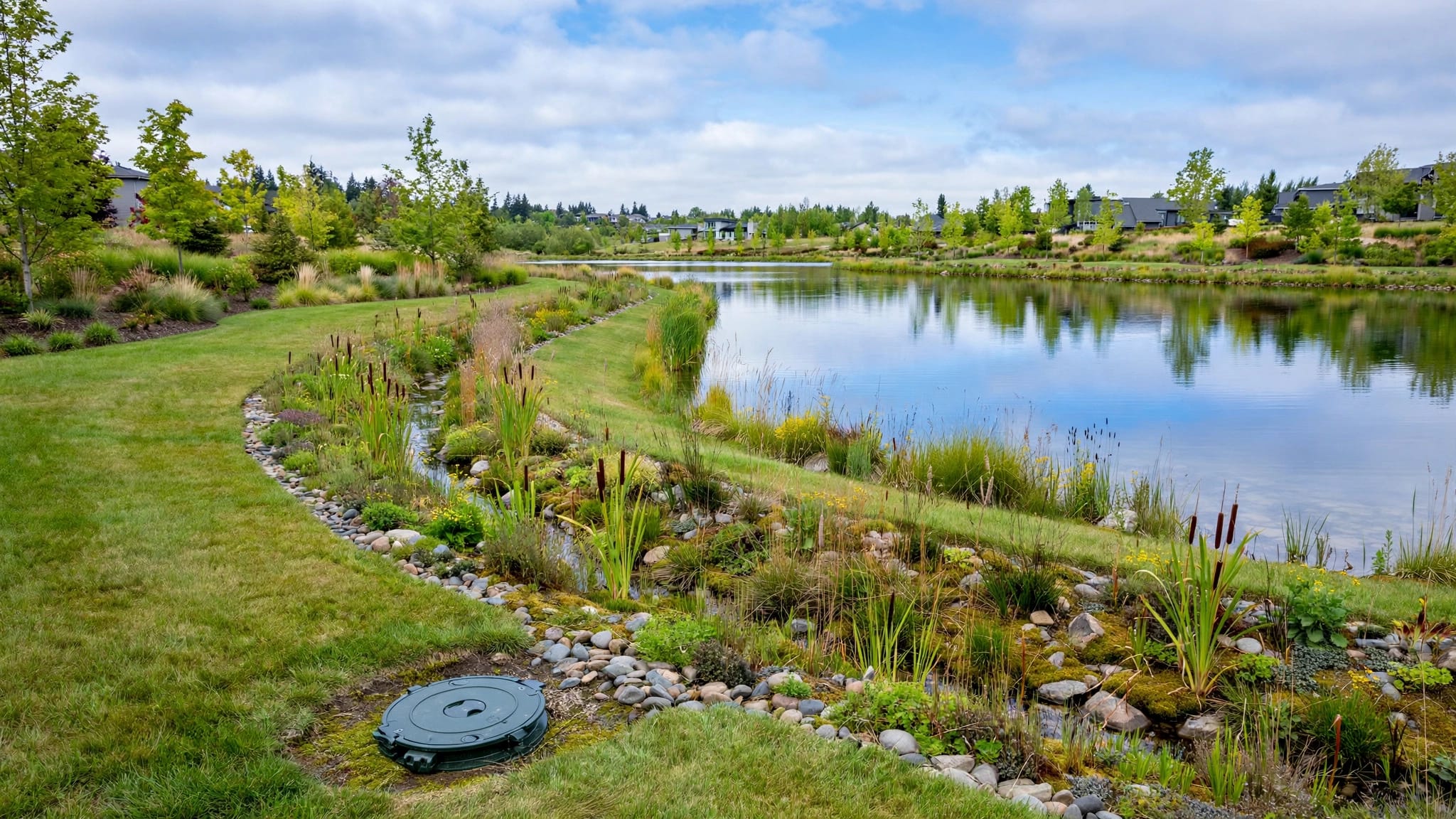
A sediment forebay is a designated settling area near a stormwater inlet. It slows incoming runoff so heavier particles can settle before water enters the larger pond.
Depending on the design, a berm, weir, or other divider may separate it from the main lake. However, every shallow inlet corner isn't necessarily an engineered forebay.
Locate each forebay on drainage plans and as-built drawings. Identify its inlet, settling area, connection to the lake, and maintenance access. If the drawings don't match field conditions, ask a qualified professional to resolve the difference.
Establish the original condition
Collect available design dimensions, inspection records, and previous sediment-removal reports. These establish the intended condition and show whether buildup has accelerated.
For recently transferred communities, request these documents during developer turnover. Also confirm which association or property owner maintains each feature.
Assign consistent identifiers to every lake and forebay. Otherwise, an inspection report describing "the inlet pond" can send a contractor to the wrong location.
Sediment Forebay Maintenance Checklist for Site Visits
Inspect from stable ground, and keep residents away from unsafe banks or damaged structures. Don't enter pipes, control structures, or deep muck during a routine walk-through.
Use these checks for each forebay:
- Inspect the inlet for branches, palm fronds, trash, grass clippings, sediment deposits, and vegetation that restricts incoming runoff.
- Examine the settling area for exposed muck, expanding sediment bars, shrinking open water, and deposits extending toward the main lake.
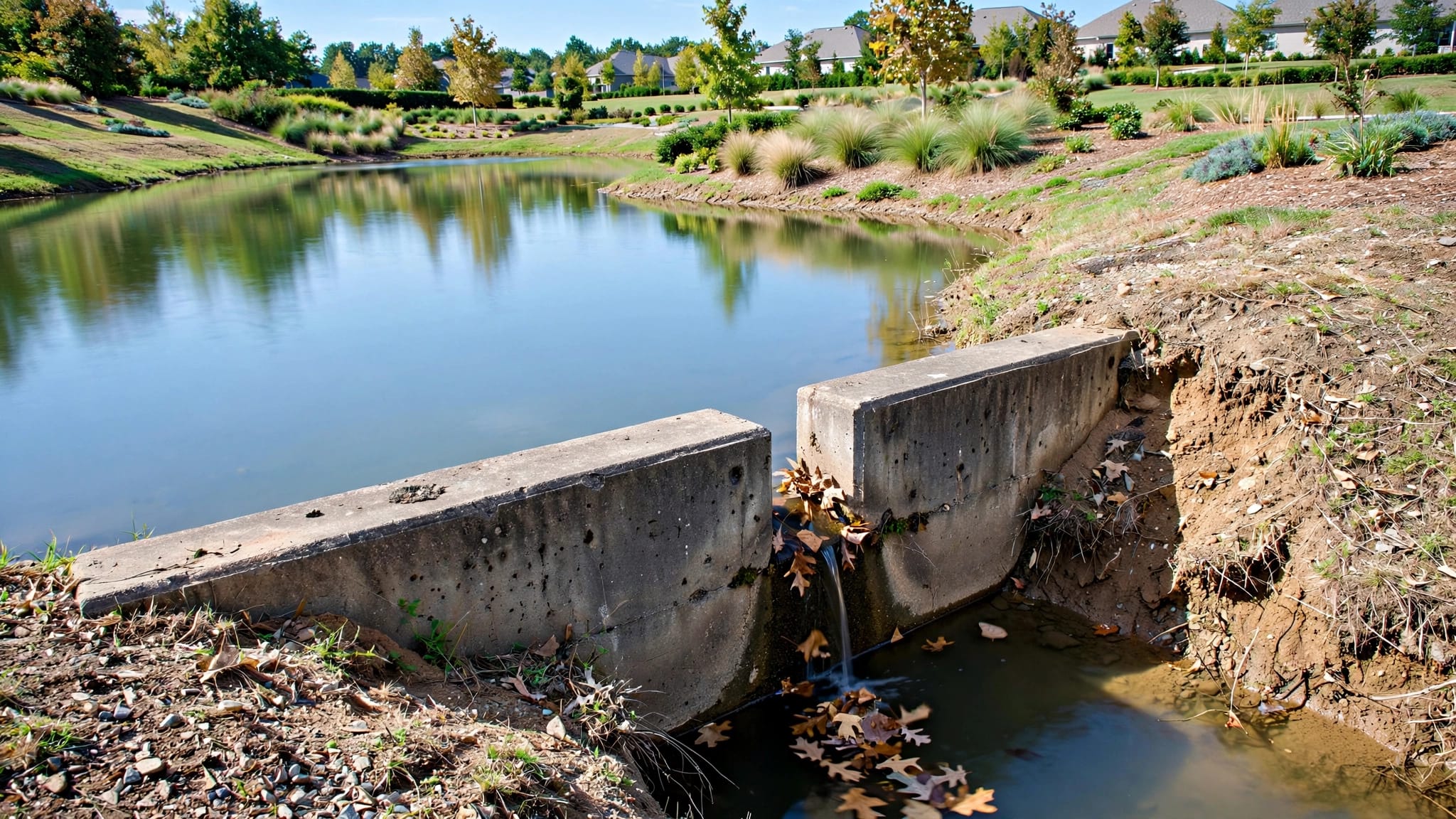
- Check the divider and connecting structures for visible damage, displacement, erosion, and water taking an unexpected path around them.
- Walk accessible banks to identify bare soil, exposed roots, fresh washouts, undercut edges, and new low spots.
- Review surrounding drainage areas for construction disturbance, failing turf, redirected irrigation, and new discharge points carrying soil.
- Confirm that maintenance access remains usable, including gates, equipment routes, nearby utilities, and any landscaping that could obstruct future work.
Photograph each finding and record its location. However, distinguish settled material from floating debris and dense plant growth, because each requires a different response.
Pair this checklist with stormwater control structure inspections when pipes, weirs, or overflow areas show problems. A clean forebay can't compensate for a damaged downstream structure.
Record normal conditions too. Photos of a clear inlet and intact divider provide useful comparisons after the next storm.
Set Routine and Post-Storm Inspection Timing
Add forebay checks to regular lake visits
An HOA's general lake schedule provides a starting point. Weekly property checks can flag litter, obvious erosion, algae, and unusual water conditions. Monthly reviews can examine shorelines, inlets, outlets, water levels, and fixed-point photos.
These are practical inspection intervals, not a universal forebay maintenance standard. Adjust them to the property's drainage design, sediment history, and contractor recommendations.
A forebay below active construction or an eroding drainage area may need closer attention. Include forebay observations in your routine retention pond inspection checklist so crews don't overlook them during broader lake service.
Inspect after runoff changes the site
After heavy rain or storms, look for fresh deposits, blocked inlets, muddy water, washouts, and damaged access routes. Also check whether water moved around the forebay instead of through its intended path.
Wait until weather and ground conditions allow safe access. Florida lake inspections also require awareness of wildlife and unstable banks.
Schedule a more detailed review before the wet season. During lower-water periods, exposed banks and sediment deposits may reveal conditions that routine shoreline observations missed.
Measure Buildup Before Approving a Cleanout
Track sediment against a reliable baseline
A visible sediment bar deserves investigation, but it doesn't establish the amount of material requiring removal. Water level changes can also make a forebay appear shallower.
Have qualified personnel measure repeat locations and record the water elevation or reference used. Compare findings with design information and earlier measurements.
Keep water depth and sediment thickness separate in the report. A depth reading alone doesn't identify the original bottom beneath accumulated material.
For larger basins or connected systems, bathymetric surveys for multi-lake properties help document bottom shape and shallow areas. Additional investigation may be needed to establish sediment thickness.
Use site-specific cleanout criteria
There isn't one cleanout interval or sediment-depth trigger that fits every Florida HOA forebay. Follow the property's approved plans, operating documents, and qualified technical guidance.
Warning signs include sediment reaching the connection to the main lake, recurring inlet blockage, unexpected bypass flow, and progressive loss of the settling area.
Ask the contractor to explain what measurement or condition supports the recommendation. Then document the proposed timing and consequences of waiting.
Measured change gives boards a stronger basis for spending than appearance alone. It also helps distinguish a localized forebay problem from broader lake sediment accumulation.
Separate Routine Cleanup From Sediment Removal
Match the service to the material
Trash pickup, vegetation management, and sediment excavation are different tasks. Removing floating palm fronds doesn't restore bottom depth, while algae treatment doesn't remove accumulated soil.
Ask for a written description of the material, removal area, and proposed method. The HOA guide to pond dredging helps boards distinguish settled sediment from surface debris and plant problems.
Mechanical excavation or hydraulic removal may be appropriate depending on access, sediment characteristics, and site design. Let qualified professionals select the method. Don't assume a whole-lake dredging project is necessary because one inlet forebay contains deposits.
Confirm the full work scope
Before authorizing sediment forebay maintenance involving removal, verify applicable permit, handling, testing, and disposal requirements with the responsible professionals and authorities.
The proposal should address equipment access, utility protection, material handling, bank restoration, and the intended finished condition. Also clarify how the contractor will manage disturbed sediment during work.
Don't lower lake levels or alter drainage connections without appropriate review. Retention ponds are part of the community's stormwater system.
After completion, obtain photos, measurements, and a record of the work performed. Compare the finished forebay with the approved scope before closing the project.
Stop Erosion From Refilling the Forebay
Sediment removal addresses accumulated material. Without source control, the same forebay may receive another heavy load during subsequent storms.
Trace deposits upstream. Look at storm drain discharge areas, exposed construction soil, eroding swales, damaged banks, and landscape areas where runoff concentrates. On golf courses, include drainage near cart paths and disturbed turf.
Coordinate findings with the landscape contractor, lake manager, and drainage professional. Stabilizing an eroding bank or correcting an upstream runoff problem can reduce repeated sediment loading.
Also keep grass clippings, mulch, and landscape debris out of drainage paths. However, don't remove established littoral vegetation simply to make the edge look cleaner. Plant management should respect the site's design and maintenance requirements.
Track whether muddy inflows continue after repairs. If the forebay keeps filling rapidly, reassess the source rather than repeating cleanouts without investigation.
Keep Records and Budget by Lake
Make inspection reports usable
Maintain a separate record for each forebay within the lake's master file. Include inspection dates, weather, water level observations, photographs, measurements, defects, completed work, and pending actions.
Use the same photo locations whenever possible. This makes gradual bank loss or growing deposits easier to recognize.
Assign someone to manage the file and follow up on open items. Each reported problem needs an owner and a review date.
For multi-lake communities, prioritize by condition and consequence. A blocked inlet near homes needs a different response than a stable deposit with no observed flow restriction.
Define contractor responsibilities and costs
Write forebay inspections into the service agreement. Clarify who measures buildup, reports storm damage, recommends cleanouts, and coordinates specialist review.
Separate routine service from survey, sediment removal, shoreline repair, and restoration costs. Equipment access and material handling can change the project scope, so compare bids on matching assumptions.
A Florida HOA lake service RFP can help boards specify coverage and reporting.
Seabreeze Lake Maintenance serves Southwest Florida communities and holds Commercial Applicator License #CM28291 and State-Licensed Specialty Contractor #SCC131152136. Match credentials and project expertise to the proposed work, including any separate engineering needs.
Key Takeaways for HOA Boards
- Inspect the inlet, settling area, connecting structures, banks, and access route, rather than judging the forebay by surface appearance.
- Base cleanout decisions on site documents and measured change. Heavy sediment buildup doesn't automatically require whole-lake dredging.
- Address upstream erosion and keep lake-specific records so future boards can understand recurring problems and previous repairs.
Frequently Asked Questions About Forebay Maintenance
Does every retention pond need a sediment forebay?
Forebays are design features, and their presence depends on the stormwater system. Check approved drainage plans before treating an inlet corner as a separate settling basin.
If a lake lacks a forebay and receives heavy sediment loads, ask a qualified drainage professional to assess options. Adding a divider or excavating a new basin requires review of the existing design. An HOA shouldn't improvise those changes during routine maintenance.
Can aeration or algae treatment remove sediment?
Aeration and algae control address different lake conditions. Neither excavates mineral sediment or restores a forebay's designed bottom.
A fountain's appearance also doesn't establish whether the forebay has adequate settling space. Continue checking deposits and measuring changes even when the main lake looks healthy.
The maintenance plan may include water-quality management alongside sediment work, but each task needs its own purpose and documented scope.
Keep the Forebay Working Between Storms
A clean-looking lake still needs attention where runoff enters. Consistent sediment forebay maintenance combines inspections, measurements, and source control to protect the settling area.
Use site-specific evidence to decide when cleanup, repairs, or sediment removal are warranted. Keep those decisions in a record the next board can use.
For a Southwest Florida site review, call Seabreeze Lake Maintenance at (239) 470-5550 to request a free lake health assessment and discuss inspection priorities.
Recent Posts