HOA Lake Weed Removal: Manual vs. Mechanical Methods
A few weeds near an HOA lake's outfall can block flow, collect trash, and make a well-kept community look neglected. The right choice in HOA lake weed removal depends on the plant, infestation size, water depth, access, and the lake's purpose.
Hand removal can solve a small patch with little site disturbance. Mechanical equipment can clear dense vegetation faster, but it still requires plant identification, careful collection, and follow-up. For retention ponds and lakes in gated communities, the process starts with understanding the waterbody and the weed growing in it.
Why HOA lake weed removal starts with identification
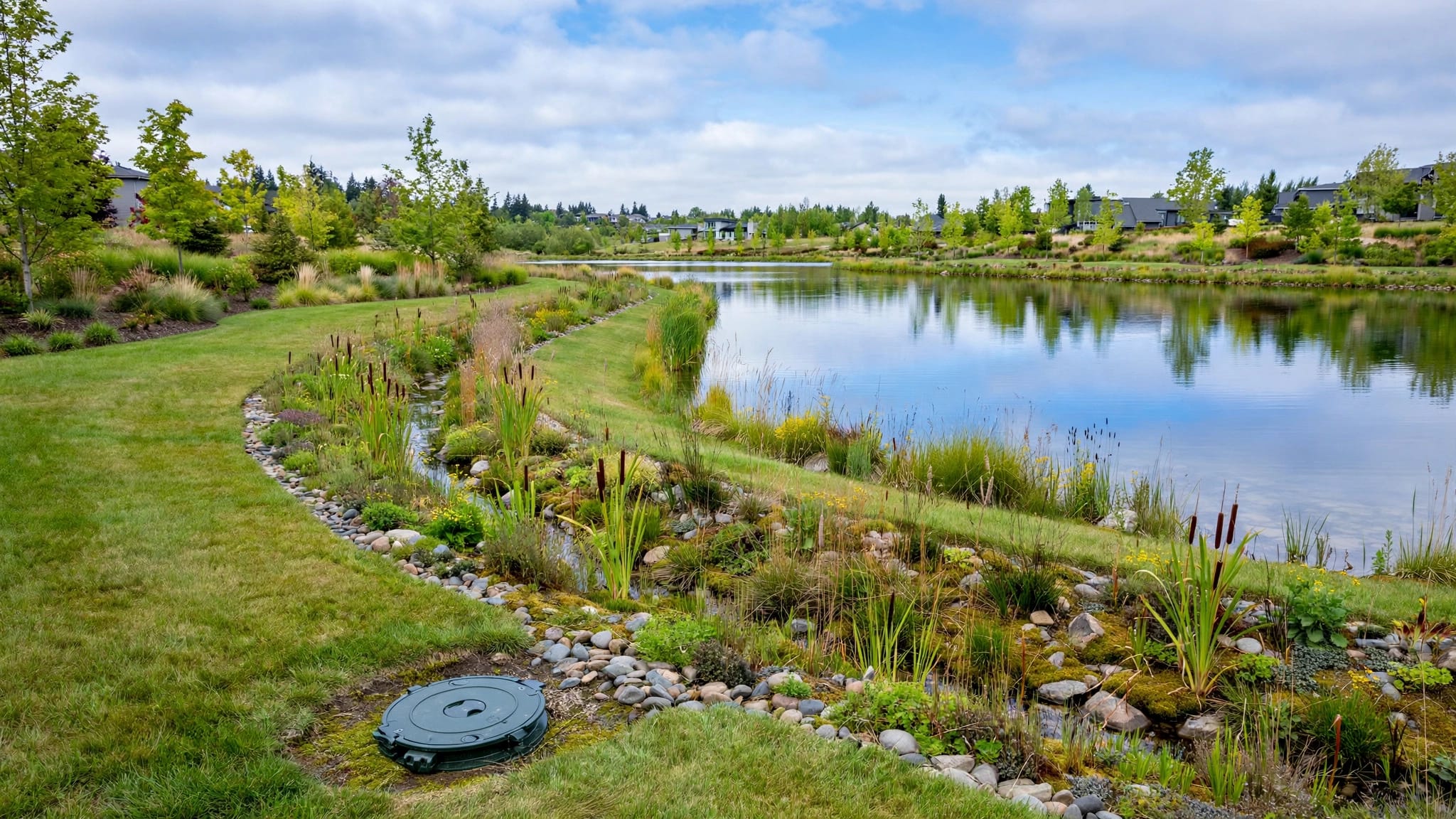
Retention ponds and community lakes have jobs beyond appearance. They hold stormwater, direct drainage, protect banks, and shape views around homes, fairways, and common areas. This comparison applies to those waterbodies, not ornamental koi ponds.
A pond's function affects the response. Before approving work, an HOA board should provide a map showing inlets, outfalls, fountains, access points, and connected lakes. The distinction between a retention and detention pond also matters, so boards can review retention and detention pond maintenance when planning service.
Identify the plant before choosing tools
Aquatic weeds don't all respond to the same method. Floating plants can spread across the surface with wind and water movement. Submerged plants can break into fragments, while emergent weeds may anchor along shallow shorelines.
A crew should identify the plant, map its density, and look for roots, fragments, and nearby colonies. The same rake or cutting tool can clear one plant and spread another. Plant identification also helps determine whether manual work, mechanical removal, selective treatment, or a combined plan makes sense.
Match the work to the waterbody
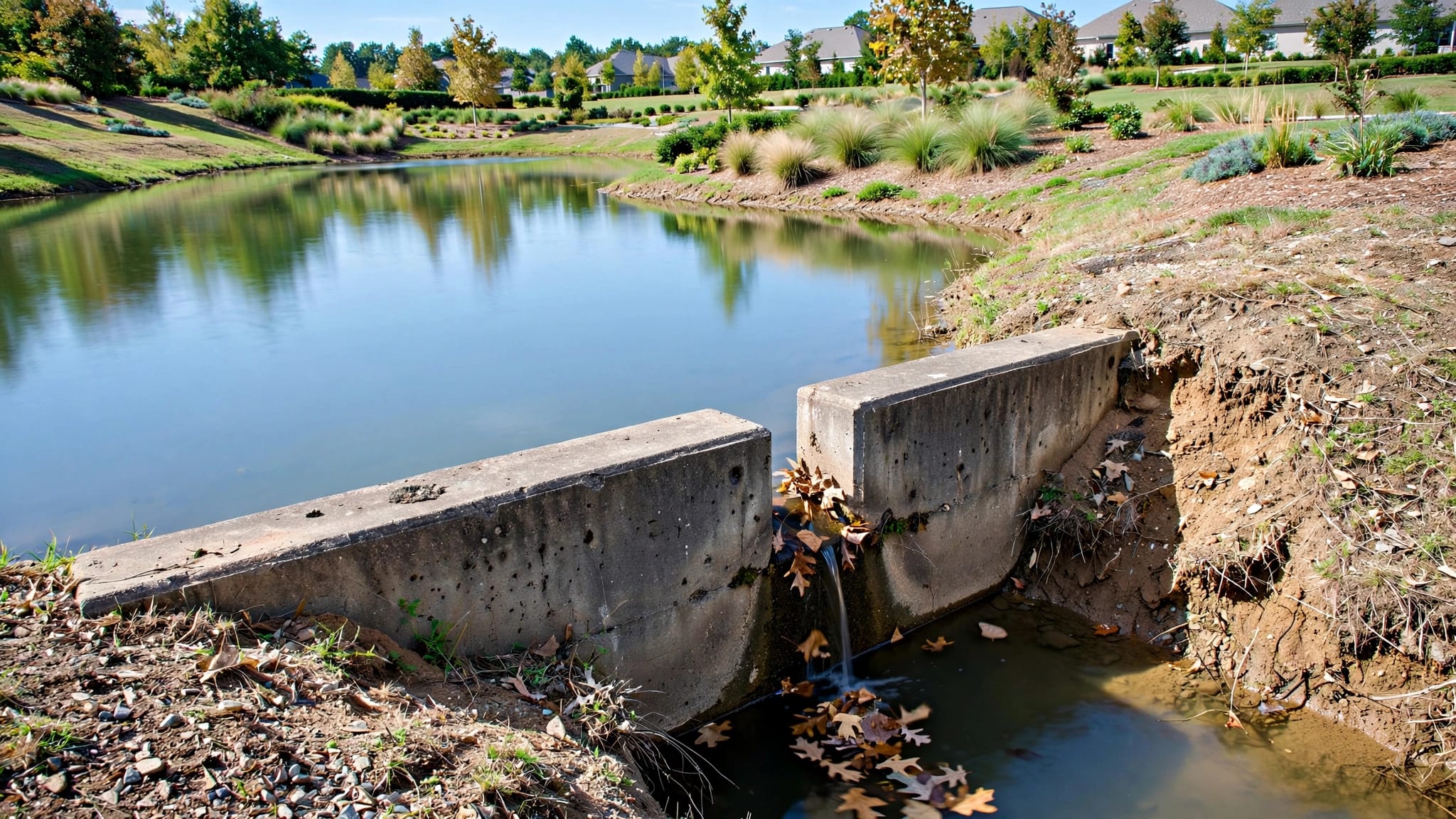
Water depth, shoreline slope, fountains, pipes, irrigation intakes, outfalls, and resident access all affect the removal method. A hand tool may work beside a sidewalk, while a dense mat near an inlet may require equipment and debris collection.
Recent rain can move floating pieces between connected ponds. For that reason, the inspection should cover the entire property instead of focusing only on the most visible lake. A small colony near an inlet can become a larger maintenance problem when crews miss the waterbody receiving the fragments.
When manual weed removal makes sense
Manual removal uses hands and small tools to pull, cut, gather, and remove vegetation. It gives workers close control in places where large equipment cannot reach safely or would create unnecessary disturbance.
Manual removal fits small, accessible areas
Hand work can suit isolated growth along an accessible shoreline, around a fountain, beside a bridge, or near a drain. It may open a narrow access point, clear a small amount of floating vegetation, or remove loose material before it enters a pipe or control structure.
The crew must take the vegetation out of the water. Leaving cut stems on the surface can spread fragments and create another cleanup problem. Work near homes and walking paths also requires attention to residents, pets, wildlife, and foot traffic.
For a small patch, manual labor may provide better precision than a machine. It can also reduce disturbance around native shoreline plants, bank edges, and structures that need protection.
Know the limits of hand removal
Hand removal becomes slow when roots cover a broad area or vegetation extends into deeper water. Pulling rooted plants can disturb bottom sediment, while raking can break stems into pieces that drift to another shoreline.
Plants such as coontail and parrotfeather require care when stems or colonies break apart. A crew should collect loose material instead of allowing it to move through the pond. Manual work can improve access, but it may not remove the roots or conditions that support regrowth.
When mechanical weed removal is the better fit
Mechanical removal uses equipment to collect or cut vegetation at a larger scale. Depending on access and site conditions, a crew may use aquatic harvesting equipment, vacuum collection, nets, or land-based machinery.
The equipment must match the pond. Narrow banks, unstable shorelines, low bridges, fountains, pipes, and shallow water can limit access. Crews also need a plan for loading, transporting, and disposing of the removed vegetation.
Mechanical equipment helps with dense mats
Mechanical work can be an important part of HOA lake weed removal when floating mats cover a broad area, block an inlet, surround a fountain, or create a hazard beside a busy path. Equipment can remove more material per visit than hand tools when the infestation has spread across open water.
Mechanical removal also helps in debris-heavy areas where dead vegetation has accumulated. Taking that material out of the pond reduces the organic matter left to decompose in the water. However, machines need room to operate and may not fit every community lake.
Removal still needs follow-up
Harvesting or cutting removes visible growth, but it may leave roots, crowns, or fragments behind. A mat can return when excess nutrients, poor circulation, shallow water, or incoming plant material continue to support growth.
That is why mechanical work shouldn't be treated as a one-time answer for every infestation. Mechanical removal for dense aquatic weeds may solve an access or drainage problem, while long-term control may also require selective aquatic treatment, aeration, water-quality work, or shoreline maintenance.
If herbicide is part of the plan, the product must match the identified plant and follow the aquatic-use label. Irrigation, fishing, pets, wildlife, and stormwater movement should be considered before any application.
Manual vs. mechanical weed removal for HOA lakes
Neither method fits every lake. The practical choice depends on the problem the community needs to solve.
- Manual removal fits a small, isolated patch where workers can reach the plants safely and collect every piece.
- Mechanical removal fits dense mats, broad infestations, blocked drainage structures, and areas where fast access matters.
- A combined approach can work when hand tools protect a fountain or shoreline while equipment clears open water nearby.
- A follow-up treatment or maintenance plan may be needed when roots remain or the pond continues receiving nutrients and plant fragments.
For example, a narrow shoreline beside a resident walkway may need careful hand work, while an open mat near an outfall may require mechanical collection. The removal method should protect the lake's function while solving the immediate problem.
Build a repeatable weed management plan
A single cleanup can improve appearance, but multi-lake properties need a property-wide plan. Consistent inspections help crews find new growth before it spreads across connected waterbodies.
Inspect every connected lake
Start with all ponds, lakes, inlets, outlets, and drainage channels. Check for floating plants, submerged growth, algae, blocked structures, erosion, low circulation, and areas where debris collects.
Connected waterbodies deserve special attention because fragments can move during storms or changes in water level. Guidance on preventing weeds from spreading between lakes can help boards understand why one pond shouldn't be managed in isolation.
Schedule follow-up visits
The service schedule should match the property's size, plant pressure, water conditions, and risk areas. Weekly or biweekly visits may include weed and algae inspections, debris removal, water-quality observations, inlet and outlet checks, and photographs.
A written report gives the board a record of what crews found and removed. It also helps compare conditions across seasons and identify recurring problem areas. A broader integrated aquatic weed control program may combine mechanical work with selective treatments, shoreline care, and preventive maintenance.
What HOA boards should ask before approving lake work
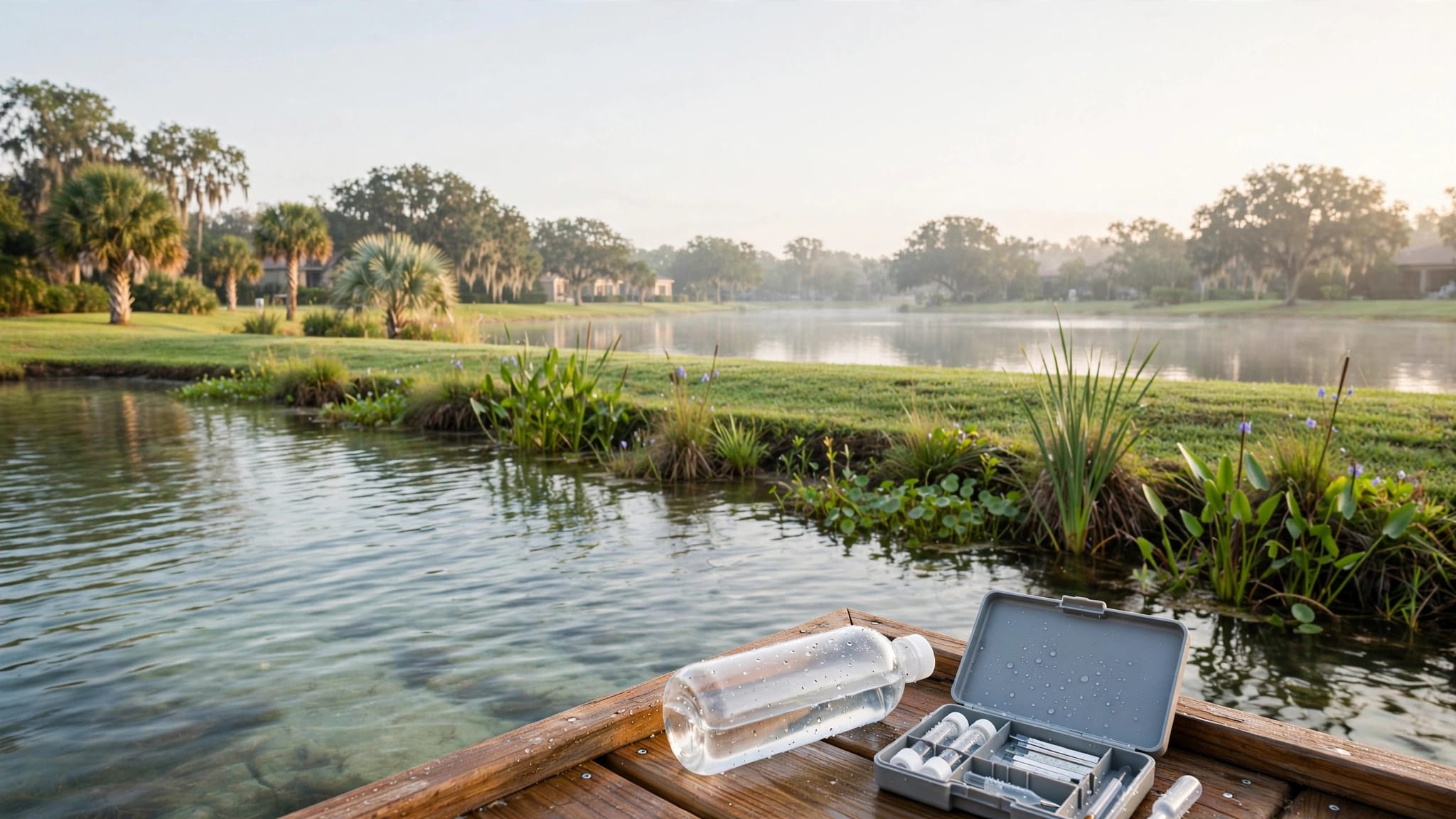
The removal method is only one part of a lake maintenance contract. Boards should also review the contractor's experience, licenses, insurance, disposal process, inspection schedule, and reporting standards.
Check qualifications and safety practices
If the plan includes aquatic herbicide, ask whether the applicator has current commercial licensing and follows the product label. The contractor should also explain how crews will protect residents, pets, wildlife, irrigation systems, fountains, and nearby structures.
Seabreeze Lake Maintenance has Commercial Applicator License #CM28291 and State-Licensed Specialty Contractor #SCC131152136. HOAs, golf courses, and property managers should confirm that the contractor's credentials match the work included in the proposal.
Require a clear scope of work
A useful quote separates routine maintenance from one-time corrective work. It should state how often crews will visit, which ponds are included, whether removed vegetation will be hauled away, and how follow-up inspections are handled.
Boards can use guidance on writing an HOA lake maintenance RFP when comparing proposals. Line-item pricing makes it easier to distinguish regular weed control from mechanical removal, shoreline repairs, erosion work, or water-quality services.
For a property-specific review, boards and community managers can Get a Free Lake Health Assessment and arrange a lake inspection with Seabreeze Lake Maintenance.
Choose the removal method that fits the lake
Manual and mechanical removal each have a place in community lake care. Manual work offers precision for small or sensitive areas, while mechanical equipment handles larger mats, access problems, and heavy vegetation more efficiently.
The strongest HOA lake weed removal plan begins with plant identification, considers each pond's drainage function, and includes follow-up inspections. When a community treats visible weeds without checking connected lakes, roots, fragments, and water conditions, the same problem can return.
A clear scope, qualified contractor, and consistent maintenance schedule help protect drainage performance, shoreline condition, resident safety, and property appearance.
Recent Posts