Alligator Safety Florida: Community Lake Practices
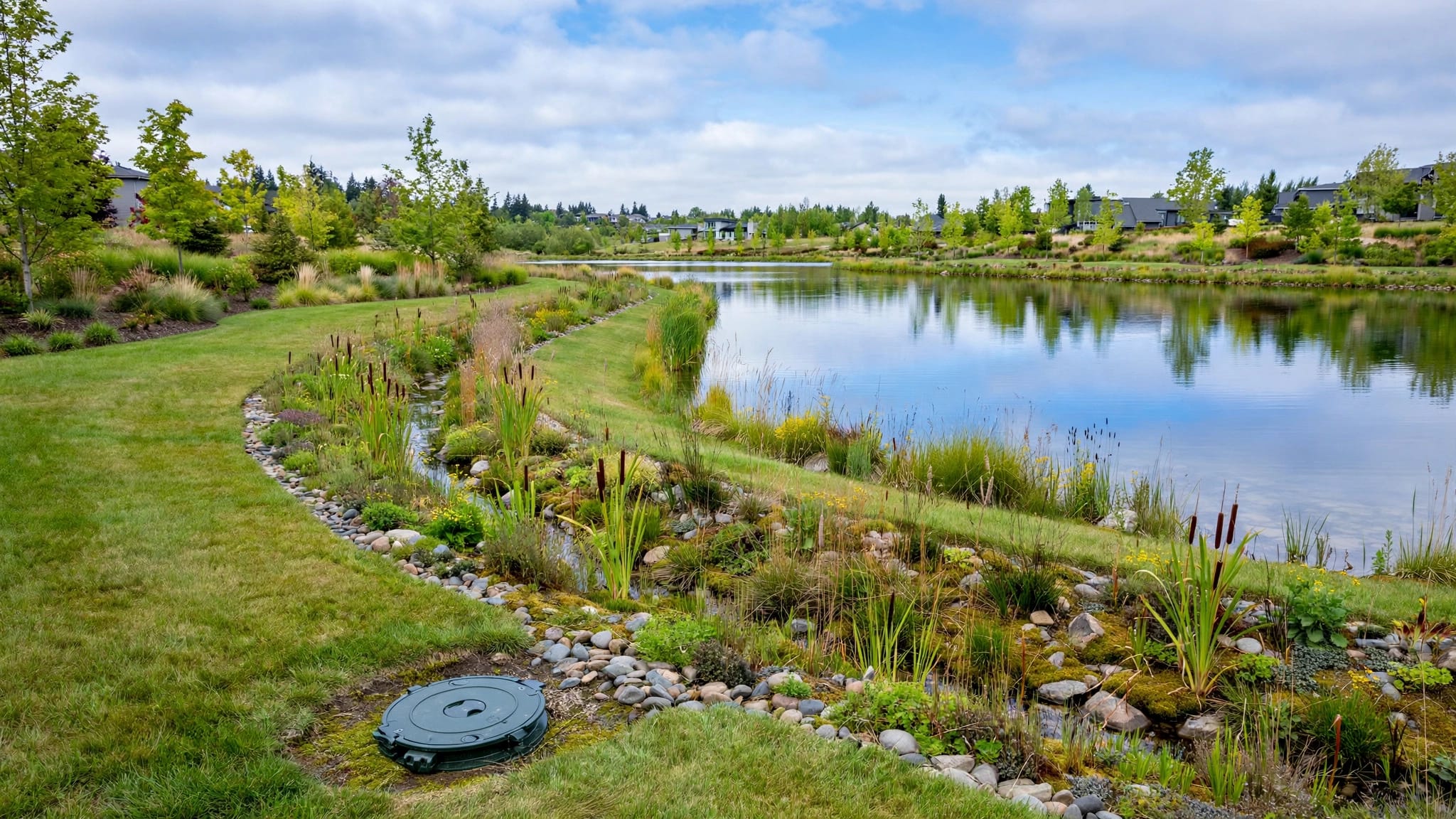
A retention pond can sit beside a sidewalk, golf cart path, or playground and still support wild alligators. Water that looks quiet and landscaped remains fresh water habitat.
For an HOA or golf course, alligator safety Florida planning starts with clear resident rules, visible shorelines, and a consistent response to sightings. Routine lake maintenance cannot remove every alligator, but it can help people recognize hazards and avoid risky behavior.
Why Alligator Safety Florida Matters on Community Lakes
Alligators live in many Florida lakes, canals, wetlands, and retention ponds. The Florida Fish and Wildlife Conservation Commission (FWC) advises people to stay alert around fresh and brackish water, including areas that appear developed or heavily maintained.
A community lake creates shared access. Residents may walk dogs, fish, take children outside, or use a shoreline path without realizing that an alligator is nearby. Clear policies reduce confusion when those activities overlap with wildlife habitat.
Retention ponds are still wildlife habitat
A retention pond manages stormwater, but its function doesn't make it a swimming pool or decorative water feature. Reeds, littoral plants, brush, steep banks, and floating vegetation can provide cover for wildlife.
Alligators may move between connected ponds through drainage channels, culverts, and wetland areas. A property with several lakes should treat the entire water system as one connected environment rather than focusing on a single reported sighting.
Shared access increases the need for rules
Residents need simple instructions they can follow without interpretation. Signs and community notices should state that people must stay away from alligators, keep pets leashed, and avoid the water's edge after dark.
An HOA board should also explain that seeing an alligator doesn't automatically mean it is a nuisance animal. FWC recommends reporting an alligator when it poses a threat to people, pets, or property.
Alligator Safety Florida Rules for Residents
Residents should receive the same guidance through welcome packets, email notices, clubhouse postings, and signs near lake access points. Consistent wording matters because one informal suggestion can create a dangerous exception.
Keep people and pets away from the water's edge
Children need close supervision whenever they play near a lake. Adults should keep a safe distance from any alligator and never approach it for a photograph. Pets should remain on a leash and away from the bank.
FWC advises residents not to let pets swim in, drink from, or exercise near fresh or brackish water where alligators may be present. Dogs can resemble natural prey, especially when they stand close to the shoreline.
Residents should also remember these rules:
- Swim only in designated swimming areas and only during daylight hours.
- Never feed an alligator, even if it appears calm or seems accustomed to people.
- Keep fishing lines, bait, and fish scraps away from the shoreline.
- Store food and trash in closed containers near docks, parks, and fishing areas.
- Never harass, touch, capture, relocate, or kill an alligator.
Feeding alligators is dangerous and illegal in Florida. State law also prohibits killing, harassing, or possessing an alligator except under a permit.
Treat dusk and dawn as higher-risk periods
FWC says alligators are most active between dusk and dawn. Community policies should discourage swimming, fishing, and shoreline recreation during those hours.
Golf courses and larger properties need practical controls as well. Staff can schedule shoreline work during daylight, keep workers out of concealed areas when visibility is poor, and report sightings near maintenance routes before assigning a crew to that location.
How HOAs Can Reduce Alligator Encounters
An HOA can't make a natural lake wildlife-free. It can, however, remove behaviors and site conditions that bring people or animals too close to the water.
Stop food from entering the lake
Fish scraps are a common attractant around fishing areas. Residents should place unused bait and fish remains in garbage cans instead of throwing them into the water. Grounds crews should remove discarded food from picnic areas and inspect overflowing trash containers.
Feeding often changes an alligator's behavior. An animal that begins associating people with food may approach paths, docks, or shorelines more readily. Board members should address feeding reports promptly, document the location, and remind the responsible resident of the rule.
Signs work best when they are visible at actual access points. Place them near fishing areas, benches, bridges, dog-walking routes, and any informal path leading to the bank.
Keep access points visible and controlled
Dense vegetation can hide an alligator from a person walking along the shore. Lake maintenance should preserve appropriate littoral planting while keeping designated paths, benches, drainage structures, and access areas visible.
That doesn't mean removing all shoreline plants. Native and permitted littoral vegetation can support bank stability and habitat. The goal is to manage views and access without damaging useful shoreline plantings.
Fences, rails, and barriers may help around high-use areas, especially where a path runs close to deep water. They should guide people away from the bank rather than create a false impression that the entire lake is secure.
Lake Maintenance Practices That Support Safer Shorelines
Alligator safety works better when it fits into the property's regular lake program. A well-maintained shoreline gives managers more chances to identify erosion, damaged fencing, fallen branches, blocked paths, and changes in water conditions.
Inspect the whole property, not one problem spot
A multi-lake community needs a repeatable inspection route. Each visit should cover shorelines, inlets, outlets, culverts, fountains, aeration equipment, fishing areas, and pedestrian access points.
The Florida HOA lake inspection checklist can help property managers track recurring conditions and compare photographs over time. Documenting the same locations makes it easier to spot a new access problem before someone gets hurt.
Inspection records should include the date, lake or basin, exact location, visible alligator activity, damaged signage, and any resident report. Staff should avoid approaching an alligator to collect information. A distant photograph may help identify the location, but personal safety comes first.
Manage weeds, debris, and shoreline damage
Floating weeds, algae mats, fallen limbs, and trash can draw people closer to the bank while limiting their view of the water. They can also block drains and create unsafe walking conditions.
Aquatic weed control and debris removal should account for the lake's use, connected basins, water movement, and permitted shoreline plants. Removing vegetation without a plan can damage erosion-control plantings or scatter plant fragments into another basin.
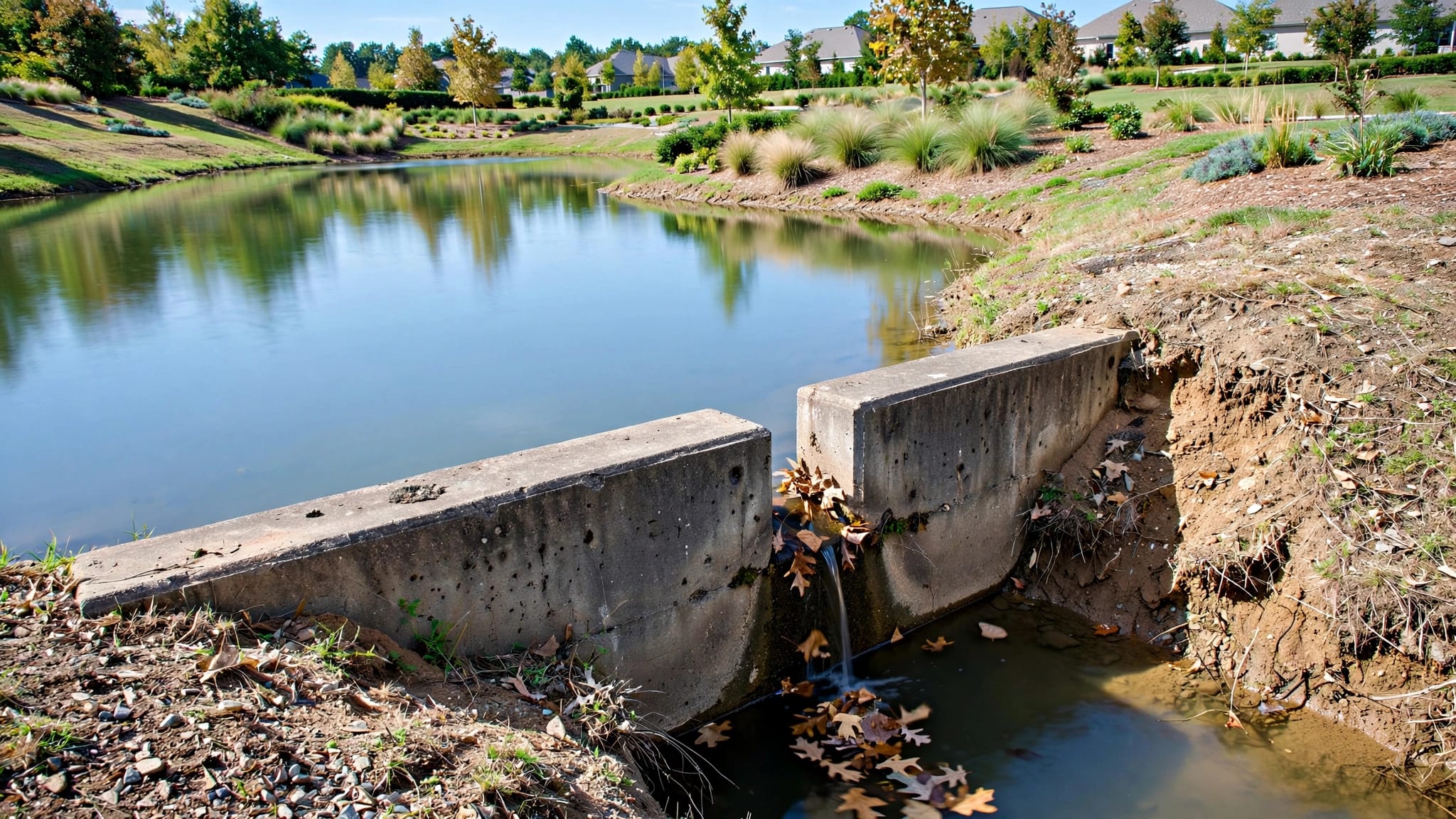
Erosion deserves attention too. A collapsing edge can create a sudden drop-off where residents walk, fish, or retrieve a ball. Shoreline stabilization, repairs to access areas, and clear warning signs can reduce those hazards.
Good lake maintenance improves visibility and access control, but it doesn't replace wildlife awareness. An alligator can still use a clean, attractive community lake.
What to Do When Someone Reports an Alligator
Every community should have a written response procedure. Residents need to know whom to contact, while staff need to know when to keep people away and when to involve FWC.
Start with distance and temporary control
A person who sees an alligator should move away without approaching, feeding, or provoking it. The report should include the lake name, nearest address or landmark, approximate length, time of day, and whether the animal is near people, pets, a path, or a building.
Property staff can temporarily close a nearby access point if the animal is close to a high-use area. They shouldn't send employees to chase, trap, measure, or relocate it. Only authorized personnel should handle nuisance alligator work.
For a suspected threat, call the FWC Nuisance Alligator Hotline at 866-FWC-GATOR (866-392-4286) . FWC's Statewide Nuisance Alligator Program handles alligators that are at least four feet long when they are believed to threaten people, pets, or property.
The four-foot guideline doesn't mean smaller animals are safe to approach. Distance and avoidance still apply to every alligator.
Respond correctly after an attack
Anyone bitten by an alligator needs immediate medical attention. FWC warns that alligator bites can cause serious infection.
During an attack, FWC advises the person to fight back with as much noise and resistance as possible. Hitting or kicking the animal, or poking its eyes, may cause it to release its grip. Other people should call emergency services and avoid entering the water.
Afterward, the property should preserve relevant information, restrict access to the area, notify the appropriate authorities, and review whether signs, barriers, or resident communication need improvement.
Policies for HOAs, Golf Courses, and Multi-Lake Properties
A community policy should cover normal recreation, maintenance work, resident reports, and emergency response. It should apply to every lake and pond on the property, including basins that seem isolated from the main water system.
Give residents one clear reporting path
Post the HOA management office, security desk, or property manager's contact information near lake access points. The notice should also tell residents to call 911 for an immediate emergency and the FWC hotline for a suspected nuisance alligator.
Board members should avoid encouraging residents to post sightings only on social media. A group message may alert neighbors, but it doesn't create an official record or send the report to the agency that handles nuisance alligators.
Golf courses need procedures for marshals, grounds crews, irrigation staff, and cart attendants. Workers should report alligators near tees, greens, cart paths, maintenance roads, and irrigation structures. They should pause work when the location creates a direct encounter risk.
Train vendors and document decisions
Landscape crews, lake contractors, pressure washers, and shoreline repair teams need the same instructions as employees. Contractor orientation should include no-feeding rules, safe distances, reporting contacts, and restrictions on entering water.
Keep a log of sightings, resident notices, closed areas, hotline calls, and follow-up actions. A record helps the board identify recurring locations and show that it responded consistently.
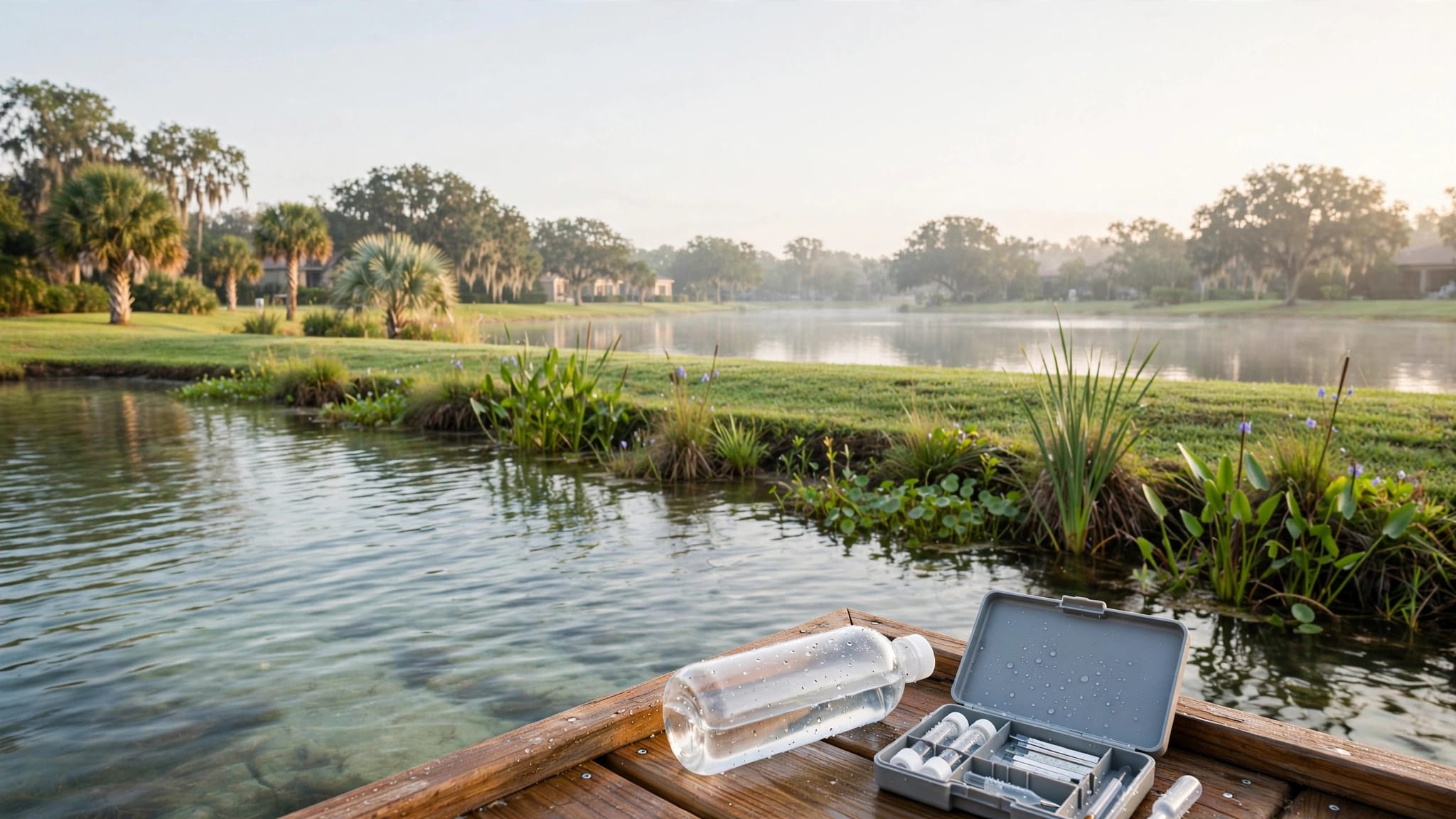
Lake treatment records belong in the same property file. They should identify the product, application area, water-use restrictions, and reopening instructions. This matters when residents fish, walk pets, irrigate turf, or access the shoreline.
When Professional Lake Management Helps
Alligator safety often exposes a larger lake-management issue. Overgrown edges, blocked visibility, erosion, poor circulation, algae, and aquatic weeds can make a community lake harder to monitor and less pleasant to use.
A professional assessment can separate wildlife concerns from water-quality problems. For example, an algae mat may push residents away from one shoreline while encouraging them to use an unmaintained access point on another. A damaged bank may create a shortcut that leads children or pets closer to the water.
Treatment planning also requires care. Communities should follow product labels, water-use restrictions, and applicable Florida requirements. The Florida permits for community lake treatments resource provides a starting point for reviewing licensing and permitting questions.
When a lake receives an aquatic herbicide, residents need clear information about fishing, irrigation, pets, and other restricted uses. The Florida aquatic herbicide reentry times guide explains why reopening decisions depend on the product label and planned water use.
Seabreeze Lake Maintenance works with Southwest Florida HOAs, golf courses, gated communities, and commercial properties. The company holds Commercial Applicator License #CM28291 and State-Licensed Specialty Contractor #SCC131152136 . Its lake services include aquatic weed and algae control, water-quality management, aeration, debris removal, shoreline inspections, erosion control, and shoreline stabilization.
For a property dealing with recurring shoreline hazards or several connected lakes, Get a Free Lake Health Assessment can help identify maintenance priorities before they become larger repairs.
Conclusion
Alligator safety Florida practices begin with distance, daylight recreation, leashed pets, and a strict no-feeding rule. HOAs and golf courses also need visible shorelines, maintained access points, trained staff, and a clear reporting process.
A clean lake doesn't guarantee that alligators won't be present. It gives residents better information and gives property managers more control over how people interact with the water. Consistent communication and responsible lake maintenance keep community recreation safer without treating Florida wildlife as a nuisance by default.
Recent Posts