Repair or Replace Your HOA Lake Aeration System?
A calm lake can hide oxygen-poor water near the bottom. When an HOA lake aeration system loses performance, the problem often starts below the surface, long before residents notice odor, algae, or distressed fish.
Boards need more than a quick look at a fountain spray to make a sound decision. Equipment condition, water-quality readings, and the lake's shape should guide the choice between repair and replacement.
What Aeration Should Do in a Community Lake
Aeration helps circulate water and support oxygen transfer. Bottom-diffused systems release air through submerged diffusers, while surface aerators move and splash water at the surface. Each approach needs the right design, placement, and runtime for the lake.
For retention ponds and lakes in gated communities, golf courses, and multi-lake properties, aeration should work alongside treatment, shoreline care, and runoff management. Florida lake aeration design and installation starts with the actual conditions of each water body.
Circulation must reach the problem areas
A lake with narrow coves, deep holes, or several separated basins may have areas that receive little circulation. One aeration station can look active while a distant section remains stagnant.
Depth contours, airline routes, diffuser locations, shoreline access, and seasonal water levels all affect coverage. A visible spray pattern may improve curb appeal, but it doesn't prove that deeper water is circulating well.
Aeration does not remove nutrient sources
Aeration supports a healthier water column, but it cannot remove the nutrients that feed recurring algae. Fertilizer runoff, grass clippings, decomposing leaves, and sediment can still create water-quality problems.
Aeration can support circulation and oxygen transfer, but it cannot replace nutrient control, aquatic weed treatment, or shoreline maintenance.
When algae returns after treatment, the board should review the whole lake program instead of assuming the aerator alone has failed.
When an HOA lake aeration system needs repair
An HOA lake aeration system is often worth repairing when it previously performed well and a technician finds one clear equipment failure. A failed component doesn't always mean the entire system has reached the end of its service life.
The repair decision should follow an on-site inspection, especially when the lake supports drainage functions, public-facing common areas, or multiple adjoining neighborhoods.
Isolated electrical and mechanical failures
A repair may solve the issue when the system has a damaged timer, failed compressor part, tripped electrical protection, worn cooling fan, or loose connection. These faults can stop a system without changing whether the original design fits the lake.
A technician should inspect:
- Electrical supply, controls, timers, and weatherproof connections.
- Compressor operation, air pressure, and intake condition.
- Airline connections, valves, and visible signs of leaks.
- Diffuser output and the location of weak or absent bubbling.
Electrical work near water needs qualified personnel and equipment rated for the site. A low-cost repair becomes expensive when it leaves a shoreline cabinet, power connection, or safety issue unresolved.
Restricted diffusers and damaged airlines
Diffusers can lose output when sediment, mineral buildup, biological growth, or damage restricts airflow. Likewise, a cracked airline can release air before it reaches the lake bottom.
These problems can make a compressor work harder than intended. Restoring airflow may bring the system back to its expected performance, provided the compressor capacity and diffuser layout still match the lake.
When replacement is the better financial choice
Replacement makes sense when repeated repairs only delay the next failure or when the original equipment never provided enough circulation. A system can run every day and still fall short if it was undersized for the lake.
Boards should compare the full cost of recurring repairs, emergency calls, electricity, lost runtime, and expected service life. The lowest immediate price rarely tells the full story.
The existing design no longer fits the lake
A community may have added new phases, changed shoreline access, connected basins, or seen sediment alter the lake's usable depth. In other cases, an attractive fountain was installed for appearance but was never designed to circulate the full water column.
A replacement system should account for lake depth, surface area, bottom contours, water quality, and the location of trouble spots. For multi-lake properties, each basin may need its own plan rather than a copy of the equipment used elsewhere.
Widespread wear points to replacement
Age alone doesn't decide whether equipment should be replaced. However, replacement becomes more practical when the cabinet, compressor, wiring, airlines, and diffusers all show wear at the same time.
A system with frequent pressure loss, recurring electrical faults, unavailable parts, and weak circulation may need a planned upgrade. A written proposal should separate repairable components from parts that have reached the end of their useful life.
Use lake data before approving work
Water clarity and a working fountain don't provide enough information for a repair-or-replace decision. Boards should ask for documented observations that connect equipment performance to lake conditions.
Photos, service records, pressure readings, and water tests give future board members a clear baseline. They also make it easier to compare one proposal with another.
Check dissolved oxygen at several depths
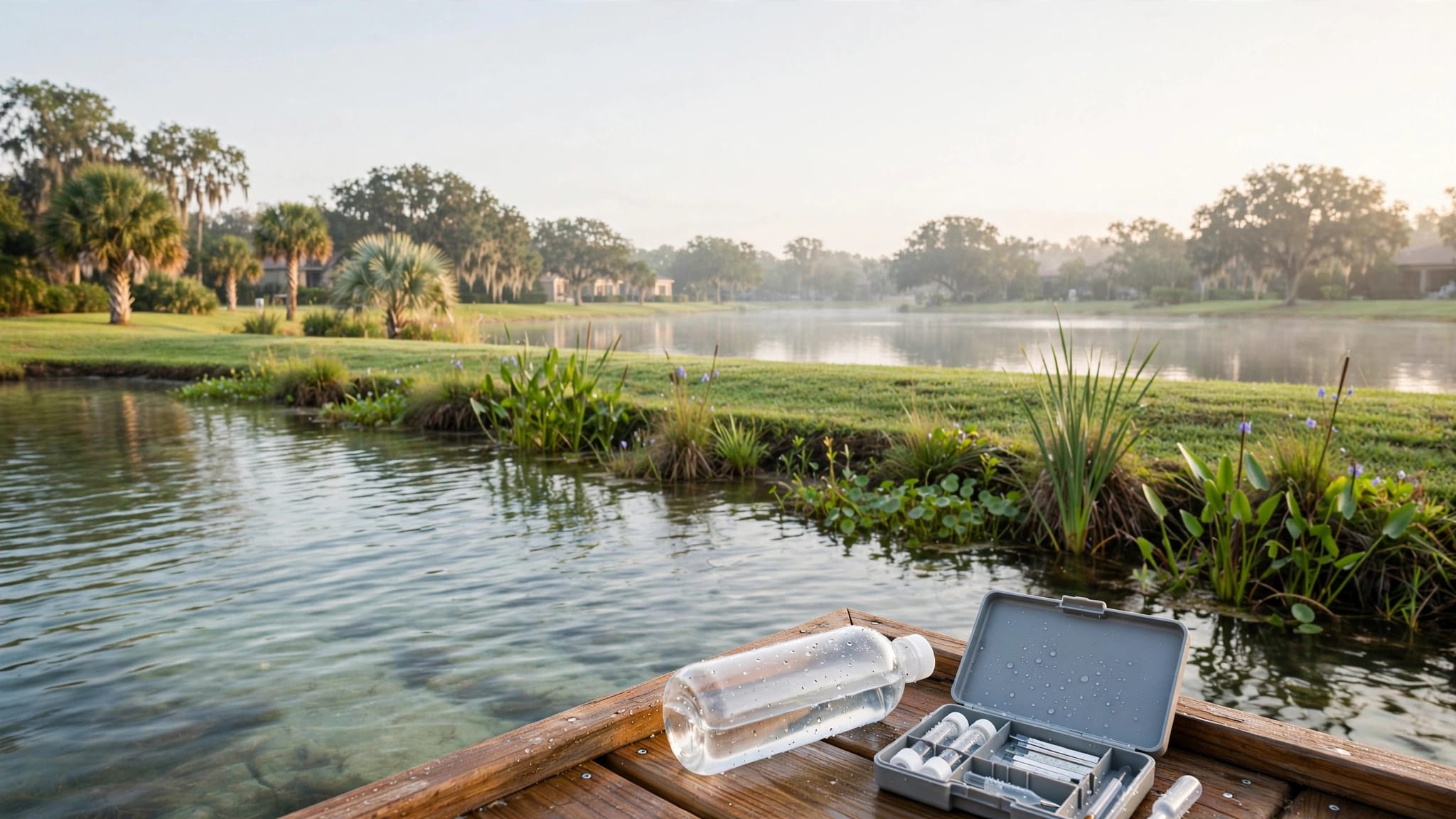
A dissolved oxygen profile records oxygen and temperature at different depths in the same area. It can show whether bottom water has poor oxygen conditions even when the surface looks acceptable.
Testing at consistent locations and times makes the results more useful. Dissolved oxygen testing for Florida ponds can help identify whether the issue involves deep-water circulation, nutrient loading, or a broader water-quality concern.
Document the equipment and shoreline conditions
An inspection should map every compressor, airline route, diffuser zone, electrical connection, and visible surface unit. The report should also note operating hours, water levels, storm debris, algae patterns, and shoreline access limitations.
Property managers can pair that record with a Florida HOA lake inspection checklist to track changes after storms and during seasonal shifts. Consistent records reduce guesswork when a system begins to lose output.
Choose the right replacement for the lake
A replacement HOA lake aeration system should solve the conditions found during inspection, rather than repeat an old equipment layout. The right setup depends on lake depth, shape, visibility needs, access to power, and the location of low-oxygen areas.
Equipment selection also affects operating costs and future maintenance needs.
Compare surface aerators and bottom diffusers
Surface aerators create visible movement and can add an attractive focal point near entrances, clubhouses, or gathering areas. They may suit shallow areas where surface circulation is the main goal.
Bottom-diffused systems place the compressor on shore and send air to submerged diffuser stations. They can circulate deeper water when the lake has adequate depth and the diffuser layout reaches the full basin. Review surface aerators versus bottom diffusers before approving equipment based on appearance alone.
Match controls and runtime to actual demand
A larger system is not automatically the answer. Runtime, staged startup, timer settings, and zone controls should follow water-quality conditions and equipment capacity.
Running an undersized system longer may increase power costs without reaching problem areas. Likewise, reducing runtime without checking water conditions can leave a lake short on circulation. Boards can reduce energy use in HOA lake aeration through proper sizing, clean equipment, and data-based controls.
Put the decision into a board-ready scope
A board should receive a written scope that identifies the lake, the equipment, the work limits, and the expected maintenance after completion. That level of detail prevents a repair quote from being compared unfairly with a full replacement proposal.
The following points make proposals easier to evaluate:
| Item to compare | Repair proposal | Replacement proposal |
|---|---|---|
| Equipment condition | Identifies the failed parts and testing performed | Lists components being removed and installed |
| Water coverage | States which existing zones will return to service | Shows diffuser or surface-unit placement by basin |
| Electrical work | Defines repairs to power, timers, or controls | Includes new controls, protection, and connection needs |
| Future service | Explains inspection and maintenance needs | States startup, warranty, and ongoing service terms |
A comparable scope helps the board see whether a lower quote addresses the same problem or only postpones it.
Keep maintenance in the plan after installation
New equipment still needs routine inspections. Service should check compressor operation, air output, electrical controls, diffuser performance, debris, and changes in lake conditions.
Seabreeze Lake Maintenance holds Commercial Applicator License #CM28291 and State-Licensed Specialty Contractor #SCC131152136. Communities with weak circulation, repeated algae issues, or uncertain equipment performance can Get a Free Lake Health Assessment before approving a repair or replacement.
Make the decision before small failures spread
A repair is the right move when a sound system has one isolated failure. Replacement is the stronger choice when aging equipment, poor coverage, and repeated repairs point to a design problem.
A working spray alone does not prove healthy lake conditions. Documented equipment performance and water-quality data give HOA boards a clearer basis for protecting their lakes, budgets, and shared spaces.
Recent Posts