Golf Course Lake Aeration Maintenance Checklist for Florida
A Florida lake can look clear at noon and still struggle with low oxygen near the bottom. Reliable golf course lake aeration protects water quality, supports fish, and helps keep highly visible lakes attractive for members, residents, and guests.
For golf courses, gated communities, and HOA properties with several retention ponds, every waterbody needs its own maintenance record. A consistent inspection routine catches small equipment and water-quality issues before they become expensive disruptions.
Golf Course Lake Aeration Starts With a Lake-by-Lake Baseline
No two lakes on the same property behave exactly alike. One may be shallow and wind-exposed, while another has a deep pocket beside a fairway or residential building. Irrigation use, stormwater inflows, shade, runoff, and surrounding vegetation all affect circulation.
Map each lake and its aeration equipment
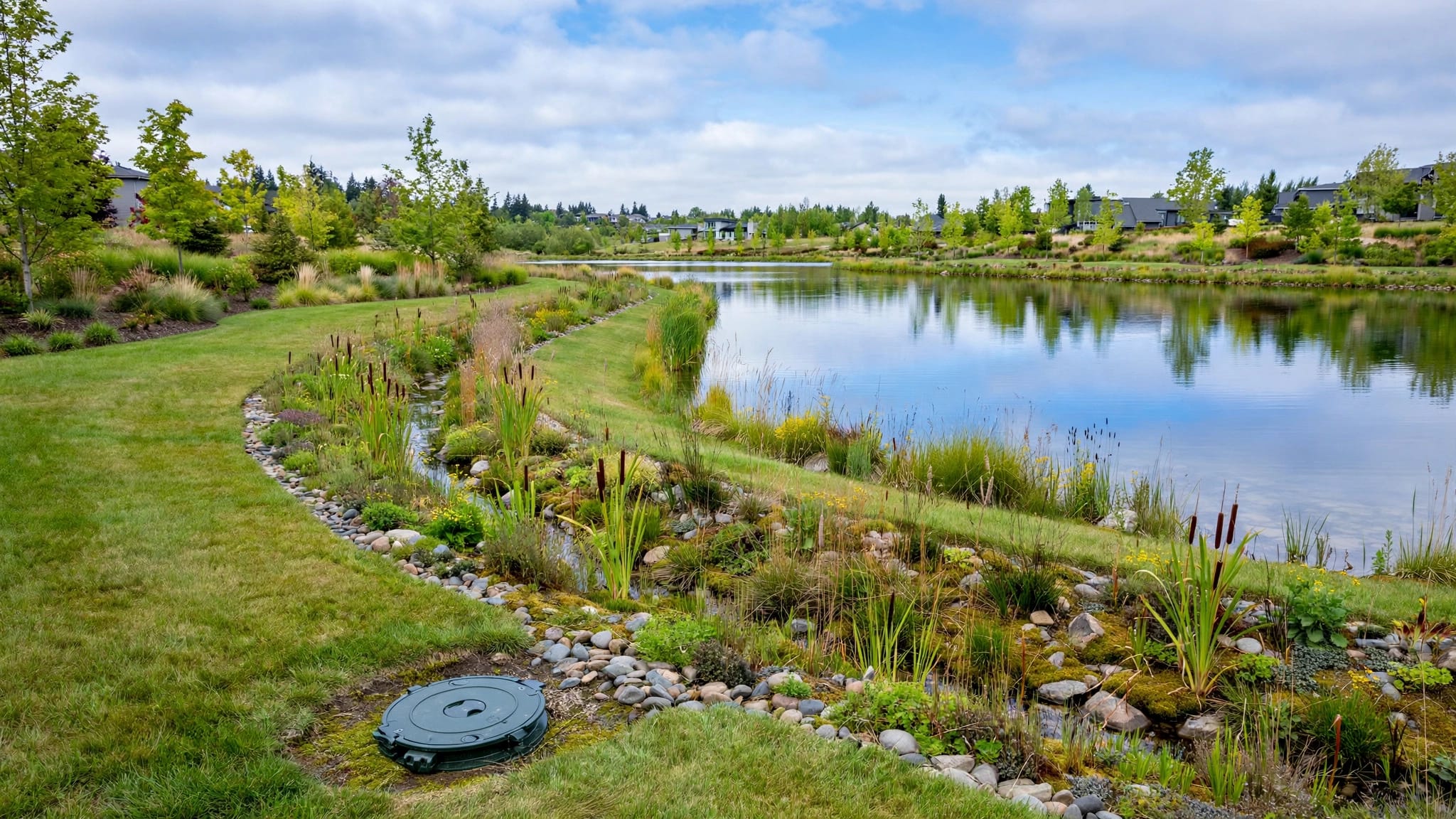
Give every lake a clear name or number, then record its approximate shape, deepest areas, inlets, outfalls, irrigation intakes, shoreline access points, and aerator locations. Include photos of cabinets, control panels, surface units, diffusers, and visible airline routes.
This baseline helps crews find changes that would otherwise go unnoticed. It also prevents one lake's schedule or equipment choice from being copied to a basin with different needs.
Before replacing equipment or adding units, review aeration system sizing for community lakes. Capacity and placement should match lake depth, circulation goals, and access for future service.
Record the starting water conditions
Document water color, clarity, odor, floating debris, algae coverage, shoreline erosion, and signs of fish stress. Collect these observations at the same locations during routine visits, because a random observation near the bank rarely describes the whole lake.
A baseline should also include equipment make, model, installation date, runtime schedule, electrical requirements, and prior repairs. When a pump or compressor begins to draw abnormal amperage, those records make the pattern easier to identify.
Inspect Mechanical Components Every Month
Mechanical inspection keeps a minor blockage or loose fitting from becoming a system failure. However, crews should never enter the water to inspect powered equipment. Disconnect power before handling a unit, and use qualified personnel for electrical work.
The best equipment type depends on lake depth, appearance requirements, and circulation goals. Property managers comparing surface aerators and bottom diffusers should evaluate each lake separately.
Check surface aerators for visible changes
Surface aerators should produce a consistent spray pattern and operate without unusual vibration or noise. During a monthly visit, inspect floats, mooring lines, protective screens, power cords, housings, and connections for wear.
Remove leaves, fishing line, aquatic vegetation, and other debris from intake areas after shutting the unit down safely. A restricted intake can reduce output and place extra strain on the motor.
Also inspect the shoreline attachment point. A damaged tether or loose anchor can shift the unit toward a bank, dock, cart path, or irrigation intake.
Service bottom-diffuser systems at the cabinet
Bottom-diffuser systems usually rely on an onshore compressor, valves, weighted airline, and diffusers on the lake bottom. Check the compressor cabinet for water intrusion, insects, rodent damage, blocked ventilation, and loose fittings.
Clean or replace air filters according to the manufacturer's schedule. Then compare pressure readings with prior service notes. A sudden pressure increase can point to a blocked diffuser, pinched line, or closed valve. A pressure drop may indicate an air leak or damaged airline.
Listen for new compressor noise, excessive heat, or frequent cycling. These signs deserve prompt service, especially during hot weather when the lake may need steady circulation most.
Test Oxygen and Water Conditions at Consistent Stations
Equipment can appear to run normally while the lake still develops oxygen stress. Florida's warm water holds less dissolved oxygen than cooler water, and oxygen levels often fall overnight after photosynthesis stops.
For that reason, golf course lake aeration maintenance should include field readings, not only a visual inspection of fountains or bubbles.
Build a dissolved oxygen profile
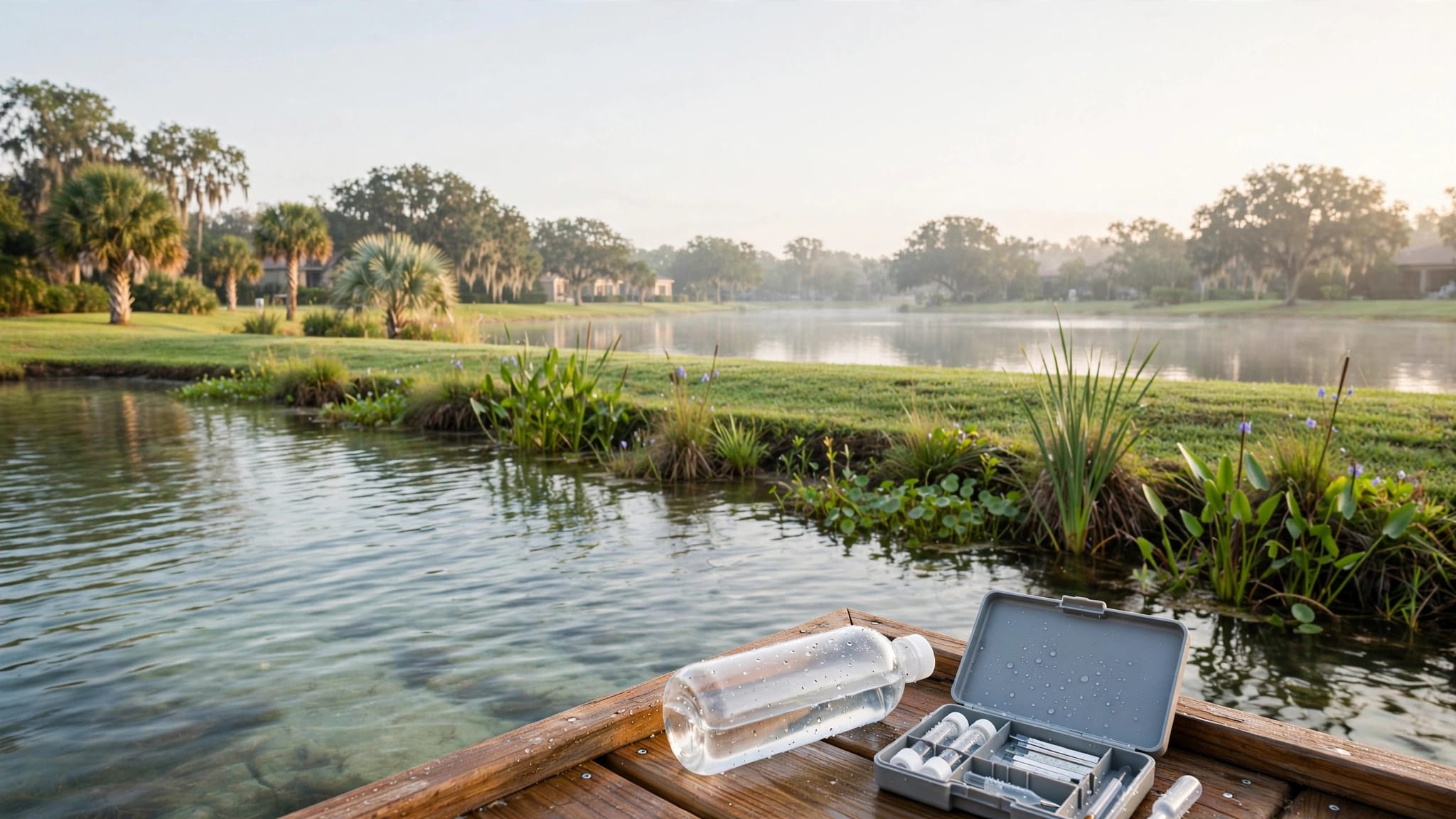
Use a calibrated dissolved oxygen meter to measure surface, middle, and bottom water at the same stations over time. Morning readings often reveal the lowest daily oxygen level, so they can show stress that an afternoon visit misses.
Record water temperature with every reading. A deep lake may show adequate oxygen at the surface and weak oxygen near the bottom, where decomposing organic matter increases demand.
A single surface reading can hide low-oxygen water near the lake bottom, especially in deeper pockets with limited circulation.
Review dissolved oxygen testing for Florida lakes when readings vary by depth or fish gather near the surface. The profile helps determine whether the issue is poor mixing, excess organic matter, runoff, or a mechanical problem.
Watch for weather-driven changes
Heavy rain can wash nutrients, grass clippings, sediment, and debris into a lake. Meanwhile, extended heat raises water temperature and can increase oxygen demand. Inspect aeration equipment after major storms, particularly when runoff enters near an inlet or swale.
Look for dense surface scum, unusual odor, dead vegetation, floating debris mats, or fish gasping at the surface. Report these changes promptly and compare them with recent rainfall, treatment dates, irrigation activity, and runtime records.
Fast action matters because conditions can shift within days during Florida's summer weather.
Adjust Runtime for Seasonal and Site Conditions
A timer isn't a water-quality plan. An aerator's operating schedule should reflect dissolved oxygen readings, lake depth, system capacity, weather, and biological demand.
Some lakes need extended runtime during warmer months, while others can use a different schedule after data confirms adequate circulation. Turning off equipment to reduce an electric bill without checking oxygen levels can create a larger maintenance cost later.
Use data before changing the schedule
Review runtime changes with service records, pressure readings, and oxygen profiles. If bottom water remains low in oxygen, longer runtime may help, but equipment placement or system size may also need attention.
For multi-lake communities, avoid applying the same schedule to every basin. A shaded lake near homes, a deep golf course lake, and a shallow stormwater pond may each require different operating hours.
Property managers can review ways to reduce aeration energy use without sacrificing the circulation the lake needs.
Inspect after lightning, flooding, and hurricanes
Florida storms can damage controls, flood compressor cabinets, move surface units, and deposit debris around shore connections. Follow electrical safety procedures during severe weather, and do not restore power to damaged equipment until a qualified technician inspects it.
After a hurricane or major flooding event, inspect cabinet foundations, mounting hardware, visible airlines, electrical connections, screens, and mooring points. Update photos after repairs so the property has a clear record of the system's condition.
Pair Aeration With Complete Lake Maintenance
Aeration improves circulation and supports aerobic bacteria that break down organic material. However, it doesn't remove the nutrient sources that feed algae or correct a failing shoreline.
A dependable lake program combines golf course lake aeration with water-quality monitoring, vegetation management, debris removal, and structural inspections.
Control nutrient sources and algae pressure
Coordinate lake care with turf and irrigation practices. Fertilizer runoff, grass clippings, leaves, and sediment all add nutrients or organic matter to the water. Inlets, swales, and stormwater discharge points need extra observation after rainfall.
Algae treatment can be appropriate when a licensed professional identifies the issue and applies the correct product. Because treatment can change oxygen demand, the treatment schedule and aeration schedule should work together.
Seabreeze Lake Maintenance holds Commercial Applicator License #CM28291 and State-Licensed Specialty Contractor #SCC131152136 for work that connects lake treatment, equipment, and ongoing service.
Keep shorelines and water-control structures accessible
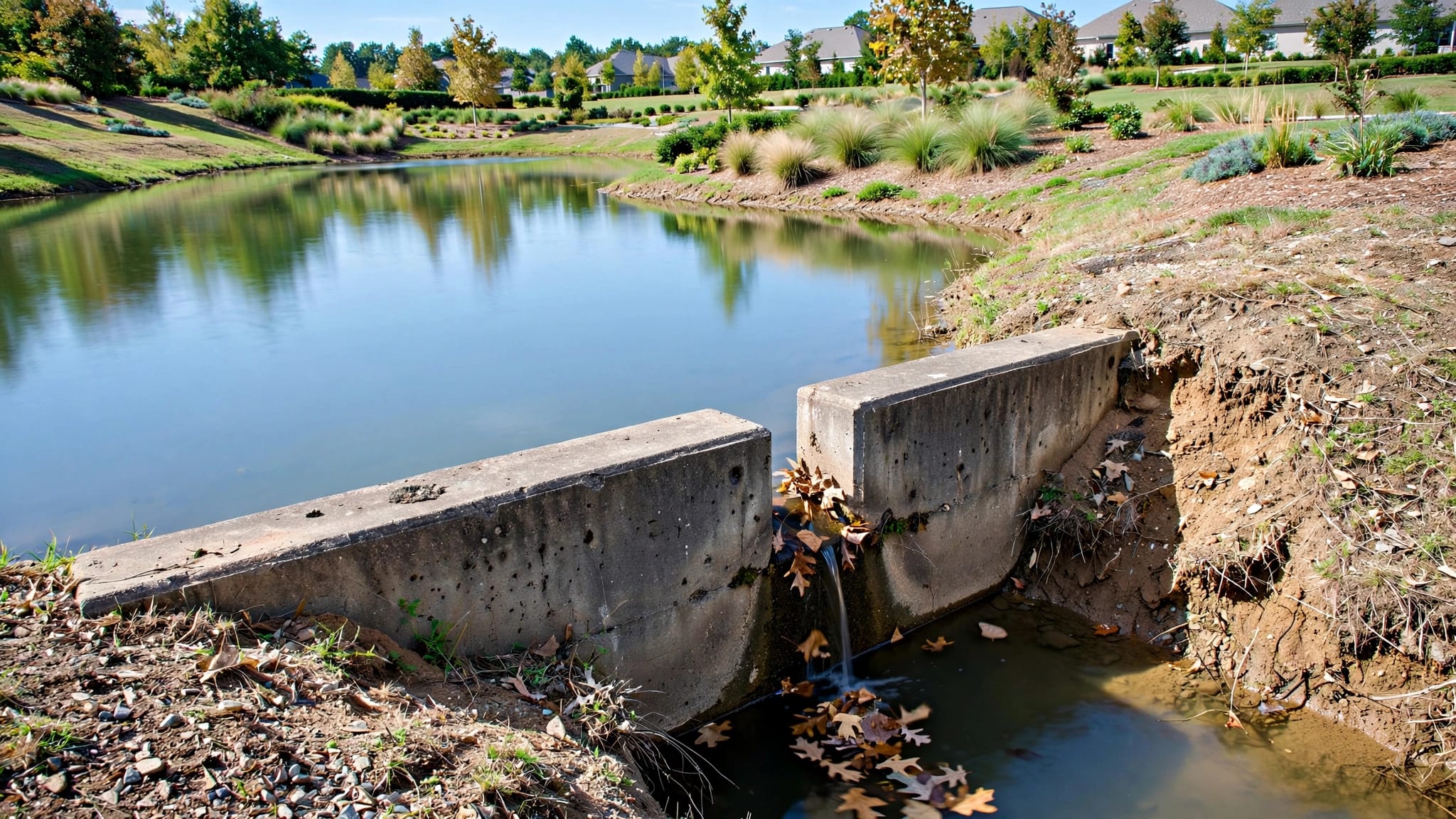
Inspect banks for exposed soil, undercutting, bare areas, and runoff channels. Check that aeration equipment does not obstruct inlets, outfalls, spillways, control structures, or inspection access.
Healthy littoral plant areas can help stabilize the shoreline and filter runoff before it reaches open water. Still, crews should monitor plant density so growth does not block circulation paths or cover equipment.
A neat shoreline also makes floating debris, algal buildup, and damaged hardware easier to spot during normal property walks.
Use a Service Checklist and Clear Records
A written checklist gives boards, golf course managers, and community staff a reliable record across every lake. It also makes vendor reports easier to review because each visit follows the same basic format.
Include these items in each aeration service log:
- Record the lake name, date, weather, recent rainfall, and current water level.
- Note whether each unit is running, along with unusual noise, vibration, pressure, or electrical concerns.
- Photograph equipment, surface patterns, cabinet interiors, and any visible damage.
- Log dissolved oxygen and temperature readings at designated sampling stations.
- Document water color, odor, algae coverage, debris, and fish activity.
- Check intake screens, floats, moorings, airline connections, filters, and control panels.
- Inspect nearby inlets, outfalls, shoreline areas, and access paths.
- List repairs, replacement parts, schedule adjustments, and follow-up dates.
A property-wide record turns isolated observations into useful trends. It also supports complete lake maintenance planning for properties that manage several ponds and lakes.
When recurring algae, odor, poor oxygen readings, or equipment faults appear, schedule a site review rather than waiting for the next routine visit. Communities and golf courses can Get a Free Lake Health Assessment to review equipment condition, circulation, and water-quality concerns.
Keep Aeration Part of the Lake Plan
Healthy Florida lakes depend on more than visible spray or a running compressor. Regular inspections, dissolved oxygen profiles, appropriate runtime, and fast repairs give golf course lake aeration a practical role in long-term water management.
For multi-lake properties, consistent records make the difference. They show which lake needs attention, which equipment needs service, and where water-quality conditions are starting to change.
Recent Posts