How Construction Runoff Damages Florida HOA Lakes
Construction runoff in Florida can turn a clear HOA lake cloudy after just one storm. When a site is graded, cleared, or paved near a pond, the water often takes the hit first.
For HOAs, golf courses, and multi-lake communities, that damage spreads fast. Sediment builds up, algae blooms follow, and the lake starts working harder than it should. Routine care matters, but so does stopping runoff before it reaches the water.
What construction runoff brings into an HOA lake
A construction site does not send one problem into a lake. It sends a mix of soil, dust, nutrients, and debris, and each one causes its own mess.
In a Florida community, the biggest issue is often loose soil. Heavy rain washes that soil into retention ponds and lakes, where it settles on the bottom and clouds the water. Fine sediment can also coat shoreline plants, block sunlight, and reduce habitat near the edge.
Here is a quick look at what often shows up in the water.
| Runoff source | What enters the lake | Common result |
|---|---|---|
| Exposed soil and grading | Silt, clay, sand | Cloudy water, sediment buildup |
| Landscaping work | Mulch, fertilizer, plant debris | Extra nutrients, algae growth |
| Concrete and washout areas | Cement dust, alkaline residue | Water quality stress, pH shifts |
| Open access on site | Trash, packaging, tires, wood scraps | Shoreline clutter, blocked inlets |
The table tells the story plainly. Once these materials reach the pond, they do more than make the water look bad. They change how the lake functions.
A healthy HOA lake depends on clear water flow, balanced nutrients, and stable shoreline edges. Construction runoff chips away at all three.
Why Florida ponds feel the damage so fast
Florida weather makes runoff problems harder to control. Storms can dump a lot of rain in a short time, and that water moves fast across disturbed ground.
Warm temperatures also speed up plant growth and algae blooms. So when runoff carries nutrients into the lake, the pond can shift from calm to stressed in a short window. That is especially true in retention ponds, where the lake already holds stormwater for the property.
When a lake becomes the last stop for dirt and wash water, it turns into the first place the problem collects.
The damage is not only visual. Sediment can fill in shallows and reduce storage capacity. That matters in communities where the pond is part of the stormwater system.
A lake that holds less water has less room for the next rain event. Over time, that can mean more maintenance, more dredging pressure, and more trouble for the board's budget.
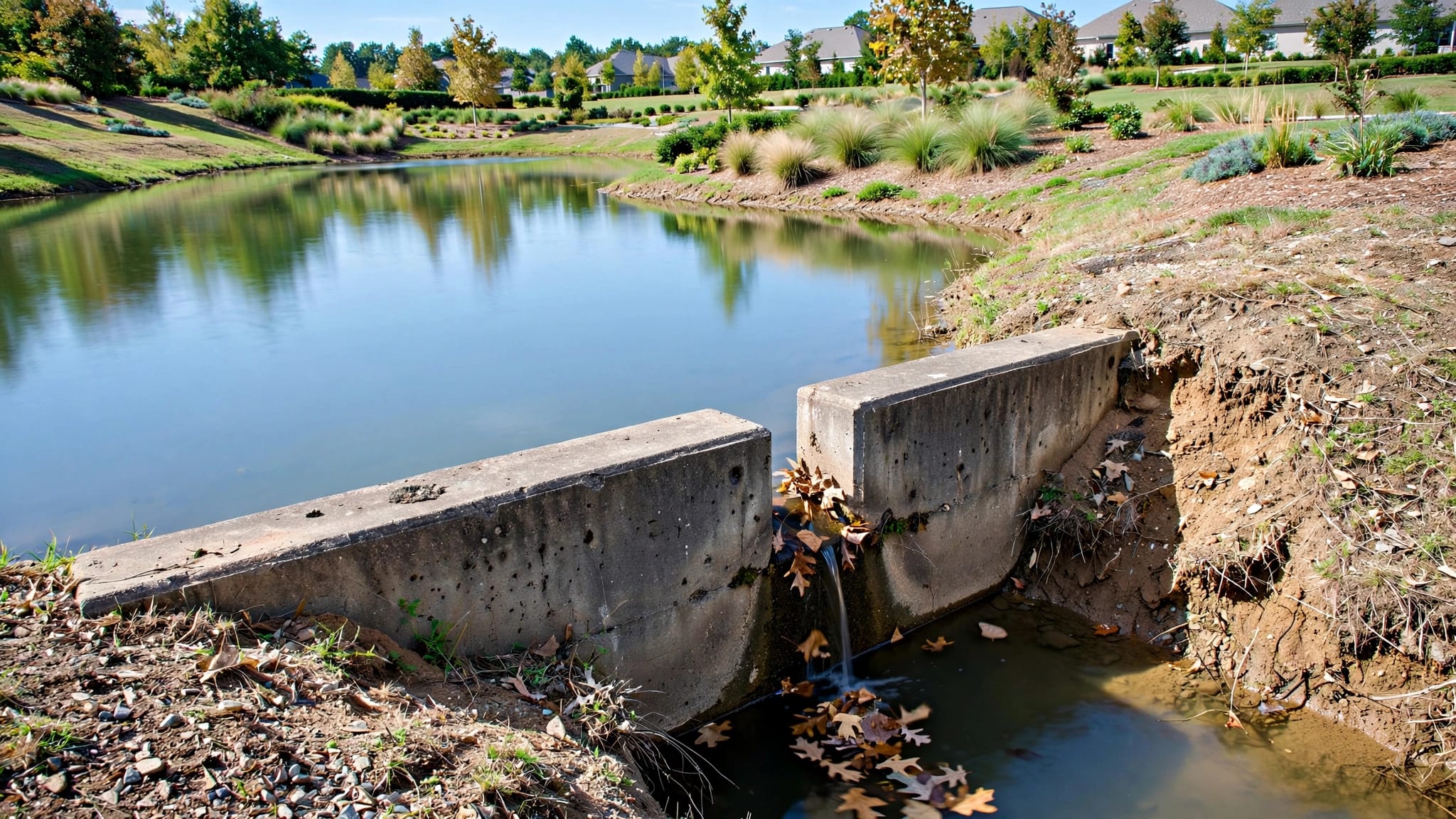
Construction near a lake also disturbs shoreline balance. Bare banks erode faster, littoral plants get buried, and wave action eats away at weak edges. In a gated community or golf course, that can create a rough look right where residents expect a polished one.
Early signs a lake is already under construction stress
The first signs often look small. A little cloudiness, some extra weeds, or a thin line of mud near the edge can seem harmless. Then the problems stack up.
Watch for these changes after nearby work begins:
- Brown or gray water after rain, which usually points to suspended sediment.
- New mats of algae near inflows, which often follow nutrient runoff.
- Silt lines on the shoreline , especially where stormwater enters the pond.
- Buried or wilted littoral plants , which can't keep the bank stable.
- Clogged pipes or inlets , which reduce drainage capacity.
- Floating trash or construction debris , which signals poor site control.
These signs matter because lakes rarely recover on their own once the runoff keeps coming. The longer the site stays open, the more material reaches the water.
If the pond is part of a multi-lake system, one troubled basin can also affect the others. Water flow does not stop at the property line inside a community. It moves through the system, carrying the same sediment and nutrients with it.
For that reason, HOA boards should keep an eye on lake service timing during active construction. Determining the right frequency for professional lake care helps crews catch trouble before it spreads.
How HOAs can limit runoff damage before it spreads
The best time to protect a lake is before the first pile of soil gets moved. Once stormwater starts carrying loose material, cleanup gets harder and more expensive.
Before the site opens
Start with a clear plan for erosion control. The contractor should use silt fence, inlet protection, stabilized entrances, and a proper washout area. Bare soil should stay covered whenever possible, and disturbed ground should get stabilized quickly.
Boards should also ask who is responsible for pond protection if the site borders a lake. That belongs in the paperwork, not in a verbal promise. What HOA boards need in a lake maintenance contract covers the kind of language that keeps service, response, and cleanup expectations clear.
While work is active
During construction, the pond needs regular checks, especially after heavy rain. A strong maintenance plan looks for fresh sediment, algae growth, inlet blockage, and shoreline washout before those problems settle in.
Communication matters too. If grading changes, landscaping starts, or concrete work begins, the lake vendor and board should know right away. Small changes on site can create large changes in the water.
For communities with active construction nearby, a monthly visit may not be enough. Extra inspections can catch new runoff paths, damaged barriers, or areas where water is bypassing protection.
After paving, landscaping, or final grading
Once the site closes out, the lake still needs attention. Sediment already in the pond does not disappear when the equipment leaves. It keeps affecting depth, water clarity, and plant growth until it's removed or managed.
This is where treatment, shoreline repair, and water quality work often come together. When algae shows up after runoff, and the bank has started to fail, the fix may require more than one service. That can include aeration, debris removal, selective aquatic weed control, shoreline stabilization, and erosion control.
For treatment work and shoreline repair in Florida, licensing matters. Seabreeze Lake Maintenance works under Commercial Applicator License #CM28291 and State-Licensed Specialty Contractor #SCC131152136 , which helps keep lake work aligned with Florida requirements.
Restoring a damaged lake after construction ends
A lake that has already taken runoff damage can recover, but only if the board acts quickly. The first step is often to stop the source and then assess what the water has actually taken on.
Some ponds need sediment removal. Others need algae treatment, better circulation, or shoreline work where erosion has exposed the edge. In many communities, the real problem is a mix of all three.
The repair plan should match the lake's role in the property. A small decorative pond does not need the same approach as a retention pond that handles stormwater for several streets. The same is true on golf courses, where the lake may also affect play, drainage, and appearance.
A steady maintenance schedule helps once the emergency work is done. Recommended frequency for Florida HOA lake servicing gives boards a practical starting point for keeping the lake stable after heavy construction or storm activity.
That follow-up matters because runoff problems often return in waves. One rain event can stir up old sediment, and one missed inspection can let a small algae bloom spread across the basin. Regular service keeps those issues from turning into long repairs.
If your community is seeing cloudy water, shoreline loss, or algae after nearby work, schedule an inspection early. Get a Free Quote for a lake review and a maintenance plan that fits the site.
Conclusion
Construction runoff can do more than cloud the water. It can shrink lake depth, feed algae, damage shoreline plants, and strain the stormwater system that HOA communities depend on.
The safest approach is simple. Protect the site before work starts, inspect the lake while the project is active, and restore the pond before the damage settles in. In Florida, that kind of attention keeps a community lake working the way it should.
Recent Posts