Managing lake iron staining in community lakes
Orange-brown water along a community lake's edge can appear after one heavy rain, yet the source may have been building for months. Lake iron staining can affect retention ponds, golf course lakes, and connected water systems in gated communities, creating rust-colored water, sediment, or marks on concrete structures.
For an HOA or property manager, the right response is more than treating the color. Managing lake iron staining starts with finding where the iron enters, checking the water and sediment, and correcting conditions that keep moving it through the lake. These steps apply to community lakes and retention ponds, not koi ponds.
What causes lake iron staining in Florida communities?
Iron is a natural mineral in Florida soil and groundwater. Rain can carry iron-rich soil into a retention pond, while groundwater seepage or drainage changes can introduce dissolved iron below the surface. Irrigation runoff may add another pathway, especially where water crosses bare soil, mulch, or eroded banks.
The form of iron changes when water chemistry changes. Dissolved iron can stay in low-oxygen water, then react with oxygen and form orange, red, or brown particles. Those particles may remain suspended, settle on the bottom, or collect along the shoreline.
Water color is only one sign
Iron staining may appear in several places:
- Rust-colored water near an inflow or groundwater seep
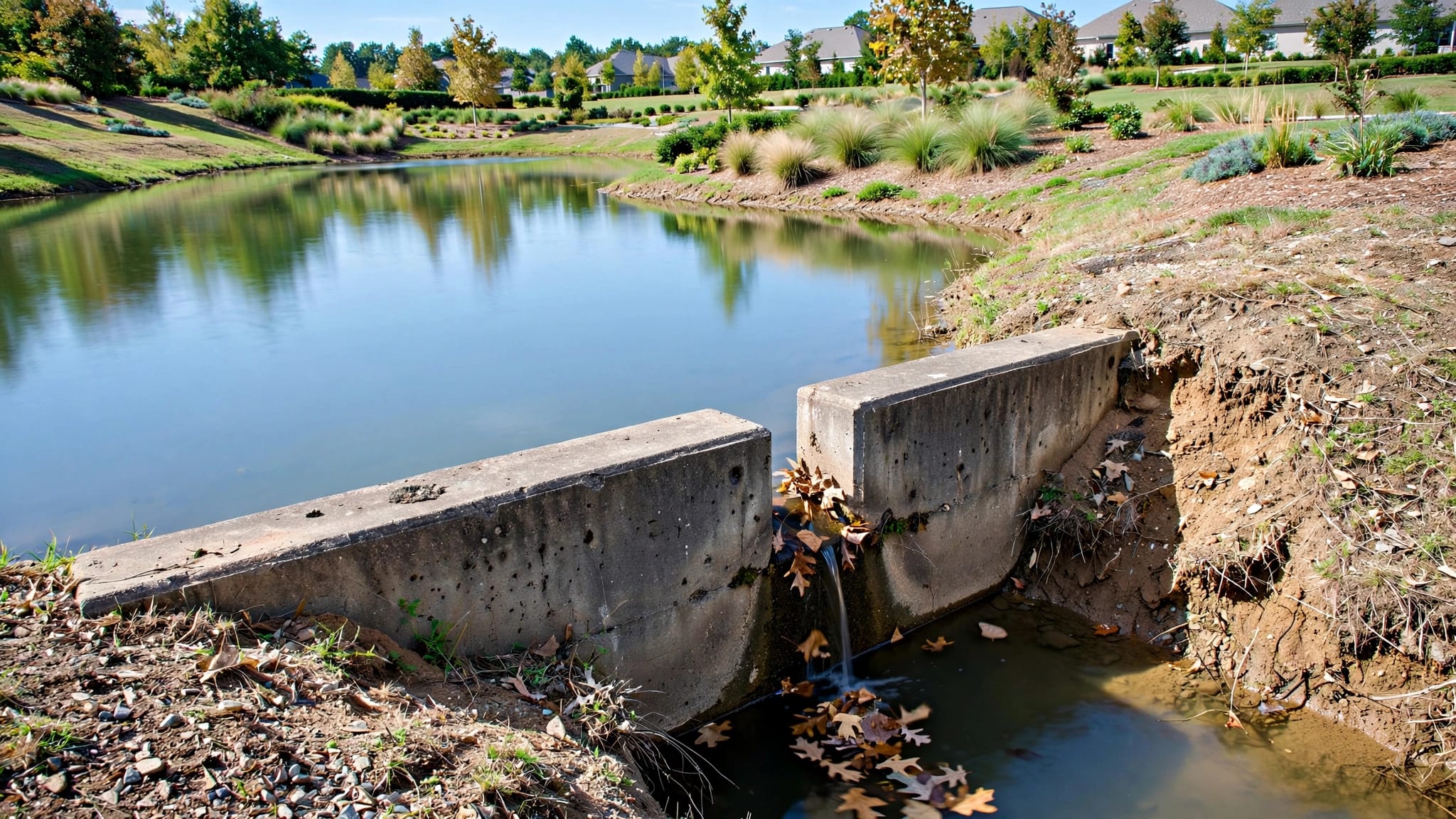
- Orange film on rocks, concrete, pipes, or fountain components
- Brown sediment in shallow coves
- Red streaks along an eroded bank
- Dark deposits mixed with decaying leaves and organic material
A stain near one outfall often points toward a local source. A uniform color across several connected lakes may indicate movement through the drainage system or a wider sediment problem.
Iron can resemble other water problems
Brown or tea-colored water doesn't always come from iron. Decaying leaves, tannins, suspended sediment, algae, and low oxygen can produce similar colors. Why Florida community lakes turn brown can help property managers compare those conditions before selecting a treatment.
Visual inspection still matters, but color alone can't identify the cause. Iron staining may also occur alongside algae, odor, or cloudy water when runoff brings several pollutants into the same pond.
How to assess lake iron staining before treatment
Treatment decisions should follow the water's movement, not the stain's most visible location. A lake may show orange deposits at the shoreline while the actual source enters through a pipe, seep, or upstream pond.
Start with a complete inspection of the lake and its drainage features. For a multi-lake property, walk the connected system in the same visit. Note which lake receives runoff first and whether the color changes after rainfall.
Inspect inflows, outfalls, and shorelines
Walk the perimeter after a rain event when possible. Look for orange water entering through storm drains, swales, culverts, pipes, or low areas along the bank. A groundwater seep may appear as a steady trickle, even during dry weather.
Also check:
- Bare soil near the waterline
- Washed-out slopes and exposed roots
- Mulch or clippings moving toward drains
- Irrigation overspray crossing soil
- Construction areas or recent grading
- Clogged inlet structures that redirect flow
Photograph each location and record the date, recent rainfall, water level, and visible changes. If one inflow repeatedly shows rust-colored water, that evidence is more useful than a single sample taken from the center of the lake.
Shoreline erosion deserves attention because every washout can carry additional sediment into the pond. Stabilizing the bank, correcting drainage, and removing accumulated debris can reduce the material that keeps the water discolored.
Test water at more than one location
A useful sampling plan may include the inflow, shoreline, open water, and bottom water. Samples collected at different depths can show whether the issue is entering as suspended sediment or developing under low-oxygen conditions.
Testing may include iron, pH, dissolved oxygen, conductivity, turbidity, nutrients, and other measurements selected for the property. A single result has limited value without location, depth, weather, and treatment history. Understanding community lake test reports can help HOA boards read those results in context.
A clear surface sample doesn't prove the lake is stable. Iron and other dissolved materials can behave differently at the bottom, near inflows, and after rain.
Sediment testing may help when deposits are heavy or persistent. It can show whether the bottom has accumulated iron-rich material, organic matter, or other sediment that continues to cloud the water during wind, storms, or maintenance work.
Practical ways to manage stained community lakes
The most reliable plan usually combines source control, water-quality monitoring, shoreline care, and appropriate lake maintenance. Treating the visible stain without reducing the incoming material often leads to repeated service calls and inconsistent results.
Reduce iron-rich runoff and sediment
Begin with the drainage path that feeds the lake. Keep inlet structures clear so water follows the designed route. Repair eroded banks, redirect concentrated flow where appropriate, and address irrigation that sprays beyond turf or planted areas.
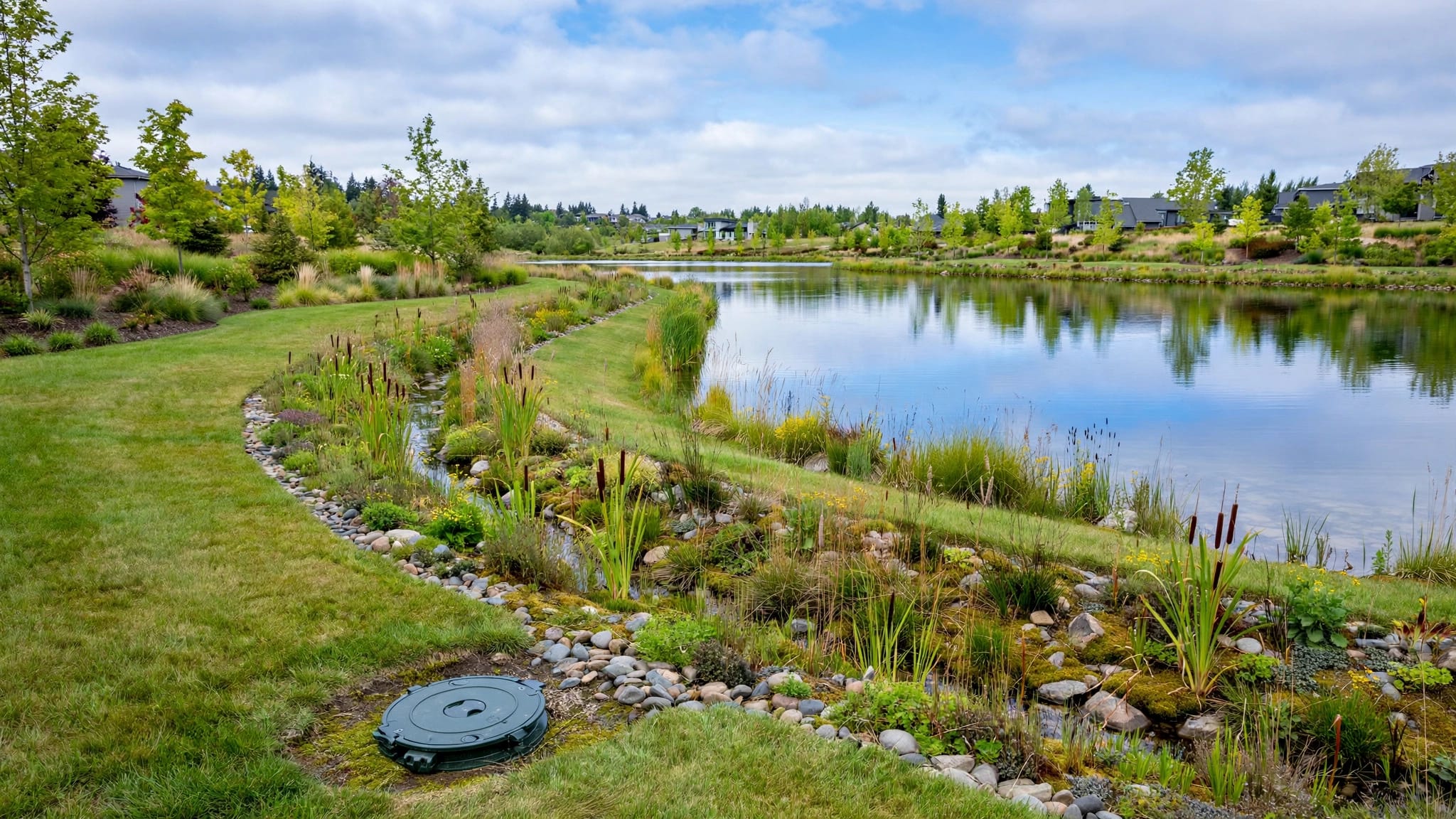
Vegetated buffers can slow runoff before it reaches the water. Healthy shoreline plants also help hold soil in place, although plant selection must match the lake's design, water level changes, maintenance needs, and local requirements.
Debris removal matters as well. Leaves, grass clippings, and mulch add organic material that can reduce oxygen as it decomposes. When those materials mix with iron-rich sediment, the water may become darker and the deposits may become more noticeable.
On golf courses and large HOA properties, review drainage after mowing, fertilization, landscaping, and storm events. A maintenance practice that seems minor on land can send repeated material into a lake through the stormwater system.
Improve movement and oxygen where needed
Aeration and circulation can help prevent stagnant areas and support more even water conditions. They can also change how dissolved iron reacts in the water. As oxygen reaches low-oxygen zones, iron may form particles that become visible before they settle.
That temporary change doesn't mean aeration created the iron. It may reveal material that was already dissolved or held in the bottom water. Aeration also doesn't remove the mineral, so it works best alongside source correction and sediment management.
A professional may measure oxygen at several depths before recommending equipment. Measuring dissolved oxygen in retention ponds provides useful context for lakes that look acceptable at the surface but have poor conditions below it.
Equipment placement matters. Fountains and diffused-air systems need to match the lake's depth, shape, electrical access, circulation pattern, and public safety requirements. Adding equipment without checking those factors can leave problem areas untouched.
What lake treatments can and cannot accomplish
Aquatic herbicides control labeled plants and algae. They don't remove iron from a lake. Treating algae may improve appearance when algae are part of the problem, but it won't stop orange deposits caused by groundwater, runoff, or sediment.
Water-quality products also require careful selection. A treatment that changes pH or causes rapid settling may affect fish, plants, oxygen levels, or downstream water. Products must match the lake's condition and label directions. Licensed application is especially important on shared properties where residents, pets, wildlife, and guests use the surrounding area.
Avoid treating color without identifying the source
A broad treatment may make the water look different for a short period while the same inflow continues adding iron. Before approving work, ask whether the plan identifies the likely source, includes follow-up testing, and addresses the shoreline or drainage condition that keeps feeding the problem.
Iron bacteria can add another complication. Some bacteria use iron as part of their growth and may produce orange slime, surface sheens, or stringy deposits. Those signs can resemble simple mineral staining, so field observations and testing help separate the conditions.
Consider sediment removal only when it fits the lake
When iron-rich sediment has accumulated heavily, physical removal may deserve review. Options can include targeted vacuuming, dredging, or excavation, depending on the lake's design and the amount of material present.
Sediment work can affect water quality, shoreline plants, wildlife, access, and permits. It also costs more than routine maintenance, so the property should confirm that the sediment is a continuing source or a major operational problem before moving ahead.
A targeted approach may work better than disturbing the entire bottom. It can focus on an inflow delta, a shallow cove, or a location where deposits repeatedly collect.
Build a maintenance plan for HOA and golf course lakes
Iron staining is easier to manage when the property tracks conditions throughout the year. Waiting for a resident complaint can leave the source active through several storms, especially in a connected lake system.
Schedule inspections after major rainfall, during long dry periods, and before seasonal maintenance changes. A Florida lake maintenance calendar can help boards and managers plan wet-season and dry-season checks.
A practical record should include:
- Photos of stained water, deposits, and inflows
- Rainfall and recent drainage changes
- Water-test results with sample locations
- Aerator or fountain operating status
- Shoreline repairs and debris removal
- Aquatic treatments, dates, products, and observed results
For multi-lake properties, map each lake, inlet, outfall, fountain, aerator, and low shoreline area. That map gives the board, landscape team, and lake contractor a shared reference when conditions change.
Weekly or biweekly maintenance may suit properties with heavy nutrient loads, public visibility, frequent algae growth, or several connected ponds. Other sites may need a different schedule based on size, vegetation, runoff, and inspection findings. The schedule should change when the lake's conditions change.
Clear resident communication also helps. Explain that orange water may come from mineral movement, sediment, or biological activity, and tell residents whom to contact before they add products to the lake. Unapproved treatments can create new water-quality problems and interfere with professional service.
When to bring in a licensed lake professional
Call for an inspection when staining returns after rain, appears at several connected lakes, affects fountains or outfalls, or comes with odor, algae, fish stress, erosion, or falling water clarity. A professional can compare the water, shoreline, drainage system, equipment, and maintenance history before recommending work.
Seabreeze Lake Maintenance serves HOA communities, gated neighborhoods, golf courses, apartment properties, and other multi-lake sites in Southwest Florida. Its work includes water-quality management, aeration, debris removal, shoreline inspections, erosion control, and aquatic plant and algae control.
For licensed lake maintenance, Seabreeze Lake Maintenance holds Commercial Applicator License #CM28291 and State-Licensed Specialty Contractor #SCC131152136. Property managers can Get a Free Lake Health Assessment to arrange a lake inspection and discuss recurring staining.
Keep lake staining manageable with consistent attention
Lake iron staining usually requires investigation before treatment. Inspect the drainage path, test water at meaningful locations and depths, protect eroding shorelines, and use aeration or sediment work only when the lake's conditions support it.
A single orange shoreline may be a local inflow issue, while staining across a connected property can point to a wider water-quality pattern. Regular inspections help communities find that difference early, before mineral deposits, sediment, or related lake problems become harder to manage.
Recent Posts